

- Industries
Industries
- Functions
Functions
- Insights
Insights
- Careers
Careers
- About Us

AI Agents for Autonomous Task Execution







Artificial Intelligence (AI) has evolved far beyond traditional automation, moving from systems that recognized patterns, answered questions, or generated content to intelligent AI agents capable of planning, reasoning, making decisions, and executing complex tasks with minimal human intervention. Unlike traditional AI that simply responds to commands, AI agents can understand objectives, break them into subtasks, gather information, interact with multiple software systems, adapt to changing conditions, and complete entire workflows autonomously. This shift is transforming AI from a digital assistant into an autonomous workforce, enabling organizations to improve efficiency, reduce costs, and enhance productivity across industries such as customer service, finance, healthcare, manufacturing, software development, logistics, cybersecurity, legal research, and marketing. This article explores the architecture, capabilities, benefits, applications, challenges, enabling technologies, and future of AI agents for autonomous task execution.
Understanding AI Agents
An AI agent is an intelligent software system that can perceive information from its environment, analyze situations, make decisions, and perform actions to accomplish specific objectives. Unlike traditional automation tools that rely on rigid, predefined workflows, AI agents possess varying levels of autonomy, enabling them to reason through problems, learn from previous experiences, adapt to changing circumstances, and collaborate with both humans and other AI systems. Rather than simply executing fixed instructions, they can understand assigned objectives, develop an execution strategy, gather the necessary information, utilize available tools and software, make informed decisions throughout the process, continuously monitor progress, adjust their actions when conditions change, complete tasks efficiently, and provide detailed reports on the outcomes. By combining advanced reasoning, memory, planning, and real-time decision-making, AI agents can independently manage complex, multi-step workflows while requiring minimal human oversight. This ability to execute tasks autonomously makes them valuable across industries, helping organizations improve operational efficiency, reduce manual effort, accelerate decision-making, and deliver more accurate and consistent results.
Evolution of AI Toward Autonomous Agents
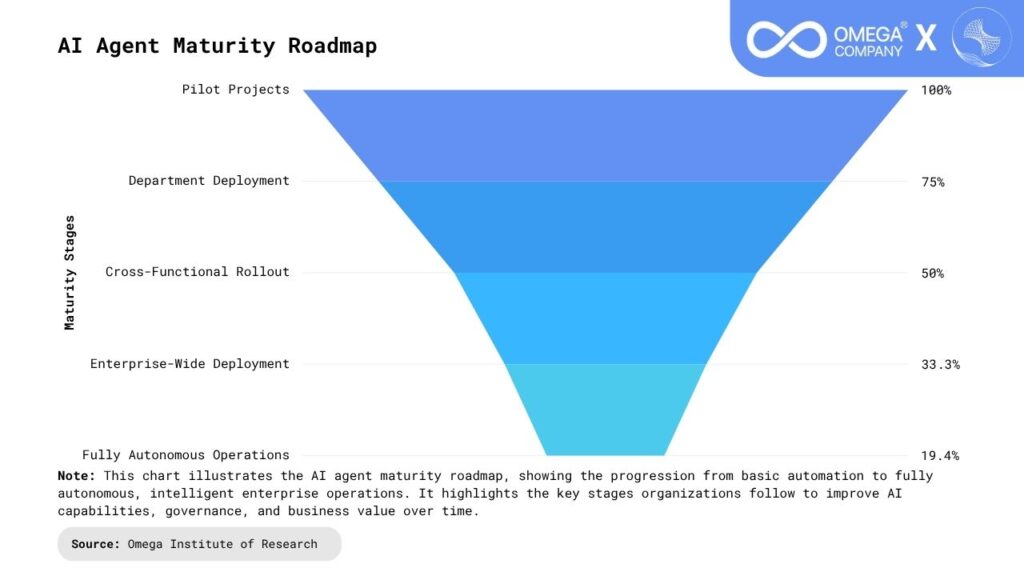
The journey toward autonomous task execution has progressed through several stages.
Rule-Based Systems: The earliest AI systems operated using predefined rules and fixed logic, allowing them to perform repetitive tasks with high consistency but little flexibility. For example, a system could automatically send an approval request if an invoice exceeded a specific amount, yet it could not learn, adapt, or make decisions beyond its programmed instructions.
Machine Learning Systems: The introduction of machine learning enabled AI to learn from historical data, recognize patterns, and make predictions rather than simply following static rules. These systems became widely used for applications such as fraud detection, product recommendations, and demand forecasting, although humans still remained responsible for most decision-making and task execution.
Generative AI: The emergence of Large Language Models (LLMs) significantly expanded AI capabilities by enabling systems to generate human-like text, write code, create marketing content, answer complex questions, and summarize documents. While highly intelligent and versatile, generative AI primarily functioned as an assistant that required users to provide continuous instructions for each step of a task.
Autonomous AI Agents: Modern AI agents represent the next stage of evolution by combining reasoning, planning, memory, tool integration, decision-making, and continuous learning into a single intelligent system. This allows them to independently execute complete workflows, adapt to changing conditions, and achieve goals with minimal human intervention, transforming AI from a responsive assistant into an autonomous digital workforce.
Core Characteristics of Autonomous AI Agents
Goal-Oriented Behavior: Autonomous AI agents focus on achieving defined objectives rather than simply executing individual commands. For example, when assigned the goal of launching a new product campaign, the agent can independently conduct market research, analyze competitors, create marketing content, schedule campaigns, monitor performance, and optimize results without requiring detailed instructions for every step.
Planning and Reasoning: AI agents break complex objectives into smaller, manageable tasks and develop structured execution plans before taking action. Similar to an experienced project manager, they can gather relevant data, analyze business metrics, generate visualizations, prepare reports, and organize presentations in the most efficient sequence to accomplish the overall goal.
Memory: Advanced AI agents maintain memory of previous conversations, user preferences, historical decisions, organizational policies, and past project outcomes. This contextual understanding enables them to make more informed decisions, personalize interactions, avoid repeating mistakes, and continuously improve their performance over time.
Tool Usage: Modern AI agents extend beyond text generation by interacting directly with email platforms, CRM and ERP systems, databases, cloud storage, web browsers, APIs, and other business applications. By integrating with these tools, they can automate real-world business processes, retrieve information, update records, and execute tasks without constant human involvement.
Self-Correction: Autonomous AI agents continuously monitor the progress and quality of their work, allowing them to identify errors or unexpected situations during execution. If a strategy fails, such as an unavailable API or missing data source, the agent can automatically retry, switch to an alternative solution, notify relevant stakeholders, and continue other tasks without interrupting the overall workflow.
Architecture of an Autonomous AI Agent
A complete AI agent consists of several integrated components.
Perception Layer: The perception layer serves as the entry point for an AI agent by collecting and processing information from multiple sources, including documents, emails, images, databases, sensors, APIs, voice inputs, and web applications. By gathering and organizing this data, it provides the agent with the contextual awareness needed to understand its environment and make informed decisions.
Reasoning Engine: The reasoning engine analyzes the collected information, interprets the current situation, and determines the most appropriate course of action. It evaluates factors such as the overall objective, available resources, missing information, and potential strategies, enabling the AI agent to make logical and context-aware decisions throughout task execution.
Planning Module: The planning module converts high-level objectives into structured workflows by breaking complex tasks into smaller, sequential steps. For example, a customer onboarding process may include identity verification, account creation, compliance checks, welcome communication, and service activation, ensuring that every stage is completed in the correct order.
Memory System: The memory system enables AI agents to retain both short-term and long-term information that supports intelligent decision-making. Short-term memory stores the current task context, while long-term memory preserves historical knowledge, organizational policies, previous interactions, and past experiences to improve future performance.
Tool Integration Layer: The tool integration layer connects AI agents with external software and digital platforms such as Microsoft 365, Google Workspace, Salesforce, SAP, ServiceNow, Slack, GitHub, and Jira. These integrations allow the agent to access information, exchange data, and automate tasks across multiple business systems without requiring manual intervention.
Action Executor: The action executor is responsible for carrying out the decisions made by the AI agent by performing real-world operations. It can send emails, generate invoices, update CRM records, schedule meetings, deploy software, create reports, and complete other business processes automatically and accurately.
Feedback Loop
The feedback loop continuously evaluates the outcome of every action performed by the AI agent to determine whether the intended objective has been achieved. By identifying errors, measuring performance, and learning from previous executions, the agent can refine its strategies over time, resulting in greater accuracy, efficiency, and continuous improvement.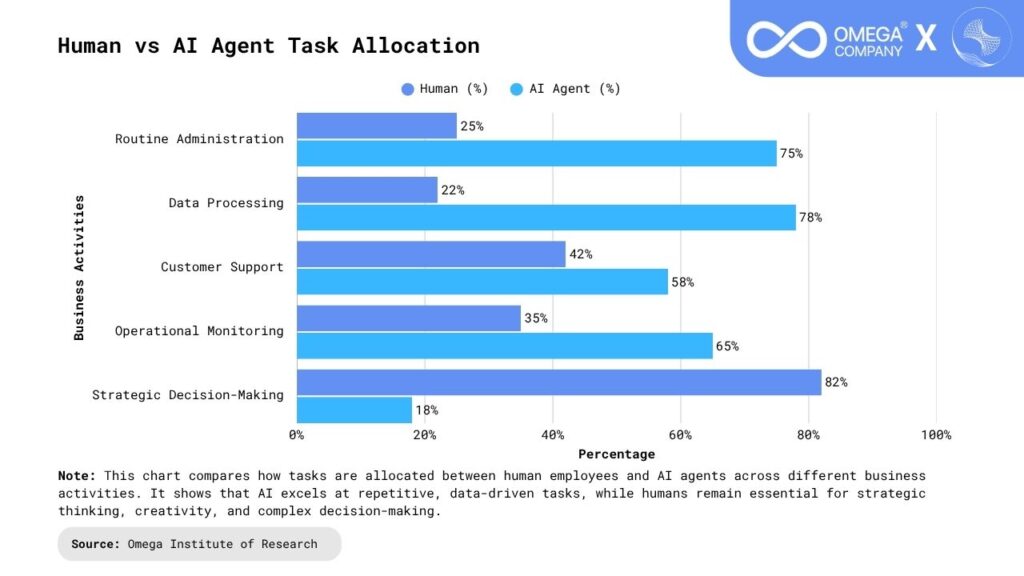
Enterprise Applications of Autonomous AI Agents
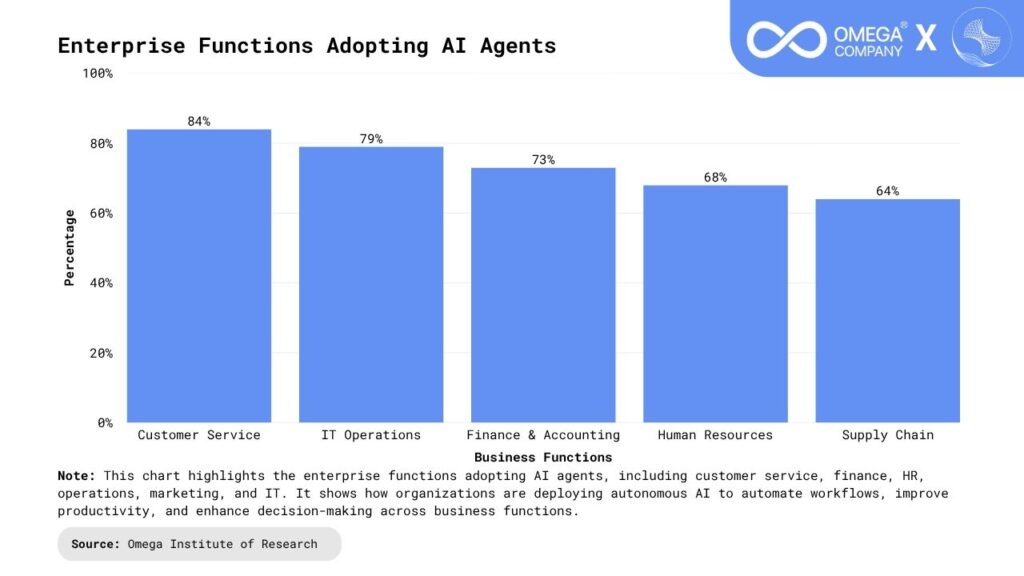
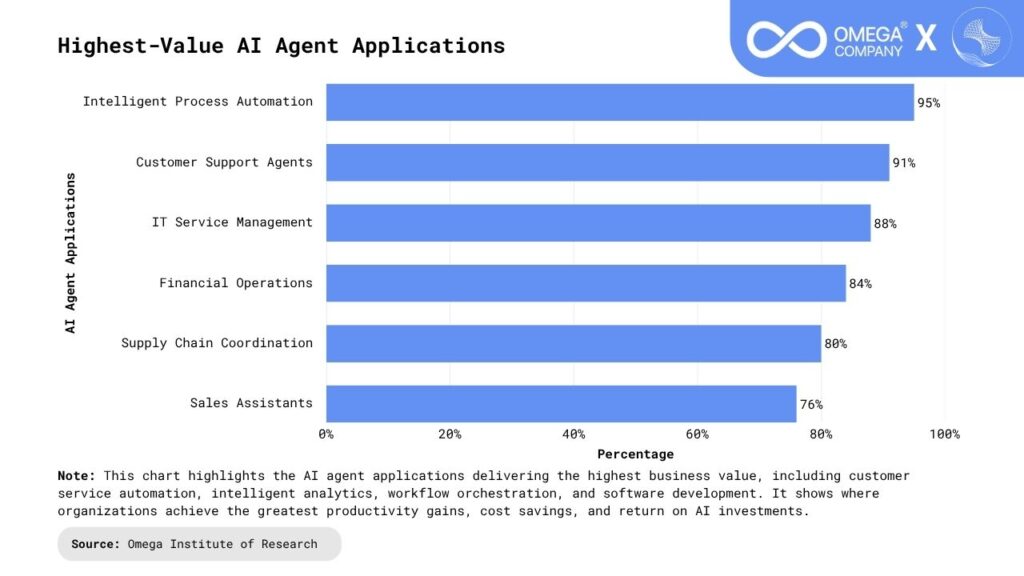
Customer Service: Autonomous AI agents enhance customer service by independently resolving support tickets, answering customer inquiries, processing refunds, scheduling appointments, and escalating complex issues when necessary. Their ability to provide fast, accurate, and around-the-clock assistance helps organizations reduce operational costs, improve response times, and deliver a more satisfying customer experience.
Software Development: AI agents are transforming software development by generating code, identifying bugs, performing automated testing, reviewing pull requests, deploying applications, and monitoring production environments. By automating repetitive development tasks, they enable engineering teams to accelerate software delivery, improve code quality, and focus on innovation.
Finance: In finance, AI agents streamline operations by automating invoice processing, expense approvals, financial reporting, budget forecasting, risk analysis, and compliance monitoring. These capabilities improve accuracy, reduce manual workloads, accelerate financial decision-making, and help organizations maintain regulatory compliance.
Healthcare: Healthcare organizations use AI agents to support appointment scheduling, medical documentation, insurance verification, clinical decision support, and personalized patient monitoring. While these systems significantly improve efficiency and reduce administrative burdens, qualified healthcare professionals remain responsible for making final clinical decisions.
Human Resources: AI agents simplify human resource management by screening resumes, scheduling interviews, supporting employee onboarding, providing policy guidance, tracking performance, and recommending personalized learning opportunities. This automation enables HR teams to enhance employee experiences while spending more time on strategic workforce planning.
Marketing: Marketing teams leverage AI agents to plan campaigns, generate content, segment audiences, analyze campaign performance, schedule social media posts, and optimize email marketing efforts. These intelligent systems help organizations deliver highly personalized customer experiences while improving marketing efficiency and return on investment.
Supply Chain: AI agents strengthen supply chain operations by monitoring inventory levels, predicting shortages, optimizing logistics, managing procurement activities, coordinating with suppliers, and reducing delivery delays. Their ability to analyze real-time data enables businesses to improve operational resilience and maintain efficient supply chain performance.
Cybersecurity: Autonomous AI agents continuously protect digital environments by monitoring network activity, detecting security anomalies, isolating compromised systems, investigating incidents, and generating detailed security reports. Their rapid response capabilities help organizations minimize cyber risks, reduce response times, and strengthen overall security posture.
Technologies Powering Autonomous AI Agents
Several technologies work together to enable autonomous execution.
Large Language Models (LLMs): Large Language Models (LLMs) serve as the intelligence core of autonomous AI agents by enabling natural language understanding, reasoning, planning, and content generation. They allow agents to interpret complex instructions, solve problems, and make informed decisions while interacting naturally with users and enterprise systems.
Retrieval-Augmented Generation (RAG): Retrieval-Augmented Generation (RAG) enhances AI agents by enabling them to access relevant organizational knowledge before generating responses or taking actions. This approach improves accuracy, reduces hallucinations, and ensures that decisions are based on the latest and most reliable information available.
Vector Databases: Vector databases store information as numerical embeddings, allowing AI agents to perform semantic searches instead of relying solely on keyword matching. This enables faster retrieval of contextually relevant information, improving the quality and precision of task execution.
Knowledge Graphs: Knowledge graphs organize data by representing relationships between people, processes, documents, and business entities in a structured format. By understanding these connections, AI agents can reason more effectively, discover hidden insights, and make context-aware decisions.
Workflow Orchestration: Workflow orchestration technologies coordinate the execution of multiple tasks across different systems and applications to ensure smooth end-to-end automation. They help AI agents manage dependencies, monitor progress, and execute workflows efficiently while maintaining consistency throughout the process.
API Integration: API integration enables autonomous AI agents to communicate seamlessly with enterprise applications, databases, cloud services, and third-party platforms. Through these connections, agents can retrieve information, update records, trigger workflows, and perform real-world business operations automatically.
Reinforcement Learning: Reinforcement learning helps AI agents improve their decision-making by learning from feedback, rewards, and previous outcomes over time. This continuous learning process enables agents to optimize strategies, adapt to changing environments, and achieve better performance with experience.
Cloud Computing: Cloud computing provides the scalable computing power, storage, and networking resources required to deploy and operate autonomous AI agents efficiently. It allows organizations to run intelligent systems securely, process large volumes of data, and scale AI workloads according to business demands.
Benefits of Autonomous Task Execution
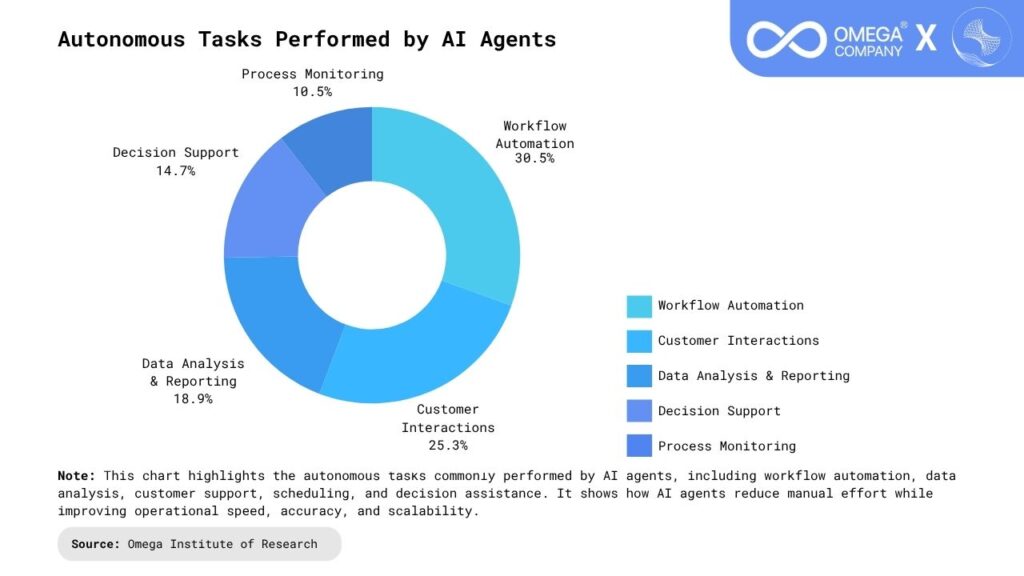
Organizations adopting autonomous AI agents gain significant advantages by automating complex workflows and reducing dependence on manual processes. These intelligent systems increase operational efficiency, accelerate decision-making, and minimize repetitive work, allowing employees to focus on higher-value strategic activities and innovation. AI agents operate continuously, providing 24/7 task execution while maintaining consistent performance and improving organizational scalability as business demands grow. They also help reduce operational costs, boost overall productivity, and deliver faster, more personalized customer experiences through intelligent automation across multiple business functions. Additionally, by continuously analyzing large volumes of structured and unstructured data, AI agents generate valuable insights that support informed decision-making, improve process consistency, and strengthen business agility. As they learn from historical outcomes and adapt to changing conditions, autonomous AI agents enable organizations to achieve greater accuracy, resilience, and long-term competitive advantage in an increasingly digital business environment.
Challenges and Risks
Despite their transformative potential, autonomous AI agents introduce several technical, operational, and ethical challenges that organizations must address before large-scale deployment. AI agents may generate inaccurate or misleading outputs, expose security vulnerabilities, create data privacy risks, or produce biased decisions if trained on incomplete or unbalanced data. Their limited explain ability and increasing autonomy can make it difficult to understand how certain decisions are reached, while integrating them with existing enterprise systems and complying with evolving regulations can add significant complexity. Organizations must also build trust among employees and stakeholders by ensuring transparency, accountability, and responsible governance throughout the AI lifecycle. To minimize these risks, businesses should implement rigorous testing, continuous monitoring, strong cybersecurity measures, comprehensive audit trails, and human oversight for high-impact decisions, ensuring that AI agents operate safely, ethically, and in alignment with organizational policies and regulatory requirements.
The Future of Autonomous AI Agents
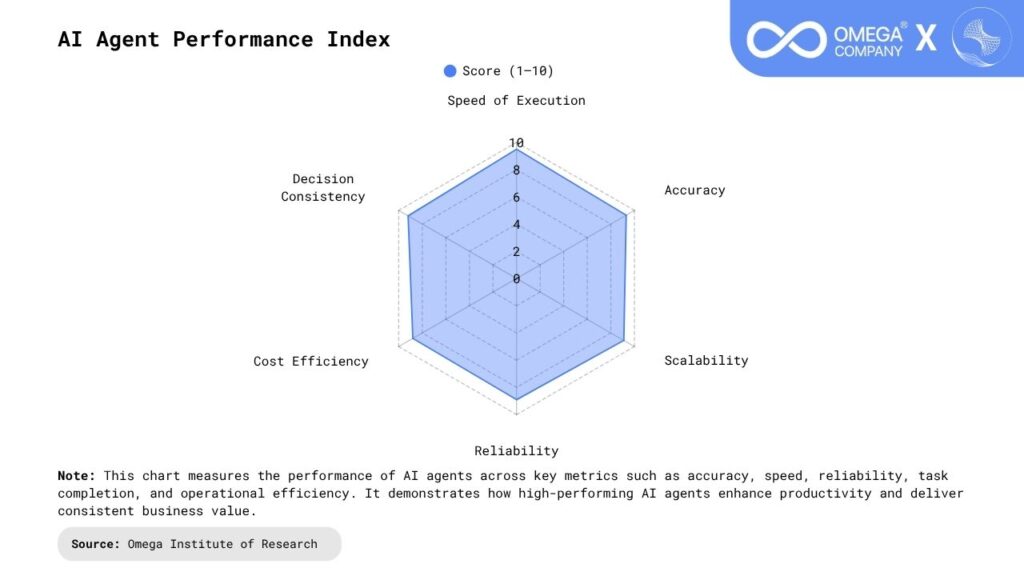
Autonomous AI agents are expected to evolve from task-specific assistants into collaborative digital coworkers capable of managing increasingly complex responsibilities across entire organizations. Future advancements will enable specialized AI agents to work together seamlessly, leveraging improved long-term memory, deeper personalization, stronger reasoning capabilities, and native integration with enterprise applications, cloud platforms, and Internet of Things (IoT) devices. Industry-specific AI agents tailored for sectors such as healthcare, finance, manufacturing, and legal services will provide highly specialized expertise while continuously optimizing business processes with minimal human intervention. At the same time, advancements in governance, transparency, explain ability, and regulatory compliance will make autonomous AI systems more trustworthy and suitable for mission-critical operations. As these technologies continue to mature, organizations will move beyond automating isolated tasks and begin orchestrating complete business functions through interconnected networks of intelligent AI agents, driving unprecedented levels of efficiency, agility, innovation, and digital transformation.
Conclusion
AI agents for autonomous task execution represent a major advancement in the evolution of artificial intelligence, combining reasoning, planning, memory, and real-world tool integration to move beyond traditional automation and become intelligent collaborators capable of completing complex, end-to-end workflows with minimal human intervention. Across industries, these autonomous systems are improving operational efficiency, reducing costs, accelerating innovation, enhancing decision-making, and enabling organizations to focus human expertise on strategic, creative, and high-value activities. Although challenges such as security, governance, transparency, regulatory compliance, and trust must be carefully addressed, responsible implementation, continuous monitoring, and strong human oversight can maximize their benefits while minimizing potential risks. As digital transformation continues to reshape the global business landscape, autonomous AI agents are expected to become a core component of the modern workforce, working alongside people to optimize operations, streamline business processes, improve customer experiences, and build smarter, faster, more agile, and resilient organizations for the future.
- https://wjaets.com/sites/default/files/fulltext_pdf/WJAETS-2025-0744.pdf
- https://www.salesforce.com/in/agentforce/ai-agents/autonomous-agents/
- https://chain.link/article/autonomous-ai-agents
- https://www.sap.com/resources/what-are-ai-agents
- https://research.perplexity.ai/articles/how-ai-agents-reshape-knowledge-work
Subscribe
Select topics and stay current with our latest insights
- Functions