

- Industries
Industries
- Functions
Functions
- Insights
Insights
- Careers
Careers
- About Us

AI as a Moat: How Companies Are Using Data to Outpace Competitors







Artificial intelligence has evolved beyond automation to become one of the most powerful competitive advantages in modern business. While advanced AI technologies are increasingly accessible, sustainable differentiation now depends on proprietary, high-quality data that enables organizations to generate unique insights, accurate predictions, and personalized experiences that competitors cannot easily replicate. This has led to the emergence of AI as a strategic moat, where exclusive data assets, continuous learning models, and intelligent analytics create lasting barriers to competition. By investing in robust data ecosystems and AI-driven platforms, leading organizations are building self-improving systems that strengthen customer relationships, optimize operations, accelerate innovation, and become more valuable with every interaction, creating a continuous cycle of growth and long-term market leadership.
Understanding AI as a Competitive Moat
A business moat refers to a sustainable competitive advantage that protects an organization from competitors and enables long-term market leadership. Traditionally, these advantages were built through strong brand recognition, intellectual property, network effects, economies of scale, and exclusive strategic partnerships. Today, artificial intelligence has emerged as a new and increasingly powerful form of competitive protection. Organizations that combine proprietary, high-quality data with advanced AI models create intelligent systems that competitors cannot easily replicate. Even when rivals have access to similar AI technologies, they often lack the unique historical customer insights, operational intelligence, and industry-specific knowledge that drive superior outcomes. As a result, the true competitive advantage no longer lies in simply adopting AI, but in continuously enriching AI systems with exclusive data that enables smarter decision-making, greater innovation, and sustained business differentiation.
Why Data Matters More Than Algorithms
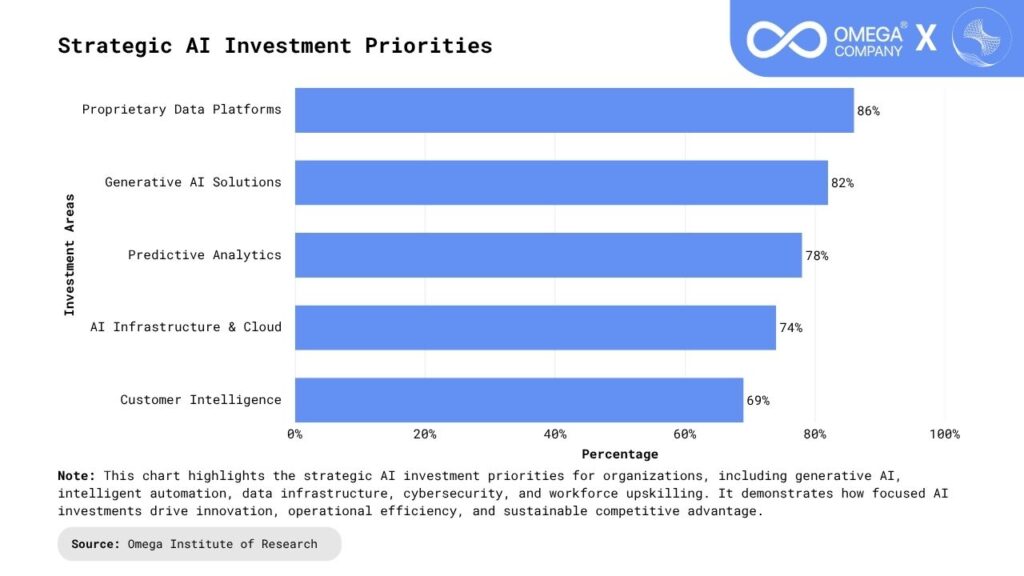
AI Accessibility Levels the Playing Field: Advanced AI technologies, including large language models and machine learning frameworks, are now widely available through open-source platforms and cloud services. As a result, simply adopting AI is no longer enough to establish a lasting competitive advantage. Organizations must find new ways to differentiate beyond the technology itself.
Proprietary Data Creates Unique Value: Every customer interaction, transaction, operational workflow, and business decision generates valuable data that is unique to an organization. Over time, this proprietary information becomes a strategic asset that competitors cannot easily acquire or replicate. Its uniqueness makes it a powerful driver of long-term business success.
Data Improves AI Performance: High-quality, structured, and well-governed data enables AI systems to deliver more accurate predictions and actionable insights. It also helps organizations personalize customer experiences, automate complex processes, and make faster, evidence-based decisions. Better data ultimately leads to smarter and more reliable AI outcomes.
Competitive Advantage Comes from Data Quality: Organizations with years of clean, consistent, and comprehensive data possess an advantage that cannot simply be purchased or copied. Even when competitors use similar AI models, they cannot reproduce the historical knowledge embedded within proprietary datasets. This creates a significant barrier to entry in increasingly data-driven markets.
Data Fuels Sustainable Business Growth: Proprietary data empowers businesses to identify operational inefficiencies, reduce risks, uncover emerging market opportunities, and support long-term strategic planning. As AI systems continuously learn from new information, their value increases over time. This creates a self-reinforcing cycle of innovation, efficiency, and sustainable competitive growth.
How Leading Companies Build AI Moats
Hyper-Personalized Customer Experiences: Modern consumers expect highly personalized interactions across every stage of their journey. AI analyzes purchase history, browsing behavior, search activity, location, device usage, and customer preferences to deliver tailored recommendations, services, and communications in real time. These personalized experiences improve customer satisfaction, strengthen engagement, and increase conversion rates. At the same time, every interaction generates additional behavioral data that continuously refines AI models, making future recommendations even more accurate and valuable.
Predictive Decision-Making: Rather than simply responding to events, leading organizations use AI to anticipate future outcomes through predictive analytics. By analyzing historical and real-time data, AI forecasts customer demand, equipment failures, supply chain disruptions, employee turnover, financial risks, and evolving market trends with increasing precision. These predictive insights enable businesses to make proactive decisions, reduce uncertainty, and allocate resources more effectively. As data accumulates over time, prediction accuracy continues to improve, creating a significant competitive advantage.
Intelligent Operations: Operational excellence has become a critical source of competitive differentiation, with AI transforming the way organizations manage daily business activities. Intelligent systems optimize manufacturing schedules, inventory management, logistics, warehouse automation, workforce planning, and energy consumption to maximize efficiency while reducing costs. Continuous monitoring and automation help organizations respond quickly to changing operational conditions and improve productivity. Every optimization generates new operational data that further enhances AI performance and drives continuous improvement.
Customer Retention: Retaining existing customers is often more cost-effective than acquiring new ones, making customer loyalty a strategic business priority. AI identifies early indicators of churn by analyzing changing customer preferences, declining engagement, support interactions, purchasing behavior, and overall satisfaction levels. These insights allow organizations to take proactive measures before customers leave, delivering personalized offers and improved service experiences. As a result, businesses increase customer lifetime value, strengthen long-term relationships, and build a more loyal customer base.
Faster Innovation: Leading organizations are using AI to accelerate innovation by transforming vast amounts of data into actionable insights. AI continuously evaluates customer feedback, product performance, market demand, emerging technologies, and industry trends to identify opportunities for improvement and future growth. This enables businesses to design, test, and launch new products more quickly while minimizing development risks and costs. By shortening innovation cycles and improving decision-making, AI helps organizations maintain a competitive edge in rapidly evolving markets.
Industry Applications
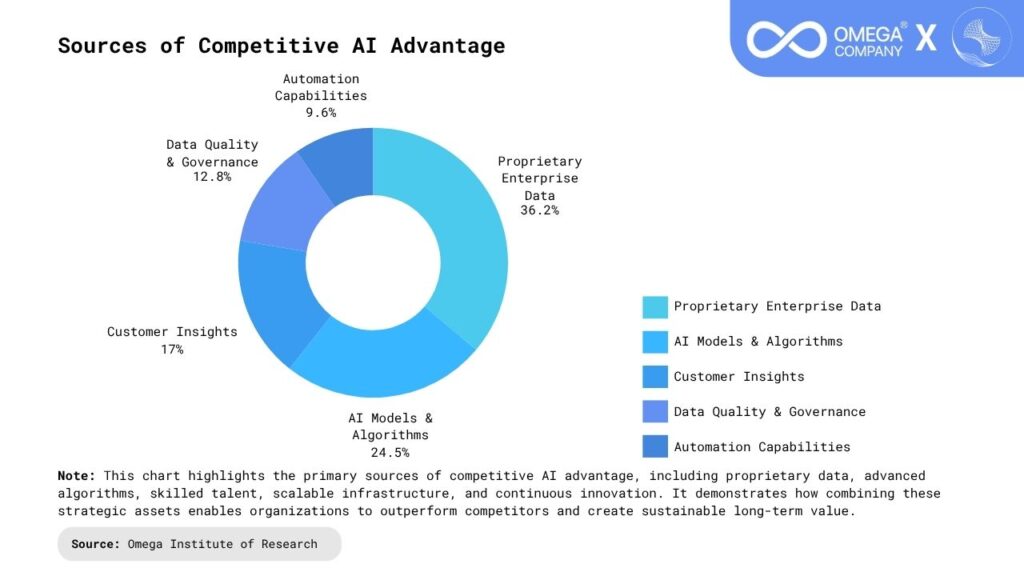
Healthcare: Healthcare organizations are using AI to analyze medical records, diagnostic imaging, genomic information, and treatment outcomes to improve clinical decision-making. As healthcare datasets continue to expand, AI systems become more accurate in detecting diseases at earlier stages and identifying personalized treatment options. These capabilities enhance patient outcomes, reduce diagnostic errors, and support more efficient healthcare delivery. Continuous learning from new clinical data further strengthens the effectiveness of AI-driven medical solutions.
Financial Services: Banks and financial institutions leverage AI to strengthen fraud detection, assess credit risk, provide personalized financial guidance, monitor regulatory compliance, and improve investment strategies. By analyzing years of transaction histories and customer behavior, AI uncovers patterns that traditional systems may overlook. This enables faster, more accurate financial decisions while reducing operational and security risks. As financial data continues to grow, AI delivers increasingly intelligent insights that improve both customer experiences and business performance.
Retail: Retail organizations use AI to optimize pricing strategies, manage inventory, personalize product recommendations, improve marketing campaigns, and forecast customer demand. Every customer interaction and purchase generates valuable data that enhances recommendation engines and purchasing predictions. These insights help retailers deliver more relevant shopping experiences while maximizing sales and operational efficiency. Continuous learning enables AI to adapt quickly to changing consumer preferences and market trends.
Manufacturing: Manufacturers integrate AI with IoT-enabled sensors to monitor equipment performance, predict maintenance requirements, improve production quality, and minimize operational downtime. Continuous analysis of factory data enables organizations to identify inefficiencies and optimize manufacturing processes in real time. This results in lower maintenance costs, increased productivity, and higher product consistency. As operational data accumulates across production facilities, AI continuously improves manufacturing performance and operational resilience.
Smart Cities: Smart cities are increasingly adopting AI to optimize urban infrastructure by managing traffic flow, public transportation, energy distribution, water resources, waste collection, and public safety systems. Real-time data from connected devices enables city administrators to make faster, more informed decisions about resource allocation and infrastructure management. These intelligent systems improve service delivery, reduce operational costs, and enhance sustainability across urban environments. As more data is collected, AI continues to make cities safer, more efficient, and better equipped to meet future demands.
Building a Sustainable Data Strategy
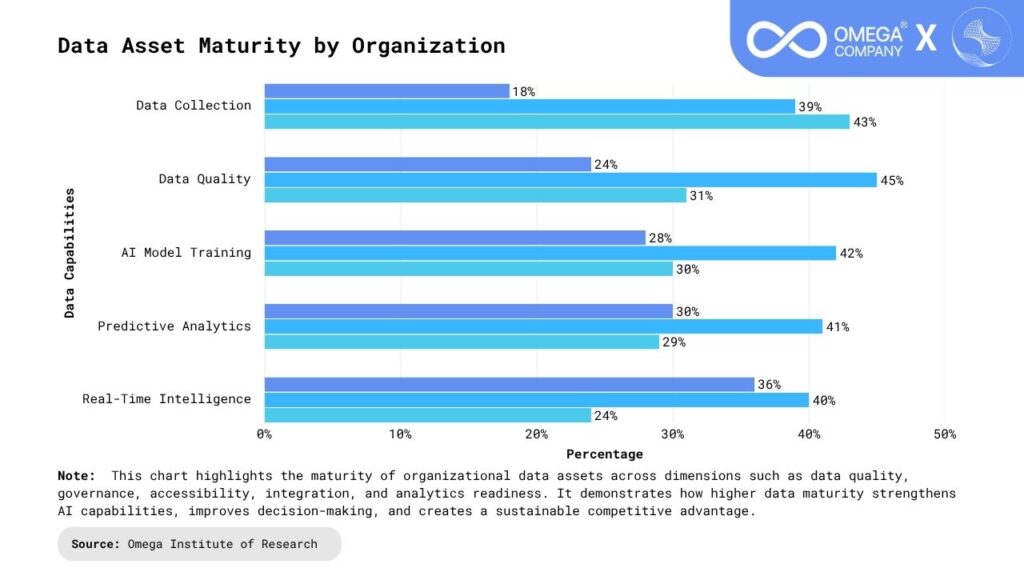
Creating a sustainable AI moat requires far more than collecting large volumes of information; it demands a strategic focus on data quality, governance, security, and ethical management. Organizations must establish robust data governance frameworks, integrate information across business functions, eliminate data silos, and invest in scalable cloud infrastructure to ensure data remains accurate, accessible, and secure. At the same time, regulatory compliance, responsible AI practices, and strong customer privacy protections are essential for maintaining trust, minimizing risk, and meeting evolving legal requirements. Continuous monitoring and improvement of data quality enable AI systems to generate reliable insights, support better decision-making, and adapt to changing business needs with greater precision. Organizations that prioritize transparency, accountability, and responsible data stewardship are better positioned to build customer confidence while maximizing the long-term value of their AI investments. As data volumes continue to grow, maintaining a flexible and scalable data strategy becomes essential for supporting future innovation, accelerating digital transformation, and sustaining competitive advantage. Without trustworthy, well-managed data, even the most sophisticated AI models are unable to deliver consistent, accurate, or meaningful business outcomes.
Challenges Organizations Must Address
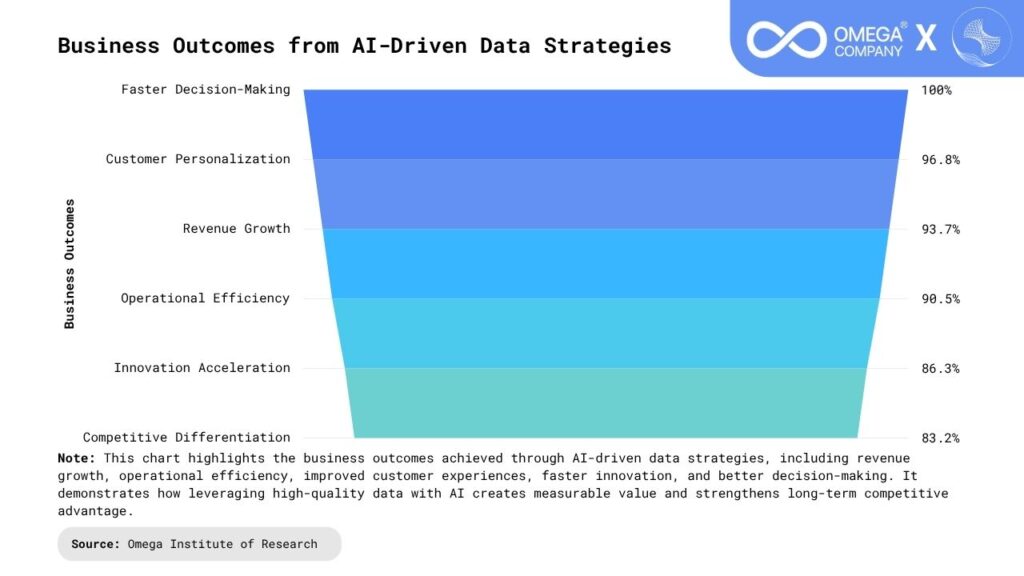
Data Privacy: As organizations collect and process larger volumes of customer information, protecting personal data has become a critical business priority. Companies must comply with evolving privacy regulations while maintaining transparency and earning customer trust through responsible data practices. Strong governance policies, secure data management, and ethical AI usage are essential for reducing legal and reputational risks. Organizations that prioritize privacy by design can strengthen customer confidence while ensuring long-term regulatory compliance and sustainable AI adoption.
Cybersecurity: Proprietary datasets have become valuable digital assets, making them increasingly attractive targets for cybercriminals and sophisticated cyberattacks. Organizations must implement robust cybersecurity strategies that include encryption, identity management, continuous monitoring, and threat detection to safeguard sensitive information. Regular security assessments and proactive risk management help minimize vulnerabilities across AI systems and data infrastructure. A resilient cybersecurity framework not only protects critical business assets but also ensures uninterrupted AI operations and customer trust.
Data Quality: The effectiveness of AI depends heavily on the quality, consistency, and accuracy of the data used to train and operate intelligent systems. Incomplete, outdated, or biased datasets can produce unreliable predictions, flawed insights, and poor business decisions. Organizations must establish continuous data validation, cleansing, and governance processes to maintain high-quality information across all business functions. Investing in strong data management practices enables AI models to deliver more accurate, trustworthy, and impactful outcomes.
Talent Shortages: The rapid adoption of AI has significantly increased demand for professionals with expertise in artificial intelligence, data engineering, machine learning, and advanced analytics. Many organizations struggle to recruit and retain the skilled talent needed to develop, deploy, and manage sophisticated AI solutions. Addressing this challenge requires ongoing investment in employee training, workforce development, and collaboration with academic and technology partners. Building internal AI capabilities helps organizations accelerate innovation while reducing dependence on limited external expertise.
Infrastructure Costs: Scaling AI across an enterprise requires substantial investments in cloud computing, high-performance processing, data storage, networking, and system integration. Organizations must balance these infrastructure costs with expected business value while ensuring that AI platforms remain scalable, secure, and reliable. Careful planning, phased implementation, and efficient resource utilization can help control expenses without limiting innovation. A modern and flexible technology infrastructure provides the foundation needed for long-term AI growth, operational efficiency, and sustained competitive advantage.
Emerging Trends Shaping AI Moats
Several emerging technologies are redefining how organizations strengthen AI-driven competitive advantages and create more resilient business models. AI agents capable of autonomous decision-making are streamlining complex workflows, while multimodal AI integrates text, images, audio, and video to generate richer insights and more accurate predictions. At the same time, synthetic data generation is enabling organizations to train AI models while protecting sensitive information, and federated learning allows multiple parties to collaborate on AI development without exposing proprietary data. Real-time edge AI is delivering instant intelligence in connected environments, reducing latency and improving operational responsiveness, while enterprise knowledge graphs enhance contextual reasoning and business intelligence by connecting information across the organization. Together, these innovations are enabling businesses to build smarter, more adaptive AI systems that improve decision-making, accelerate innovation, strengthen security, and maintain effective governance in an increasingly data-driven economy.
Future Outlook
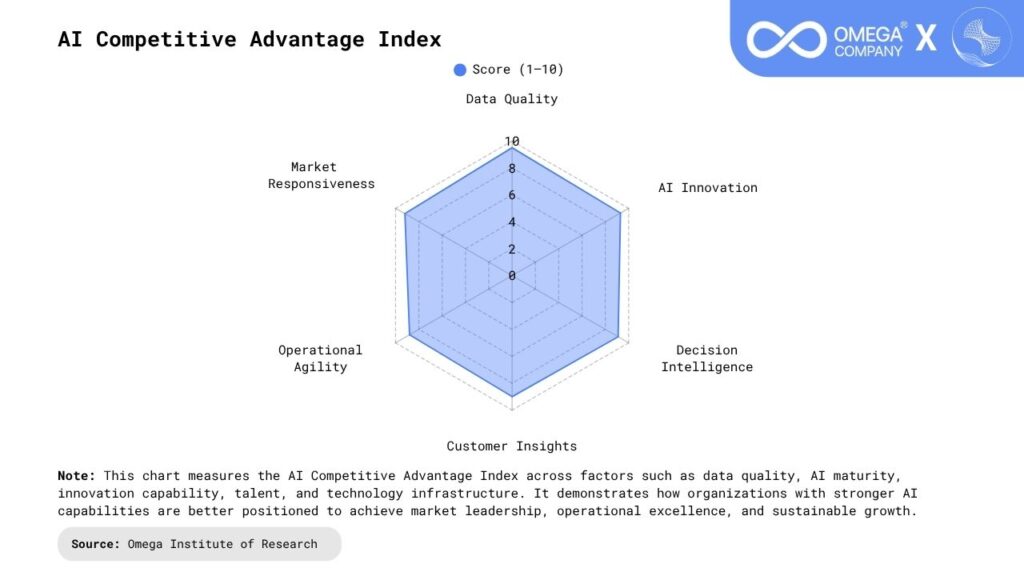
As AI technologies continue to evolve, competitive advantage will increasingly depend on how effectively organizations capture, govern, and apply proprietary data. Businesses that invest in scalable AI infrastructure, responsible data management, and continuous learning systems will be better equipped to adapt to changing market conditions and customer expectations. The organizations that treat data as a strategic asset, not merely a byproduct of operations will be best positioned to innovate faster, respond with greater precision, and sustain long-term market leadership. As emerging technologies such as autonomous AI agents, multimodal intelligence, and real-time analytics become mainstream, organizations with strong data foundations will accelerate innovation while creating experiences that competitors cannot easily replicate. In the years ahead, the combination of trusted data, ethical AI practices, and intelligent automation will become a defining factor in business resilience, enabling enterprises to unlock new growth opportunities, strengthen customer relationships, and maintain leadership in an increasingly AI-driven global economy.
Conclusion
Artificial intelligence has evolved beyond a productivity tool into a strategic business moat. While AI models are becoming widely available, proprietary data remains the defining factor that separates industry leaders from followers. Companies that continuously collect high-quality data, refine intelligent systems, and transform insights into action create a self-reinforcing cycle of innovation, efficiency, and customer value. In an increasingly data-driven economy, sustainable competitive advantage will belong to organizations that combine trusted data, advanced AI capabilities, and responsible governance to stay ahead of the competition. Organizations that make long-term investments in scalable AI ecosystems, secure data infrastructure, and continuous innovation will be better positioned to anticipate market shifts, improve decision-making, and unlock new growth opportunities. As AI becomes deeply embedded across industries, the ability to transform proprietary data into intelligent business outcomes will define future market leaders and establish a lasting foundation for resilience, differentiation, and long-term success.
- https://www.salesforce.com/blog/ai-moat/
- https://medium.com/generative-ai-revolution-ai-native-transformation/the-ai-moat-is-moving-and-most-enterprises-are-looking-in-the-wrong-place-6d487f1671b0
- https://www.sifars.com/en/blog/ai-as-a-competitive-moat-why-early-adopters-will-own-the-next-decade/
- https://thedataguy.pro/writing/2025/05/building-your-ai-data-moat/
Subscribe
Select topics and stay current with our latest insights
- Functions