

- Industries
Industries
- Functions
Functions
- Insights
Insights
- Careers
Careers
- About Us

AI-Augmented Consulting: How Technology Is Redefining Client Engagement







Artificial Intelligence (AI) is not just reshaping industries, it’s reinventing consulting. What was once a field defined solely by human expertise and intuition is now evolving into AI-augmented consulting, where data intelligence, automation, and predictive analytics amplify human judgment and creativity. This transformation is redefining how consultants work, how clients engage, and how strategic value is delivered, shifting the focus from manual analysis to insight-driven decision-making and proactive problem-solving. AI enables consultants to surface deeper insights, accelerate research, simulate business scenarios, and deliver more tailored, data-backed solutions at scale. As a result, consulting is moving from reactive advisory to continuous, real-time intelligence empowering firms to deliver faster outcomes, enhance precision, and create more impactful client partnerships in an increasingly competitive and technology-driven business landscape.
The Evolution of Consulting in the Age of AI
For decades, consulting success relied on human analysis long hours spent on research, spreadsheets, and interviews but as the pace of business accelerates and data volumes explode, this manual model can no longer keep up. AI bridges that gap by transforming massive, unstructured information into real-time, actionable insight, enabling consultants to uncover patterns and opportunities that traditional methods would miss. Consulting firms are shifting from reactive problem-solvers to proactive intelligence partners, using AI to anticipate market shifts, optimize decisions, and deliver results faster, smarter, and at scale. This evolution also elevates the consultant’s role from data processor to strategic advisor, freeing experts to focus on judgment, creativity, and high-value client interaction. With AI enhancing speed, accuracy, and foresight, consulting is entering a new era where innovation, predictive intelligence, and continuous value delivery become core competitive advantages.
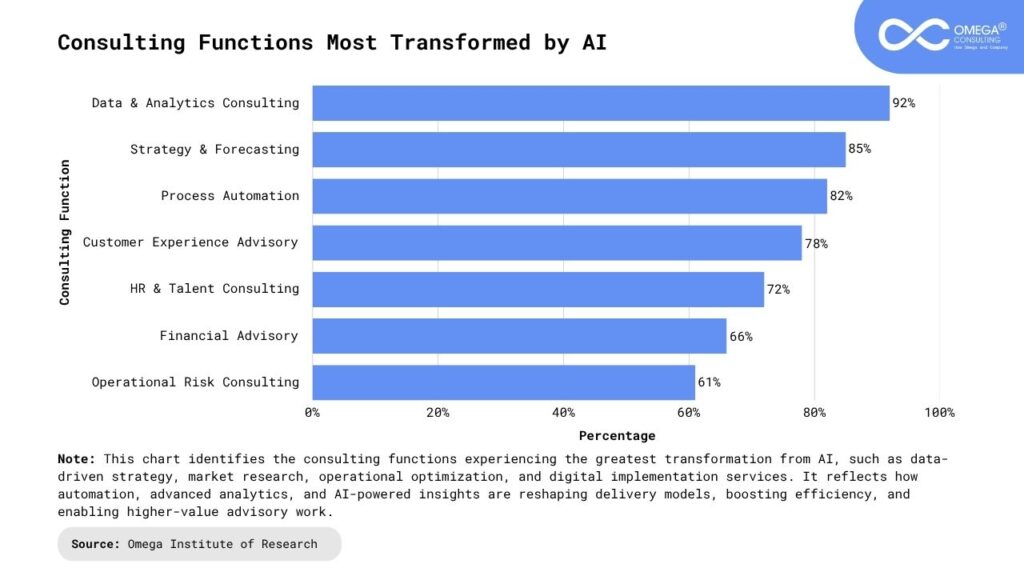
Key Ways AI Is Transforming Client Engagement
Data-Driven Decision Making: AI algorithms analyze millions of data points from internal metrics to global market signals uncovering hidden patterns that humans might miss. This empowers consultants to present evidence-based recommendations, increasing confidence and credibility in every client conversation. With intelligent forecasting tools, consultants can evaluate complex variables simultaneously and deliver sharper business insights in record time. This shift ensures leaders make decisions rooted in precision and real-time intelligence rather than intuition alone.
Hyper-Personalized Strategy Development: Clients no longer want one-size-fits-all strategies. AI enables deep personalization by modeling scenarios unique to each client’s business ecosystem. Whether it’s optimizing pricing models or predicting supply chain risks, consultants can deliver precision insights tailored to each client’s reality. AI engines also continuously refine models based on new data, ensuring strategies evolve as business conditions shift. This level of personalization creates a competitive edge and strengthens client satisfaction by aligning recommendations with real-world variables.
Real-Time Collaboration and Co-Creation: AI-powered dashboards, generative assistants, and virtual strategy labs make client engagements more interactive. Consultants and clients can now co-create solutions in real time, improving transparency and trust throughout the engagement cycle. Teams can rapidly test ideas, share insights, and iterate strategies together, shortening decision cycles and accelerating execution. This collaborative intelligence approach transforms the client–consultant dynamic into a true strategic partnership fueled by agility and shared insight.
Predictive and Prescriptive Insights: Beyond analyzing what happened, AI tells consultants what will happen next and how to act on it. Predictive analytics anticipates disruptions, while prescriptive AI recommends data-backed strategies to mitigate risks and capture new opportunities. This builds resilience into business planning and ensures clients stay ahead of market shifts rather than reacting to them. Armed with automated scenario planning tools, consultants can forecast outcomes, prioritize actions, and provide clients with a roadmap built for long-term success.
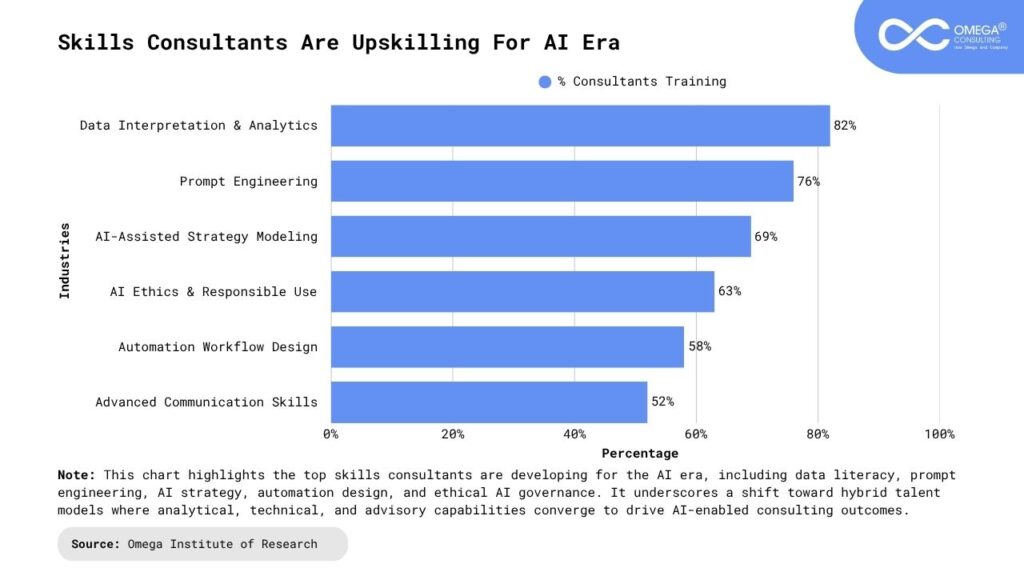
AI-Driven Value Delivery Models
AI isn’t just changing how consultants engage clients, it’s transforming what they deliver.
AI-Driven Value Delivery Models: AI isn’t just changing how consultants engage clients it’s transforming what they deliver, redefining traditional service boundaries and expanding strategic impact. With automation, machine learning, and data intelligence, consulting firms are evolving into always-on value engines rather than periodic advisors, driving measurable and ongoing business outcomes.
Outcome-Based Consulting: AI enables continuous performance tracking, allowing firms to measure outcomes in real time. This shifts consulting models from deliverables-based contracts to outcome-oriented partnerships, where value is quantified and shared transparently. By aligning incentives with client results, AI strengthens accountability and creates long-term collaboration rooted in measurable success. As performance data flows in continuously, consultants can refine strategies dynamically, ensuring projects remain aligned with evolving business goals.
Intelligent Knowledge Management: AI tools capture institutional knowledge and client insights automatically, ensuring continuity and accelerating onboarding for new projects. This creates a collective intelligence network, where insights grow stronger with each engagement. Consultants no longer start from scratch instead, they leverage a constantly evolving knowledge ecosystem powered by automation. This accelerates expertise development, strengthens best-practice transfer, and preserves strategic learning across teams and client portfolios.
Scalable Innovation Delivery: Generative AI can rapidly produce strategic documents, business model drafts, and scenario simulations helping firms scale innovation and ideation without increasing human workload. This empowers consultants to explore multiple strategic paths at once, validating opportunities faster and with greater analytical depth. As repetitive tasks are automated, firms can allocate more time to creativity, experimentation, and client collaboration, driving continuous innovation at a pace traditional models could never match.
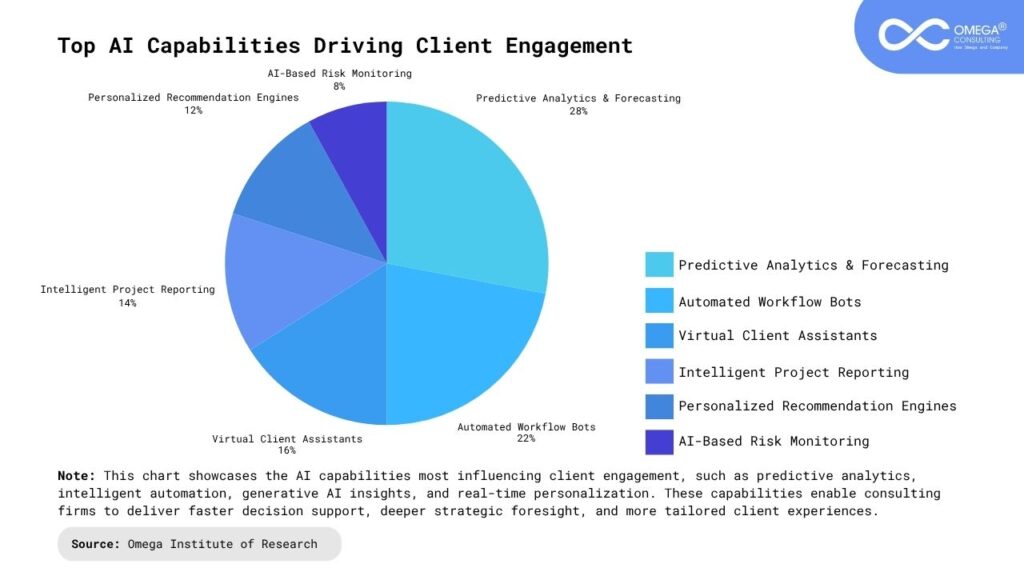
The Changing Nature of Client Relationships
AI is reshaping the consultant–client dynamic by replacing periodic updates and static final reports with continuous collaboration and insight exchange. Instead of waiting for scheduled presentations, clients now expect instant access to intelligence and rapid adjustments to evolving business conditions and AI supports this shift with automated dashboards, sentiment analysis, intelligent assistants, and adaptive recommendations that respond in real time. This creates a seamless, always-on advisory model where consultants stay embedded in client operations, guiding decisions as they unfold rather than reviewing outcomes after the fact. The result? Deeper, more strategic partnerships, heightened transparency, and long-term engagement that continues well beyond the initial project, enabling consultants to deliver sustained value, enhance trust, and remain indispensable as ongoing transformation partners in a rapidly evolving business landscape.
Emerging Technologies Powering AI-Augmented Consulting
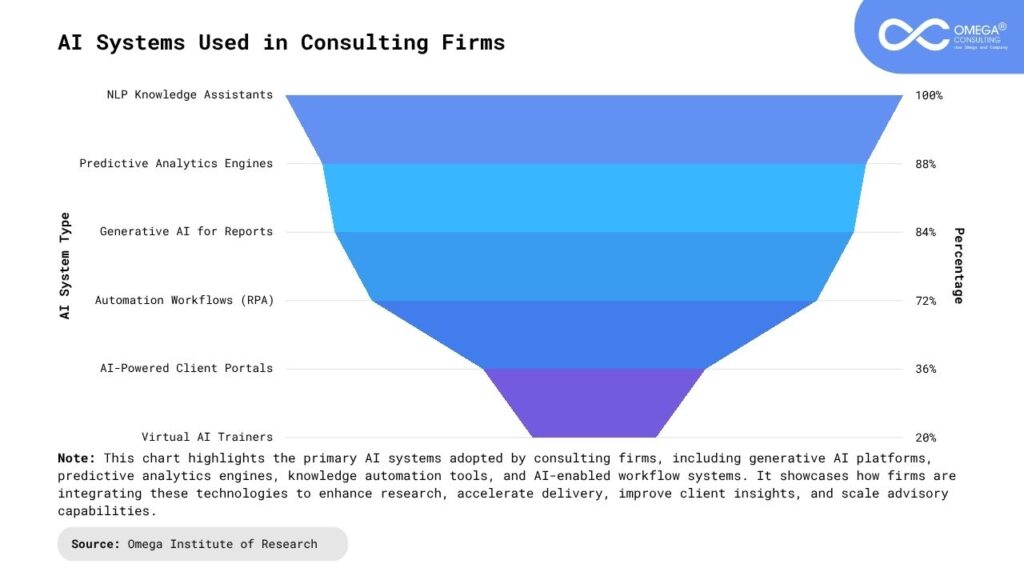
The consulting toolkit now includes a suite of AI technologies that extend far beyond automation:
Generative AI: Drafts reports, presentations, and proposals in minutes freeing consultants from time-consuming documentation tasks. Beyond content creation, generative engines can design business frameworks, ideate transformation roadmaps, and prototype solutions with remarkable precision. They also support multilingual delivery, enabling firms to scale globally without sacrificing speed or consistency. Ultimately, generative AI accelerates strategy cycles and empowers consultants to focus deeply on insight, creativity, and executive decision-making.
Natural Language Processing (NLP): Extracts insights from interviews, call transcripts, and client feedback, transforming unstructured communication into strategic intelligence. NLP systems can detect client sentiment, identify emerging issues, and even summarize board-level discussions instantly. This enhances qualitative analysis and ensures consultants never miss subtle signals that influence business decisions. With continuous learning, NLP tools refine models over time, improving accuracy and context understanding with every engagement.
Machine Learning (ML): Detects patterns and trends across financial, operational, and market data, uncovering correlations invisible to human analysis. ML-powered models can benchmark performance, optimize processes, and identify hidden growth levers faster and more accurately than manual methods. By continuously ingesting new data, ML systems evolve alongside clients’ business environments, making insights more dynamic, contextual, and predictive. This transforms consulting into an evidence-based, data-driven discipline grounded in measurable intelligence.
Predictive Analytics: Forecasts outcomes and models future scenarios, enabling consultants to help clients navigate uncertainty with confidence. From revenue forecasting to risks and supply chain disruptions, predictive tools highlight emerging opportunities and threats before they materialize. These insights enable proactive planning, strategic investments, and resilient operating models. With automated scenario simulations, consultants can test decisions in real time, strengthening strategic foresight and long-term value delivery.
Conversational AI & Chatbots: Enhance client communication and support by providing on-demand access to insights, documents, and recommendations. These systems act as virtual consulting assistants, answering questions, summarizing reports, and escalating critical issues instantly. They reduce response times, improve client satisfaction, and ensure executives always have strategic guidance at their fingertips. As conversational AI grows more intelligent, it helps consultants scale personal attention and maintain high-touch engagement at enterprise scale.
Knowledge Graphs: Connect insights across projects, industries, and data sources to accelerate solution design and problem-solving. They map relationships between people, processes, technologies, and outcomes, revealing cross-domain learning and strategic parallels. This shared intelligence ecosystem enables consultants to apply proven patterns across clients and unlock innovation faster. With expanding datasets and automated knowledge enrichment, knowledge graphs become long-term intellectual capital engines that strengthen organizational expertise and client value over time.
The Future of AI-Augmented Consulting
Consulting is evolving into a seamless partnership between human expertise and machine intelligence, transforming advisors into always-on strategic partners. AI will empower consultants to continuously monitor client ecosystems, track performance shifts, and surface emerging risks and opportunities in real time shifting engagements from episodic support to continuous guidance. Consultants will deliver adaptive, real-time insights using predictive modeling and automated decision-support systems, ensuring clients stay ahead of disruption and make informed choices at speed. They will also co-create future-ready business models with clients, supported by digital simulations and AI-driven innovation frameworks that help design resilient, scalable strategies. Ultimately, firms that master human–AI collaboration will lead the industry, driving faster transformation cycles and delivering sharper, more measurable value in an increasingly dynamic business environment.
Conclusion
AI-augmented consulting is more than a technological trend; it’s a strategic reinvention of the consulting profession, reshaping how value is created, delivered, and sustained. By merging human insight, ethical intelligence, and AI-driven data precision, consulting firms can deliver higher value, faster outcomes, and deeper, more trusted relationships than ever before. This shift transforms consultants from analysts into strategic co-pilots, empowered to support clients continuously with real-time intelligence, adaptive strategies, and future-focused innovation. In this new era, the question isn’t whether consultants will use AI but how intelligently they will use it to redefine the client experience, elevate decision-making, and build organizations that are more resilient, agile, and competitive in a rapidly evolving business world.
- https://hbr.org/2025/09/ai-is-changing-the-structure-of-consulting-firms
- https://elevationlearning.co.uk/article/how-ai-is-redefining-consulting-teamwork/
- https://www.finextra.com/blogposting/25723/redefining-client-engagement-the-ai-revolution
- https://medium.com/predict/how-ai-is-impacting-the-consulting-industry-a-deep-dive-5765e7fa8fba
- https://www.contents.com/magazine/artificial-intelligence/revolutionising-client-engagement-the-ai-driven-transformation-in-consulting-firms/
Subscribe
Select topics and stay current with our latest insights
- Functions