

- Industries
Industries
- Functions
Functions
- Insights
Insights
- Careers
Careers
- About Us

AI-Driven Reforestation: Drones Planting Trees Across Continents







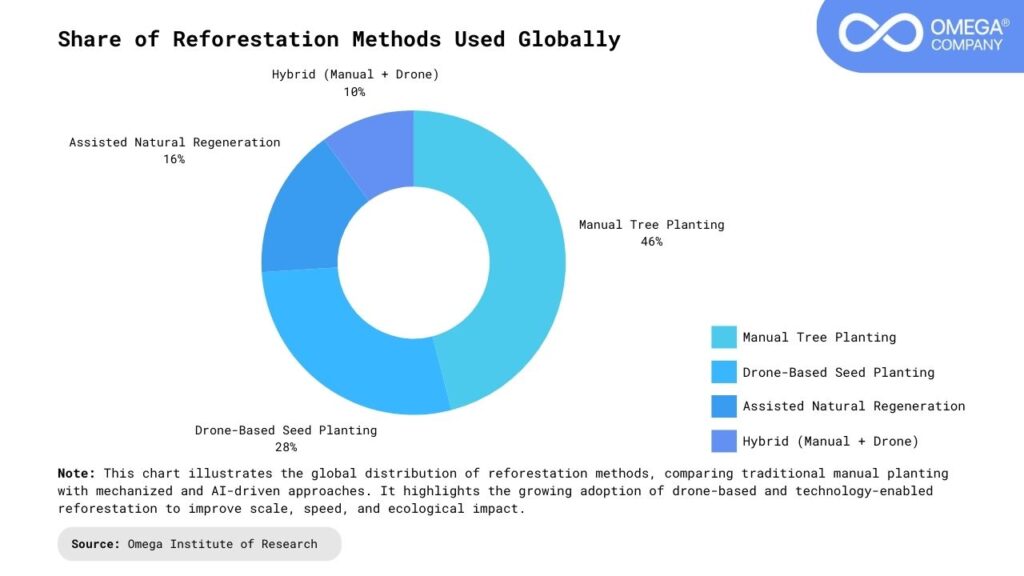
Deforestation remains one of the most urgent environmental challenges of our time, with millions of hectares of forest lost each year to urban expansion, agriculture, wildfires, and climate-driven disasters. While traditional reforestation methods such as manual planting and nursery-grown seedlings are essential, they are often slow, labor-intensive, and difficult to scale. AI-driven reforestation marks a powerful shift bringing together artificial intelligence, drones, satellite imagery, and advanced data analytics to restore forests faster and more intelligently than ever before. What once took decades can now be achieved in months, as autonomous drones plant trees at unprecedented scale across degraded landscapes in Africa, wildfire-affected regions of North America, and deforested areas throughout Asia and South America.
The Global Reforestation Challenge
Conventional reforestation faces several structural limitations:
High Labor Dependency: Manual tree planting requires large workforces, extensive training, and long operational timelines. In many regions, labor shortages and rising wages significantly increase project costs. Seasonal availability of workers further slows planting cycles and disrupts long-term restoration planning.
Limited Terrain Accessibility: Many degraded areas are located in regions that are unsafe or inaccessible for human planters. Steep slopes, waterlogged soils, and fire-damaged land make transportation and planting physically challenging. These barriers often leave vast high-impact areas unrestored for years.
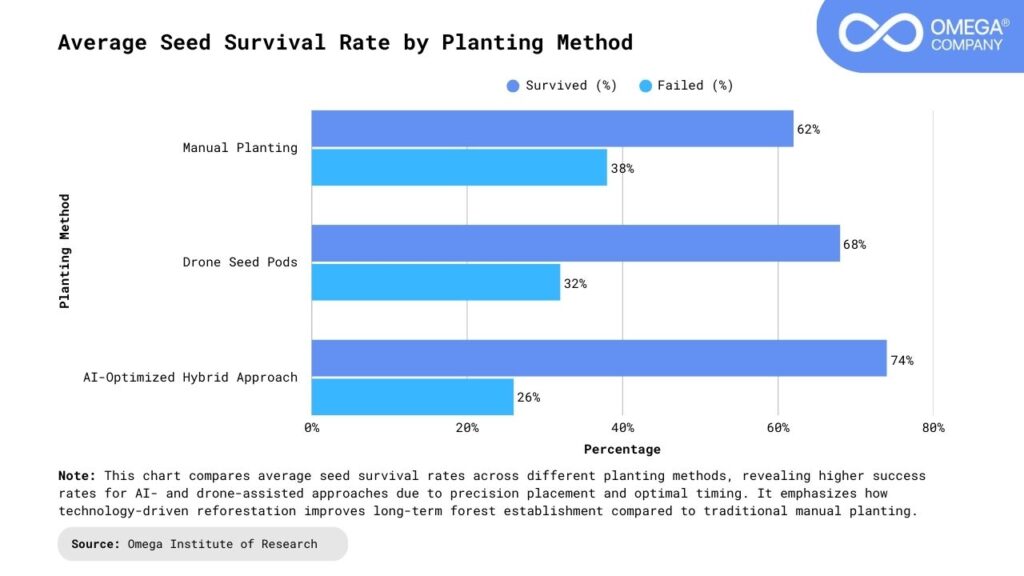
Low Seedling Survival Rates: Without precise environmental data, seedlings are often planted in unsuitable soils or climates. Mismatched species struggle to adapt, leading to high mortality rates and wasted resources. Changing weather patterns further reduce survival when planting decisions are based on outdated assumptions.
Slow Scaling and Deployment: Traditional planting methods progress gradually, sometimes taking years to cover limited areas. This slow pace cannot keep up with the speed of deforestation and climate damage. As a result, restoration efforts fall short of global reforestation targets despite significant investment.
How AI-Driven Reforestation Works
AI-driven reforestation is not just about drones dropping seeds. It is an end-to-end intelligent ecosystem that combines data, automation, and environmental science.
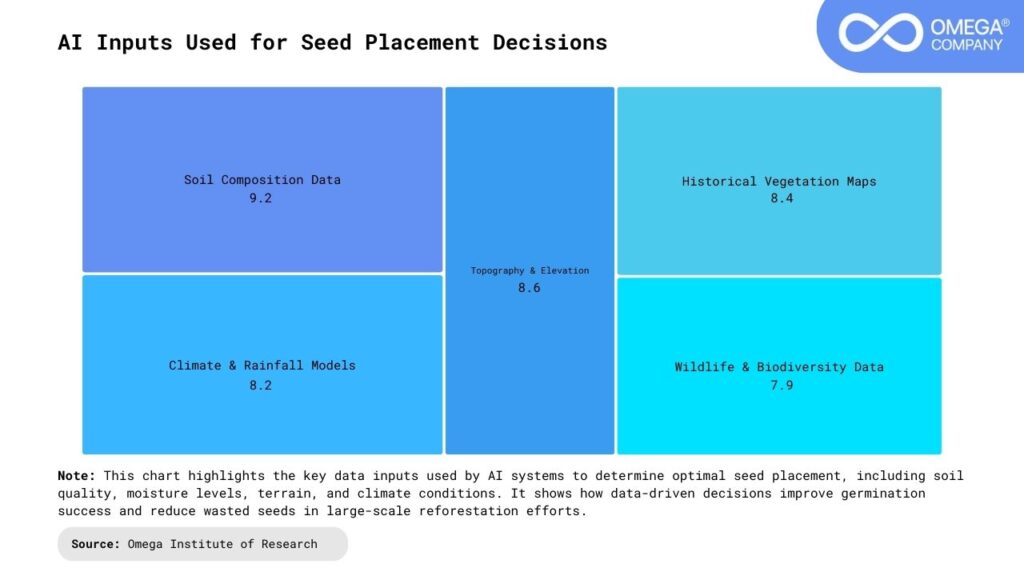
Landscape Analysis Using AI and Satellites: Before planting begins, AI models analyze vast environmental datasets to determine the most suitable locations for reforestation. Satellite and LiDAR imagery provide insights into terrain, slope stability, and land degradation patterns. Soil composition, moisture levels, and historical climate data help predict planting success under future conditions. Native species and local biodiversity are also considered to ensure ecological balance and long-term resilience.
Intelligent Seed Pod Engineering: Instead of fragile seedlings, AI-driven systems deploy biodegradable seed pods designed for higher survival rates. Each pod contains the right mix of nutrients, protective coatings, beneficial microbes, and moisture-retaining materials. AI algorithms match seed species to specific soil depths, spacing, and environmental conditions. This precision significantly improves germination success compared to traditional manual planting methods.
Autonomous Drone Deployment at Scale: Reforestation drones use GPS, terrain-mapping sensors, and AI-powered flight optimization to plant seeds with extreme accuracy. High-speed dispersal mechanisms allow a single drone to plant tens of thousands of seeds in a single day. These drones can access mountains, wetlands, and post-fire landscapes that are unsafe for human crews. When deployed in coordinated swarms, they can restore vast areas across regions and continents.
Continuous Monitoring and Adaptive Learning: After planting, AI systems continue to monitor growth using satellite and drone imagery. They detect early signs of disease, drought stress, or soil degradation before widespread damage occurs. Insights from real-world outcomes are fed back into AI models to refine future planting strategies. This creates a self-improving reforestation loop where each deployment becomes smarter and more effective than the last.
Drones Planting Trees Across Continents: Real-World Impact
Africa: Combating Desertification: In the Sahel region, AI-driven drones are helping restore degraded land by planting drought-resistant native species. These initiatives support food security, prevent soil erosion, and revive ecosystems threatened by desert expansion. Beyond ecological benefits, local communities are increasingly engaged in monitoring and maintaining reforested areas, creating jobs and fostering environmental stewardship. Over time, these efforts contribute to reversing the cycle of land degradation and improving climate resilience across the region.
North America: Healing Wildfire-Scarred Forests: Post-wildfire recovery in the U.S. and Canada is increasingly relying on drone-based planting. AI models assess burn severity and soil damage, enabling rapid reforestation that stabilizes landscapes and reduces future fire risks. Drones can also reintroduce native species that promote biodiversity and wildlife recovery. Combined with ongoing monitoring, these efforts accelerate ecosystem restoration, helping forests recover faster than traditional methods allow.
South America: Protecting the Amazon and Beyond: In deforested areas of the Amazon basin, drones assist in restoring buffer zones and degraded farmland. AI ensures species diversity, helping rebuild complex ecosystems rather than monoculture forests. Reforestation also strengthens local watersheds, supports indigenous communities, and helps mitigate climate change by sequestering carbon. Over time, these projects aim to create self-sustaining forests that thrive without constant human intervention.
Asia-Pacific: Restoring Mangroves and Coastal Forests: AI-powered drones are also used to replant mangroves critical for coastal protection and carbon sequestration. Precision planting ensures seedlings survive tidal fluctuations and saline conditions. These efforts enhance coastal resilience against storms and erosion while supporting marine biodiversity. Additionally, community-led monitoring programs help maintain these forests, creating long-term environmental and social benefits across the region.
Environmental and Climate Benefits
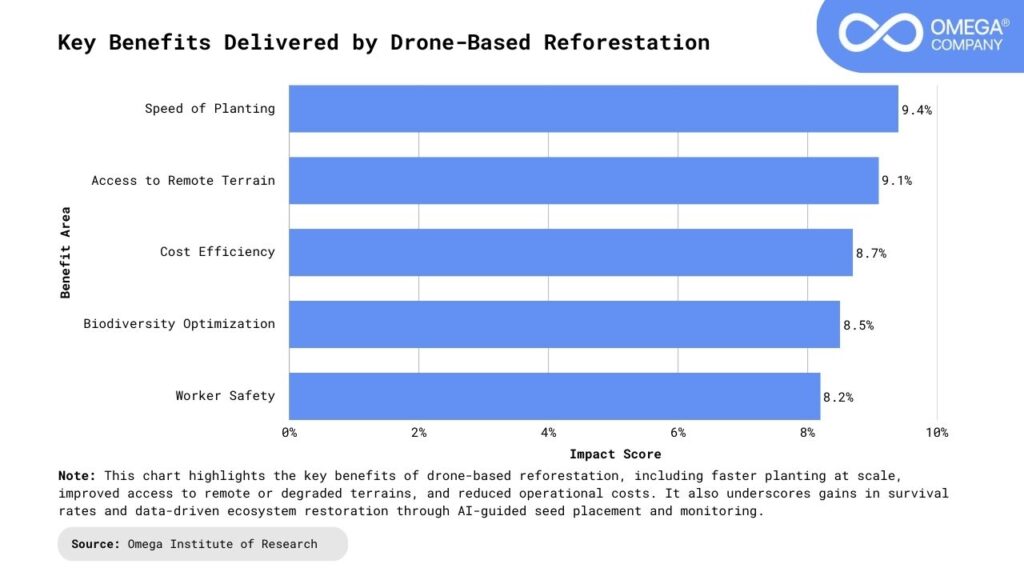
Accelerated Carbon Sequestration: AI-driven reforestation accelerates the creation of carbon sinks, directly contributing to net-zero and climate-positive goals. Faster tree growth and higher survival rates mean that more carbon is captured in less time, helping mitigate global warming. Over large scales, these efforts can offset significant emissions from industry and agriculture, making a measurable impact on national and global climate targets.
Biodiversity Restoration: By prioritizing native species and ecological balance, AI systems support wildlife habitats, pollinators, and soil regeneration. Restored forests reconnect fragmented ecosystems, allowing species to migrate and thrive naturally. This approach also helps prevent invasive species from dominating, ensuring long-term ecological stability and a resilient food web.
Cost and Resource Efficiency: Automated planting reduces labor costs by up to 80%, while increasing planting density and survival rates. Precision deployment minimizes waste of seeds, water, and fertilizers, optimizing every resource used. Over time, this efficiency allows larger areas to be restored with the same investment, making reforestation projects financially viable at continental scales.
Climate Resilience: AI-selected species improve forest resilience to droughts, pests, and extreme weather events. By analyzing soil, climate, and ecosystem conditions, AI ensures the right species are planted in the right locations. This adaptive approach creates forests that are better equipped to survive and thrive under future climate uncertainties, reducing restoration risks and ensuring long-term success.
Challenges and Ethical Considerations
While promising, AI-driven reforestation is not without challenges:
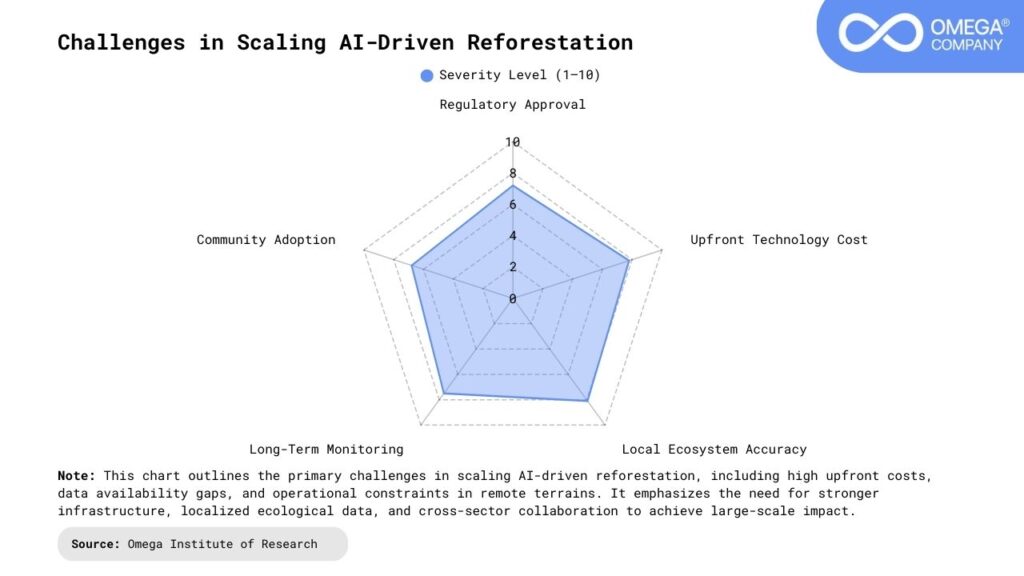
Data Bias Leading to Poor Species Selection: AI models rely on historical and environmental data, which can sometimes be incomplete or skewed. Poorly calibrated algorithms may select species unsuitable for local conditions, reducing survival rates and ecosystem health. Continuous validation with on-the-ground ecological expertise is essential to prevent unintended consequences and ensure accurate decision-making.
Over-Reliance on Technology Without Local Ecological Knowledge: While AI provides powerful insights, ignoring traditional ecological knowledge can lead to misguided interventions. Local communities often understand seasonal variations, soil nuances, and species interactions that data alone cannot capture. Integrating human expertise with AI ensures restoration efforts are culturally sensitive, ecologically sound, and socially inclusive.
Regulatory Hurdles for Drone Operations: Drone-based planting often requires navigating complex aviation regulations, permits, and safety standards. Restrictions on flight altitude, airspace, or drone weight can slow operations and limit coverage areas. Coordinating with local authorities and aligning with environmental laws is critical to scale AI-driven reforestation effectively and legally.
Risk of Monoculture Planting if Biodiversity is Ignored: Focusing solely on fast-growing or high-carbon species can create monocultures that are vulnerable to disease, pests, or climate extremes. Neglecting biodiversity undermines ecosystem stability and long-term resilience. Ethical reforestation requires deliberate planning to maintain species diversity, support wildlife, and rebuild balanced, self-sustaining forests.
The Future of AI-Driven Reforestation
Looking ahead, AI-driven reforestation is set to become even more intelligent and transformative. Advanced AI agents will coordinate global restoration strategies, optimizing planting efforts across continents and ecosystems. Real-time climate modeling will guide species selection and adaptation, ensuring forests thrive under changing environmental conditions. Integration with carbon credit markets and ESG reporting will create transparent, measurable impacts for businesses and governments alike. Ultimately, fully autonomous reforestation pipelines from site analysis to growth monitoring and maturity tracking will enable scalable, efficient, and resilient forest restoration like never before. As AI systems continue to learn and adapt from each deployment, reforestation efforts will become progressively smarter, driving global environmental recovery at unprecedented speed and precision.
Conclusion
AI-driven reforestation represents a transformative shift in how humanity restores damaged ecosystems, combining artificial intelligence, drones, and ecological science to achieve scale and speed once unimaginable. As autonomous drones plant trees across continents, they exemplify a new era in which technology works in harmony with nature rather than replacing it. By enabling adaptive, data-driven restoration, AI not only accelerates forest recovery but also strengthens biodiversity, enhances climate resilience, and supports global environmental goals. These innovations create opportunities for communities, governments, and businesses to collaborate on large-scale restoration projects. The future of reforestation is autonomous, intelligent, and profoundly hopeful, offering a tangible path toward repairing our planet and securing a sustainable legacy for generations to come.
- https://www.forbes.com/sites/jamesconca/2020/09/30/drones-can-reforest-the-planet-faster-than-humans-can/
- https://www.evertreen.com/news/tree-planting-drones-revolutionizing-reforestation-and-ecosystem-restoration
- https://www.weforum.org/stories/2019/12/technology-artificial-intelligence-ai-drone-trees-deforestation/
- https://advexure.com/blogs/news/reforestation-by-air-how-seed-planting-drones-are-restoring-forests?srsltid=AfmBOooI6YfeoRuaKT9aapOS87SjXt_sfEd2bimJ6eh7bmnhPDl-6z-r
- https://tecscience.tec.mx/en/tech/drones-tech-in-reforestation/
Subscribe
Select topics and stay current with our latest insights
- Functions