

- Industries
Industries
- Functions
Functions
- Insights
Insights
- Careers
Careers
- About Us

AI in Accounting and Finance: Will AI Replace Accountants or Make Them More Valuable?







Artificial intelligence is transforming how businesses manage finances, analyse financial performance, and make critical decisions. From automated bookkeeping and invoice processing to fraud detection and financial forecasting, AI is becoming an essential part of modern accounting and finance operations. Tasks that once required hours of manual effort can now be completed in minutes using intelligent software and automation tools. This transformation raises an important question for businesses and finance professionals: Will AI eventually replace accountants, or will it make their expertise more valuable? While AI can automate repetitive processes and improve accuracy, accounting involves far more than calculations and data entry. Financial judgement, regulatory knowledge, strategic planning, ethical responsibility, and professional advice remain essential to effective financial management. The future of accounting will therefore depend not on humans competing with AI, but on how effectively they combine human expertise with intelligent technology.
How AI Is Transforming Accounting and Finance
Traditional accounting has relied heavily on manual data entry, transaction recording, reconciliations, financial reporting, and compliance checks, requiring organisations to invest considerable time in repetitive financial activities. AI is taking automation further through machine learning, natural language processing, predictive analytics, and intelligent document processing, enabling financial systems to recognize patterns, interpret information, identify unusual transactions, and generate data-driven insights. AI-powered accounting platforms can now automatically categorise expenses, extract information from invoices, match transactions, and detect discrepancies in financial records, helping finance teams reduce administrative workloads, improve accuracy, and save valuable time. As these technologies become more advanced, accounting is gradually shifting from a transaction-focused function toward a more analytical and strategic business role, allowing finance professionals to concentrate on business performance, financial planning, and better decision-making.
Key Applications of AI in Accounting and Finance
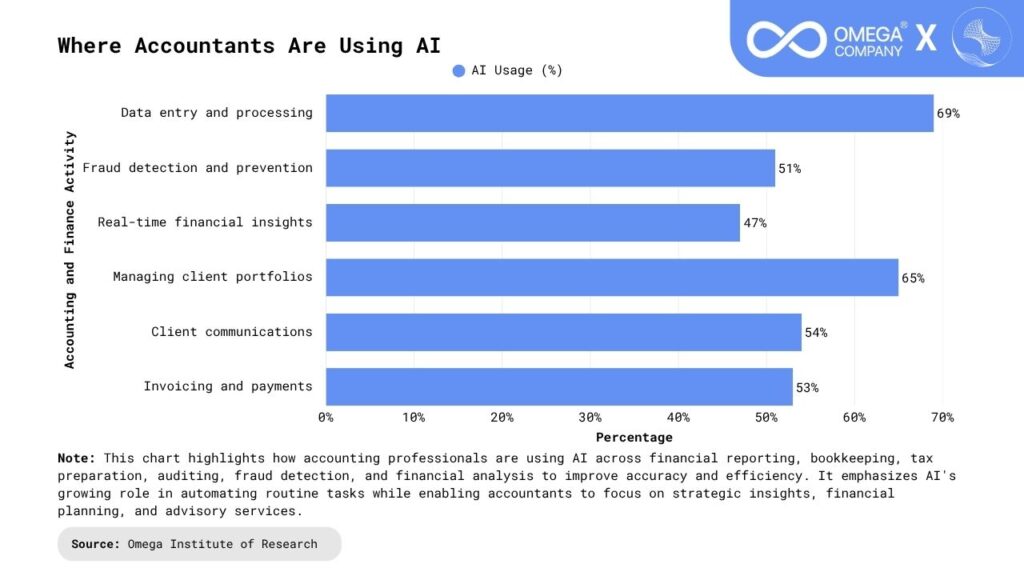
Automated Bookkeeping and Data Entry: Bookkeeping is one of the most time-consuming responsibilities in traditional accounting, but AI-powered systems can extract information from invoices, receipts, bank statements, and financial documents and automatically organise transactions into appropriate categories. This reduces repetitive manual work, minimises data-entry errors, and enables accounting teams to process larger volumes of financial information more efficiently, allowing accountants to spend less time recording transactions and more time reviewing financial accuracy and supporting business operations.
AI-Powered Financial Reporting: Preparing financial reports requires collecting, organising, and analysing information from multiple sources, and AI can simplify this process by helping generate income statements, balance sheets, cash flow summaries, and management reports. It can also identify unusual changes in expenses, revenue patterns, and financial performance, helping businesses move beyond historical reporting to understand what financial data indicates, recognise emerging trends, and identify areas where management attention may be required.
Fraud Detection and Risk Management: Financial fraud can expose businesses to significant financial losses, regulatory penalties, and reputational damage, making early detection essential. AI can analyse large volumes of transactions to identify unusual spending patterns, suspicious payments, duplicate invoices, and activities that deviate from normal financial behaviour, while machine learning models continuously improve their ability to recognise potential threats as new data becomes available. However, suspicious activities still require investigation and professional judgement, as AI can highlight potential risks but human oversight remains essential before making financial or compliance decisions.
Tax Preparation and Regulatory Compliance: Tax preparation involves reviewing financial records, calculating liabilities, interpreting regulations, and meeting filing deadlines, and AI-powered platforms can simplify these responsibilities by organising tax documents, identifying relevant information, checking calculations, and supporting tax research. For businesses operating across multiple regions, AI can also help monitor regulatory updates and organise compliance-related information. In India, these capabilities can support accounting teams working with GST documentation, invoice reconciliation, tax records, and financial compliance, although tax interpretations and final filings should always be reviewed by qualified professionals.
Intelligent Auditing and Reconciliation: Auditing requires accuracy, consistency, and detailed examination of financial records, and AI can support this process by comparing transactions, identifying mismatches, reviewing supporting documents, and highlighting unusual entries that require further investigation. It can also help auditors examine larger datasets rather than relying exclusively on traditional sampling methods, making audit preparation more efficient while allowing professionals to focus on internal controls, material risks, evidence evaluation, and audit conclusions.
Will AI Replace Accountants?
The concern that AI could replace accountants is understandable, as many traditional accounting responsibilities involve repetitive processes that software can increasingly perform. However, accounting goes beyond entering numbers or generating financial statements; it requires interpreting financial information, evaluating risks, applying professional standards, and advising decision-makers. According to Thomson Reuters’ 2026 Future of Professionals Report, 81% of tax and audit firm professionals regularly use AI in their day-to-day workflows, highlighting how AI is transforming professional responsibilities rather than eliminating the need for expertise. The more realistic possibility is that certain accounting tasks will become automated while accountants take on more analytical and strategic responsibilities. For example, AI may prepare financial reports or identify suspicious transactions, but accountants must verify the information, investigate potential issues, and advise management on the appropriate actions. Ultimately, AI may replace parts of an accountant’s workflow, but replacing the knowledge, experience, critical thinking, and strategic value of a qualified professional remains a much greater challenge.
How AI Will Make Accountants More Valuable
More Time for Strategic Financial Advice: Accountants traditionally spend considerable time preparing reports, maintaining records, and completing administrative responsibilities. With AI handling more of these activities, professionals can focus on helping business owners understand financial performance, evaluate investment opportunities, and identify ways to improve profitability. This allows their role to evolve from recording financial history to influencing future business decisions through strategic financial advice.
Stronger Business Decision-Making: Financial information becomes valuable when it helps organisations make better decisions. Accountants who understand both financial data and business strategy can use AI-generated insights to explain cost structures, evaluate profit margins, assess financial risks, and recommend operational improvements. This positions finance professionals as valuable contributors to leadership discussions rather than simply providers of financial reports.
Improved Client Relationships: For accounting firms, AI can reduce the time spent on repetitive client-related activities, creating more opportunities for meaningful communication and personalised support. Accountants can provide financial guidance, explain tax implications, support business planning, and help clients understand their financial position. As automated services become more accessible, professional trust, communication, and advisory expertise can become important competitive advantages.
Greater Focus on Risk and Governance: AI introduces new financial and operational risks, including inaccurate outputs, data privacy concerns, algorithmic bias, and unauthorised access to sensitive information. Accountants with expertise in internal controls, compliance, auditing, and risk management can help organisations establish safeguards around AI-driven financial processes. This creates new opportunities for finance professionals to contribute to technology governance, regulatory compliance, and financial accountability.
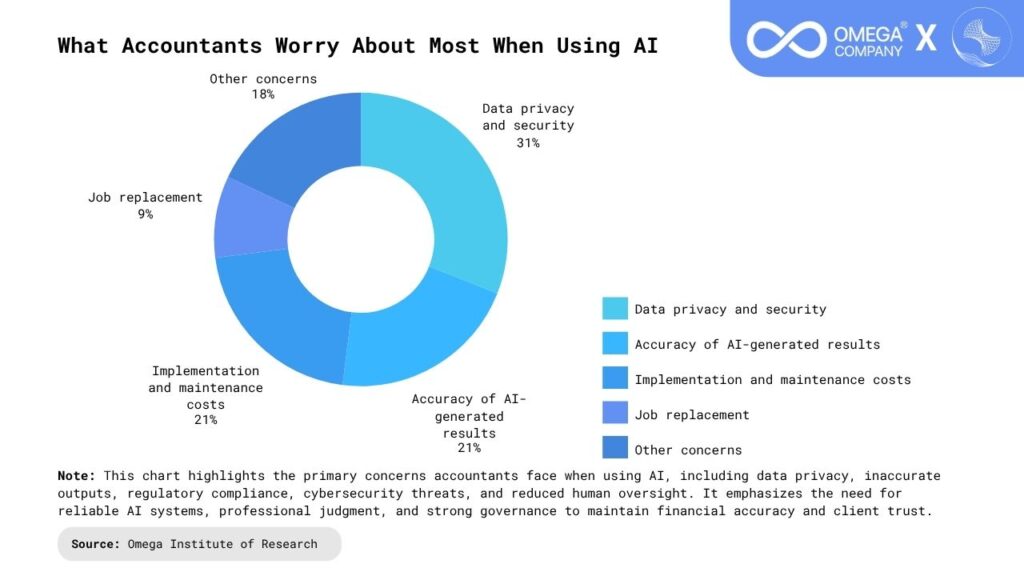
Higher Productivity and Professional Capacity: AI can help accountants complete routine assignments faster, organise information more effectively, and manage larger workloads. Instead of spending hours reviewing individual documents, professionals can use AI to summarise financial information, identify discrepancies, and highlight areas requiring attention. This improves overall productivity while allowing accounting teams to dedicate more time to complex assignments, professional analysis, and higher-value financial services.
The Biggest Challenges of Using AI in Accounting and Finance
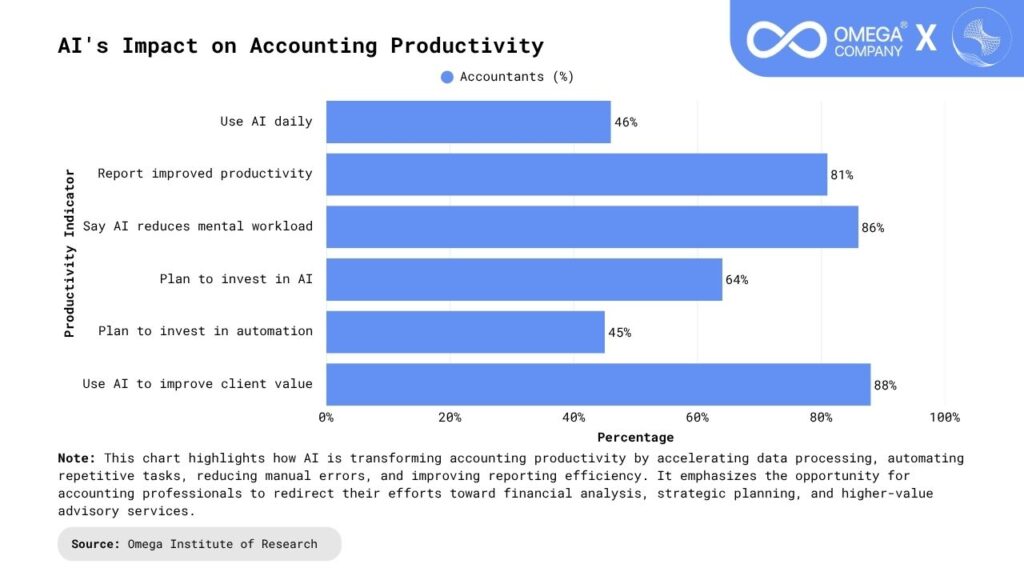
Data Privacy and Financial Security: Accounting systems contain confidential information, including employee salaries, bank details, tax records, customer information, and business transactions. Using AI tools without appropriate security measures can expose sensitive financial data to unauthorised access or potential breaches. Organisations must therefore establish clear data-access policies, strong encryption standards, and approved technology practices to protect financial information and maintain client confidentiality.
Inaccurate Information and AI Hallucinations: AI systems can generate incorrect calculations, misinterpret financial documents, or provide inaccurate explanations with confidence, creating potential risks for businesses. These errors can affect financial reporting, tax preparation, and business decisions if professionals rely on automated outputs without proper verification. Human review, reliable source documentation, and effective validation processes remain essential to maintaining financial accuracy and accountability.
Regulatory and Compliance Risks: Accounting and taxation are governed by changing laws, reporting standards, and professional requirements, making regulatory compliance a significant challenge for AI-powered financial systems. AI tools may not always reflect the latest regulatory developments or correctly interpret complex financial situations, potentially leading to compliance errors. Businesses must ensure that qualified professionals review AI-generated recommendations and verify that final financial decisions comply with applicable regulations.
Job Displacement and Changing Entry-Level Roles: One of the biggest concerns surrounding AI is its potential impact on traditional accounting jobs, particularly positions involving data entry, basic bookkeeping, document processing, and routine reconciliations that are increasingly becoming automated. Thomson Reuters’ 2026 research indicates that 46% of professionals in tax and audit firms expect entry-level roles to decrease over the next two to three years, reflecting industry expectations rather than confirmed employment outcomes. As a result, accounting firms may need to rethink how they train junior professionals and create opportunities to develop essential technical, analytical, and problem-solving skills.
The Future of Accounting: Human Expertise Meets Artificial Intelligence
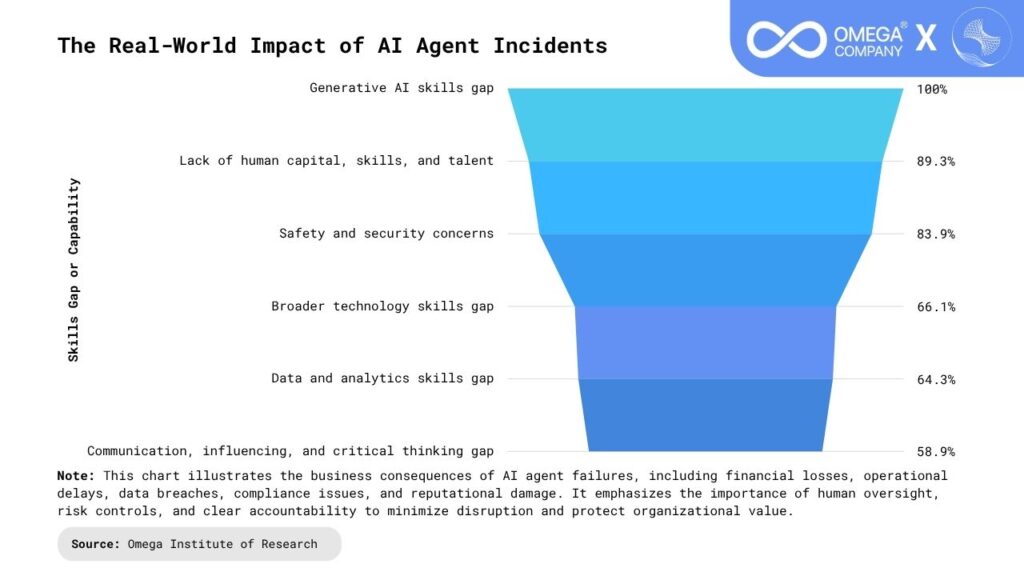
The future of accounting will be shaped by collaboration between human professionals and intelligent technologies. As AI capabilities continue to advance, accounting systems are likely to become more autonomous, handling complex workflows and supporting financial decisions with real-time insights. One emerging development is agentic AI, which can perform multi-step activities with limited human intervention, potentially coordinating invoice processing, reconciling transactions, preparing financial summaries, and identifying compliance issues. However, greater automation will also increase the importance of accountability, transparency, and professional oversight, creating demand for accountants who understand both financial principles and the impact of automated systems on business operations. For accounting firms, this transformation presents opportunities to develop new services, improve client experiences, and deliver continuous financial insights rather than relying entirely on periodic reporting. Research from CPA.com also highlights the profession’s transition toward AI-enabled workflows, including intelligent audit assistance, automated processes, and the integration of generative AI into professional services.
Conclusion
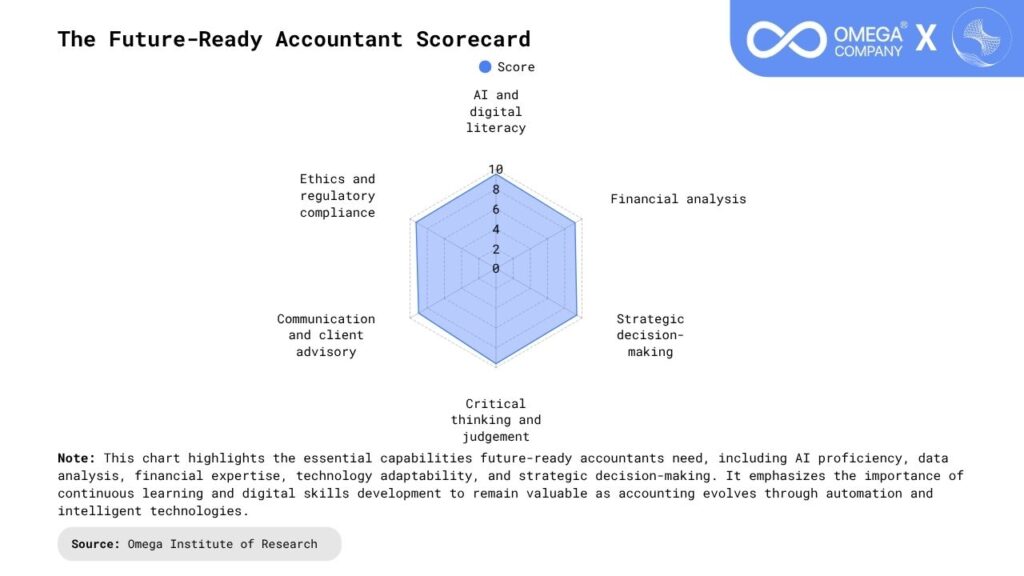
Artificial intelligence is transforming accounting and finance by automating repetitive activities, improving financial analysis, strengthening fraud detection, and accelerating reporting processes. Although these developments may reduce the demand for certain traditional accounting tasks, they also create opportunities for professionals to take on more strategic and advisory responsibilities. The real challenge for accountants is not competing with AI but learning how to use it effectively. Businesses will continue to need professionals who can interpret financial information, exercise independent judgement, manage risks, ensure compliance, and guide important financial decisions. For accounting firms and finance leaders, embracing AI is becoming essential to remaining competitive, while individual professionals must develop AI literacy, analytical capabilities, and business advisory skills. Ultimately, AI may become the driving force behind modern accounting, but human expertise will remain essential for turning financial information into meaningful business decisions. The future will belong to professionals who can effectively combine technological capabilities with human judgement and experience.
- https://www.dualentry.com/blog/will-ai-replace-accountants
- https://digits.com/blog/will-ai-replace-accountants/
- https://www.gsb.stanford.edu/insights/ai-reshaping-accounting-jobs-doing-boring-stuff
- https://www.learnsignal.com/blog/will-ai-replace-accountants/
- https://www.becker.com/blog/career/can-ai-replace-accountants-future-proofing-your-career
Subscribe
Select topics and stay current with our latest insights
- Functions