

- Industries
Industries
- Functions
Functions
- Insights
Insights
- Careers
Careers
- About Us

AI-Powered Creativity Tools for Art and Music







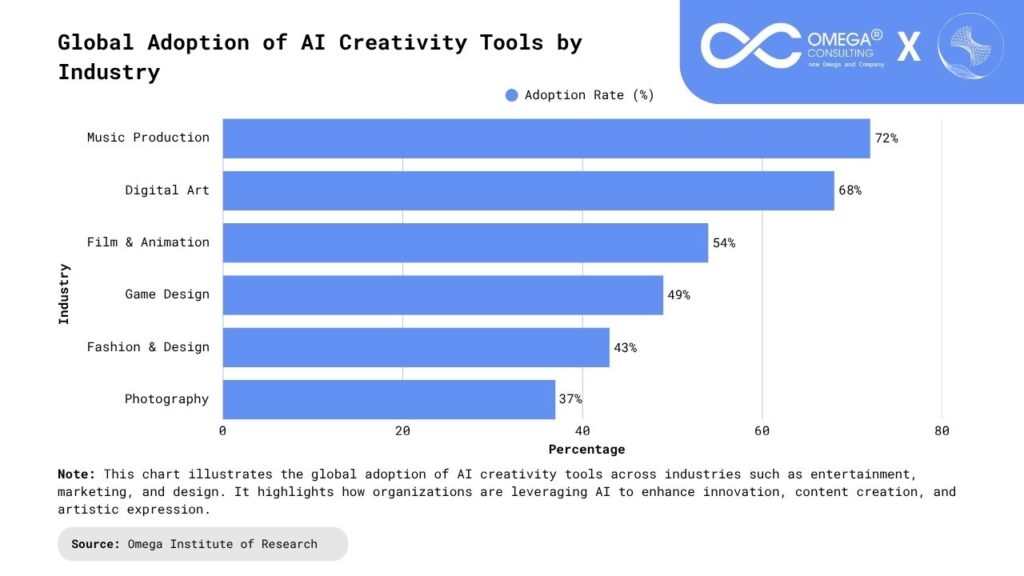
Artificial Intelligence (AI) has evolved far beyond analytics and automation; it has entered the creative realm, redefining how art and music are imagined, produced, and experienced. Across the globe, AI-powered creativity tools are empowering artists, musicians, and designers to push the boundaries of innovation, blending human emotion with machine precision. From generating symphonies to painting masterpieces, AI is reshaping the cultural landscape of creativity. These tools not only accelerate the creative process but also inspire new forms of artistic collaboration between humans and machines. With algorithms that learn from patterns of style and sound, AI enables the creation of works that were once beyond imagination. As technology and creativity converge, the future of art and music is being rewritten one algorithm at a time. This new wave of AI-driven artistry is democratizing creativity, making professional-grade tools accessible to all. Ultimately, AI is not replacing human imagination, it’s amplifying it, ushering in an era of limitless expression.
The Rise of AI in the Creative World
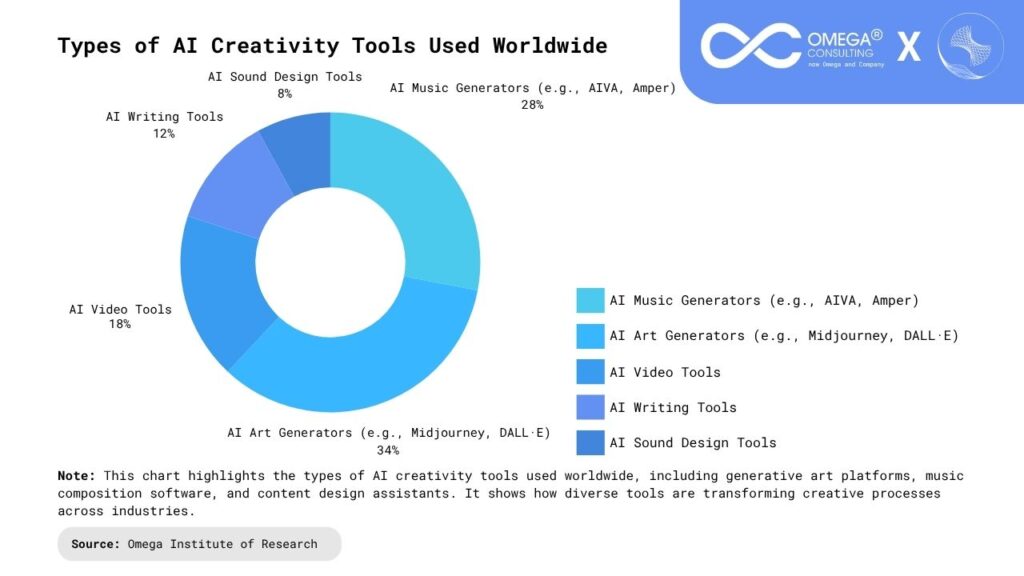
For decades, creativity was seen as a uniquely human trait driven by intuition, emotion, and experience. But with advances in deep learning, generative models, and neural networks, AI systems now mimic and sometimes amplify these qualities. The democratization of AI tools like ChatGPT, DALL·E, Runway, Midjourney, and AIVA have made creative technology accessible to millions of creators. Whether composing film scores, designing album covers, or generating concept art, creators are now collaborating with algorithms as co-artists rather than competitors. This fusion of art and intelligence is giving rise to entirely new genres and styles, where imagination meets computation. From personalized soundtracks to AI-assisted storytelling, the boundaries of creative expression continue to expand. As AI becomes more intuitive and emotionally aware, it is poised to transform how the world defines and experiences creativity itself. In classrooms, studios, and digital spaces worldwide, artists are learning to speak the language of algorithms. These collaborations are not just enhancing creative output—they’re reshaping the very process of artistic discovery. The result is a global renaissance of innovation, where human inspiration and machine intelligence co-create the future of art.
Transforming Visual Arts: The New Canvas of Creation
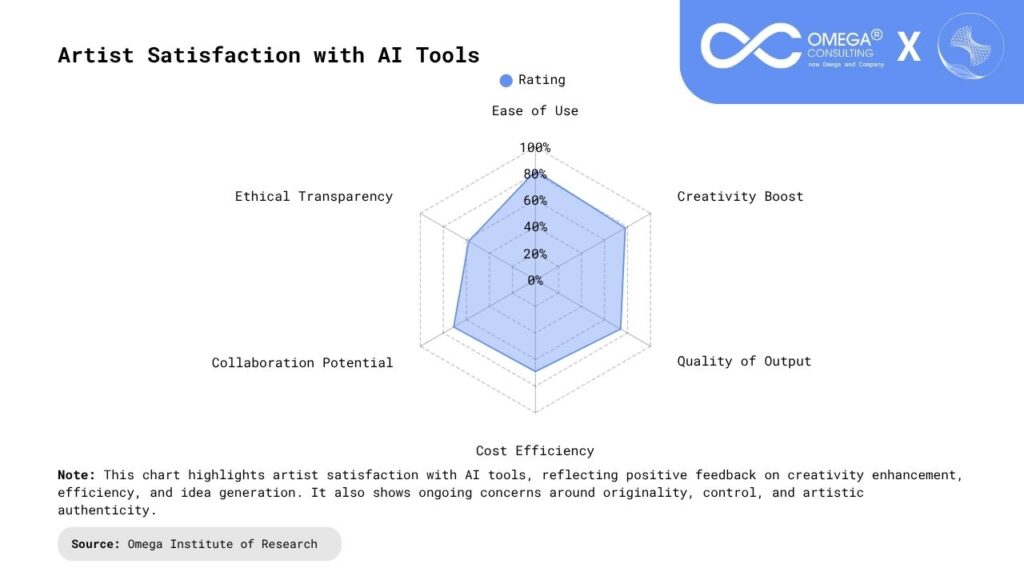
AI as the Artist’s Assistant: AI-powered design and art tools are enhancing creativity by automating technical tasks and expanding the artist’s imagination. Tools like DALL·E 3, Midjourney, and Adobe Firefly use text-to-image generation to transform prompts into stunning digital visuals allowing anyone to visualize abstract ideas instantly. Artists use these models to explore style variations, refine compositions, and discover new artistic directions. Beyond visuals, AI assists in music composition, animation, and 3D modeling, streamlining workflows and saving time. By handling repetitive or complex technical work, AI frees creators to focus on conceptual innovation and emotional storytelling, turning ideas into polished art more efficiently than ever before.
Generative Art and NFT Revolution: The rise of generative art where algorithms autonomously produce visuals based on patterns, randomness, or data has created a new art movement. Platforms such as Art Blocks and DeepArt.io blend mathematics with creativity, producing unique works that often become digital collectibles on blockchain marketplaces. AI has enabled a new form of authorship, where humans and algorithms co-create, raising fascinating questions about originality and ownership. This fusion of creativity and technology is transforming the art economy, enabling artists to reach global audiences and monetize their works in innovative ways. Collectors and enthusiasts are embracing these digital creations as both artistic statements and investment opportunities, cementing AI-generated art as a cultural phenomenon.
Cultural Preservation and Restoration: AI tools are also being used for art restoration and cultural preservation. Deep learning models analyze damaged artworks or ancient frescoes and reconstruct them with remarkable accuracy. Projects like Google Arts & Culture’s “Art Transfer” are digitizing and preserving global heritage for future generations. By detecting minute details and patterns invisible to the human eye, AI can repair and restore fragile pieces without risking further damage. Furthermore, AI enables virtual reconstructions of historical sites and artifacts, allowing global audiences to experience and learn from cultural treasures that may otherwise be inaccessible.
AI in Music: Composing the Future of Sound
From Inspiration to Composition: AI is now composing symphonies, producing beats, and generating harmonies that rival human musicians. Tools like AIVA, Amper Music, Mubert, and Soundful allow artists to generate background scores, experiment with chord progressions, or even produce full-length songs within minutes. These AI systems learn from vast datasets of musical styles classical, jazz, electronic, pop and adapt compositions to user inputs like mood, genre, and tempo. Musicians can explore countless variations of a theme in moments, discovering novel melodies and rhythms they might not conceive independently. AI also facilitates cross-cultural fusion, blending musical traditions from around the world into cohesive, innovative compositions.
Collaboration, Not Replacement
Musicians aren’t being replaced, they’re being empowered. Artists like Taryn Southern and Holly Herndon have collaborated with AI systems to produce albums blending human emotion with algorithmic intelligence. AI provides the creative spark or backing track, while human artists infuse emotional nuance, narrative, and personality creating a true partnership between human creativity and machine intelligence. This synergy encourages experimentation, allowing artists to push boundaries without the limitations of traditional instruments or time-consuming composition processes. Over time, these collaborations are redefining authorship and what it means to be a composer in the digital age.Personalization and Sound Design: AI is enabling hyper-personalized sound experiences. Streaming platforms use AI to generate tailored playlists, while startups like Endel create adaptive soundscapes that match a listener’s mood, heart rate, or activity. In film and gaming, AI sound design tools analyze visual scenes to produce dynamic sound effects—elevating immersion and emotional resonance. Beyond entertainment, AI-powered music therapy applications are emerging, creating customized soundscapes to reduce stress, improve focus, or aid relaxation. As AI continues to evolve, it is shaping not just how music is made, but how it is experienced on a deeply individual level.
The Global Impact: Democratizing Creativity
AI-powered tools are breaking barriers to entry in the creative industries.
Accessibility: You no longer need advanced design or composition skills to create professional-grade art or music. AI platforms guide users with intuitive interfaces, automated suggestions, and instant previews, allowing beginners and seasoned creators alike to experiment fearlessly. This democratization empowers a broader range of voices to contribute to global creative conversations.
Affordability: Many AI tools offer free or low-cost access, empowering independent artists and small studios. Subscription models and open-source AI frameworks further reduce financial barriers, enabling experimentation without significant upfront investment. As a result, creators from diverse economic backgrounds can participate in projects that were once limited to well-funded studios or conservatories.
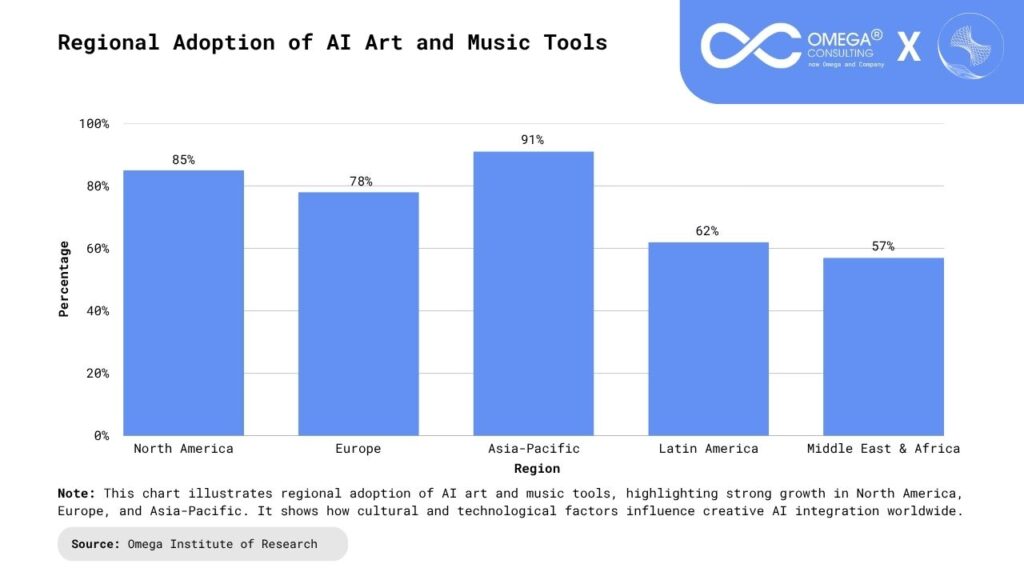
Diversity: Creators worldwide—from Mumbai to Berlin to São Paulo—are sharing unique perspectives through AI-assisted media, fostering cross-cultural exchange. AI enables the blending of local traditions with global trends, producing art and music that are both innovative and culturally rich. For example, African artists are using AI to remix traditional beats with modern rhythms, while Asian designers blend historical aesthetics with futuristic concepts. Creativity has never been more global, inclusive, or dynamic, with technology acting as a bridge between cultures and ideas.
Challenges and Ethical Considerations
Despite the excitement, AI-generated art and music also raise critical ethical questions:
Authorship: Who owns an artwork created with AI the human prompter or the machine? Clear guidelines and contracts are needed to define ownership and prevent disputes in commercial and artistic contexts. This debate also impacts attribution in exhibitions, publications, and digital marketplaces.
Originality: Can AI truly create, or is it remixing what already exists? While AI can generate novel combinations, it often draws from pre-existing datasets, raising questions about innovation versus replication. Understanding the balance between inspiration and copying is key for ethical and meaningful creative output.
Bias: AI models trained on biased datasets may reflect cultural or aesthetic imbalances. This can result in underrepresentation of certain styles, themes, or communities, perpetuating stereotypes or marginalization. Careful dataset curation and ongoing monitoring are necessary to ensure fairness and inclusivity.
Copyright: The legal landscape for AI-generated content remains complex, with ongoing debates over fair use and intellectual property rights. Without clear legislation, creators and companies risk disputes over ownership, licensing, and distribution of AI-assisted works. Balancing innovation with responsibility is essential as the creative world navigates this new frontier, ensuring both freedom and accountability.
The Future: Creativity Without Borders
The future of creativity will likely be AI-human hybrid creation—where imagination is infinite, and expression transcends technical limitations.
Immersive Art: AI will merge with virtual and augmented reality to create interactive, living art experiences. These experiences will allow audiences to influence the artwork in real time, blurring the lines between creator and observer. Such integration will redefine engagement, turning passive viewing into participatory exploration.
Real-Time Collaboration: Musicians and visual artists across continents will co-create in real time using cloud-based AI studios. Geographic barriers will disappear, enabling global teams to work seamlessly and instantly share iterative ideas. This connectivity will foster unprecedented innovation and accelerate the evolution of art and music.
Emotional AI: Future models will better understand human emotion, enabling art and music that respond dynamically to the creator’s or audience’s mood. Imagine installations that shift color palettes with audience reactions or compositions that adapt tempo and harmony based on listeners’ emotions. Emotional AI promises a deeply personal and immersive creative experience, making every interaction unique and memorable.
Conclusion
AI-powered creativity tools are ushering in a renaissance one defined not by brushes or instruments alone, but by algorithms that learn, adapt, and inspire. From the vibrant strokes of AI-generated art to the melodies composed in partnership with machines, this evolution symbolizes the harmony between human imagination and artificial intelligence. These tools are not replacing human creativity they are amplifying it, enabling artists and musicians to explore ideas and forms previously beyond reach. In this new age of creativity, the question isn’t whether AI can be creative but how humans can best collaborate with it to create beauty, meaning, and connection across the world. As technology and artistry converge, the possibilities are limitless, promising a future where inspiration knows no boundaries and creativity is truly universal.
- https://www.mdpi.com/2076-0752/14/3/52
- https://cloudxlab.com/blog/ai-in-creative-fields-the-next-frontier-for-art-music-and-writing/\
- https://www.salzburgglobal.org/news/topics/article/ai-art-and-creativity-exploring-the-artists-perspective
- https://www.bbc.com/future/article/20241018-ai-art-the-end-of-creativity-or-a-new-movement
- https://stillwatersdigital.co.za/ai-powered-creativity-from-art-to-music-and-beyond/
Subscribe
Select topics and stay current with our latest insights
- Functions