

- Industries
Industries
- Functions
Functions
- Insights
Insights
- Careers
Careers
- About Us

AI-Powered Efficiency: Unlocking Time and Financial Value







Organizations across industries are facing growing pressure to increase productivity, reduce costs, and deliver greater value in an increasingly competitive environment. Rising operational expenses, evolving customer expectations, and workforce challenges have accelerated the need for smarter and more efficient business processes. In response, Artificial Intelligence (AI) has emerged as a transformative technology that enables organizations to automate repetitive tasks, enhance decision-making, optimize resource utilization, and improve customer experiences. No longer limited to large technology companies, AI is now being adopted by businesses of all sizes to streamline operations and drive measurable business outcomes. By reducing manual effort and leveraging data-driven insights, AI helps organizations save time, lower costs, and focus on strategic growth initiatives. This article explores how AI-powered efficiency is unlocking significant time and financial value, the key mechanisms through which AI creates business impact, practical applications across industries, and strategies for maximizing the benefits of AI adoption.
Understanding AI-Powered Efficiency
AI-powered efficiency refers to the application of artificial intelligence technologies to enhance productivity, streamline operations, reduce waste, and improve decision-making across an organization. Unlike traditional automation, which relies on fixed rules and predefined workflows, AI systems can analyze large volumes of data, recognize patterns, learn from experience, adapt to changing conditions, and continuously improve their performance. The primary goal of AI-powered efficiency is to maximize business outcomes while minimizing the time, costs, and resources required to achieve them. By automating repetitive tasks, identifying operational bottlenecks, forecasting future outcomes, and generating actionable insights, AI enables organizations to make smarter, faster, and more informed decisions. As a result, businesses become more agile, responsive, and efficient, allowing them to deliver greater value to customers, optimize resource utilization, and maintain a strong competitive advantage.
The Time Value of AI
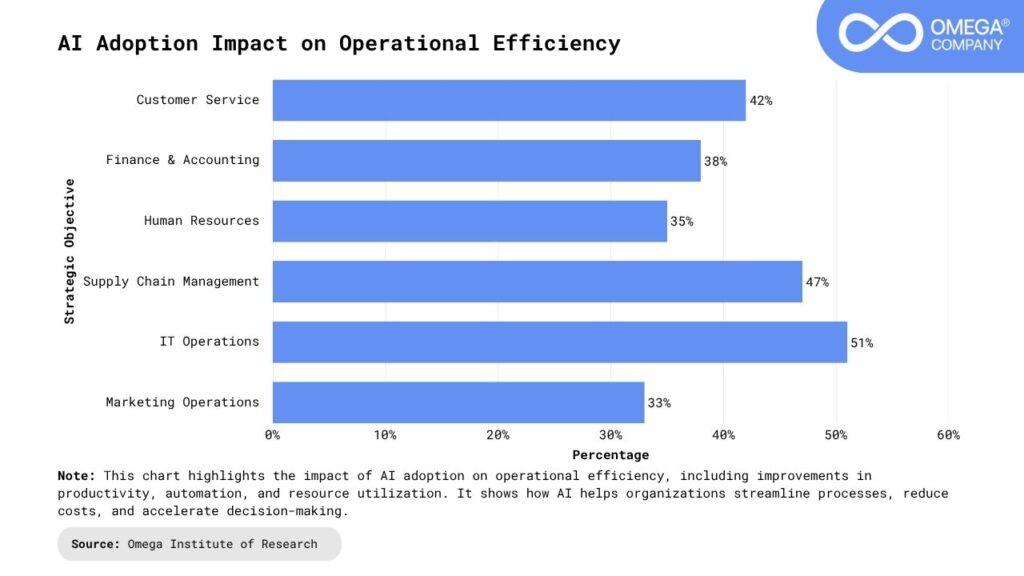
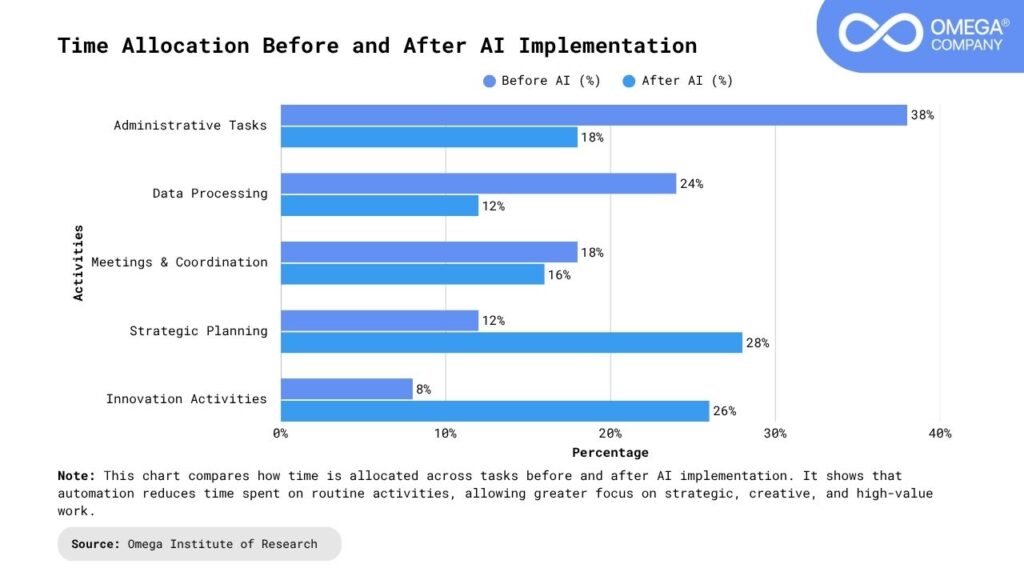
Time is one of the most valuable resources within any organization. Employees often spend significant portions of their workday performing repetitive administrative tasks, searching for information, generating reports, or managing routine communications. AI helps reclaim this lost time by automating and accelerating many of these activities.
Automating Repetitive Tasks: AI-powered automation significantly reduces the time employees spend on routine and repetitive activities such as data entry, invoice processing, appointment scheduling, email management, document handling, and customer service requests. By automating these tasks, organizations can eliminate manual errors, improve consistency, and accelerate workflow execution. Employees are freed from administrative burdens and can focus on more strategic, creative, and customer-centric responsibilities. This shift not only improves operational efficiency but also enhances employee satisfaction and overall business performance.
Accelerating Decision-Making: Modern organizations generate vast amounts of data from multiple sources, making timely analysis increasingly challenging. AI can process and analyze large datasets in real time, uncovering trends, patterns, risks, and opportunities much faster than traditional methods. Instead of spending hours or days compiling reports and reviewing spreadsheets, leaders can access actionable insights almost instantly. Faster access to reliable information enables organizations to make informed decisions quickly, respond effectively to changing conditions, and maintain a competitive advantage.
Enhancing Workforce Productivity: AI-powered assistants and intelligent workflow tools help employees complete tasks more efficiently by providing instant access to information, generating summaries, drafting communications, and offering recommendations. These capabilities reduce the time spent on repetitive knowledge work and simplify complex processes across departments. As employees become more productive, organizations can increase output without proportionally increasing workforce size or operational costs. The result is a more agile, efficient, and high-performing workforce capable of delivering greater value across the business.
The Financial Value of AI
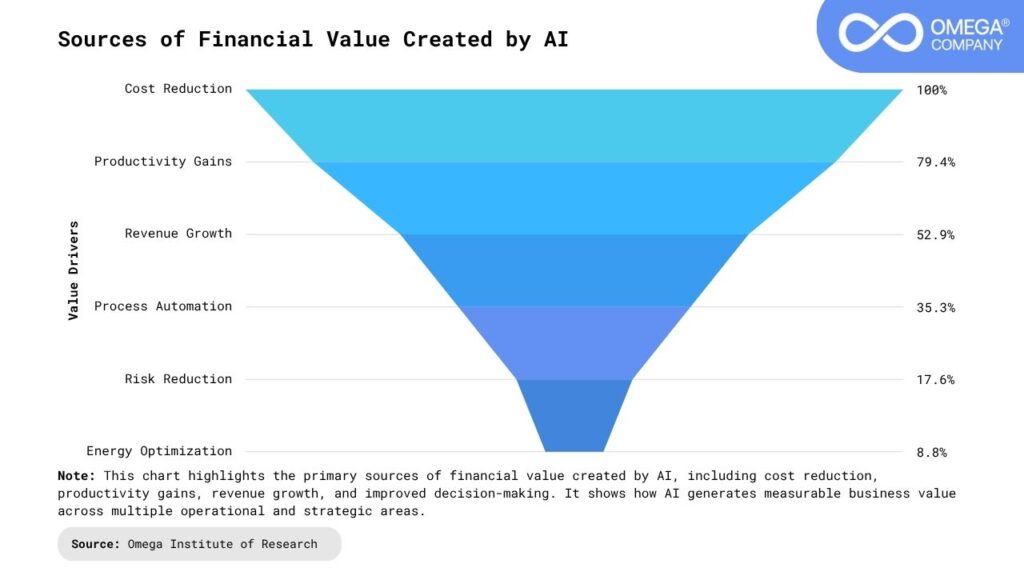
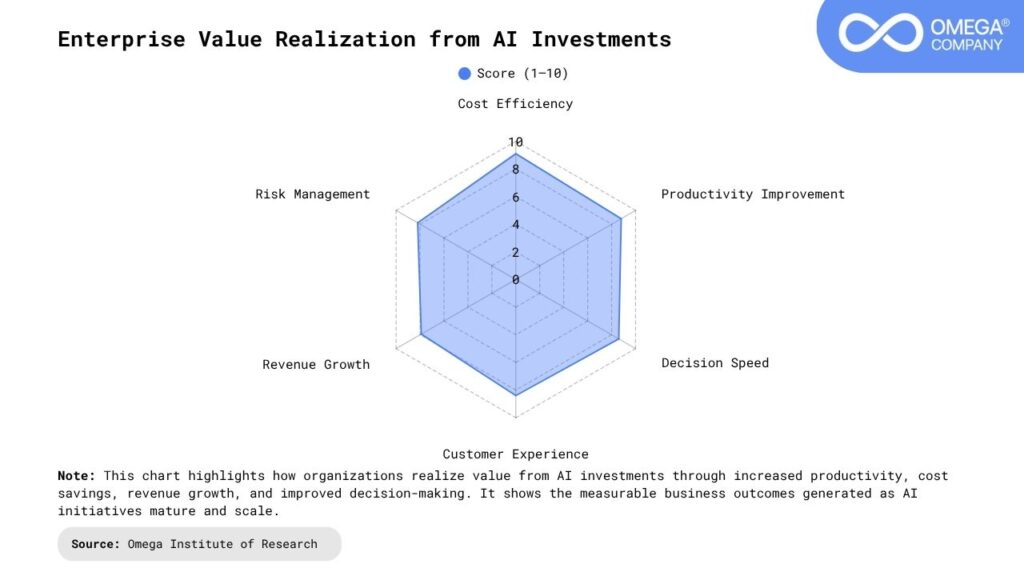
Beyond saving time, AI delivers significant financial benefits by reducing costs, improving resource allocation, increasing revenue opportunities, and minimizing operational risks.
Reducing Operational Costs: AI delivers substantial financial value by automating labor-intensive processes and reducing dependence on manual workflows. Organizations can process transactions, manage operations, and handle customer interactions more efficiently while minimizing errors and delays. Automation lowers operational expenses across functions such as administration, customer service, finance, supply chain management, and IT operations. These efficiencies enable businesses to improve productivity and profitability without requiring significant increases in workforce or infrastructure investments.
Improving Resource Utilization: AI helps organizations maximize the value of their resources by analyzing operational data and identifying opportunities for optimization. Intelligent systems can forecast demand, monitor resource availability, and recommend the most effective allocation of personnel, equipment, inventory, and energy. This enables businesses to reduce waste, avoid overutilization or underutilization, and improve overall operational performance. Better resource management not only lowers costs but also enhances productivity and business sustainability.
Increasing Revenue Opportunities: AI-powered analytics provide organizations with deeper insights into customer behavior, purchasing patterns, and emerging market trends. These insights allow businesses to personalize products and services, improve customer engagement, and develop targeted growth strategies. By understanding customer needs more accurately, organizations can increase sales conversions, strengthen customer loyalty, and identify new revenue streams. AI also supports faster innovation and market responsiveness, creating additional opportunities for long-term revenue growth.
Minimizing Risk and Financial Loss: AI plays a critical role in reducing financial risk by identifying potential issues before they become costly problems. Advanced algorithms can detect unusual patterns, predict equipment failures, monitor cybersecurity threats, and assess compliance risks in real time. This proactive approach helps organizations prevent fraud, avoid operational disruptions, and reduce unexpected expenses. By strengthening risk management capabilities, AI contributes to greater financial stability, business continuity, and long-term organizational resilience.
Key Technologies Driving AI Efficiency
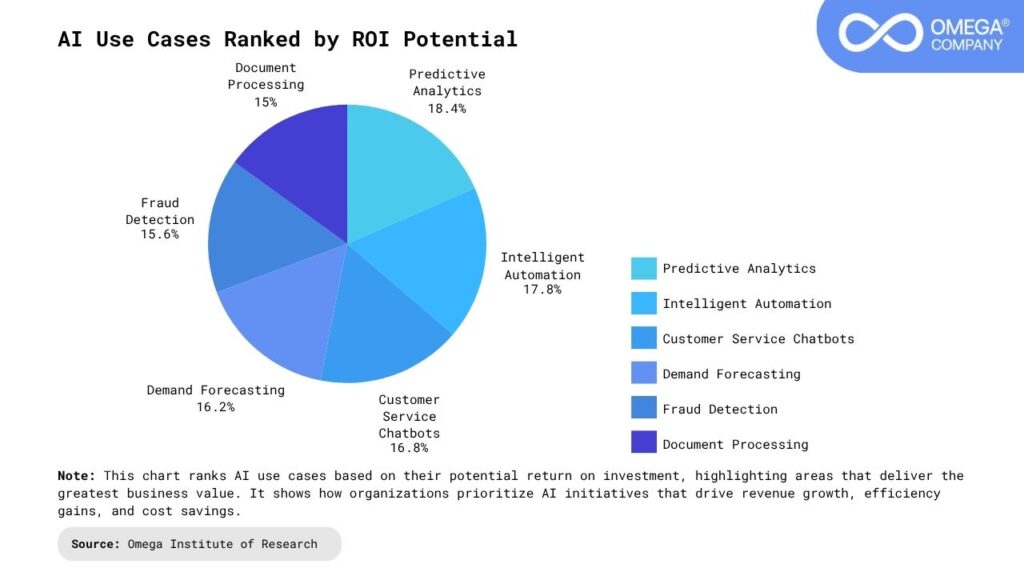
Several AI technologies contribute to efficiency improvements across modern enterprises.
Machine Learning: Machine learning enables systems to learn from historical data, identify patterns, and improve predictions over time. Organizations use machine learning to forecast demand, optimize pricing strategies, improve operational planning, and enhance customer experiences. By continuously analyzing new data, these systems become more accurate and effective. This allows businesses to make better decisions, reduce uncertainty, and respond more quickly to changing market conditions.
Natural Language Processing: Natural Language Processing (NLP) enables computers to understand, interpret, and generate human language. This technology powers chatbots, virtual assistants, automated content generation, intelligent search systems, and document processing solutions. NLP helps organizations streamline communication, reduce response times, and improve customer service experiences. By improving information accessibility and automating routine interactions, NLP contributes significantly to productivity gains across the enterprise.
Computer Vision: Computer vision allows machines to analyze and interpret visual information from images, videos, and real-world environments. Organizations use this technology for quality inspection, security surveillance, inventory management, and autonomous operations. In manufacturing and logistics, computer vision improves accuracy, reduces manual effort, and enhances operational visibility. This leads to greater efficiency, better quality control, and faster decision-making.
Predictive Analytics: Predictive analytics combines historical data, statistical models, and AI algorithms to forecast future events and business outcomes. Organizations use predictive models to anticipate customer behavior, market demand, equipment maintenance needs, and potential risks. By identifying trends before they occur, businesses can make proactive decisions and improve planning accuracy. This helps optimize resource allocation, reduce uncertainty, and strengthen overall performance.
Generative AI: Generative AI is transforming workplace productivity by creating content, code, designs, reports, and recommendations with minimal human intervention. Organizations use generative AI to accelerate content creation, software development, customer support, marketing activities, and research processes. The technology reduces the time required for knowledge-intensive work while enhancing creativity and innovation. Its ability to combine speed, scalability, and intelligence makes it a powerful driver of organizational efficiency.
Industry Applications of AI-Powered Efficiency
Healthcare: Healthcare organizations use AI to streamline administrative processes, support medical diagnostics, optimize scheduling, and enhance patient care delivery. AI helps healthcare providers reduce paperwork, improve resource allocation, and accelerate clinical decision-making. These capabilities contribute to better patient outcomes, increased operational efficiency, and more effective use of healthcare resources.
Financial Services: Banks and financial institutions leverage AI for fraud detection, customer service automation, risk assessment, and regulatory compliance. AI enables faster transaction processing, improves security monitoring, and enhances the accuracy of financial decision-making. As a result, organizations can reduce operational costs while delivering more personalized and efficient customer experiences.
Manufacturing: Manufacturers use AI to optimize production processes, predict equipment failures, and strengthen quality assurance programs. Intelligent systems monitor operations in real time, helping organizations reduce downtime and improve productivity. This leads to lower maintenance costs, higher product quality, and more efficient manufacturing operations.
Retail and E-Commerce: Retailers utilize AI to personalize customer experiences, forecast demand, manage inventory, and optimize pricing strategies. By analyzing customer behavior and purchasing patterns, AI helps businesses improve engagement and increase sales opportunities. These insights support better inventory control, stronger customer loyalty, and more effective marketing efforts.
Logistics and Supply Chain: AI helps logistics providers optimize transportation routes, forecast demand, manage inventory, and improve delivery performance. Advanced analytics enable organizations to reduce transportation costs while improving operational visibility across the supply chain. This results in faster deliveries, higher customer satisfaction, and greater supply chain resilience.
Measuring AI Return on Investment
To fully realize the value of AI, organizations must establish clear metrics for measuring performance and outcomes.
Productivity Metrics: Productivity metrics measure how AI improves workforce efficiency and operational performance. Organizations commonly track time saved per task, process completion speed, employee output, and workflow efficiency improvements. These indicators help quantify how AI reduces manual effort and accelerates business processes.
Financial Metrics: Financial metrics evaluate the direct economic benefits generated by AI investments. Organizations assess factors such as cost reductions, revenue growth, profit margin improvements, and overall return on investment. These measurements help determine whether AI initiatives are delivering meaningful financial value.
Customer Metrics: Customer metrics focus on the impact of AI on customer experience and engagement. Businesses often monitor customer satisfaction scores, response times, retention rates, and conversion rates to assess performance. Improvements in these areas indicate that AI is helping create more personalized and efficient customer interactions.
Operational Metrics: Operational metrics measure how AI enhances business processes and resource utilization. Key indicators include error reduction, downtime minimization, resource efficiency, and process optimization outcomes. Tracking these metrics helps organizations understand how AI contributes to greater reliability, consistency, and operational excellence.
Challenges to AI Adoption
Despite its significant advantages, AI implementation presents several challenges that organizations must address to achieve successful outcomes. Overcoming these obstacles requires a combination of strategic planning, technology investment, workforce development, and strong governance practices.
Data Quality Issues: AI systems depend on accurate, complete, and reliable data to generate meaningful insights and recommendations. Poor-quality data can lead to inaccurate predictions, flawed decision-making, and reduced system performance. Organizations must establish strong data management practices, including data cleansing, validation, and governance frameworks. Maintaining high-quality data is essential for maximizing the effectiveness and reliability of AI initiatives.
Integration Complexity: Many organizations rely on legacy systems and fragmented technology environments that may not integrate easily with modern AI solutions. Implementing AI often requires updates to existing infrastructure, data pipelines, and operational processes. Without proper planning, integration challenges can increase costs and delay project timelines. A well-defined implementation strategy helps ensure smooth adoption and long-term scalability.
Skills and Talent Gaps: Successful AI adoption requires expertise in areas such as data science, machine learning, analytics, and technology management. Many organizations face shortages of qualified professionals capable of developing, deploying, and maintaining AI solutions. To address this challenge, businesses must invest in employee training, upskilling programs, and talent acquisition strategies. Building internal AI capabilities is critical for sustaining long-term success and innovation.
Change Management: Employees may resist AI adoption due to concerns about job displacement, workflow disruptions, or uncertainty about new technologies. Effective change management involves clear communication, employee engagement, and education about the benefits of AI. Organizations that actively involve employees in the transformation process are more likely to achieve successful adoption. Creating a culture that embraces innovation helps reduce resistance and encourages collaboration.
Ethical and Governance Considerations: Organizations must ensure that AI systems operate responsibly, transparently, and in compliance with legal and regulatory requirements. Issues such as data privacy, algorithmic bias, security risks, and accountability require careful oversight and governance. Establishing ethical guidelines and monitoring mechanisms helps build trust among customers, employees, and stakeholders. Strong governance frameworks ensure that AI delivers value while minimizing potential risks and unintended consequences.
The Future of AI-Powered Efficiency
As AI technologies continue to evolve, organizations will gain access to increasingly advanced capabilities that enhance productivity, decision-making, and operational performance. Future AI systems are expected to become more autonomous, context-aware, and deeply integrated into everyday business processes, enabling organizations to automate complex workflows and respond more intelligently to changing conditions. Emerging innovations such as autonomous agents, multimodal AI, intelligent automation platforms, and real-time decision intelligence will further accelerate efficiency and unlock new opportunities for value creation. These technologies will help businesses operate with greater speed, accuracy, and agility while reducing operational complexity. AI will also play a growing role in supporting strategic planning, innovation, and personalized customer experiences across industries. As digital transformation continues to reshape markets, organizations that invest in and successfully adopt AI today will be better positioned to innovate, remain competitive, and adapt to the demands of an increasingly digital and data-driven economy.
Conclusion
AI-powered efficiency is transforming how organizations operate by enabling smarter processes, faster decision-making, and more effective resource utilization across every business function. By automating repetitive tasks, enhancing workforce productivity, reducing operational costs, and uncovering new revenue opportunities, AI generates both significant time savings and measurable financial value. The true power of AI extends beyond automation, as it augments human capabilities, improves strategic decision-making, and drives continuous innovation and improvement. As organizations continue their digital transformation journeys, AI will play a central role in helping them achieve greater agility, resilience, profitability, and competitive advantage. Businesses that strategically invest in AI-powered efficiency today will be better positioned to adapt to changing market demands, accelerate growth, and deliver exceptional value to customers, employees, and stakeholders. In the years ahead, AI will increasingly become a fundamental driver of sustainable business success and long-term organizational performance.
- https://hexaware.com/blogs/ai-in-financial-services-intelligence-that-unlocks-value/
- https://www.sciencedirect.com/science/article/abs/pii/S0165176524006311
- https://www.bcg.com/publications/2025/to-unlock-the-full-value-of-ai-invest-in-your-people
- https://cfo.university/library/article/the-ai-revolution-in-corporate-finance-unlocking-new-frontiers-bell
- https://blog.workday.com/en-au/beyond-automation-how-ai-unleashing-creativity-finance.html
Subscribe
Select topics and stay current with our latest insights
- Functions