

- Industries
Industries
- Functions
Functions
- Insights
Insights
- Careers
Careers
- About Us

Anticipating Disruption: How Senior Leaders Build Companies That Outlast Markets







Business has changed faster in the last ten years than most leaders expected, and it’s reshaped how companies compete and make decisions. Most organizations still build themselves around one business model that works well for today’s conditions. But companies that last for decades do something different: they try to see disruption coming before it hits. Leaders who think this way know that big shifts ,new technology, new regulations, economic shocks aren’t a question of if, just when. The most resilient companies act a bit like well-tuned systems: they keep reading signals from across the organization instead of relying on one department’s view, and they stay flexible with how they spend money and build culture. As markets move faster and swing harder, learning to spot disruption early isn’t just a nice skill for leaders to have anymore , it’s becoming one of the main things that separates companies that survive for generations from those that don’t.
What is Disruption Anticipation?
Disruption anticipation is really just the discipline of a leadership team learning to notice, understand, and act on big structural changes before those changes tear through the industry’s economics. It’s different from watching each market signal in isolation, and very different from only reacting once revenue starts dropping. It means building a real, ongoing understanding of the early, faint signals and threats that are easy to miss in a normal quarterly planning cycle. A leadership team doing this well keeps an eye on where their customer base is shifting, what new regulations might mean years down the road, which technologies are quietly maturing, and where their business could reasonably expand , and they start moving before their core business shows signs of decline. Done well, it connects the outside world to what’s actually happening inside the company, and that connection is what protects the business, keeps it competitive, and helps it survive over the long haul.
Why Anticipating Disruption Matters
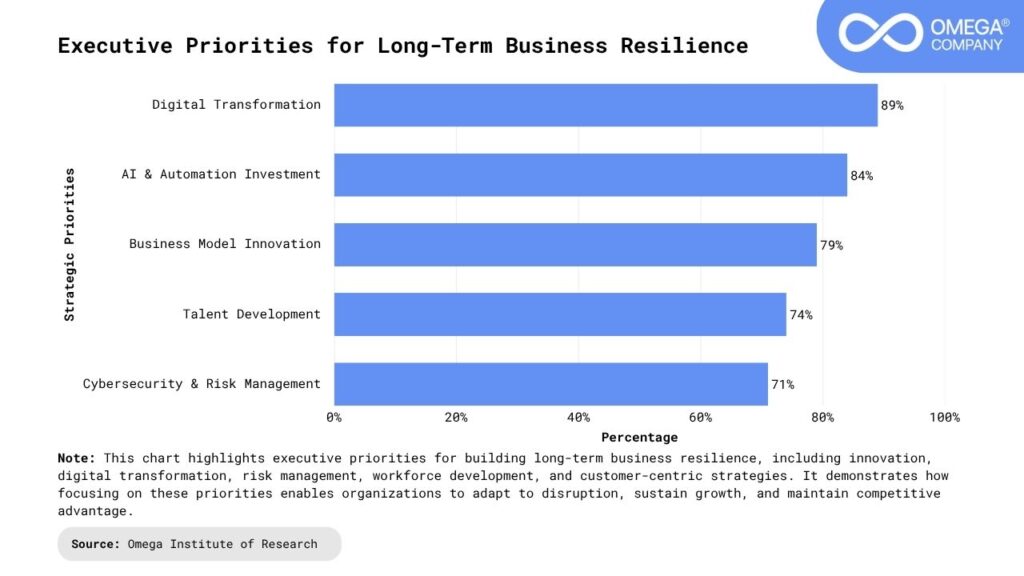
Better Strategic Positioning: When leaders pull together signals from across the economy and their industry, they get a much fuller picture than teams that only react to what’s already happened. Looking at several long-term factors at once makes it easier to catch structural shifts while there’s still time to act, which means the company can reposition itself with more confidence and less risk of getting caught flat-footed.
More Operational Resilience: Looking at supply chains, regulations, technology, and customer behavior together , instead of one at a time , helps surface weak spots before they turn into real crises. That kind of joined-up view sharpens risk planning and protects capital, giving leaders a clearer runway to make structural changes even when the broader market gets rocky.
Smarter use of Resources: Rather than leaning on last year’s financials, this approach weighs several possible futures at once when deciding where money and people should go. It balances capital spending, hiring, R&D, and corporate development under one forward-looking view , so less money gets wasted on businesses that are fading, and more goes toward what’s actually going to matter.
More Value for Everyone Involved: When leaders track investor expectations, new regulations, employee needs, and customer behavior side by side, they can plan more deliberately and communicate more consistently , both with the market and internally. That builds more trust with shareholders, keeps good people around longer, and strengthens the company’s reputation through the inevitable ups and downs.
Stronger long-term growth. Pulling insights from across different parts of the business world gives leaders a genuinely fuller picture of where the industry is headed. That makes it easier to spot gaps in the market, decide where to put innovation dollars, and move into new areas with more speed and confidence , protecting the business from getting commoditized and giving it a real, lasting edge.
How Anticipating Disruption Actually Works
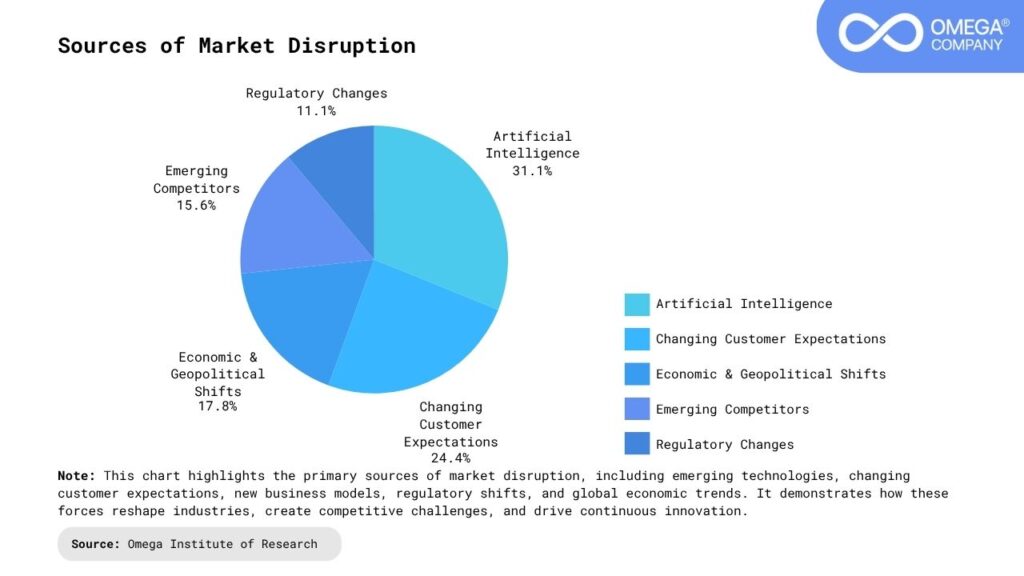
Scanning the Horizon: It starts with gathering information broadly , economic data, research on new technology, regulatory changes, shifts in how people feel about things, patent activity, geopolitical developments. Casting a wide net matters more than digging deep into one narrow metric, because it gives leaders both the hard numbers and the softer signals they need to think clearly about what’s coming.
Filtering it Down: Once all that information is in, it needs to be turned into something a board can actually use. Economic trends become financial risk estimates; new technology becomes a list of capabilities the company needs; new regulations become compliance considerations; competitor moves become market-share projections. Translating everything into a shared language is what lets leaders compare very different kinds of threats and opportunities side by side.
Putting it all Together: The next step is combining these separate signals into one coherent view of risk and opportunity. This is where leaders start noticing connections that wouldn’t be obvious otherwise , say, a new technology maturing right as customer habits shift, or a supply chain change lining up with a new regulation. That combined view is what makes the planning that follows so much sharper.
Testing Different Futures: With that fuller picture in hand, leadership teams run through different possible futures rather than reacting to one threat at a time , modeling how competitor behavior, technology adoption, and economic conditions might interact and affect the core business. This is where real vulnerabilities get spotted, and where teams start shaping their actual options.
Putting Money Behind it: Finally, all that foresight turns into real decisions , investments, R&D spending, restructuring, acquisitions, or shutting parts of the business down, all aimed at long-term survival rather than this quarter’s numbers. Because these calls are grounded in a much broader set of information, they tend to be more proactive and better thought-through than the usual budget cycle produces. This is ultimately what keeps a company relevant over the long run.
What Makes a Company Disruption-Resilient
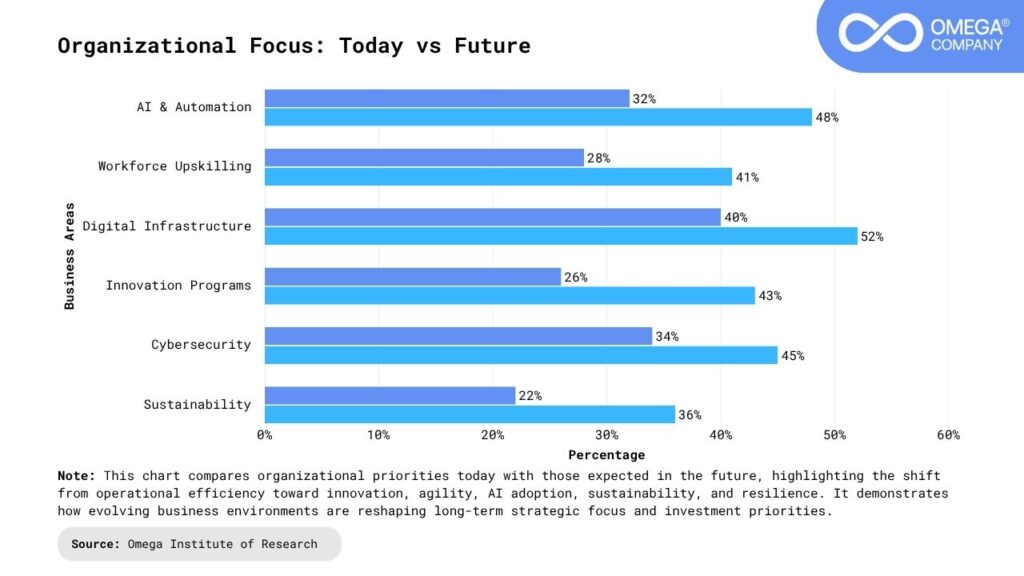
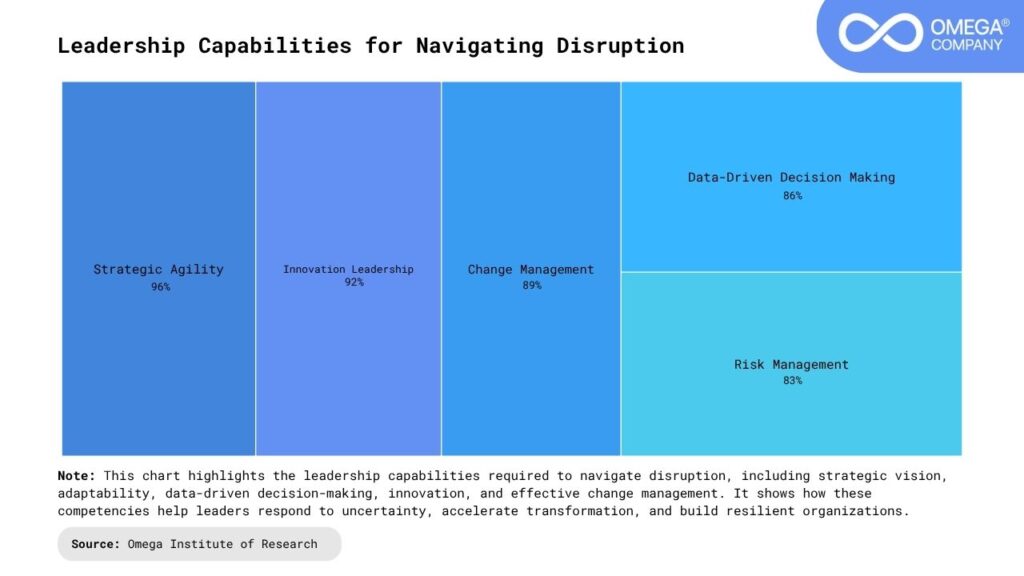
Leadership that Actually Thinks Long-term: This is the foundation , a board and executive team that sets real direction, stays engaged, and knows how to prioritize resources. They’re the ones interpreting the signals, setting milestones, managing what stakeholders expect, and balancing this quarter’s performance against next decade’s survival. The best ones even tie executive pay to long-term outcomes, not just short-term numbers, to keep everyone honest about the horizon they’re aiming for.
Real Market Intelligence: Resilient companies build the muscle to actually watch what’s happening across competitors, technology, the economy, and regulation , not just glance at it occasionally. This turns messy outside noise into something the company can act on, whether that means selling off a struggling division or buying a promising piece of technology early.
Operating Models that can Bend: Companies that adapt well can restructure quickly when the strategy changes , forming new teams, breaking down old silos, and moving people where they’re needed. Pushing decision-making down and out, rather than keeping it locked at the top, tends to make these pivots faster and much less painful.
Systems Built to Catch Risk Early: These systems look for the quiet problems , weak points in the supply chain, financial exposure, regulatory gaps , before they become full-blown crises. Catching subtle patterns early is what lets a company protect its capital and keep running smoothly when things get rough.
Innovation that Never Really Stops: Rather than running the occasional isolated pilot, resilient companies treat innovation as an ongoing, connected series of experiments tied to where they want to be years from now. This lets them move fast, learn from the market quickly, and , often , disrupt their own business before someone else does it for them.
Everyone is actually working together. This is what ties it all together , a shared way of coordinating people, money, and infrastructure across R&D, finance, legal, marketing, and operations, so the whole company moves in the same direction instead of different teams pulling apart. Companies built to last depend on this kind of alignment to get through long, difficult transitions.
Why Built-to-Last Companies Win
A Real Sustainable edge: By combining what they’re learning from technology, customers, and regulation, these companies get to strategic positions earlier and with fewer blind spots than competitors who are just reacting. Validating long-term trends before betting big capital on them makes their pivots land better and more consistently.
Genuine Agility: Instead of optimizing for one static environment, these companies read the economy, technology, and their own capabilities together , which gives leaders a much better sense of when to expand and when to pull back. That timing is often the whole difference between a well-executed move and a costly one.
Real Staying Power Through Volatility: These companies build enough flexibility into how they’re structured that teams can adapt naturally when markets shift or the economy takes a hit. That built-in give is what lets a company keep running even while a core part of its business is under real pressure , and it tends to translate into more investor confidence and better odds of long-term survival.
Faster Value Creation: By running several transformation efforts at once, these companies can wind down what’s fading, retrain people, fund new bets, and scale what’s working , all without as much internal friction. That usually means shorter development cycles and more room to grow while still protecting profitability.
Staying Relevant to Customers: Leaders who keep tracking how customer needs and buying habits shift over time can keep updating their products, branding, and business model to match. That ongoing effort is what keeps customers loyal across generational change, not just this year’s marketing campaign.
Fewer Unforced Errors: One of the real strengths of these companies is checking their assumptions against multiple sources , actual operating capacity, financial limits, regulatory reality , before committing to a multi-year transformation. That discipline is what lets leaders make bold calls without taking on reckless risk.
The Road Ahead: Leading Through Constant Change
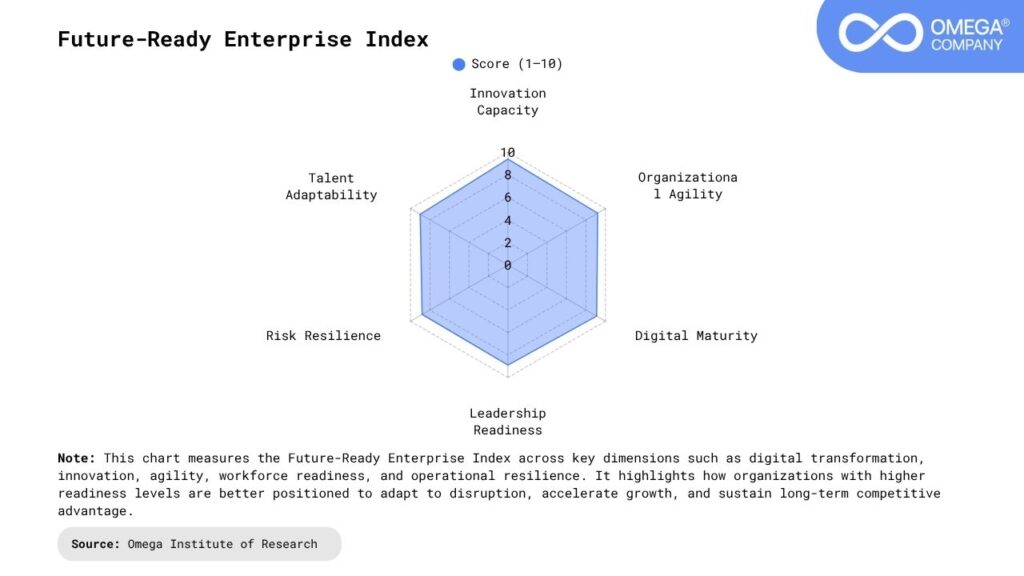
As disruption continues to reshape global markets through advances in AI, automation, evolving customer expectations, and economic uncertainty, long-term success will depend on an organization’s ability to adapt quickly and innovate continuously. Future-ready companies will prioritize agility, data-driven decision-making, workforce development, strategic partnerships, and sustainable business practices to remain competitive. Leaders who foster a culture of continuous learning, resilience, and experimentation will be better equipped to navigate uncertainty and seize emerging opportunities. Rather than trying to predict every market shift, successful organizations will build the flexibility to respond proactively, ensuring they remain resilient, create lasting value, and maintain a competitive advantage in an increasingly dynamic global business landscape.
Conclusion
Learning to anticipate disruption is a real shift in how companies think about strategy , it means building flexibility into the core of the business instead of bolting it on after something goes wrong. Where older planning models assumed markets would stay relatively stable, this approach treats economic, technological, and behavioral change as connected parts of the same picture. For companies today, getting good at this is one of the more reliable ways to protect capital, keep innovating, spend resources wisely, and hold onto a real competitive edge through the changes that are coming whether they’re ready or not. As the pace of change keeps picking up, the ability to see disruption coming is quickly becoming less of an advantage and more of a basic requirement for staying in business at all.
- https://hbr.org/2025/03/anticipating-market-disruption
- https://www.mckinsey.com/capabilities/strategy-and-corporate-finance/our-insights/building-the-resilient-enterprise
- https://sloanreview.mit.edu/article/how-senior-leaders-outlast-volatile-markets
- https://www.strategy-business.com/article/the-anatomy-of-a-disruption-proof-company
- https://www.bcg.com/publications/2024/mastering-the-art-of-strategic-anticipation
Subscribe
Select topics and stay current with our latest insights
- Functions