

- Industries
Industries
- Functions
Functions
- Insights
Insights
- Careers
Careers
- About Us

Biodegradable Electronics: Medical Devices That Dissolve After Use







Imagine a world where your medical implant simply melts away after doing its job, no surgery, no waste, no complications. Welcome to the era of biodegradable electronics, a groundbreaking innovation merging biotechnology, materials science, and electronic engineering to create devices that safely dissolve in the body or the environment after use. This emerging technology is reshaping the future of medical devices, diagnostics, and sustainability, offering a new vision where electronics serve their purpose and then gracefully disappear. By eliminating the need for surgical removal, these devices reduce patient risk and healthcare costs. Moreover, their eco-friendly nature addresses the growing problem of electronic waste that burdens our planet. As research advances, biodegradable electronics are set to revolutionize how we think about technology’s lifecycle making it as temporary, efficient, and natural as life itself.
The Concept of Biodegradable Electronics
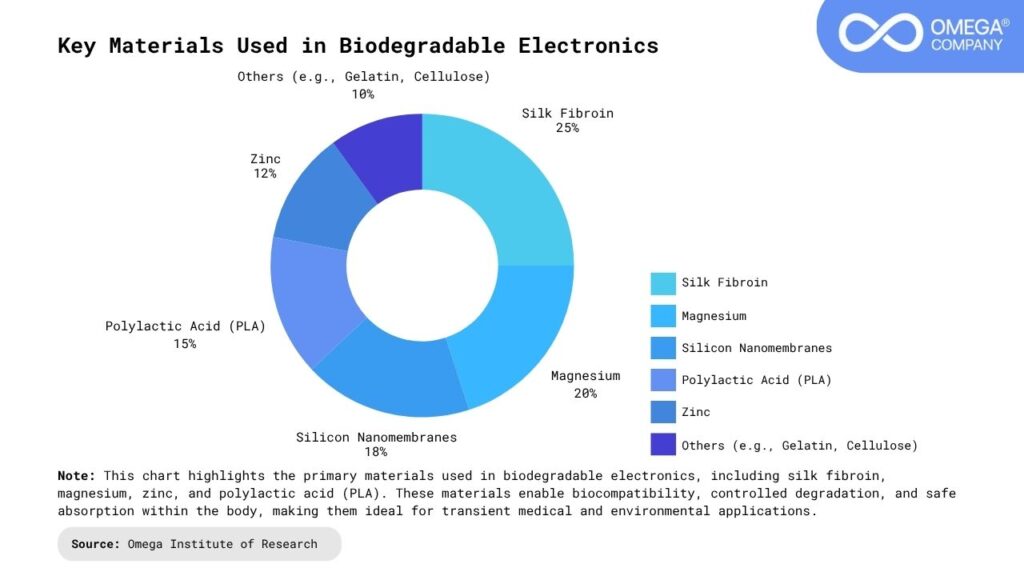
Biodegradable electronics, also known as transient electronics, are designed to perform electronic functions for a specific period and then decompose naturally when exposed to biological fluids or environmental conditions. These innovative devices are made from biocompatible materials such as silk, magnesium, zinc, and silicon, which safely break down into non-toxic byproducts. Once their job is complete whether monitoring vital signs, delivering medication, or supporting healing they dissolve harmlessly, eliminating the need for surgical removal or disposal while ensuring safety, sustainability, and efficiency in medical and environmental applications. This remarkable concept bridges the gap between technology and nature, creating devices that exist only as long as they are needed. By reducing medical waste and preventing long-term contamination, biodegradable electronics promote a circular approach to innovation. Ultimately, they represent a shift toward smarter, greener, and more human-centered technology that adapts to both biological and ecological systems.
How Do Biodegradable Electronics Work?
The magic lies in the materials. Traditional electronics rely on durable metals and plastics, but biodegradable versions use organic polymers, thin silicon membranes, and biodegradable substrates.
Conductive Layers: Use transient metals like magnesium or zinc for electrical circuits that naturally oxidize and vanish. These metals conduct electricity efficiently during operation and then react with moisture or biological fluids to safely dissolve into benign compounds. This ensures that once the device’s task is complete, it disappears without leaving behind metal waste or residues that could harm tissues or the environment.
Substrates: Made from biopolymers such as silk fibroin or cellulose, which degrade safely in biological environments. These materials act as the foundation of the device, offering flexibility, strength, and compatibility with human tissue. Their controlled breakdown process allows the electronic components to disintegrate gradually, ensuring smooth absorption or elimination by natural biological pathways.
Encapsulation: Coatings control how fast the device dissolves from hours to weeks depending on medical needs. The encapsulation layer acts as a protective barrier, shielding the electronics until they’ve completed their purpose. By adjusting its thickness and composition, researchers can program devices for precise degradation timelines, making them ideal for applications like short-term implants, wound monitoring, or targeted drug delivery.
Applications in Healthcare
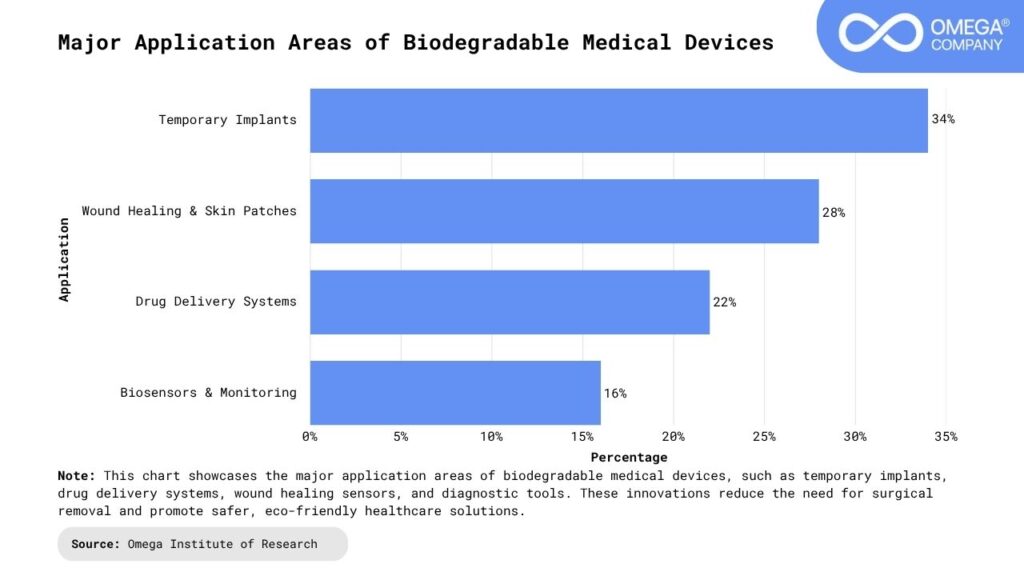
Biodegradable electronics are revolutionizing medicine by tackling long-standing challenges like infection risk, post-surgery complications, and electronic waste in hospitals.
Temporary Implants: Devices like neural sensors or cardiac monitors can collect data for a few weeks and then dissolve, eliminating the need for a second surgery to remove them. This reduces patient discomfort, lowers healthcare costs, and minimizes the risk of infection or inflammation. Such implants are particularly valuable for post-operative monitoring, where temporary functionality is essential but permanent hardware poses long-term risks.
Drug Delivery Systems: Smart biodegradable patches or capsules can deliver drugs over time and then safely disappear, improving patient compliance and safety. These systems allow for precise control over dosage and timing, ensuring optimal therapeutic outcomes. Once the treatment period ends, the device naturally breaks down, eliminating the need for removal and reducing residual toxicity or side effects.
Wound Healing & Tissue Regeneration: Dissolvable sensors can track healing progress and release growth factors, enhancing recovery without introducing permanent materials into the body. They can monitor parameters such as pH, temperature, or inflammation levels to provide real-time feedback for clinicians. As the tissue regenerates, the sensor degrades, integrating seamlessly with the body’s natural healing process and preventing long-term interference.
Environmental & Diagnostic Sensors: Outside the body, transient sensors can monitor environmental conditions or water quality, decomposing after their task to prevent pollution. These sensors help detect contaminants, track air or soil quality, and contribute to eco-friendly environmental management. By disappearing after use, they address one of the biggest challenges in modern sensing technology, reducing e-waste and environmental contamination from discarded devices.
Benefits of Biodegradable Medical Devices
The advantages go far beyond convenience; they represent a leap toward sustainable and patient-centric healthcare.
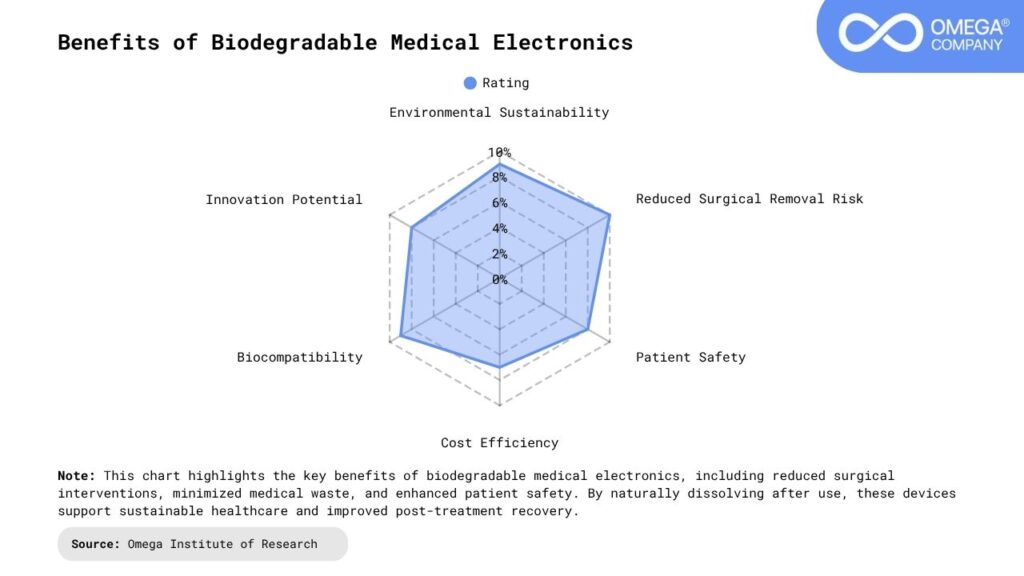
No Removal Surgery: Patients avoid extra operations, reducing risks, pain, and hospital costs. This leads to faster recovery times, fewer hospital stays, and improved overall patient comfort. Additionally, the elimination of follow-up surgical procedures significantly reduces the strain on healthcare resources, allowing medical professionals to focus on more critical cases and improving operational efficiency.
Reduced E-Waste: Traditional medical electronics contribute to biomedical waste; biodegradable versions leave no trace. As these devices dissolve naturally after use, they eliminate the burden of disposing of harmful materials that often end up in landfills or incinerators. This shift toward zero-waste healthcare aligns with global sustainability goals, promoting cleaner hospitals and a healthier planet.
Enhanced Biocompatibility: Materials are designed to integrate seamlessly with biological tissues. Their non-toxic nature minimizes immune reactions and inflammation, ensuring safe interaction within the human body. This harmony between device and biology allows for smoother healing processes, better treatment outcomes, and greater patient comfort during the device’s active period.
Sustainability in Medicine: Encourages eco-friendly innovation in an industry increasingly focused on green solutions. By prioritizing materials that break down naturally, healthcare manufacturers can reduce their carbon footprint and contribute to long-term environmental preservation. This sustainable shift also drives research into renewable resources, inspiring a new generation of medical technologies built with both patients and the planet in mind.
Challenges and Limitations
While the potential is immense, biodegradable electronics still face several hurdles:
Material Stability: Balancing performance with degradability is complex; devices must work reliably before dissolving. The materials must maintain their electrical and mechanical integrity during operation while degrading predictably afterward. Achieving this balance requires precise control over chemical composition, thickness, and environmental interactions, making material engineering one of the most demanding aspects of development.
Mass Production: Manufacturing transient electronics at scale remains costly and technically challenging. The specialized materials and fabrication techniques involved are still in their infancy, limiting commercial scalability. Researchers are exploring cost-effective printing and flexible electronics methods to streamline production, but achieving consistent quality and yield remains a significant industrial barrier.
Regulatory Approval: As a new class of medical technology, they must undergo rigorous safety and efficacy testing. Regulatory agencies need comprehensive data to ensure that the materials, degradation products, and processes are biocompatible and safe for both patients and the environment. The absence of standardized testing protocols for biodegradable devices also slows down approval timelines, delaying their entry into the market.
Limited Power Sources: Creating biodegradable power systems like batteries or energy harvesters is still in early development. Current solutions often rely on external power or short-lived energy sources, limiting the functionality and duration of these devices. Scientists are experimenting with organic batteries, biofuel cells, and energy-scavenging systems that can safely dissolve, but these innovations must mature before fully integrated biodegradable systems become feasible.
Recent Innovations and Research
Global research teams are pushing boundaries in the field of biodegradable electronics, driving innovations that merge technology with sustainability and biocompatibility. Scientists at Northwestern University have developed fully biodegradable nerve stimulators that accelerate healing in injured nerves, offering new hope for regenerative medicine. Meanwhile, researchers in South Korea and Germany are creating transient silicon chips for post-surgical monitoring, enabling precise, temporary diagnostics without the need for removal. Additionally, eco-friendly bioresorbable sensors are being tested to monitor brain activity, temperature, and pressure, delivering critical insights during recovery before dissolving harmlessly inside the body. Together, these breakthroughs highlight a future where medical technology not only heals but also vanishes leaving behind no trace, only better health and cleaner ecosystems.
Conclusion
Biodegradable electronics represent a paradigm shift from rigid, permanent devices to adaptive, self-erasing technologies inspired by nature. By blending innovation, sustainability, and patient care, these medical devices offer a glimpse into a cleaner, safer, and smarter future. The fusion of biocompatibility and biodegradability is not just an engineering breakthrough, it’s a movement toward sustainable healthcare and environmental responsibility. As researchers continue to refine materials and extend device capabilities, we can expect these transient technologies to revolutionize how medicine is practiced and how technology interacts with living systems. Beyond healthcare, their potential spans environmental monitoring, smart packaging, and green consumer electronics. Ultimately, biodegradable electronics remind us that true innovation doesn’t just advance human capability it also harmonizes with the planet that sustains us.
- https://link.springer.com/article/10.1007/s43939-025-00381-w
- https://pmc.ncbi.nlm.nih.gov/articles/PMC8022537/
- https://www.psu.edu/news/engineering/story/biodegradable-electronics-may-advance-ability-control-dissolve-rate
- https://advanced.onlinelibrary.wiley.com/doi/10.1002/adhm.202503424
- https://www.e-spincorp.com/biodegradable-electronics-sustainability-tech/
Subscribe
Select topics and stay current with our latest insights
- Functions