

- Industries
Industries
- Functions
Functions
- Insights
Insights
- Careers
Careers
- About Us

Building an AI-First Organization Without Disrupting Core Operations







Artificial intelligence (AI) is no longer a future investment, it has become a strategic business necessity for organizations seeking long-term growth and competitiveness. Rather than replacing existing systems overnight, successful businesses are integrating AI gradually into their current operations to automate workflows, enhance decision-making, improve customer experiences, and unlock new revenue opportunities while maintaining business continuity. An AI-first organization places intelligent decision-making at the core of its strategy, using AI to empower employees, strengthen existing processes, and continuously improve through data-driven insights. By viewing AI transformation as an evolution instead of a disruption, organizations can minimize risk, protect core operations, and build a more agile, efficient, and future-ready enterprise.
Understanding the AI-First Organization
An AI-first organization is one where artificial intelligence is treated as a core business capability rather than a standalone technology initiative. Instead of asking whether AI can solve a problem, leaders focus on how it can improve every business function by enabling data-driven decision-making, integrating intelligence into daily workflows, automating routine processes, enhancing customer engagement, supporting predictive planning, encouraging cross-functional collaboration, and continuously optimizing operations. However, becoming AI-first does not mean replacing people with technology. Employees remain essential for creativity, strategic leadership, ethical decision-making, and solving complex business challenges, while AI complements their work by handling repetitive analysis and operational tasks more efficiently.
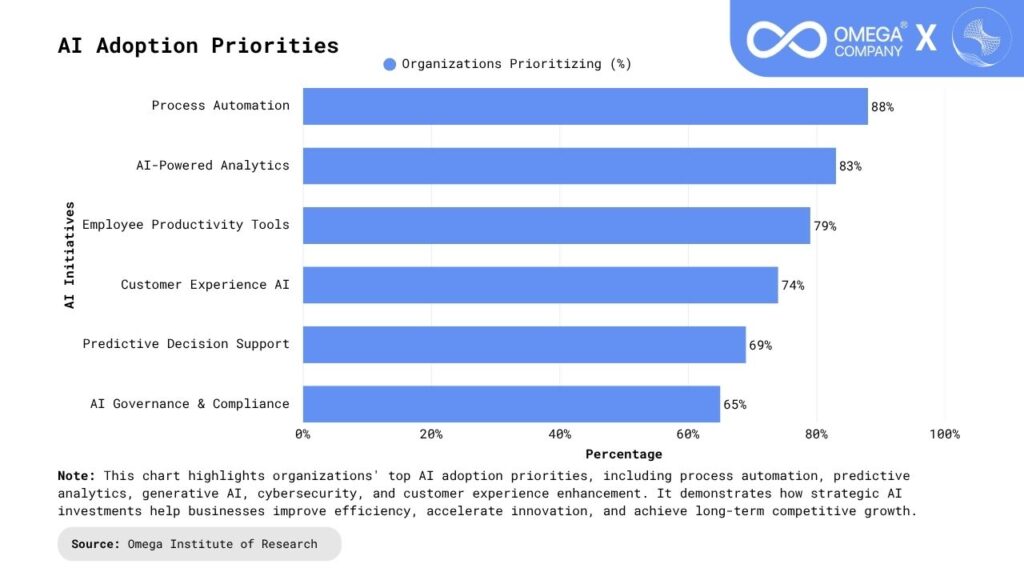
Why Companies Fear AI Transformation
Operational Downtime: Organizations often worry that introducing AI could disrupt production, customer service, or other mission-critical operations. Even brief interruptions can affect revenue, customer satisfaction, and overall business performance. As a result, many companies delay AI adoption to avoid operational risks.
Employee Resistance: Employees may view AI as a threat to job security or fear increased monitoring and unfamiliar technologies. Without clear communication and proper training, resistance can slow adoption and reduce the effectiveness of AI initiatives. Building trust and involving employees early helps create a smoother transition.
Legacy Infrastructure: Many businesses still rely on older ERP, CRM, and operational systems that were not designed for modern AI capabilities. Leaders often assume these systems are difficult or costly to integrate, creating hesitation around transformation. However, gradual integration strategies can extend the value of existing infrastructure.
Data Quality Challenges: AI systems rely on accurate, consistent, and well-structured data to deliver reliable insights. Poor-quality or incomplete data can lead to inaccurate predictions, reduced efficiency, and a lack of confidence in AI-driven decisions. Establishing strong data governance is essential for successful AI implementation.
Cybersecurity Risks: Organizations handling sensitive customer, financial, or operational data must ensure AI adoption does not introduce new security vulnerabilities. Concerns about data breaches, unauthorized access, and AI-powered cyber threats often slow implementation efforts. Strong security frameworks and continuous monitoring help reduce these risks.
Regulatory Compliance: Industries such as healthcare, finance, and government operate under strict regulatory requirements that demand transparency and accountability. AI systems must be explainable, auditable, and compliant with industry standards to avoid legal and reputational risks. Responsible AI governance ensures innovation while maintaining regulatory compliance.
Building the Right AI Strategy
Organizations should begin their AI journey by aligning every initiative with clearly defined business objectives rather than adopting technology for its own sake. Leaders should evaluate where operational costs are highest, which processes consume the most employee time, where customers experience friction, which decisions depend on repetitive analysis, and where predictive insights can create a lasting competitive advantage. By answering these strategic questions, businesses can identify high-impact opportunities that deliver measurable value and support long-term growth. A well-defined AI strategy ensures resources are invested in projects that improve efficiency, enhance customer experiences, and strengthen decision-making across the organization. Ultimately, successful AI adoption is driven by measurable business outcomes, ensuring technology becomes a catalyst for sustainable transformation rather than an isolated innovation initiative.
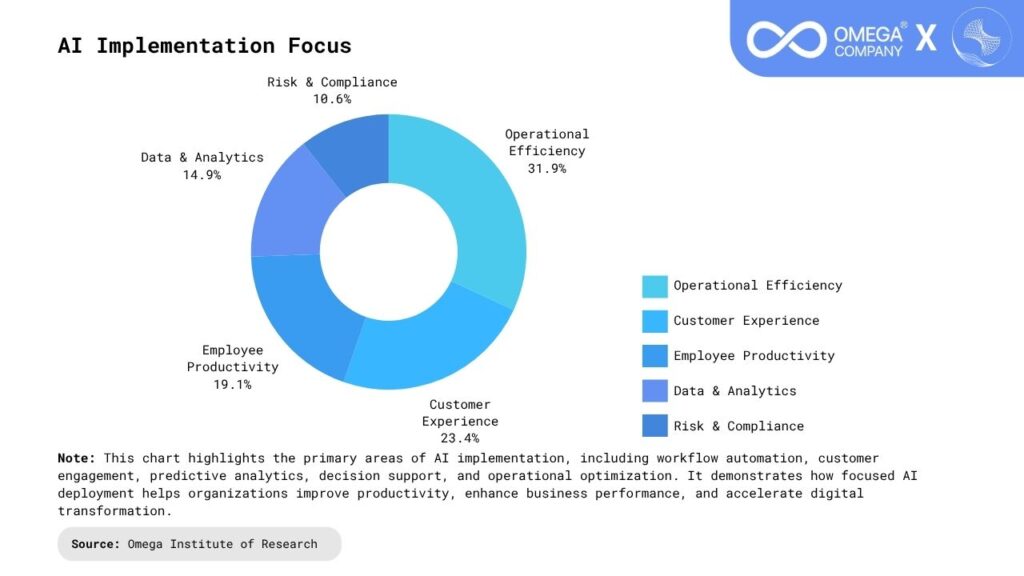
Assessing Organizational AI Readiness
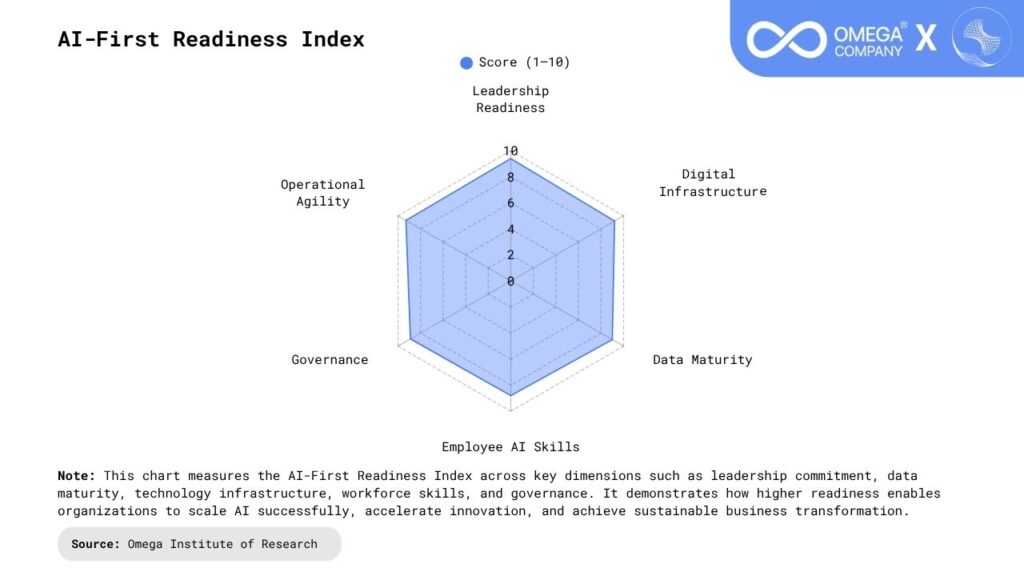
Leadership Commitment: Successful AI transformation begins with committed leadership that actively champions AI initiatives and communicates a clear long-term vision. Executives must align AI investments with business objectives, encourage innovation, and foster a culture that embraces continuous learning and change. Strong leadership ensures organization-wide support and sustained momentum throughout the transformation journey.
Data Readiness: High-quality, accurate, secure, and well-governed data is the foundation of every successful AI initiative. Organizations should ensure their data is complete, accessible, consistent, and properly managed so AI systems can generate reliable insights and informed recommendations. Investing in data quality builds trust and improves the effectiveness of AI-driven decisions.
Technology Infrastructure: A modern technology infrastructure provides the foundation needed to deploy and scale AI solutions efficiently. Cloud platforms, APIs, integration capabilities, and scalable computing environments enable organizations to connect existing systems with AI while minimizing operational disruptions. A flexible infrastructure also supports future innovation as business requirements evolve.
Workforce Skills: Employees need the knowledge and confidence to work effectively alongside AI technologies. Developing skills in AI literacy, data interpretation, automation tools, prompt engineering, and human-AI collaboration enables teams to use AI responsibly and maximize its business value. Continuous training ensures the workforce remains adaptable as AI capabilities continue to advance.
Governance Framework: A comprehensive governance framework establishes clear guidelines for the responsible use of AI across the organization. Policies should define accountability, ethical standards, data privacy requirements, model monitoring practices, and appropriate human oversight to ensure transparency and regulatory compliance. Effective governance builds trust while reducing operational, legal, and reputational risks.
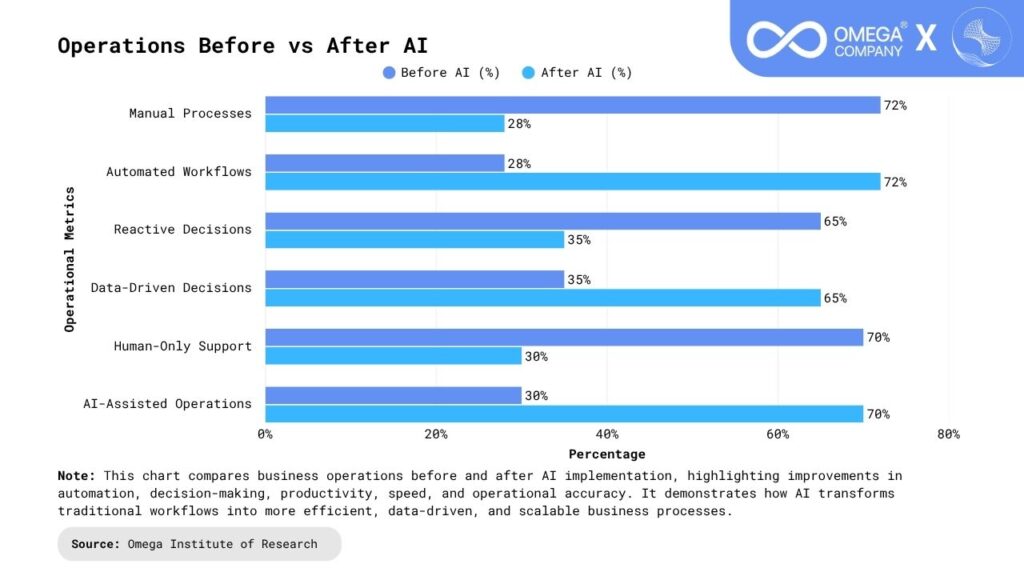
Managing Organizational Change
A common misconception is that organizations must replace all existing software before they can successfully adopt AI. In reality, modern AI solutions are designed to integrate with existing ERP, CRM, HR, financial, supply chain, and manufacturing systems through APIs, middleware, and cloud-based integration technologies. This approach allows businesses to enhance current operations with intelligent capabilities while preserving the value of previous technology investments. By integrating AI alongside legacy applications instead of replacing them, organizations can minimize operational disruption, reduce implementation costs, and accelerate deployment. This gradual modernization strategy enables businesses to improve efficiency, strengthen decision-making, and build a scalable foundation for future innovation without interrupting core operations.
The Future of AI-First Enterprises
The next generation of enterprises will combine artificial intelligence with automation, cloud computing, advanced analytics, digital twins, edge computing, robotics, and intelligent agents to create smarter and more connected business ecosystems. These technologies will enable organizations to anticipate customer needs, optimize operations in real time, personalize products and services at scale, and support autonomous business processes with greater accuracy and efficiency. AI will also play a critical role in improving sustainability by optimizing resource utilization, reducing waste, and enabling data-driven innovation across every business function. As AI capabilities continue to evolve, organizations will become more agile, resilient, and capable of responding quickly to changing market conditions and customer expectations. Businesses that invest in building AI capabilities today will be better positioned to achieve long-term competitive advantage, accelerate innovation, and lead the future of digital transformation.
Conclusion
Building an AI-first organization does not require disrupting the systems, people, or processes that already drive business success. The most successful transformations begin with a clear strategy, high-quality data, well-defined use cases, and gradual integration into existing workflows, enabling organizations to modernize operations while maintaining stability and minimizing risk. An AI-first approach creates a culture where intelligent technologies and human expertise work together to accelerate decision-making, improve operational efficiency, enhance customer experiences, and drive continuous innovation. Organizations that prioritize responsible AI governance, workforce development, and scalable innovation will be better equipped to adapt to changing market demands and emerging technologies. Ultimately, AI is no longer just a technology investment, it is becoming the foundation of resilient, agile, and future-ready enterprises that can sustain long-term growth and competitive advantage.
- https://www.splunk.com/en_us/blog/learn/ai-first.html
- https://www.aubergine.co/insights/building-an-ai-first-organization
- https://www.bcg.com/publications/2025/how-companies-can-prepare-for-ai-first-future
- https://www.rolandberger.com/en/Insights/Publications/Re.Imagine-how-business-works.html
- https://infounderswords.substack.com/p/how-to-build-an-ai-first-company
Subscribe
Select topics and stay current with our latest insights
- Functions