

- Industries
Industries
- Functions
Functions
- Insights
Insights
- Careers
Careers
- About Us

Business Process Management







In today’s rapidly changing world, with rising customer expectations and intense competition, organizations must adapt to stay ahead. Business Process Management (BPM) offers a transformative approach that goes beyond simple task management to reimagine how work is done, driving operational efficiency and effectiveness. Whether you’re a growing startup scaling your operations or an established enterprise navigating digital disruption, BPM empowers you to streamline processes, enhance performance, and deliver long-term value. By continuously improving workflows, organizations can improve collaboration, reduce inefficiencies, and drive innovation. BPM provides the framework to continuously refine workflows and remain agile in an ever-evolving market. It’s the key to unlocking sustainable success in the face of constant change.
What Is Business Process Management?
At its core, Business Process Management (BPM) is a disciplined, methodical approach used by organizations to make their operations more efficient, agile, and aligned with their strategic goals. It encompasses the analysis, design, implementation, monitoring, and continual improvement of business processes. However, BPM is not merely a set of technical procedures—it is a philosophy of continuous improvement that embeds adaptability and operational excellence into the culture of an organization. It encourages a holistic view of processes across departments, fostering collaboration and consistency. Ultimately, BPM empowers businesses to respond proactively to change while delivering greater value to customers and stakeholders.
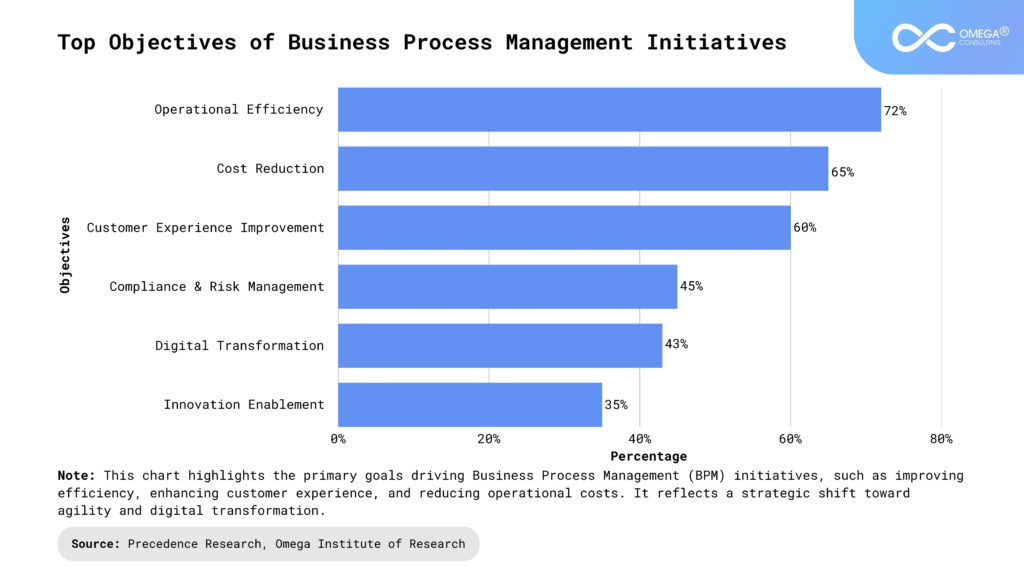
Align operations with strategic goals: Business Process Management ensures that every activity and workflow contributes directly to overarching business objectives. It bridges the gap between strategy formulation and day-to-day execution by providing clarity and structure. As a result, organizations maintain focus, allocate resources efficiently, and measure success against meaningful benchmarks. BPM helps create transparency and accountability across departments, aligning team efforts with enterprise priorities.
Eliminate inefficiencies and redundancies: By analyzing and mapping processes, BPM uncovers unnecessary steps, duplicate tasks, and resource wastage. Streamlining these processes leads to faster turnaround times, reduced costs, and improved productivity. This continuous pruning of inefficiencies ensures that operations remain lean and performance-driven. It also frees up time and resources that can be redirected toward strategic initiatives and innovation.
Enhance customer and employee experiences: Optimized processes reduce delays, errors, and frustration, creating smoother interactions for both customers and staff. Employees benefit from clearer roles, improved tools, and less manual work, increasing job satisfaction. For customers, quicker service and consistent delivery improve loyalty, trust, and overall satisfaction. A seamless process journey enhances brand perception and strengthens long-term relationships with all stakeholders.
Drive innovation with agility and clarity: BPM creates a flexible framework that allows organizations to test, iterate, and scale new ideas with minimal disruption.It enables quick adaptation to market shifts, regulatory changes, and technological advancements. Through structured process improvement, innovation becomes a routine practice rather than a reactive response. This proactive approach empowers teams to seize new opportunities and deliver value faster than the competition.
Why BPM Is Essential
Operational Efficiency: BPM helps identify process gaps, bottlenecks, and redundancies that slow down performance. Through standardization and automation, organizations reduce cycle times, minimize errors, and lower operational costs. By creating repeatable and optimized workflows, BPM enhances consistency and reliability across the business. This leads to better resource utilization and allows companies to scale more effectively.
Business Agility: Markets evolve rapidly, and businesses must respond quickly to stay competitive. BPM provides a flexible framework for adapting workflows in real time, supporting fast decision-making and execution. Changes can be implemented with minimal disruption, reducing the risk of downtime or lost opportunities. It equips organizations with the resilience to navigate uncertainty and seize emerging trends.
Customer-Centric Delivery: Streamlined processes result in smoother, faster, and more consistent customer interactions. BPM ensures that customer journeys from onboarding to after-sales support are responsive and frictionless. It helps eliminate pain points, personalize engagement, and ensure service quality across every touchpoint. A well-managed process boosts customer satisfaction, loyalty, and long-term business growth.
Regulatory Compliance: With BPM, businesses can enforce internal standards, manage documentation, and track audit trails effectively. Transparent, controlled processes make it easier to comply with evolving regulatory requirements. Automation and monitoring help detect compliance issues early, reducing legal and financial risks. This not only ensures accountability but also builds trust with regulators and stakeholders.
Workforce Empowerment: Clear, well-documented processes reduce ambiguity and improve employee confidence. BPM liberates teams from repetitive manual tasks through automation and smart delegation. This allows staff to focus on higher-value activities like problem-solving, creativity, and innovation. Empowered employees are more engaged, productive, and aligned with organizational goals.
The BPM Lifecycle
Design
Lay the foundation for process improvement by understanding and documenting how things are currently done and how they should be done.
- Document Existing Processes: Begin by thoroughly documenting how current workflows operate across departments. This includes identifying each task, decision point, input, output, and involved stakeholder. Visual tools like flowcharts or swimlane diagrams help to make the workflow more understandable.
- Define Improvements: Analyze the documented process to pinpoint inefficiencies, redundancies, or manual steps that could be eliminated or improved. Gather input from stakeholders who experience the process daily to identify pain points. Use this insight to propose a more streamlined and effective version of the process.
- Set Goals: Establish clear objectives for what the redesigned process should achieve, such as reducing turnaround time or increasing accuracy. Goals should be SMART—Specific, Measurable, Achievable, Relevant, and Time-bound. This creates alignment across the organization and guides subsequent decisions.
- Clarify Roles and Responsibilities: Assign each task or activity in the process to specific individuals or teams. Clear ownership reduces confusion, enhances accountability, and improves communication across departments. A RACI (Responsible, Accountable, Consulted, Informed) matrix can be useful here.
- Expected Outcomes: By the end of the design phase, there should be a comprehensive blueprint of the optimized “to-be” process. This includes documentation, roles, goals, and any assumptions made. This foundation will guide all following phases in the BPM lifecycle.
Model
Translate the designed process into a dynamic, visual representation to predict how it will perform in various conditions.
- Simulate Process Variations: Model the proposed process using BPM software to visualize how it behaves under different conditions. Try varying inputs like demand levels, task durations, and staff availability. These simulations help identify weak spots and prepare for real-world variability.
- Predict Performance: Analyze the model to forecast performance metrics such as throughput, resource usage, and total process time. This quantitative insight helps validate whether the new process meets the desired goals. Stakeholders can also evaluate whether expectations are realistic or need adjustment.
- Test Scenarios: Use “what-if” scenarios to test how the process behaves in adverse conditions, such as delays, system failures, or staff shortages. This allows risk mitigation before implementation. Simulated stress-testing ensures robustness and process resilience.
- Identify Risks and Inefficiencies: Even in a redesigned model, inefficiencies and risks may surface through simulation. Modeling helps detect issues like unnecessary approvals, potential bottlenecks, or compliance gaps. Early detection saves time and costs during implementation.
Execute
Implement processes using BPM software or automation tools. Integrate with other systems for seamless operation.
- Deploy Processes: Using BPM tools, convert your model into a live, operational process that users interact with. BPM platforms often allow drag-and-drop configuration of workflows without deep programming knowledge. Deployment marks the transition from planning to real-world use.
- Automation Tools: Automate repetitive or rules-based tasks using RPA bots or workflow engines. Automation reduces human error, improves speed, and frees up employees for higher-value work. Integrating AI capabilities can also enhance decision-making within the process.
- System Integration: Ensure the new process communicates seamlessly with other enterprise systems like ERP, CRM, and HR platforms. Integration enables data flow, reduces duplication, and enhances process accuracy. APIs and middleware can help achieve this interoperability.
- Change Management: Introduce the new process thoughtfully to employees by offering training and addressing resistance. Good change management includes communication plans, feedback mechanisms, and ongoing support. This step is crucial to ensure user adoption and long-term success.
- Real-world Activation: Monitor the go-live phase carefully to ensure the process performs as expected. Initial bugs or gaps may emerge and require quick fixes or workarounds. Early performance should be compared to modeling predictions to validate effectiveness.
Monitor
Track key performance indicators (KPIs) in real time. Identify variances, delays, or compliance issues early.
- Track KPIs: Continuously monitor key performance indicators to evaluate process effectiveness. Metrics may include cycle time, cost per transaction, accuracy rates, or customer satisfaction. Dashboards and analytics tools can help visualize performance in real time.
- Real-time Insights: Leverage monitoring tools to get instant alerts when performance deviates from targets. Real-time visibility allows for proactive corrections and prevents small issues from escalating. It also provides decision-makers with actionable information.
- Compliance Checks: Ensure the process adheres to internal policies and external regulatory requirements. Monitoring tools can flag any deviations from standard procedures or missed approvals. This is especially important in highly regulated industries like healthcare or finance.
- Feedback Loops: Gather qualitative feedback from users interacting with the process daily. Their insights can highlight friction points not visible in the data. Structured surveys, interviews, or in-app feedback options can support this continuous improvement approach.
- Alerts and Escalations: Set up automated alerts for anomalies, missed deadlines, or compliance failures. Escalation mechanisms ensure that unresolved issues are quickly brought to managerial attention. This improves responsiveness and process reliability.
Optimize
Use data insights to refine and evolve processes. Improve speed, quality, and cost-effectiveness continuously.
- Analyze Performance Data: Collect and analyze data over time to understand long-term trends and improvement opportunities. Use tools like process mining to identify deviations and root causes. Insights gained here guide meaningful changes for future cycles.
- Enhance Efficiency: Identify steps that can be eliminated, combined, or redesigned for greater efficiency. Lean methodologies can help eliminate waste, while Six Sigma approaches improve quality. Efficiency gains directly impact speed, cost, and user satisfaction.
- Boost Quality and Speed: Make small iterative improvements to increase accuracy and reduce turnaround time. Faster processes enhance customer experience, while higher quality minimizes rework. These changes compound over time for significant gains.
- Cost-effectiveness: Use performance metrics and ROI analysis to justify changes that reduce operational costs. Automation, resource reallocation, or process simplification are typical areas for savings. Sustainable cost reductions strengthen business competitiveness.
- Agile Evolution: Treat process improvement as a continuous, agile cycle—not a one-time event. Business conditions, technologies, and customer expectations evolve, and so must your processes. A flexible optimization strategy ensures long-term process relevance and value.
BPM in the Digital Age
Modern Business Process Management (BPM) is no longer limited to static diagrams or manual interventions. Today’s BPM is dynamic, data-driven, and deeply integrated with digital transformation initiatives. It enables organizations to respond faster to change, enhance agility, and deliver exceptional customer experiences. By blending traditional process thinking with modern technology, BPM becomes a strategic asset, not just an operational tool.
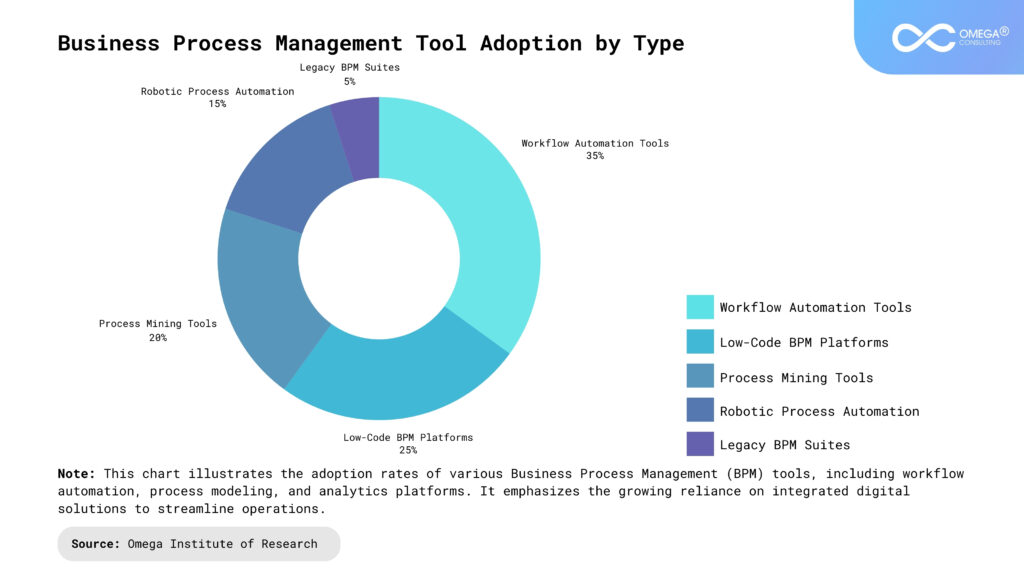
AI and Machine Learning: Artificial Intelligence (AI) and Machine Learning (ML) have revolutionized BPM by enabling smarter, adaptive processes. These technologies can analyze large volumes of data to automate complex decision-making and predict future process outcomes. They can also detect anomalies in workflows, such as fraud or inefficiencies, often before they become critical. Over time, AI improves process accuracy, personalization, and responsiveness across functions.
Robotic Process Automation (RPA): RPA automates routine, rule-based tasks that were traditionally performed by humans, such as data entry, invoice processing, or report generation. Bots can work 24/7, across systems, without fatigue or errors, significantly improving efficiency and throughput. By taking over these repetitive tasks, RPA allows employees to focus on more strategic and creative work. This leads to reduced operational costs and a more agile workforce.
Low-code Platforms: Low-code development platforms empower non-technical users to build and modify workflows using visual interfaces and minimal coding. These platforms drastically reduce the time and resources needed to deploy and scale BPM solutions across departments. Business teams can prototype and iterate quickly, accelerating digital transformation initiatives. Low-code BPM bridges the gap between IT and business, fostering more innovation and ownership.
Advanced Analytics: Modern BPM systems are equipped with real-time analytics that provide deep visibility into process performance. These insights help organizations identify bottlenecks, forecast demand, and make informed decisions with confidence. Dashboards, predictive models, and process mining tools uncover hidden inefficiencies and areas for optimization. With data at the core, BPM becomes an engine for continuous improvement and strategic foresight.
Leading BPM Platforms
Some top tools transforming business workflows include:
Appian: Appian is a powerful low-code BPM platform that combines process automation, case management, and AI in a single interface. It allows businesses to quickly design, execute, and optimize workflows with minimal coding effort. Appian excels in unifying data across systems and enabling real-time decision-making. With strong mobile capabilities and cloud support, it’s ideal for enterprise-wide digital transformation.
Bizagi: Bizagi offers a user-friendly, model-driven BPM suite that empowers both business and IT teams to collaborate on process design and automation. Its intuitive drag-and-drop interface makes it easy to build, simulate, and deploy processes rapidly. Bizagi supports both cloud and on-premise deployments, with strong integration capabilities. It’s especially well-suited for organizations looking to digitize operations without extensive developer resources.
IBM Business Automation Workflow: IBM’s BPM platform blends workflow automation, content management, and AI to orchestrate complex business processes. It provides robust analytics, governance, and scalability features for large enterprises with mission-critical needs. With its integration into IBM’s broader automation and AI ecosystem, it delivers end-to-end process visibility and intelligent decision support. This makes it a strong choice for highly regulated industries and global operations.
Nintex: Nintex is known for its simplicity and speed in automating business processes, especially within Microsoft environments like SharePoint and Office 365. It offers a wide range of tools, including workflow automation, document generation, e-signatures, and RPA. Nintex’s low-code environment empowers business users to build workflows without IT intervention. It’s a great fit for organizations seeking rapid deployment and ease of use.
Pega: Pega is a highly scalable BPM and CRM platform designed for large enterprises focused on digital transformation. It uses AI-powered decisioning and case management to create dynamic, context-aware workflows. Pega’s unified architecture supports real-time customer engagement and intelligent automation across channels. Its strength lies in automating complex, end-to-end processes in industries like banking, insurance, and healthcare.
Camunda: Camunda is an open-source BPM platform favored by developers for its flexibility, transparency, and standards-based approach. It supports BPMN for workflow modeling, CMMN for case management, and DMN for decision automation. Camunda easily integrates with microservices and custom applications, making it ideal for organizations with complex, distributed systems. It provides granular control and visibility, enabling high-performance process automation.
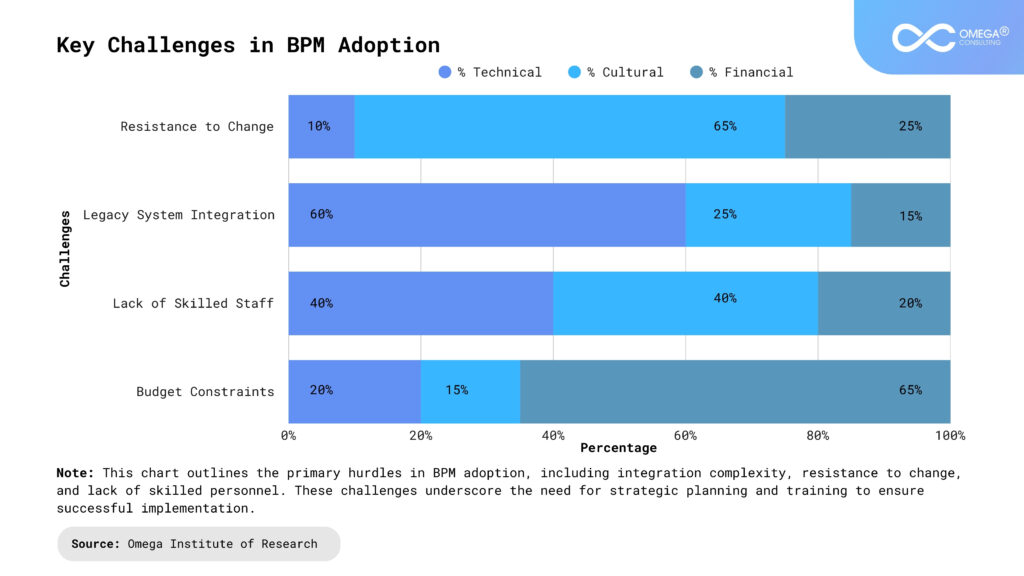
BPM Challenges to Address
Despite its benefits, BPM initiatives can stumble due to:
Change resistance: Employees may resist BPM initiatives due to fear of job loss, disruption, or added complexity in their daily tasks. This emotional and cultural barrier can significantly hinder adoption, even if the technology works perfectly. Change management and transparent communication are essential to reduce resistance. Engaging employees early helps them feel part of the transformation rather than victims of it.
Process complexity: Cross-functional processes often span multiple departments, systems, and stakeholders, making coordination and consistency a challenge. Misalignment or lack of visibility across teams can create bottlenecks, delays, or compliance issues. Documenting, analyzing, and modeling these processes in detail is essential to avoid fragmentation. Without a holistic view, optimization efforts may be limited or counterproductive.
Lack of executive sponsorship: When leadership fails to actively support BPM efforts, projects often lack the authority, funding, and visibility needed for success. Executive sponsorship provides strategic direction and helps remove roadblocks when cross-departmental cooperation is needed. It also signals organizational commitment, encouraging teams to stay engaged. BPM should be framed as a strategic enabler, not just an IT initiative.
Misplaced automation: Automating the wrong tasks such as highly variable, low-impact, or customer-sensitive processes can backfire and increase risk. Not every manual step should be automated, especially without a clear understanding of its context and value. Misjudged automation can lead to increased complexity, system errors, or customer dissatisfaction. A thoughtful analysis must precede any automation effort to ensure it adds real value.
Best Practices for BPM Success
Start with a pilot: Begin your BPM journey with a small, manageable process to test tools, approaches, and team readiness. A pilot helps uncover practical challenges and build confidence through early wins. It creates a feedback loop that guides adjustments before enterprise-wide scaling. Successful pilots generate momentum and evidence to justify further investment in BPM.
Involve stakeholders: Actively engage all relevant stakeholders—from frontline employees to department heads—during design, modeling, and execution phases. This inclusive approach builds trust, uncovers real-world insights, and ensures the process fits actual workflows. When people feel heard and valued, they’re more likely to support and champion the changes. Stakeholder input improves relevance and reduces resistance.
Stay agile: Treat BPM as a living system that evolves with business needs, customer expectations, and technology advancements. Use agile methodologies to iterate quickly, learn from feedback, and refine processes in real time. This flexibility keeps processes resilient and aligned with changing conditions. Static processes can quickly become outdated and lose their effectiveness.
Tie to strategy: Ensure BPM efforts are aligned with your organization’s strategic goals, such as customer satisfaction, efficiency, or compliance. Processes should directly support the company’s mission, KPIs, and competitive advantages. This alignment helps secure funding and executive support while maximizing business impact. BPM should not be a siloed initiative; it must drive measurable strategic value.
Invest in skills: Equip teams with the necessary skills in BPM tools, methodologies, process analysis, and change management. Training and upskilling foster competence, reduce reliance on external consultants, and empower continuous improvement. Skilled teams can better identify opportunities, resolve issues, and sustain progress. Investing in people is as critical as investing in technology for BPM success.
The Future of BPM
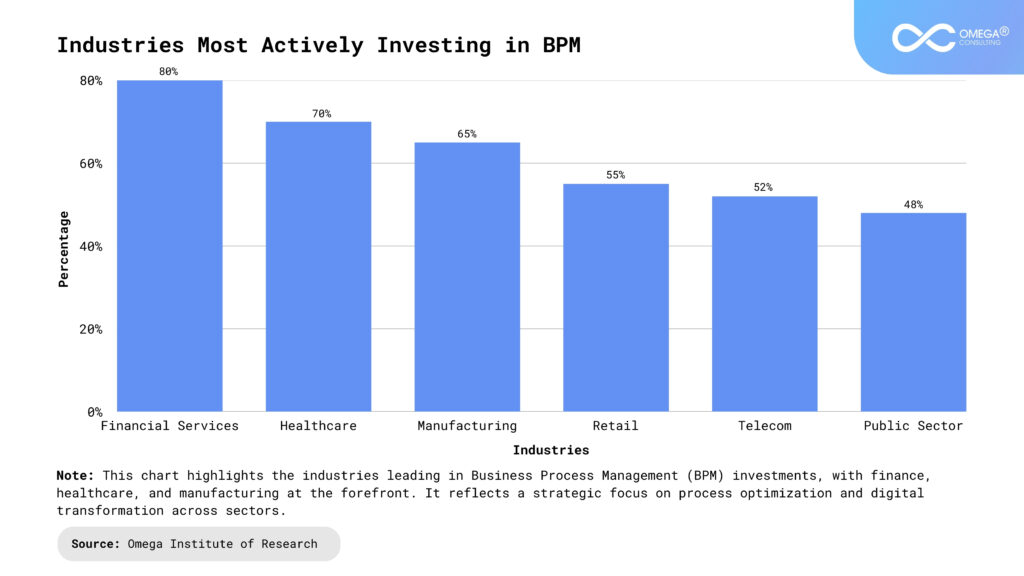
As technology continues to evolve, Business Process Management (BPM) is transforming from a static, operational tool into a dynamic, intelligent framework for strategic business performance. Future BPM systems will not only manage workflows but also predict issues, adapt autonomously, and learn continuously from data patterns. This evolution will empower organizations to make smarter decisions faster, enabling real-time responsiveness to market changes. BPM will be deeply embedded in digital ecosystems, supporting innovation and resilience. The future is not just automated, it’s adaptive, proactive, and intelligent.
Process Orchestration Across Hybrid Environments: Modern businesses operate across a mix of cloud-based systems, legacy on-premise infrastructure, and remote work environments. Future BPM tools will seamlessly orchestrate processes across these hybrid environments, ensuring unified execution regardless of location or platform. Integration capabilities will evolve to support real-time data exchange and interoperability between distributed systems. Teams will collaborate across geographies with transparent, centralized process visibility. This will be essential for managing complexity and scaling agility in a globally distributed business landscape.
AI-Driven Optimization Based on Real-Time Data: Artificial Intelligence will play a central role in enhancing BPM by using real-time data to continuously optimize processes. AI algorithms will identify inefficiencies, recommend improvements, and even implement changes autonomously in some scenarios. Over time, these systems will learn from outcomes and refine decision-making rules, boosting speed and precision. This intelligence reduces the need for manual intervention while enhancing operational excellence. Ultimately, AI-driven BPM will enable organizations to stay ahead of disruptions and deliver superior customer value.
Predictive Analytics to Anticipate and Prevent Workflow Disruptions: Instead of reacting to delays or failures, predictive analytics will allow BPM systems to anticipate disruptions before they occur. By analyzing historical patterns, system logs, and external variables, BPM platforms can forecast issues like resource shortages, compliance risks, or demand surges. Proactive alerts and scenario modeling will empower teams to take preventive actions in advance. This shift from reactive to predictive management will increase reliability, reduce costs, and improve service levels. It’s about moving from firefighting to foresight-driven process management.
Conclusion
Business Process Management (BPM) is not just a one-time project; it’s a strategic mindset that drives continuous improvement. By embracing BPM, organizations can unlock enhanced efficiency, agility, and innovation, positioning themselves to thrive in an ever-evolving business environment. In today’s competitive landscape, those who optimize their processes will be the ones who define success and outperform their competitors. Whether you’re fixing broken workflows or designing the future of your operations, BPM serves as a guiding compass to achieve smarter, faster, and more impactful outcomes. With BPM, organizations turn operational challenges into opportunities for growth and excellence.
- https://www.sciencedirect.com/science/article/pii/S0166361521000117
- https://www.techtarget.com/searchcio/definition/business-process-management
- https://link.springer.com/article/10.1007/s10257-024-00689-9
- https://onlinelibrary.wiley.com/doi/10.1155/2013/507984
Subscribe
Select topics and stay current with our latest insights
- Functions