

- Industries
Industries
- Functions
Functions
- Insights
Insights
- Careers
Careers
- About Us

Cloud Load Balancing







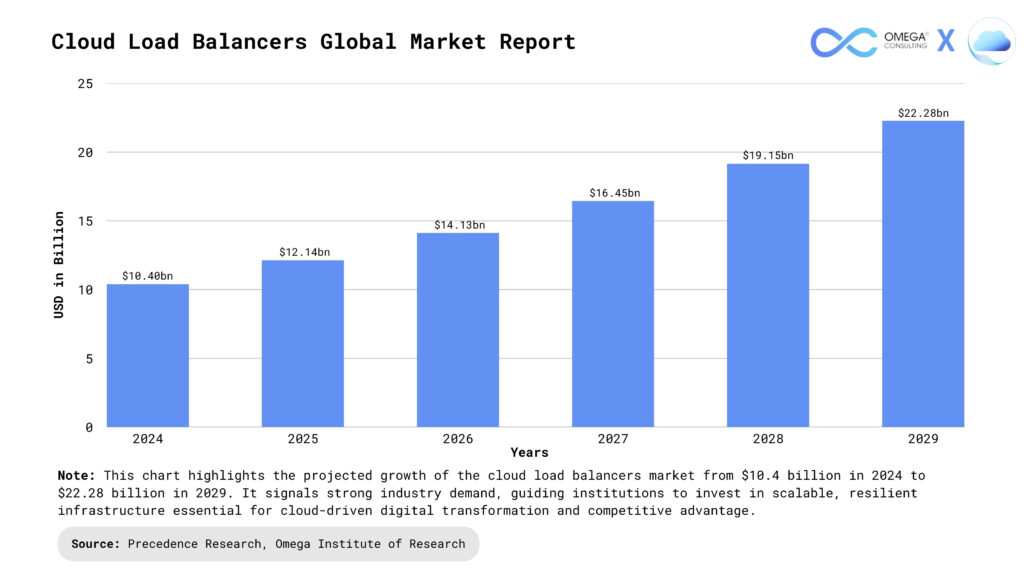
Cloud load balancing is a strategic imperative for modern digital infrastructure, essential for competitive advantage as organizations migrate workloads to the cloud. It efficiently distributes network traffic across multiple backend resources (i.e. virtual servers, containers, and IP addresses) preventing bottlenecks and enhancing application performance and user experience. Unlike traditional hardware load balancers, cloud solutions offer dynamic scalability, flexible pay-as-you-go models, and deep integration with cloud-native services. This makes them an indispensable tool for building resilient, high-performing, and cost-effective cloud-based applications that swiftly adapt to market demands. This article will delve into the strategic imperatives driving cloud load balancing adoption, explore its key capabilities and their business implications, detail its diverse applications across industries, discuss the significant strategic advantages it offers, and highlight common considerations for successful implementation.
What is Cloud Load Balancing?
Cloud load balancing is a managed service provided by cloud providers that intelligently distributes incoming network traffic among a dynamic group of healthy backend servers or resources. Its primary objective is to optimize resource utilization, maximize throughput, minimize response time, and, crucially, ensure the high availability and resilience of mission-critical applications. When a user or system sends a request to an application, the load balancer intelligently intercepts it and directs it to the most appropriate and available backend resource, leveraging predefined algorithms and real-time server health monitoring. Key components of cloud load balancing include:
Front-end IP Address/Load Balancer IP: This serves as the unified public entry point for all client requests. Clients connect to this address, and the load balancer then intelligently directs traffic to the most suitable backend resource, ensuring efficient distribution and seamless, uninterrupted access to critical applications.
Listeners: These define the protocols (e.g., HTTP, HTTPS, TCP, UDP) and ports for incoming client requests. They dictate how the load balancer receives and processes client connections, ensuring optimal routing based on the communication type and designated entry point.
Backend Pools/Target Groups: These are logical groupings of backend compute resources (e.g., virtual machines, containers, IP addresses, serverless functions) that collectively serve the application workload.
Health Checks: Load balancers continuously and proactively monitor the health and responsiveness of all backend resources within a pool. If a server fails to respond to a health check, the load balancer automatically and temporarily removes it from the active pool, preventing traffic from being sent to an unhealthy instance and thereby ensuring continuous service availability. Once the server recovers, it is seamlessly and automatically reintegrated into the pool.
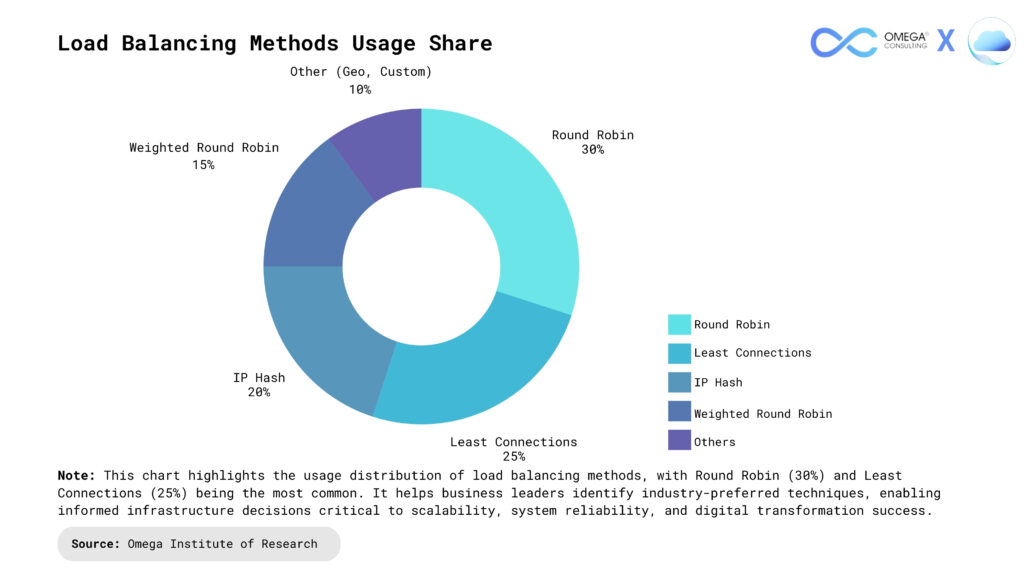
Load Balancing Algorithms/Rules: These algorithms are the core intelligence, determining which backend server handles each incoming request. Common methods include Round Robin (sequential distribution), Least Connection (directing to servers with fewest active connections), Least Response Time (prioritizing the quickest responding server), IP Hash (ensuring client IP-based sticky sessions), and Weighted Least Connection/Round Robin (assigning traffic based on server capacity and pre-defined weights).
Session Persistence/Sticky Sessions: This critical feature ensures that a client’s subsequent requests are consistently directed to the same backend server they initially connected with. This is paramount for applications that maintain session-specific data on the server, ensuring a seamless and consistent user experience, especially in e-commerce and interactive platforms.
Unlike traditional hardware load balancers that necessitate significant upfront capital investment, complex physical installation, and continuous manual maintenance, cloud load balancers are software-defined, fully managed services provided by the cloud vendor. They offer instant provisioning, elastic scalability, and seamless integration with the broader cloud ecosystem, positioning them as a flexible, cost-effective, and agile solution for modern cloud architectures that drive digital transformation.
Key Capabilities: Driving Business Outcomes
Cloud load balancing services come equipped with a rich set of capabilities that deliver advanced traffic management, robust security, and seamless integration, directly translating into tangible business advantages:
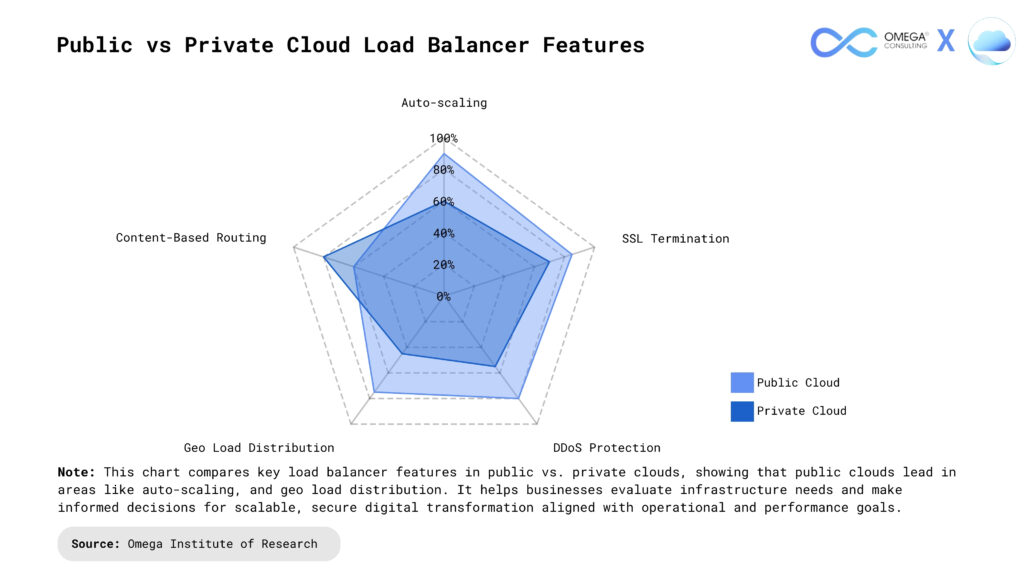
Elastic Scalability: Cloud load balancers dynamically adjust capacity to traffic, ensuring peak performance and cost efficiency. This eliminates manual provisioning and costly over-provisioning, allowing organizations to adapt infrastructure with unprecedented agility to demand fluctuations.
Global Load Balancing (GSLB): Global Server Load Balancing (GSLB) distributes traffic across regions, boosting availability and performance for global users by directing them to the nearest healthy data center. It also ensures disaster recovery by routing traffic away from outage-affected regions, crucial for business continuity.
Layer 4 (TCP/UDP) and Layer 7 (HTTP/HTTPS) Load Balancing: Cloud load balancers distribute traffic across network layers. Layer 4 offers fast, efficient distribution based on IP and port for high-volume traffic. Layer 7 enables intelligent routing based on HTTP headers and URLs, essential for microservices and advanced features like SSL termination.
SSL/TLS Termination and Offloading: Load balancers terminate SSL/TLS at the edge, decrypting traffic before it reaches backend servers. This offloads CPU-intensive processes, significantly improving server performance and security. Centralized certificate management at the load balancer further simplifies operations and enhances the overall security posture.
Web Application Firewall (WAF) Integration: Cloud load balancing integrates with Web Application Firewalls (WAFs) for robust protection against web exploits like SQL injection and cross-site scripting, and sophisticated DDoS attacks. This creates a proactive defense at the network edge, filtering malicious traffic and mitigating threats before they impact backend servers or critical data.
Content-Based Routing and Path-Based Routing: Leveraging Layer 7 capabilities, load balancers can intelligently route requests to different backend services or distinct microservices based on specific URL paths or content within the request. This capability is critical for optimizing modern microservices architectures and API gateways, enabling a single, intelligent load balancer to efficiently front multiple services based on the incoming request’s characteristics, thereby enhancing application agility and maintainability.
Strategic Applications: Driving Digital Transformation
Cloud load balancing underpins a wide array of mission-critical applications across diverse sectors, driving digital transformation and delivering tangible business value:
E-commerce and Retail: Cloud load balancing is indispensable for e-commerce platforms, critical for managing fluctuating traffic during peak sales events like Black Friday, preventing system crashes, and ensuring highly responsive and available websites. This directly translates to maximized sales and an uncompromised customer experience. It enables truly global reach and market expansion through optimized regional data center deployments, significantly reducing latency for international customers. For modern microservices architectures, it efficiently routes requests to specific backend services (e.g., product catalogs, payment processing, inventory management), optimizing overall system performance and enabling rapid feature deployment.
Media and Entertainment: Cloud load balancing is vital for delivering high-quality, uninterrupted streaming and immersive gaming experiences by intelligently distributing user requests across global server fleets, drastically reducing buffering and lag. This ensures premium content delivery and user satisfaction. It effectively manages massive concurrent user loads and sudden traffic surges during major live events, guaranteeing seamless content delivery and superior gameplay for a truly global audience, thereby protecting brand reputation and revenue streams.
Financial Services: In this highly regulated and performance-critical sector, cloud load balancing ensures ultra-high availability and ultra-low latency for online banking, high-frequency trading platforms, and mission-critical financial applications. It secures sensitive payment processing and efficiently balances internal data analytics applications, facilitating swift, secure transactions and timely access to critical financial intelligence, even under immense transactional loads.
Healthcare: Cloud load balancing is paramount in healthcare, ensuring continuous, secure access to Electronic Health Records (EHR) systems and critical patient data by intelligently distributing user requests across robust server infrastructures. It robustly supports telemedicine initiatives with highly reliable virtual consultations, and significantly aids medical research by efficiently distributing massive query loads across large bioinformatics databases for rapid, life-saving data analysis and discovery.
Software as a Service (SaaS) Providers: For SaaS companies, cloud load balancing is a cornerstone for optimizing service delivery by efficiently routing user requests within complex multi-tenant environments, significantly enhancing API management for seamless external integrations, and enabling truly global service delivery from distributed data centers worldwide. This ensures unparalleled high availability, responsiveness, and optimized performance, translating directly into enhanced customer satisfaction, retention, and business growth across a worldwide customer base.
Government and Public Sector: Cloud load balancing is instrumental in assisting government and public sector entities by effectively managing extremely high traffic volumes to critical citizen service portals during peak demand periods (e.g., tax filing seasons, disaster relief efforts). This ensures reliable and equitable access to essential public services for all citizens. It also provides robust support for emergency response systems and efficiently handles the processing of massive internal datasets, such as census data, enabling timely and accurate information access for critical decision-making.
Benefits: Fueling Business Growth and Resilience
Implementing cloud load balancing delivers a myriad of significant strategic advantages that are crucial for enabling and sustaining modern cloud-native applications, and indeed, for any organization pursuing a robust digital transformation agenda:
Improved High Availability and Fault Tolerance: Load balancers continuously and proactively monitor backend server health. If an instance fails, traffic is automatically and seamlessly redirected to healthy servers, ensuring uninterrupted service delivery and significantly minimizing downtime, which is absolutely critical for maintaining business continuity and protecting revenue streams.
Seamless Scalability and Elasticity: Cloud load balancers scale application capacity automatically to handle dynamic changes in traffic volume without manual intervention, crucial for adapting to market fluctuations. This empowers organizations to effortlessly accommodate sudden spikes in demand and efficiently scale down during quiet periods, thereby optimizing resource utilization, eliminating the need for costly over-provisioning, and ensuring optimal cost-performance ratios.
Increased Cost Efficiency and Optimized Resource Utilization: By intelligently distributing traffic and seamlessly integrating with auto-scaling capabilities, cloud load balancing fundamentally optimizes resource utilization. This ensures organizations only pay for the resources actively used, preventing unnecessary expenditure on idle or underutilized servers and leading to significant, quantifiable cost savings when compared to maintaining static, rigid, and over-provisioned traditional infrastructure.
Simplified Management and Reduced Operational Burden: As a fully managed service, cloud load balancing means the cloud provider handles all underlying infrastructure, routine maintenance, and security patching. This significantly reduces the operational burden on internal IT and DevOps teams, liberating their valuable time and resources to focus on strategic application development, innovation, and value creation, rather than undifferentiated heavy lifting of infrastructure management.
Enhanced Security Posture: Many cloud load balancers offer integrated, multi-layered security features like SSL/TLS termination, robust DDoS protection, and native Web Application Firewall (WAF) integration. These features collectively provide a crucial, proactive layer of defense at the network edge, effectively filtering malicious traffic and mitigating threats before they can compromise backend servers or sensitive data.
Global Reach, Performance Optimization, and Disaster Recovery: Global load balancing capabilities empower organizations to seamlessly distribute application traffic across multiple geographic regions or even continents. This not only significantly improves performance and responsiveness for global users by intelligently directing them to the closest available server but also provides robust, enterprise-grade disaster recovery and business continuity by automatically rerouting traffic away from regions experiencing outages or failures.
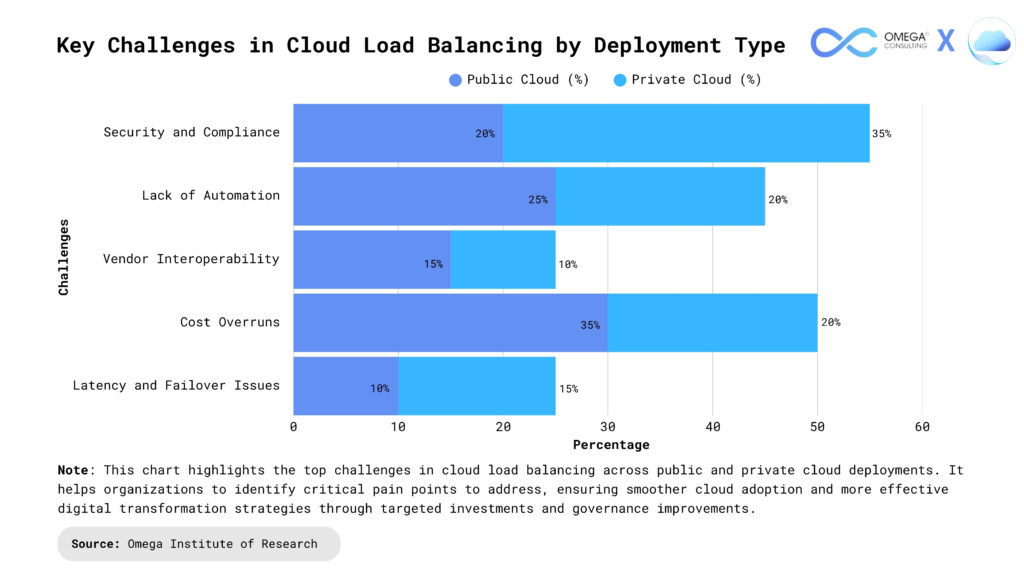
Challenges in Implementing Cloud Load Balancing
While cloud load balancing offers extensive benefits, organizations may encounter certain challenges during its implementation and ongoing management:
Complexity of Configuration: While cloud load balancing abstracts away much of the underlying infrastructure complexity, configuring advanced load balancing rules (e.g., content-based routing, session affinity, SSL policies) across multiple backend pools and listeners can still be intricate. This is particularly true for complex application architectures or multi-cloud deployments, necessitating skilled professionals and robust design.
Strategic Algorithm Selection: Choosing the optimal load balancing algorithm (e.g., Round Robin, Least Connection, IP Hash) for a specific application workload is a strategic decision that requires a deep understanding of application behavior, session state requirements, and anticipated traffic patterns. An incorrect choice can lead to suboptimal performance, impacting user experience and business metrics.
Cost Optimization for Advanced Features: While basic load balancing offers compelling cost-effectiveness, advanced features like Global Load Balancing, WAF integration, or higher throughput tiers can significantly increase expenditure. Organizations must carefully monitor and optimize their load balancer configurations to ensure expenditures align with business value and deliver maximum ROI.
TLS/SSL Certificate Management: While SSL/TLS termination at the load balancer simplifies security management for backend application servers, it centralizes certificate management for the entire application landscape. Ensuring certificates are up-to-date, properly configured, and securely stored across multiple load balancers (especially in complex or global deployments) can become a significant operational and compliance task, requiring robust automation and governance.
Mitigating Single Points of Failure: While load balancers are inherently designed for high availability, improper configuration or a lack of architectural redundancy (e.g., deploying across multiple availability zones or regions) can inadvertently introduce a single point of failure. A misconfiguration at the load balancer level could impact all traffic, severely compromising overall application availability and business operations.
Network Latency and Performance Optimization: While load balancing significantly improves overall application responsiveness, the load balancer itself introduces a minimal amount of network latency. Optimizing network paths and ensuring highly efficient communication between the load balancer and backend instances is crucial for ultra-low latency applications and those demanding real-time performance, such as financial trading platforms or IoT data processing.
Conclusion
Cloud load balancing is a cornerstone of modern cloud architecture and digital transformation. It enables organizations to build and operate highly available, performant, and scalable applications that adapt to fluctuating market demands. By intelligently distributing network traffic, load balancers optimize resource utilization, maximize throughput, and provide robust fault tolerance, thereby improving customer experience, ensuring business continuity, and safeguarding revenue. While implementation requires careful consideration of configuration complexity and cost optimization, the strategic benefits enhanced performance, increased availability, improved scalability, and greater cost efficiency make it a critical component of any forward-thinking cloud strategy. As cloud computing evolves with advancements in AI, serverless architectures, and edge computing, cloud load balancing will continue to adapt, reinforcing its role as a pivotal enabler of ongoing digital transformation, sustainable growth, and operational excellence in the cloud era.
- https://cloud.google.com/load-balancing
- https://www.akamai.com/glossary/what-is-cloud-load-balancing
- https://www.cloudflare.com/learning/performance/cloud-load-balancing-lbaas/
- https://www.zenarmor.com/docs/network-security-tutorials/what-is-load-balancing
- https://www.f5.com/glossary/cloud-load-balancing
- https://www.techtarget.com/searchcloudcomputing/definition/cloud-load-balancing
Subscribe
Select topics and stay current with our latest insights
- Functions