

- Industries
Industries
- Functions
Functions
- Insights
Insights
- Careers
Careers
- About Us

Cloud ROI: Measuring the True Value Beyond Cost Savings







The cloud is no longer just a place to store data or run applications; it’s a strategic powerhouse that can reshape business models, accelerate innovation, and unlock competitive advantages. Yet, when organizations evaluate the return on investment (ROI) of cloud adoption, many still look only at cost savings. That’s like judging a sports car solely by its fuel efficiency; it misses the performance, speed, and experience. In reality, the cloud’s value extends far beyond the balance sheet; it fuels agility, enables data-driven decision-making, and supports rapid scalability in a way traditional infrastructure simply cannot. It empowers businesses to respond to market changes faster, deliver better customer experiences, and explore entirely new revenue streams. Measuring cloud ROI means capturing these strategic benefits, not just the operational savings.
Moving Beyond the “Cost Savings Only” Mindset
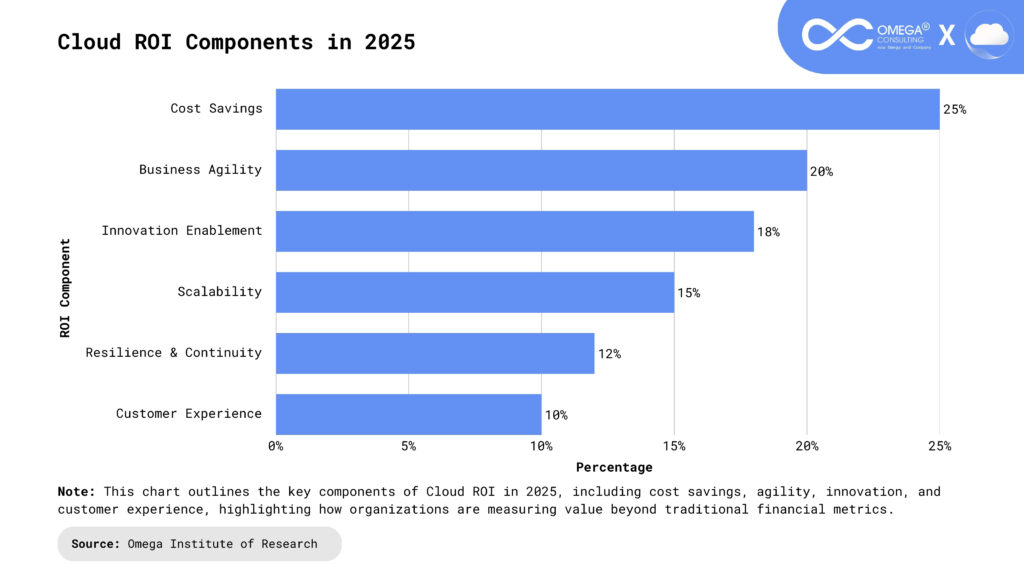
Cloud adoption discussions often focus on the CapEx-to-OpEx shift avoiding heavy upfront investments in servers and infrastructure. While that’s still valid, it represents only one part of the ROI story. Short-term savings from reduced hardware costs can be quickly outweighed by the long-term gains in productivity, scalability, and market agility. The real return lies in the opportunities the cloud enables, such as launching new revenue streams, accelerating time-to-market, and enhancing customer experiences. It also fosters innovation by allowing businesses to experiment, pivot, and deploy solutions with minimal risk. Beyond technology, it transforms how teams work breaking silos, improving collaboration, and driving a culture of continuous improvement. In an increasingly competitive landscape, these strategic advantages often deliver far more value than the initial cost savings ever could, making cloud adoption a true growth enabler.
Productivity and Operational Efficiency Gains
Cloud platforms streamline operations by automating repetitive tasks, enabling real-time collaboration, and eliminating the inefficiencies of legacy systems.
Streamlined Operations Through Automation: Cloud platforms streamline operations by automating repetitive tasks, enabling real-time collaboration, and eliminating the inefficiencies of legacy systems. This reduces human error, accelerates workflows, and ensures processes run consistently. As a result, businesses can reallocate resources to more strategic, high-impact initiatives instead of routine administration.
Higher Employee Productivity: Employee productivity rises as teams spend less time on manual updates, maintenance, and troubleshooting. With intuitive cloud tools, employees can access systems anytime, anywhere, ensuring uninterrupted workflows. This flexibility not only improves output but also boosts job satisfaction and retention.
Enhanced Collaboration Across Teams: Collaboration tools like cloud-based project management and file sharing improve cross-departmental coordination, especially in hybrid work setups. Teams can work on shared documents in real time, track progress transparently, and resolve issues faster. This seamless exchange of information accelerates decision-making and reduces project delays.Optimized IT Efficiency: IT efficiency increases as cloud providers handle security updates, scaling, and patch management freeing IT teams to focus on innovation. This shift reduces the operational burden on IT departments while ensuring systems remain secure and up-to-date. Over time, it lowers technical debt and improves infrastructure reliability.
Faster Onboarding and Training: Cloud-based systems allow new employees to get started quickly with access to centralized tools and resources. Automated setup processes and user-friendly interfaces shorten the learning curve. This helps businesses ramp up new hires faster and maintain consistent productivity across teams.
Data-Driven Decision-Making: With integrated analytics and reporting tools, cloud platforms give businesses instant insights into performance metrics and trends. Decision-makers can act quickly on real-time data, identifying opportunities and addressing challenges before they escalate. This proactive approach strengthens competitiveness and agility.
Agility and Scalability as Strategic ROI Drivers
In today’s business landscape, the ability to pivot quickly is priceless.
Elastic Scalability for Demand Fluctuations: The ability to pivot quickly is priceless. Elastic scalability lets organizations scale up during peak demand and scale down when not needed avoiding wasted resources. This flexibility ensures that businesses only pay for what they use, improving cost efficiency. It also allows companies to respond instantly to market surges or sudden traffic spikes without compromising performance.
Faster Time-to-Market: Rapid deployment means launching new features, services, or products in days instead of months. This speed not only boosts competitiveness but also enables organizations to seize opportunities before rivals do. Faster rollouts mean quicker feedback loops, enabling continuous improvement and customer satisfaction.
Risk-Free Experimentation: Experimentation without risk companies can test ideas in cloud sandboxes without heavy upfront investments. If an idea fails, resources can be released immediately without costly infrastructure write-offs. This encourages a culture of innovation where teams feel empowered to explore bold strategies.
Global Reach Without Heavy Infrastructure: Cloud infrastructure enables businesses to operate and serve customers across multiple regions without setting up physical offices or data centers. This makes it easier to enter new markets quickly and adapt offerings for local needs. It reduces the barriers to international expansion and accelerates growth opportunities.
Seamless Business Continuity: With built-in redundancy and disaster recovery capabilities, cloud platforms ensure minimal downtime during disruptions. Businesses can maintain operations even in the face of hardware failures, cyberattacks, or natural disasters. This resilience not only protects revenue streams but also strengthens customer trust and loyalty.
Innovation Enablement and New Revenue Streams
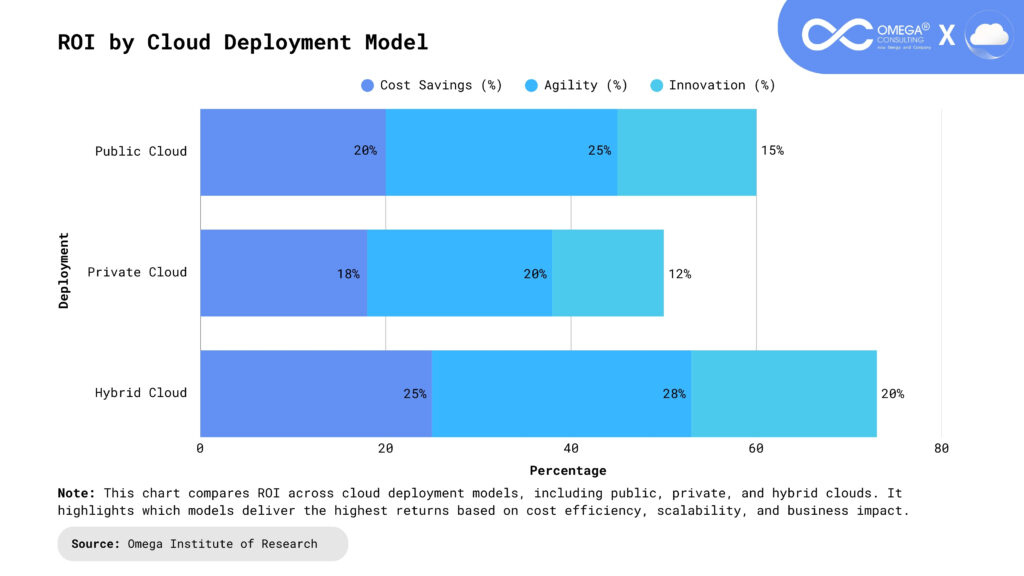
Cloud as an Innovation Engine: The cloud is not just an operational tool—it’s an innovation engine. By providing a flexible, on-demand infrastructure, it removes the traditional barriers to experimenting with bold ideas. Businesses can move from concept to prototype rapidly, minimizing the time between ideation and market launch.
Faster Digital Product Development and Market Entry: Companies can build digital products faster, enter new markets, and monetize data. With cloud-based development environments, teams can collaborate globally and iterate rapidly without hardware constraints. This agility helps capture opportunities that would otherwise pass by due to slow traditional development cycles.
Support for Microservices and API Integrations: Cloud-native architectures support microservices and API-based integrations, making it easier to create innovative customer-facing apps. These modular systems allow businesses to update individual components without overhauling the entire application. This speeds innovation while reducing maintenance complexity.
Lower Barrier to Experimentation with Emerging Tech: Cloud environments make it feasible to experiment with IoT, blockchain, AR/VR, and other emerging technologies without huge upfront costs. Companies can run small-scale pilots to validate business value before committing to full-scale deployment. This approach reduces risk while fostering a culture of exploration.
Creation of Entirely New Business Models: The cloud enables subscription-based services, platform marketplaces, and data-as-a-service models that were difficult to implement with traditional infrastructure. These new revenue streams can complement or even surpass existing ones, helping organizations diversify income and strengthen resilience against market fluctuations.
Risk Reduction and Business Resilience
Unplanned downtime, data loss, and cyberattacks can be financially devastating. Cloud solutions provide resilience in multiple ways:
Disaster Recovery as a Service (DRaaS): Unplanned downtime, data loss, and cyberattacks can be financially devastating. Disaster recovery as a service (DRaaS) ensures fast recovery with minimal downtime, enabling critical systems to be restored in hours or even minutes. Automated failover processes mean business operations can continue with little disruption, protecting both revenue and brand reputation.
Built-In Security and Compliance: Built-in security features like encryption, threat detection, and compliance support reduce risk exposure. Cloud providers continuously update their security protocols to address evolving threats, ensuring data is protected to the highest standards. This proactive security posture allows businesses to meet industry regulations without excessive internal resource strain.
Geographic Redundancy for Continuity: Geographic redundancy allows businesses to continue operations even if one data center is compromised. Data and workloads are mirrored across multiple locations, minimizing the impact of localized disasters. This ensures uninterrupted service delivery and maintains customer trust during crises.
Automated Backups and Data Versioning: Cloud platforms offer automated backups and data versioning, reducing the risk of accidental deletion or corruption. Businesses can quickly restore previous versions of files or databases without lengthy recovery procedures. This not only saves time but also minimizes costly downtime.
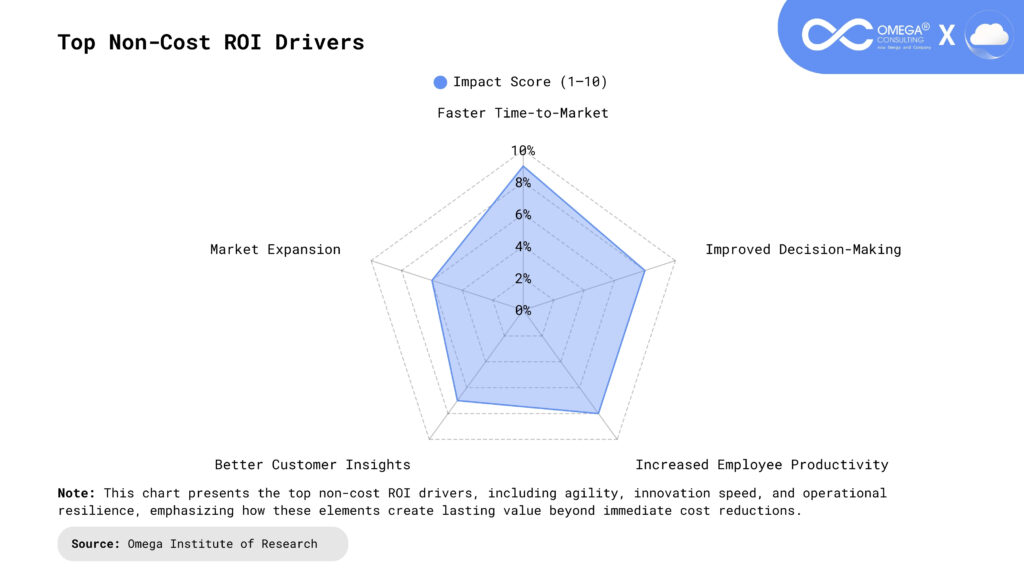
Measuring ROI with the Right Metrics
A modern cloud ROI framework should look beyond cost savings and include:
Time-to-Market Improvements: Faster delivery of new products, features, or services directly impacts competitiveness. Cloud infrastructure shortens development cycles and enables quicker rollouts. This speed allows businesses to capture opportunities and adapt to market changes before competitors can react.
Revenue Growth from Cloud-Enabled Services: By launching new digital offerings or expanding existing ones, organizations can create additional income streams. Cloud capabilities make it easier to scale services globally and reach new customer segments. This growth can far exceed initial cost savings in long-term ROI impact.
Customer Satisfaction & Retention Rates: Improved performance, faster updates, and personalized experiences keep customers engaged and loyal. Cloud-based solutions enable consistent service delivery and faster resolution of issues. Higher retention rates translate into lower acquisition costs and more predictable revenue.
Employee Productivity: Projects get completed faster with fewer delays thanks to real-time collaboration tools, automated workflows, and instant access to data. This efficiency boosts output without requiring additional headcount. Over time, it compounds into significant operational gains.
Risk Mitigation Value: Avoided downtime, reduced cyber risks, and enhanced disaster recovery capabilities all contribute to measurable ROI. Quantifying the cost of potential outages versus cloud-enabled resilience reveals substantial hidden savings. This is particularly critical for industries where downtime can cost millions per hour.
Making the Business Case to Stakeholders
When presenting cloud ROI to executives and boards, the key is storytelling backed by data:
Highlight Business Outcomes Over Technical Achievements: Frame cloud adoption in terms of revenue impact, customer experience, and competitive advantage—not just uptime or system performance. Executives respond better to results tied to growth and efficiency rather than purely technical milestones. This approach makes the business case stronger and easier to approve.
Show Alignment with Strategic Goals: Demonstrate how the cloud supports priorities like market expansion, digital transformation, or customer retention. Link each capability to a specific corporate objective. This helps stakeholders see cloud adoption as a driver of strategic vision rather than a side project.
Use Industry-Specific Examples: Reference real-world success stories from companies in the same sector to make the ROI relatable and credible. Highlight quantifiable results like increased sales, reduced time-to-market, or improved regulatory compliance. This makes the business case tangible instead of theoretical.
Present Risk Mitigation as a Value Driver: Explain how the cloud reduces the risk of costly downtime, data breaches, or compliance failures. Use industry benchmarks to show potential losses avoided. Framing security and resilience as financial benefits strengthens your ROI argument.
Leverage Visual Data Storytelling: Use dashboards, charts, and ROI calculators to illustrate the financial and operational impact. Visuals make complex data easier to grasp and more persuasive in boardroom discussions. Pair numbers with narratives for maximum impact.
Conclusion
Cloud ROI is about creating value, not just cutting costs. The most successful organizations in 2025 are those that measure ROI in terms of agility, innovation, resilience, and customer experience because these are the drivers that sustain long-term growth. True cloud success lies in its ability to unlock new opportunities, enable rapid adaptation, and future-proof the business against disruption. By looking beyond immediate savings and capturing strategic benefits, leaders can make more informed technology investments. In a world where markets shift overnight, the organizations that embrace this broader view of ROI will be the ones setting the pace not struggling to keep up.
- https://www.digitalocean.com/resources/articles/cloud-roi
- https://www.netguru.com/blog/roi-in-cloud-computing
- https://www.cio.com/article/4004704/multicloud-roi-a-guide-to-maximizing-value-and-efficiency.html
- https://www.tekrevol.com/blogs/how-to-maximize-cloud-roi-best-practices-for-optimizing/
- https://www.cloudwards.net/cloud-roi/
Subscribe
Select topics and stay current with our latest insights
- Functions