

- Industries
Industries
- Functions
Functions
- Insights
Insights
- Careers
Careers
- About Us


Conversational AI: Reinvention of Customer Experience







In today’s hyper-connected and customer-centric world, the quality of customer experience (CX) has emerged as the ultimate differentiator, directly impacting brand loyalty, revenue growth, and competitive advantage. As businesses navigate the complexities of digital transformation, the ability to deliver seamless, personalized, and efficient interactions at scale is no longer merely a desirable feature but a strategic imperative. This is precisely where Conversational AI plays a pivotal role, fundamentally reinventing how organizations engage with their customers. Far beyond simple chatbots, advanced Conversational AI solutions are transforming customer service from reactive problem-solving to proactive, intelligent engagement. They enable businesses to automate routine inquiries, personalize interactions, offer instant support 24/7, and gain invaluable insights into customer behavior. Unlike traditional, rigid customer support systems that often lead to frustrating experiences, Conversational AI offers dynamic, empathetic, and scalable interactions, making it an indispensable strategic tool for truly customer-centric enterprises thriving in the digital age.
What is Conversational AI?
Fundamentally, Conversational AI refers to a set of technologies that enable machines to simulate human conversation through voice or text. Its primary objective is to facilitate natural, intuitive, and efficient interactions between customers and businesses, thereby optimizing customer service, streamlining operational processes, and enriching the overall customer experience. When a customer initiates a query, be it through a website chatbot, a voice assistant, or a messaging app, the Conversational AI system intelligently processes their intent and context, and then forms a relevant, personalized response. Key components that underpin Conversational AI solutions include:
Natural Language Processing (NLP) & Natural Language Understanding (NLU): These are the core intelligence engines, enabling the AI to comprehend human language in all its nuances understanding intent, extracting entities, and deciphering context, even amidst slang or grammatical errors. This crucial capability moves beyond keyword matching to true comprehension.
Natural Language Generation (NLG): This component allows the AI to construct human-like responses in natural language, ensuring that the conversation flows smoothly and the information delivered is clear, concise, and easy for the customer to understand, whether via text or voice.
Machine Learning (ML) & Deep Learning: These are the learning mechanisms. ML algorithms enable Conversational AI systems to continuously learn from vast amounts of data – customer interactions, historical queries, and resolution paths – improving their accuracy, efficiency, and conversational flow over time, becoming ‘smarter’ with every interaction.
Speech Recognition (Automatic Speech Recognition – ASR) & Text-to-Speech (TTS): For voice-based Conversational AI (e.g., virtual agents, voice bots), ASR converts spoken words into text for processing, while TTS converts generated text responses back into natural-sounding speech. These components are critical for delivering seamless voice experiences.
Dialogue Management: This component orchestrates the flow of the conversation, maintaining context across multiple turns, guiding the user towards a resolution, and seamlessly handing off to a human agent when necessary. It ensures that the AI remembers previous statements and uses them to inform subsequent responses.
Integration Engines: Robust Conversational AI solutions do not operate in a vacuum. They feature powerful integration capabilities that connect them to backend systems such as CRM (Customer Relationship Management), ERP (Enterprise Resource Planning), knowledge bases, and inventory systems. This allows the AI to retrieve personalized information, execute transactions, and provide accurate, real-time data to customers.
Unlike rule-based chatbots that follow predefined scripts, advanced Conversational AI systems are adaptive, learning, and capable of handling complex, open-ended conversations. They evolve with customer needs and business processes, offering instant provisioning, elastic scalability to handle fluctuating demand, and seamless integration with existing digital ecosystems. This positions them as a flexible, cost-effective, and agile solution for modern customer engagement strategies that truly drive digital transformation.
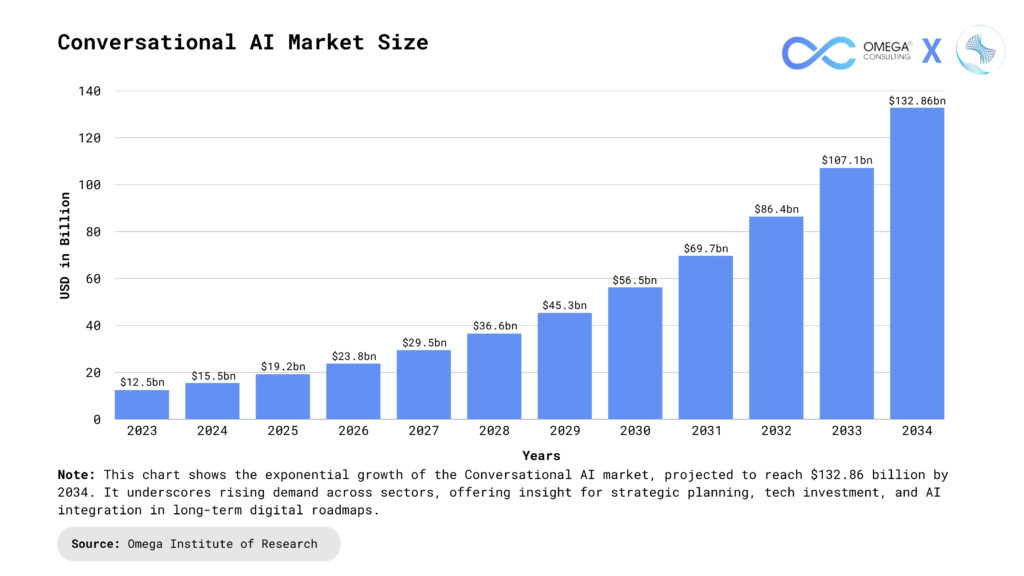
Key Capabilities: Driving Business Outcomes and Digital Transformation
Conversational AI solutions come equipped with a rich set of capabilities that deliver advanced customer engagement, robust operational efficiency, and profound data insights, directly translating into tangible business advantages:
24/7 Omnichannel Availability and Scalability: Conversational AI agents can interact with customers across all preferred channels – web, mobile apps, social media, messaging platforms (WhatsApp, Messenger), and voice – providing consistent, instant support around the clock, every day of the year. This ensures continuous service availability and eliminates customer wait times, drastically improving satisfaction. It also offers elastic scalability, handling millions of simultaneous inquiries during peak periods without performance degradation, a critical capability for global businesses and those experiencing rapid growth.
Hyper-Personalization and Contextual Awareness: Leveraging NLP, NLU, and integrations with CRM systems, Conversational AI can understand individual customer history, preferences, and real-time context. This enables it to deliver hyper-personalized interactions, anticipate needs, proactively offer relevant information, and tailor responses, fostering deeper customer relationships and loyalty. Moving beyond generic answers, the AI can engage in meaningful, informed conversations.
Intelligent Automation of Routine Tasks: A significant portion of customer inquiries are repetitive and low-complexity (e.g., checking order status, password resets, FAQ answers, billing inquiries). Conversational AI excels at automating these routine tasks, resolving them instantly without human intervention. This frees up human agents to focus on complex, high-value interactions that require empathy, critical thinking, and nuanced problem-solving.
Seamless Human Handoff and Agent Augmentation: Recognizing its limitations, advanced Conversational AI systems can intelligently identify when a conversation requires human intervention. They seamlessly hand off complex queries to live agents, providing the agent with the full transcript and context of the interaction. Furthermore, AI acts as an invaluable assistant to human agents, providing real-time information, suggesting responses, and automating data entry, significantly increasing agent efficiency and reducing handling times.
Multi-language Support and Global Reach: Conversational AI platforms can be trained to understand and respond in multiple languages, enabling businesses to provide localized and culturally sensitive support to a global customer base without the need for extensive multilingual human agent teams. This significantly reduces operational costs while expanding market reach and improving global customer satisfaction.
Data-Driven Insights and Continuous Optimization: Every interaction handled by Conversational AI generates valuable data. This data, including customer queries, sentiment, common pain points, and successful resolutions, provides unprecedented insights into customer behavior and service deficiencies. Businesses can leverage this data to identify trends, optimize processes, refine marketing strategies, and continuously improve the AI’s performance and the overall customer experience.
Strategic Applications Across Industries
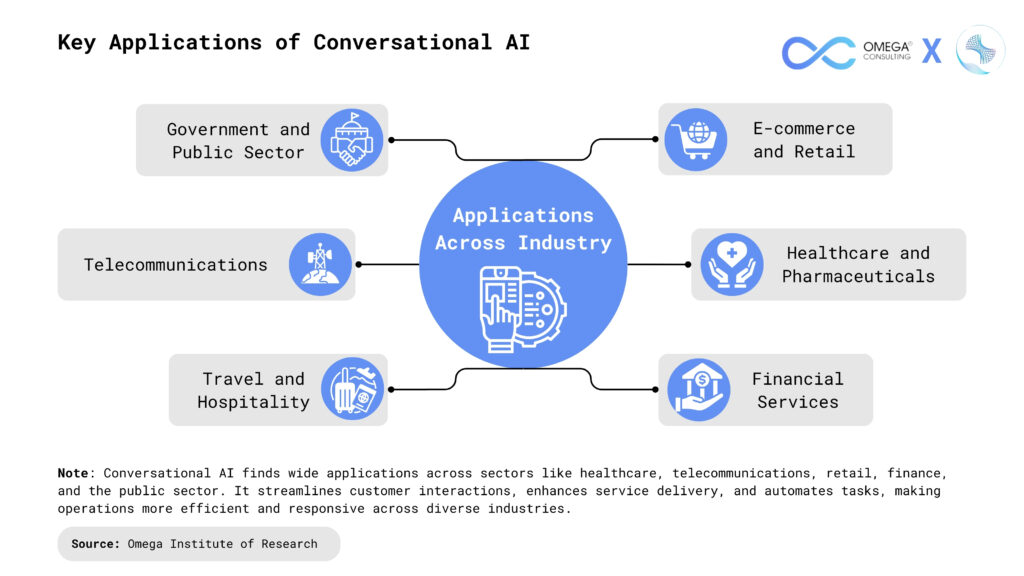
Conversational AI is fundamentally transforming customer engagement and operational efficiency across a diverse range of sectors, acting as a catalyst for digital transformation:
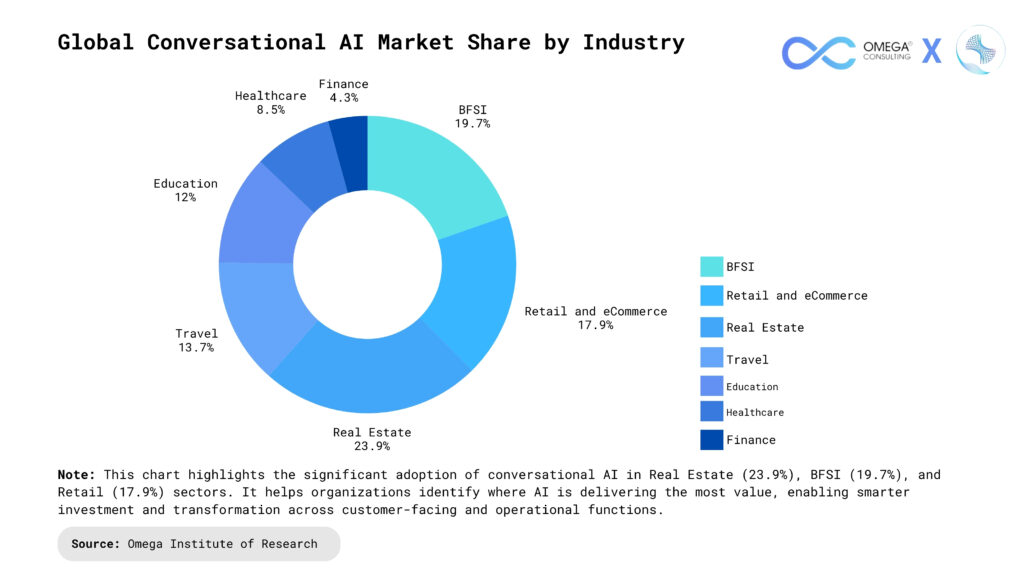
E-commerce and Retail: Conversational AI is indispensable for enhancing the online shopping journey. AI-powered chatbots and virtual assistants provide instant product recommendations, answer FAQs about shipping and returns, facilitate order tracking, and assist with checkout processes. This leads to reduced cart abandonment, increased sales conversion rates, and vastly improved post-purchase customer satisfaction, ensuring a seamless experience even during peak shopping seasons.
Financial Services: In this highly regulated and security-conscious sector, Conversational AI ensures secure, instant, and personalized support for banking, insurance, and investment inquiries. Virtual agents can assist with account balance checks, transaction history, loan applications, fraud alerts, and policy information. This enhances customer trust, reduces call center volumes, and enables 24/7 access to critical financial information, accelerating digital adoption for complex services.
Healthcare and Pharmaceuticals: Conversational AI is paramount in healthcare for improving patient engagement and operational efficiency. It can handle appointment scheduling, provide medication reminders, answer basic health questions (triage), and offer information about hospital services or insurance plans. For pharmaceutical companies, it can assist with drug information queries for healthcare professionals or provide patient support, enabling better patient outcomes and alleviating strain on administrative staff.
Telecommunications: In a sector characterized by high call volumes and complex inquiries, Conversational AI is vital. It can automate troubleshooting steps, assist with billing inquiries, manage service upgrades, and guide customers through complex product configurations. This drastically reduces customer wait times, improves first-call resolution rates, and frees up human agents for more intricate technical support, significantly impacting customer churn and operational costs.
Travel and Hospitality: Conversational AI enhances the entire travel experience, from booking to post-stay. Virtual agents can assist with flight or hotel bookings, provide real-time updates on delays or gate changes, offer local recommendations, and handle check-in/check-out processes. This leads to more efficient operations, personalized guest experiences, and increased customer loyalty in a highly competitive market.
Government and Public Sector: Conversational AI is instrumental in assisting government agencies and public sector entities by effectively managing high volumes of citizen inquiries, especially during critical periods (e.g., tax filing, disaster relief, public health crises). It ensures reliable and equitable access to essential public services, handles common queries about permits, licenses, or social programs, and streamlines bureaucratic processes, making government services more accessible and efficient for all citizens.
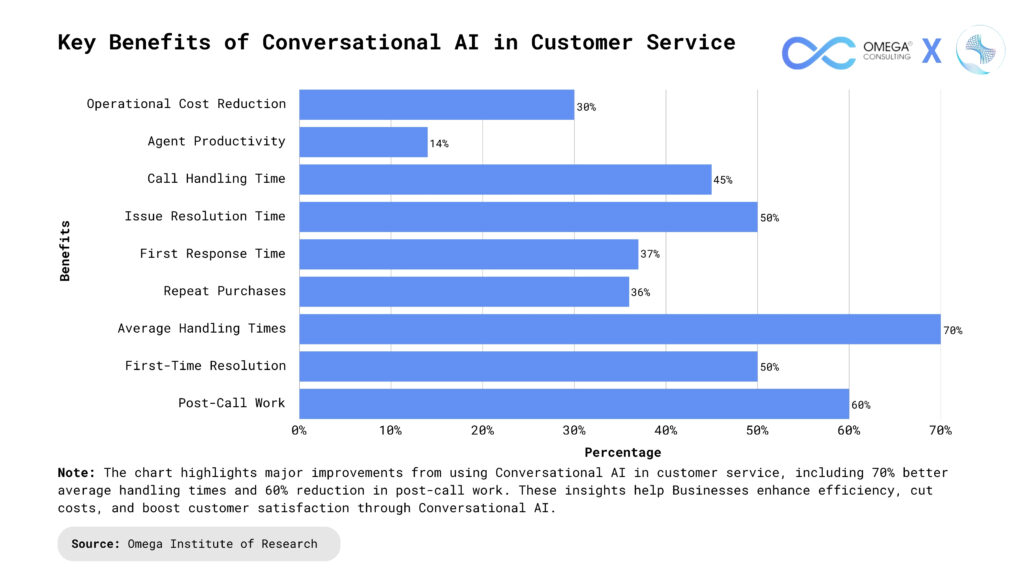
Benefits: Fueling Business Growth and Resilience
Implementing Conversational AI delivers a myriad of significant strategic advantages that are crucial for enabling and sustaining modern customer engagement strategies, and indeed, for any organization pursuing a robust digital transformation agenda:
Enhanced Customer Satisfaction and Loyalty: By providing instant, 24/7, personalized, and consistent support across all channels, Conversational AI significantly elevates the customer experience. This leads to higher satisfaction rates, reduced customer effort, and ultimately, increased customer loyalty and retention.
Significant Cost Reduction and Operational Efficiency: Automating routine inquiries and augmenting human agents allows businesses to handle a larger volume of interactions with fewer resources. This results in substantial reductions in contact center operational costs, including staffing, infrastructure, and training, transforming a cost center into a more efficient, strategic asset.
Increased Revenue and Conversion Rates: Seamless, always-on support, personalized recommendations, and proactive engagement through Conversational AI can directly lead to higher conversion rates in e-commerce, increased upsell/cross-sell opportunities, and the ability to capture business outside of traditional working hours.
Scalability and Agility for Growth: Conversational AI platforms can scale almost infinitely to meet fluctuating demand, enabling businesses to handle unpredictable spikes in customer inquiries without compromising service quality. This agility is critical for rapid business growth, seasonal peaks, and expanding into new markets without commensurate increases in operational overhead.
Invaluable Business Insights: Every conversation is a data point. Conversational AI systems capture vast amounts of interaction data, providing deep insights into customer needs, pain points, product sentiment, and emerging trends. This intelligence empowers businesses to make data-driven decisions on product development, service improvements, and strategic planning.
Improved Employee Experience and Productivity: By offloading repetitive and mundane tasks, Conversational AI frees human agents to focus on more complex, challenging, and rewarding customer interactions. This leads to higher job satisfaction, reduced agent burnout, and increased productivity, transforming the contact center into a more engaging and efficient environment.
Key Considerations for Conversational AI Implementation
While Conversational AI offers extensive strategic benefits, organizations should be aware of certain key considerations during its implementation and ongoing management to ensure optimal outcomes and maximize ROI:
Defining Clear Use Cases and ROI: Not every interaction is suitable for AI. Organizations must strategically identify specific, high-volume, repetitive use cases where Conversational AI can deliver clear value and a quantifiable ROI (e.g., cost savings from deflection, increased sales, improved CSAT). Starting with well-defined, measurable goals is crucial.
Data Quality and Training: The performance of Conversational AI is directly proportional to the quality and quantity of its training data. Insufficient, biased, or poorly labeled data can lead to inaccurate responses and frustrating customer experiences. Robust data collection, curation, and ongoing training are paramount.
Seamless Integration with Backend Systems: For Conversational AI to be truly effective, it must integrate seamlessly with CRM, ERP, knowledge bases, and other core business systems to access real-time, personalized information and execute transactions. Complex legacy systems can pose significant integration challenges, requiring careful planning and robust API strategies.
Managing Customer Expectations and Trust: While powerful, Conversational AI is not human. Setting realistic customer expectations about the AI’s capabilities and ensuring clear disclosure can prevent frustration. Building trust requires the AI to be accurate, empathetic (where appropriate), and to know when to gracefully hand off to a human agent.
Governance, Ethics, and Bias Mitigation: As AI systems learn from data, they can inadvertently perpetuate biases present in that data. Organizations must establish robust governance frameworks to monitor for bias, ensure fairness, protect customer privacy (GDPR, CCPA compliance), and maintain ethical AI practices, especially when handling sensitive customer data.
The Evolving Role of Human Agents: Conversational AI is not about replacing humans but augmenting them. Organizations need a clear strategy for reskilling and upskilling their human agents to handle more complex, nuanced interactions, focusing on empathy, problem-solving, and service recovery. Effective change management is crucial to ensure a harmonious human-AI collaboration.
Continuous Optimization and Iteration: Conversational AI is not a “set it and forget it” technology. It requires continuous monitoring, analysis of conversational data, and iterative improvements to its understanding, responses, and integration points. A culture of continuous learning and optimization is essential for maximizing its long-term value.
Conclusion
Conversational AI has unequivocally emerged as an indispensable cornerstone of modern customer engagement strategies and a fundamental enabler for successful digital transformation initiatives. It empowers organizations to deliver unparalleled customer experiences, achieve significant operational efficiencies, and unlock new avenues for growth. By intelligently and dynamically interacting with customers across diverse channels, Conversational AI ensures optimal resource utilization, maximizes throughput, and provides a continuous, personalized interface. This fundamentally improves the customer experience, ensures critical business continuity, and safeguards brand reputation and revenue. While its implementation necessitates careful consideration of factors like data quality, integration complexity, and ethical governance, the transformative strategic benefits—in terms of enhanced customer satisfaction, increased operational efficiency, greater scalability, and deeper business insights—make it an absolutely critical component of any forward-thinking digital strategy and customer-centric investment roadmap.
- https://www.ibm.com/topics/conversational-ai
- https://www.gartner.com/en/information-technology/glossary/conversational-ai
- https://www.genesys.com/definitions/what-is-conversational-ai
- https://www.sciencedirect.com/science/article/pii/S2444569X25000769
- https://azure.microsoft.com/en-us/products/ai-services/conversational-language-understanding
Subscribe
Select topics and stay current with our latest insights
- Functions