

- Industries
Industries
- Functions
Functions
- Insights
Insights
- Careers
Careers
- About Us

Deciding at Scale: Frameworks for High-Stakes Executive Decision-Making







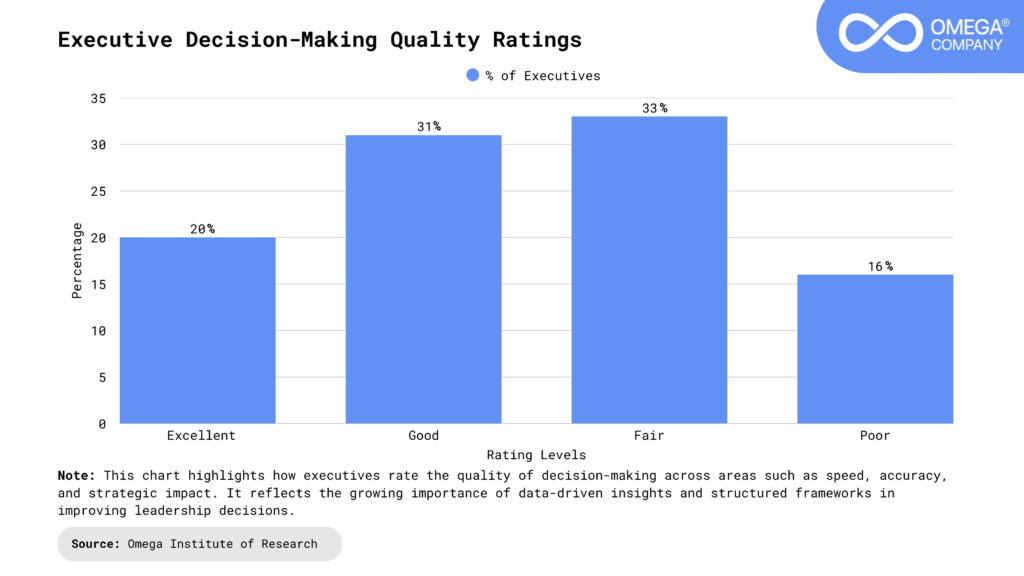
As leaders rise higher in an organization, they make fewer decisions, but each carries far greater impact. While frontline managers handle many reversible choices daily, executives such as CEOs make only a few critical decisions each year yet those decisions can shape market leadership, influence major investments, and affect thousands of jobs. This imbalance between decision frequency and consequence creates a major challenge, and many organizations struggle to improve in this area. A 2019 management consulting survey found that only 20% of executives believed their organizations excelled at decision-making, while 61% reported that much of the time spent on decisions was ineffective due to unclear ownership, excessive consensus-seeking, and insufficient data. As a result, high-stakes executive decisions require structured frameworks that bring rigor, maintain accountability, and help leaders act confidently despite uncertainty.
The Anatomy of a High-Stakes Decision
Before applying any framework, executives must first understand the type of decision they are facing, as not all high-impact decisions are the same. Roger Martin’s widely adopted taxonomy categorizes decisions into three types: big-bet decisions such as major acquisitions, market entries, or platform investments; cross-cutting decisions like pricing, talent strategy, and capital allocation that affect multiple business units; and delegated decisions, which are high-value but routine choices best handled below the executive level. Research from leading management consultancies suggests that although big-bet decisions account for fewer than 5% of executive decisions, they generate the majority of long-term value creation or destruction over a company’s lifetime.
Misclassifying decisions is a common and costly mistake. Executives often apply complex big-bet processes to routine delegated decisions, slowing execution and creating unnecessary bottlenecks, while sometimes treating true big-bet decisions too casually leading to potentially catastrophic outcomes. A simple diagnostic can help leaders classify decisions effectively by asking three questions: Is the decision reversible? What is the scale of its impact? Does it set a precedent? Decisions that are irreversible, organization-wide, and precedent-setting require structured frameworks, while reversible and localized decisions should be made quickly and at lower levels.
Framework 1: The Pre-Mortem
Developed by Gary Klein and popularized by Daniel Kahneman, the pre-mortem is one of the most effective tools for high-stakes decision-making. The method asks decision-makers to imagine that a major initiative has failed 18 months in the future and then identify the reasons for that failure. This simple reframing helps counter overconfidence and groupthink by encouraging constructive skepticism before commitment. Instead of discouraging dissent, the pre-mortem normalizes it, allowing teams to surface hidden risks early. Research published in Organizational Behavior and Human Decision Processes shows that this “prospective hindsight” improves the ability to identify potential risks by nearly 30%, making it particularly valuable for decisions involving acquisitions, new markets, or major investments.
Framework 2: The RAPID Model
The RAPID framework was developed by a leading management consultancy to address one of the biggest challenges in executive decision-making: unclear roles and responsibilities. RAPID stands for Recommend, Agree, Perform, Input, and Decide, assigning each stakeholder a defined role to eliminate confusion and delays. The individual who Recommends conducts analysis and proposes the decision, those who Agree hold limited veto authority, Performers implement the decision, and Input contributors provide insights without blocking progress. Most importantly, one person is clearly designated to Decide, preventing ambiguity around authority. This clarity significantly improves decision quality, and a 2021 organizational health survey found that companies with strong decision accountability were 1.5 times more likely to achieve above-average financial performance.
Framework 3: Scenario Planning Under Uncertainty
Scenario planning, developed at a major energy company in the 1970s by Pierre Wack and later popularized by Peter Schwartz, helps executives navigate decisions in uncertain environments. Rather than predicting a single future, this framework builds multiple plausible scenarios and evaluates how decisions perform across them. The goal is to choose strategies that remain resilient under different conditions, rather than those optimized for only one outcome. A common mistake is treating scenarios as forecasts, but scenario planning deliberately avoids probabilities and instead focuses on robustness. This approach not only improves decision quality but also strengthens organizational resilience by preparing leaders for unexpected shifts, as demonstrated when early scenario planning helped organizations better navigate market disruptions.
Framework 4: The Two-Speed Decision Model
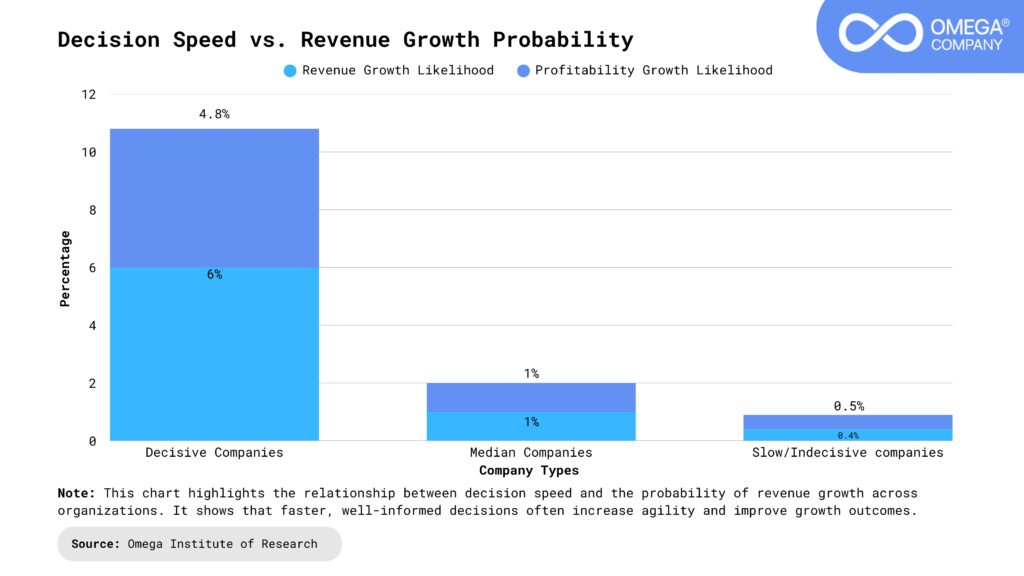
The two-speed decision model challenges the assumption that rigorous decisions must be slow by separating decisions into fast and slow tracks based on impact and reversibility. A 2018 global executive survey found that companies known for decisiveness were six times more likely to achieve above-average revenue growth, highlighting the importance of speed alongside rigor. In this model, reversible and low-risk decisions move quickly with minimal process, while irreversible, high-stakes decisions follow structured frameworks such as pre-mortems and scenario planning. Jeff Bezos famously described this approach in a 2015 shareholder letter at Amazon, calling them “Type 1” and “Type 2” decisions, Type 1 being irreversible and requiring careful deliberation, and Type 2 being reversible and best handled quickly. This distinction helps organizations balance speed with strategic discipline.
The Data Problem: What Executives Actually Use
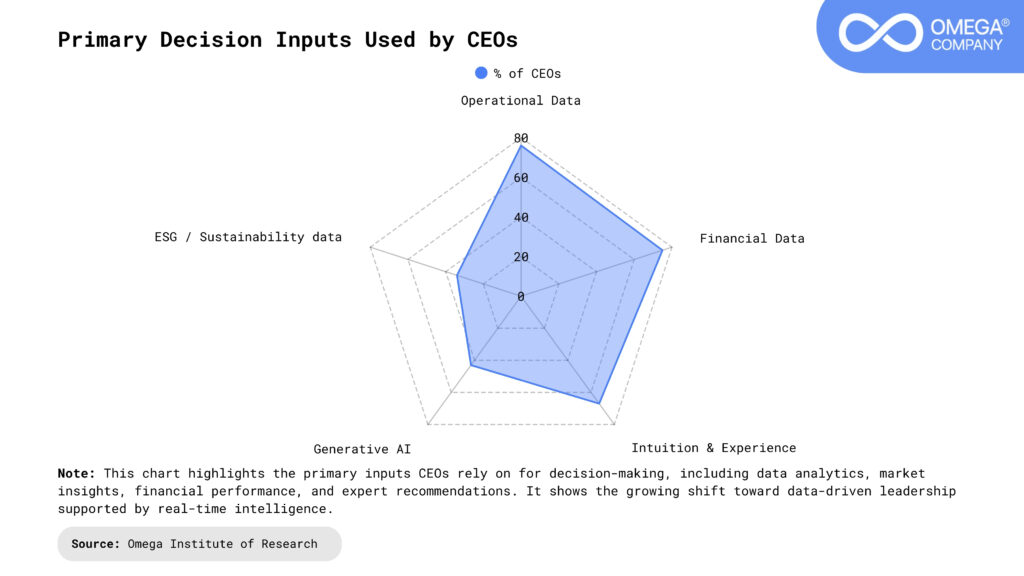
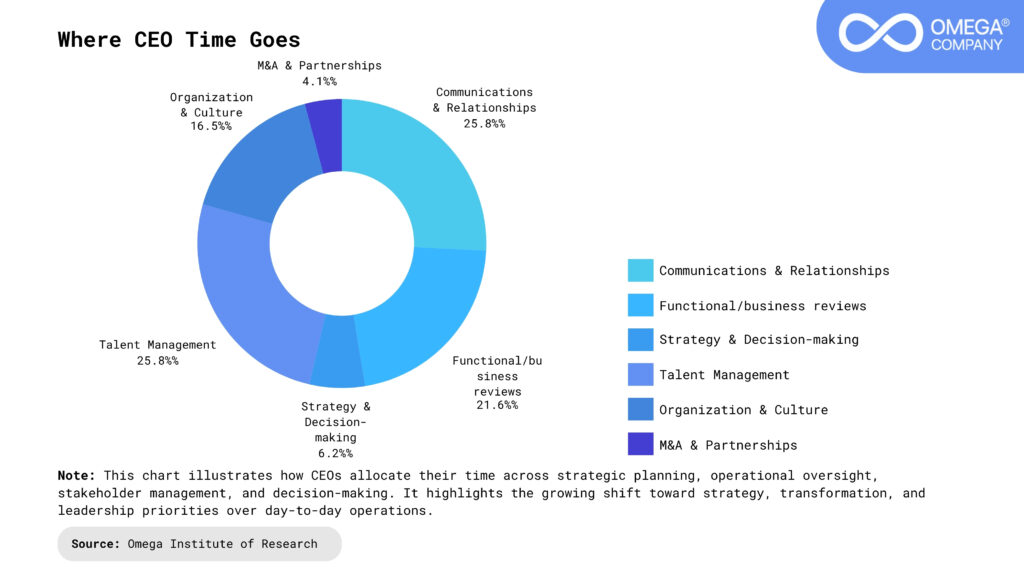
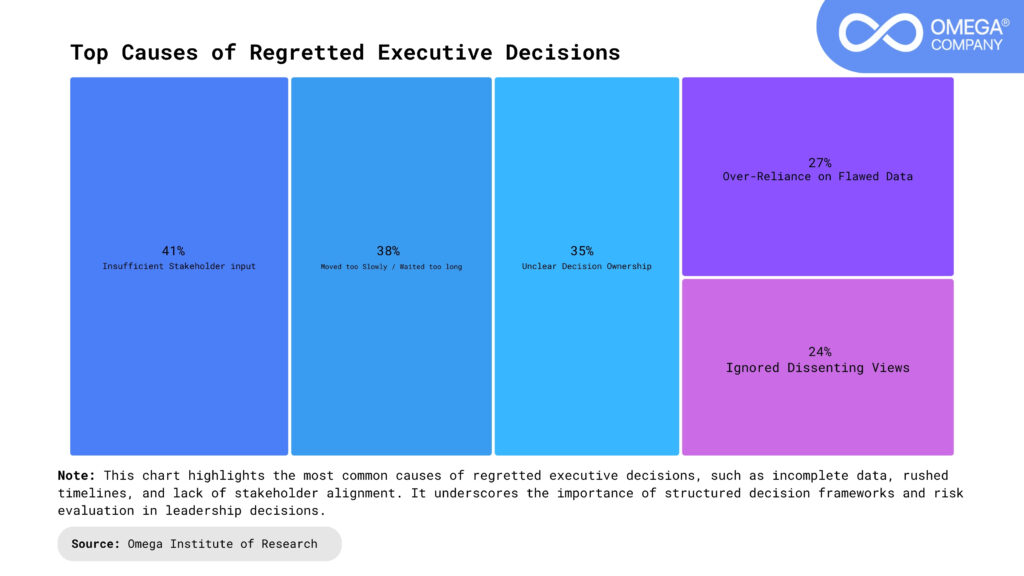
Despite the growing availability of decision-making frameworks, their adoption remains inconsistent. A 2022 CEO survey found that 73% of CEOs still rely primarily on intuition and experience for major strategic decisions, valuable for pattern recognition but risky when facing unfamiliar challenges. The same survey revealed that 85% of business leaders regretted at least one major decision in the previous year, often due to moving too quickly without stakeholder input, delaying decisions while waiting for better information, or failing to assign clear ownership. Research by Michael Porter and Nitin Nohria, published in Harvard Business Review (2018), further highlights the challenge, showing that CEOs spend only about 6% of their time on strategic decision-making, with the rest consumed by operational demands and communication. This scarcity of focused decision time makes structured frameworks not a bureaucratic burden but an essential tool for improving decision quality and maximizing executive impact.
Building a Decision-Making Culture
Building a strong decision-making culture goes beyond applying frameworks; it requires embedding disciplined thinking into leadership behavior. High-performing organizations reward sound decision processes regardless of outcomes, recognizing that even well-made decisions can face unpredictable results. They foster psychological safety, encouraging leaders to challenge ideas and surface risks without fear of negative consequences, and they conduct meaningful after-action reviews focused on learning rather than blame. These organizations also promote clarity in decision ownership, encourage data-informed thinking, and continuously refine their processes based on experience. Over time, this disciplined approach improves organizational agility, reduces costly mistakes, and strengthens leadership confidence. Across industries such as technology, finance, and aviation, organizations known for consistent performance often institutionalize these practices, making rigorous, thoughtful decision-making a leadership norm rather than an occasional exercise.
Conclusion
The executive decision-making crisis is not driven by a lack of information; leaders today have access to more data, analytics, and frameworks than ever before. Instead, the challenge lies in discipline and clarity: knowing when to slow down for high-stakes decisions, defining roles clearly, encouraging structured dissent, and distinguishing between decisions that require deep rigor and those that demand speed. Frameworks such as pre-mortems, RAPID, scenario planning, and the two-speed model are not new, but organizations that apply them consistently outperform those that rely on them only during crises. Ultimately, strong executive decision-making means building the infrastructure for sound judgment in advance, enabling leaders to act confidently, reduce risk, and drive long-term success.
- https://hbr.org/2018/07/how-ceos-manage-time
- https://hbr.org/2007/09/performing-a-project-premortem
- https://www.bain.com/consulting-services/organization/decision-effectiveness/
- https://hbr.org/1985/09/scenarios-uncharted-waters-ahead
- https://ir.aboutamazon.com/annual-reports-proxies-and-shareholder-letters/annual-reports/default.aspx
- https://www.pwc.com/gx/en/ceo-survey/2023/main-report.html
- https://www.mckinsey.com/capabilities/people-and-organizational-performance/our-insights/the-organization-blog/organizational-health-a-fast-track-to-performance-improvement
Subscribe
Select topics and stay current with our latest insights
- Functions