

- Industries
Industries
- Functions
Functions
- Insights
Insights
- Careers
Careers
- About Us

Emotion-Sensing Devices: Technology Reading Human Feelings







Technology has long understood what we say and what we do but now it is learning to understand how we feel. Emotion-sensing devices, powered by artificial intelligence, biometric sensors, and advanced data analytics, are ushering in a new era where machines can detect, interpret, and respond to human emotions in real time. From healthcare and education to marketing and human–machine interaction, these technologies are redefining the relationship between people and digital systems, transforming cold, reactive tools into empathetic, adaptive companions. By interpreting signals such as facial expressions, voice tone, physiological responses, and behavioral patterns, these systems enable more natural, personalized, and context-aware interactions. As emotional intelligence becomes embedded into technology, machines are no longer just functional; they are becoming responsive partners that adapt to human needs, moods, and experiences in a more human-centered digital world.
What Are Emotion-Sensing Devices?
Emotion-sensing devices are technologies designed to identify human emotional states by analyzing physiological, behavioral, and contextual signals, moving far beyond traditional input methods like keyboards or touchscreens to interpret subtle cues that people are often not consciously aware of. Using a combination of sensors and AI models, these systems can infer emotions such as happiness, stress, anger, anxiety, confusion, or engagement, transforming raw biometric and behavioral data into emotional insights. The goal is not just recognition, but intelligent response enabling systems to adapt their behavior in real time based on how a person feels in the moment. By adjusting tone, content, recommendations, or support dynamically, emotion-sensing devices create more natural, personalized, and emotionally aware interactions. As these technologies mature, they are laying the foundation for human–machine experiences that feel intuitive, supportive, and genuinely responsive rather than purely transactional.
How Emotion-Sensing Technology Works
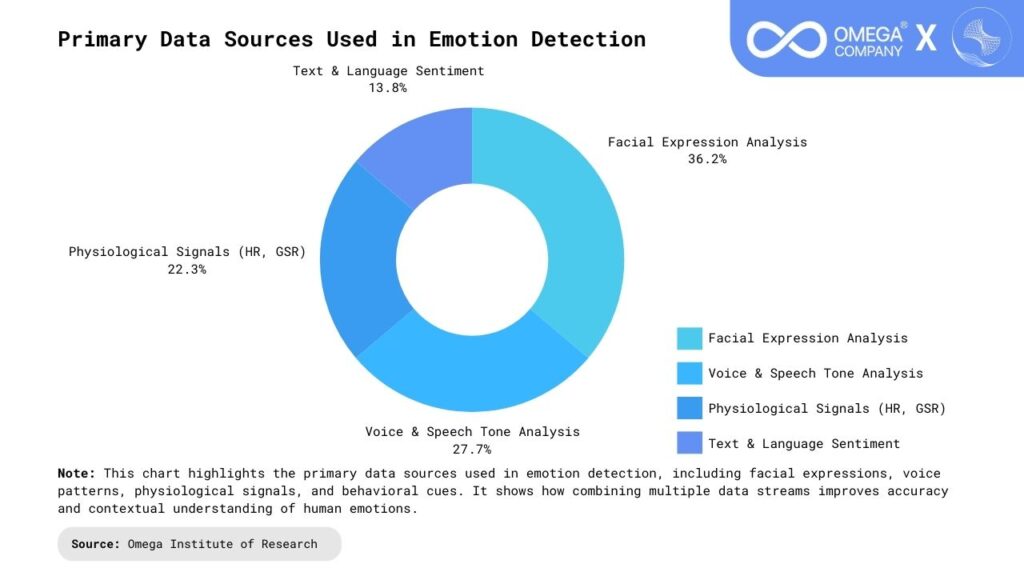
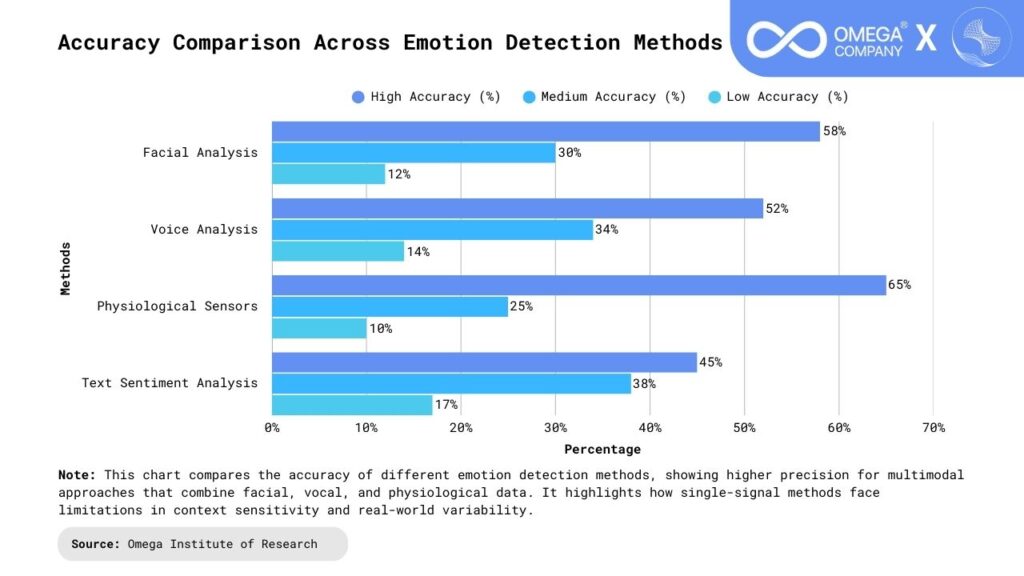
Emotion recognition relies on multimodal data collection and interpretation. No single signal defines emotion; instead, systems analyze patterns across multiple inputs.
Physiological Signals: Wearable devices and smart sensors monitor biological indicators such as heart rate and heart rate variability, skin conductance linked to sweat response, body temperature, and breathing patterns. Subtle changes in these metrics often correlate with emotional arousal, stress, relaxation, or cognitive load, even before a person consciously recognizes the emotion. By continuously tracking these signals, systems can detect early signs of fatigue, anxiety, or heightened focus. Over time, personalized baselines improve accuracy, enabling emotion-sensing devices to distinguish between physical activity and genuine emotional responses.
Facial Expression Analysis: Cameras and computer vision algorithms detect micro-expressions, tiny, involuntary facial movements that reveal underlying emotions. AI models trained on large and diverse datasets can map facial muscle movements to emotional states with increasing accuracy and cultural sensitivity. These systems analyze eye movement, eyebrow shifts, lip tension, and facial symmetry to interpret both overt and subtle expressions. When combined with other data sources, facial analysis helps validate emotional inferences and reduces the risk of misinterpretation caused by situational factors.
Voice and Speech Patterns: Emotion-sensing systems analyze vocal attributes such as tone, pitch, speech rate, pauses, rhythm, and volume. Even when spoken words remain neutral, these vocal characteristics can reveal excitement, frustration, fatigue, hesitation, or confidence. AI models also detect emotional variation over the course of a conversation, identifying escalation or calming trends. This makes voice-based emotion sensing particularly valuable in call centers, virtual assistants, and mental health applications where spoken interaction is the primary interface.
Behavioral and Contextual Data: Typing speed, mouse movement, posture, gaze direction, and interaction patterns provide additional layers of emotional context. These behaviors often change unconsciously in response to stress, boredom, engagement, or confusion. When combined with contextual information such as time of day, task complexity, and environmental conditions, systems gain a richer and more accurate understanding of a user’s emotional state. This contextual awareness allows emotion-sensing technology to respond appropriately, avoiding one-size-fits-all reactions and enabling more personalized, empathetic interactions.
Key Applications of Emotion-Sensing Devices
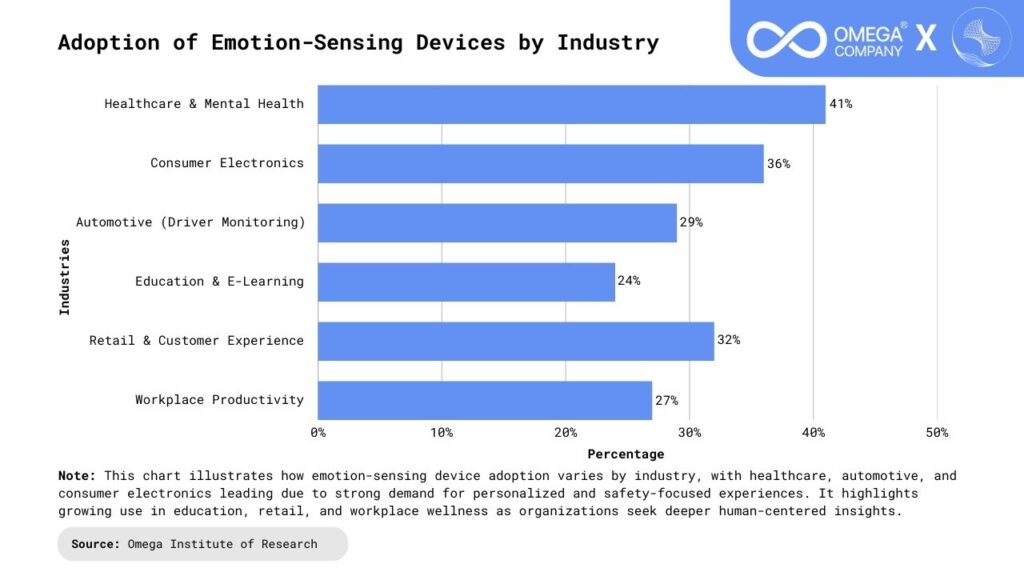
Healthcare and Mental Well-Being: Emotion-sensing wearables and applications are transforming healthcare by enabling continuous emotional monitoring rather than relying solely on self-reported data. These systems can detect early signs of stress, burnout, anxiety, or emotional imbalance, often before symptoms become severe or disruptive. By providing objective emotional data, they support mental health therapy, assist clinicians in tailoring interventions, and help caregivers monitor patients with cognitive or emotional disorders more effectively. In clinical and home-care settings, emotion-aware systems contribute to more personalized treatment plans, earlier intervention, and improved long-term patient outcomes.
Education and Learning Environments: In both physical classrooms and digital learning platforms, emotion-sensing technology helps educators better understand student engagement, attention, and comprehension levels. By identifying signals of confusion, boredom, frustration, or high engagement, systems can dynamically adjust lesson pacing, content difficulty, or teaching methods in real time. This creates more adaptive and inclusive learning experiences that cater to individual student needs. Over time, emotional insights can also help educators refine curriculum design and improve overall learning effectiveness.
Customer Experience and Marketing: Brands are increasingly using emotion-sensing tools to move beyond surface-level metrics such as clicks and conversions. By analyzing emotional responses, businesses can optimize user interfaces, refine product design, personalize content and recommendations, and measure true emotional engagement with ads, websites, or products. This deeper understanding allows companies to craft experiences that resonate on a human level rather than relying solely on transactional interactions. As a result, marketing strategies become more authentic, memorable, and emotionally aligned with customer expectations.
Workplace Productivity and Safety: Emotion-sensing devices are being explored to monitor employee stress, fatigue, and cognitive load, particularly in high-risk industries such as aviation, manufacturing, and healthcare. By identifying early warning signs of overload or burnout, these systems can support proactive interventions that protect both employee well-being and operational performance. When implemented ethically and transparently, emotion-aware tools can help organizations design healthier work environments and reduce accidents caused by fatigue or emotional strain. Over time, they also contribute to more sustainable productivity and workforce resilience.
Human–Machine Interaction: As AI agents, robots, and digital assistants become more deeply integrated into everyday life, emotional awareness is becoming a critical capability. Emotion-sensing enables machines to interpret human feelings and respond with appropriate tone, timing, and behavior, making interactions feel more natural and empathetic. This emotional responsiveness helps build trust, reduce frustration, and improve user satisfaction across digital and physical interfaces. Ultimately, it transforms human–machine interaction from rigid command-based exchanges into more intuitive, human-centered relationships.
Benefits of Emotion-Aware Technology
Emotion-sensing devices unlock a range of advantages across industries:
Personalization: Emotion-aware systems adapt experiences in real time based on a user’s emotional state, preferences, and context. Content, interfaces, recommendations, and responses can dynamically shift to match moods such as stress, curiosity, or engagement. This creates experiences that feel intuitive and relevant rather than static or generic. Over time, personalization driven by emotional insight builds stronger user relationships and higher satisfaction.
Improved Decision-Making: Emotional data adds a critical layer of insight that complements traditional behavioral and performance analytics. By understanding how people feel during interactions, organizations can make more informed decisions about design, strategy, and communication. This emotional context helps explain why certain actions occur, not just what happens. As a result, decisions become more nuanced, empathetic, and aligned with real human behavior.
Enhanced Well-Being: Emotion-sensing technology enables early detection of stress, fatigue, or emotional distress, allowing for timely intervention before issues escalate. In healthcare, workplaces, and education, this proactive approach supports mental health and emotional resilience. Individuals receive support that is responsive to their current state rather than reactive to outcomes. Over time, this contributes to healthier habits, reduced burnout, and improved overall well-being.
More Natural Interactions: By responding with emotional sensitivity, machines can communicate in ways that feel more human and supportive. Tone, timing, and interaction style can adjust based on emotional cues, reducing frustration and misunderstandings. This makes interactions with AI agents, devices, and digital platforms feel smoother and more conversational. Ultimately, emotion-aware technology bridges the emotional gap between humans and machines, fostering trust and comfort in everyday use.
The Future of Emotion-Sensing Devices
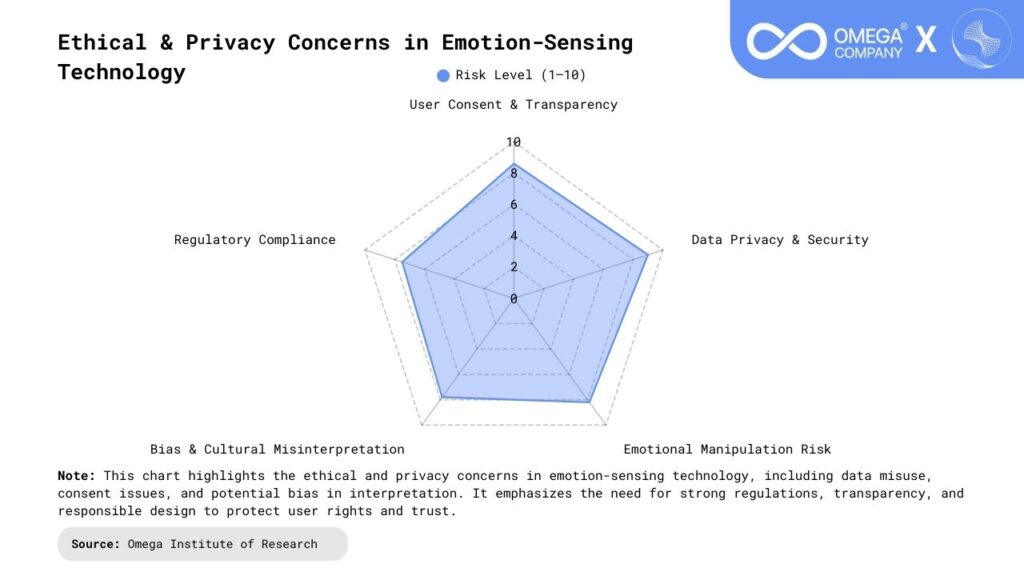
The future of emotion-sensing devices points toward emotionally intelligent ecosystems rather than isolated tools, with emotion-aware capabilities increasingly embedded into everyday technologies such as smartphones, vehicles, wearables, and AI assistants to create environments that seamlessly adapt to human feelings. As AI models become more contextual, culturally aware, and ethically grounded, emotion recognition will grow more accurate and nuanced, enabling technology to respond with greater sensitivity and relevance. These systems will move beyond simple detection to continuous learning, adapting to individual emotional patterns over time. The ultimate goal is not to replace human empathy, but to augment it using emotionally intelligent technology to better understand, support, and empower people while fostering trust, emotional well-being, and more meaningful human–technology relationships.
Conclusion
Emotion-sensing devices represent a profound shift in how technology interacts with humanity, as machines learn to read human feelings and move beyond efficiency and automation toward understanding and connection. When designed and deployed responsibly, emotion-aware technology has the potential to enhance well-being, deepen engagement, and create experiences that feel genuinely human rather than purely functional. By aligning technological responses with emotional context, these systems can reduce friction, improve support, and foster more intuitive interactions across everyday experiences. In a world increasingly shaped by intelligent systems, emotional intelligence may emerge as the most critical feature—bridging the gap between advanced technology and the human need for empathy, trust, and meaningful connection, while shaping a future where technology supports people not just logically, but emotionally as well.
- https://www.sciencedirect.com/science/article/pii/S1566253523003354
- https://tech4future.info/en/human-emotion-recognition-ai/
- https://mitsloan.mit.edu/ideas-made-to-matter/emotion-ai-explained
- https://link.springer.com/article/10.1007/s00521-024-09426-2
- https://www.electronicsforu.com/technology-trends/applications-benefits-emotion-sensing-technology
Subscribe
Select topics and stay current with our latest insights
- Functions