

- Industries
Industries
- Functions
Functions
- Insights
Insights
- Careers
Careers
- About Us


Exoplanet Exploration Tech: Instruments Discovering New Worlds







The quest to find planets beyond our solar system exoplanets has evolved from science fiction into a cutting-edge field of modern astronomy. Today, advanced telescopes and detection instruments are revolutionizing how we search for these distant worlds, revealing thousands of exoplanets orbiting stars light-years away. From identifying Earth-like planets to analyzing their atmospheres, exoplanet exploration technology is opening a window into the cosmos and perhaps, our future home. These discoveries are not only reshaping our understanding of planetary systems but also challenging long-held beliefs about the uniqueness of Earth. With each new detection, scientists move closer to answering one of humanity’s oldest questions, are we alone in the universe? The golden age of exoplanet exploration has just begun, blending innovation, curiosity, and the limitless possibilities of discovery.
The Rise of Exoplanet Discovery
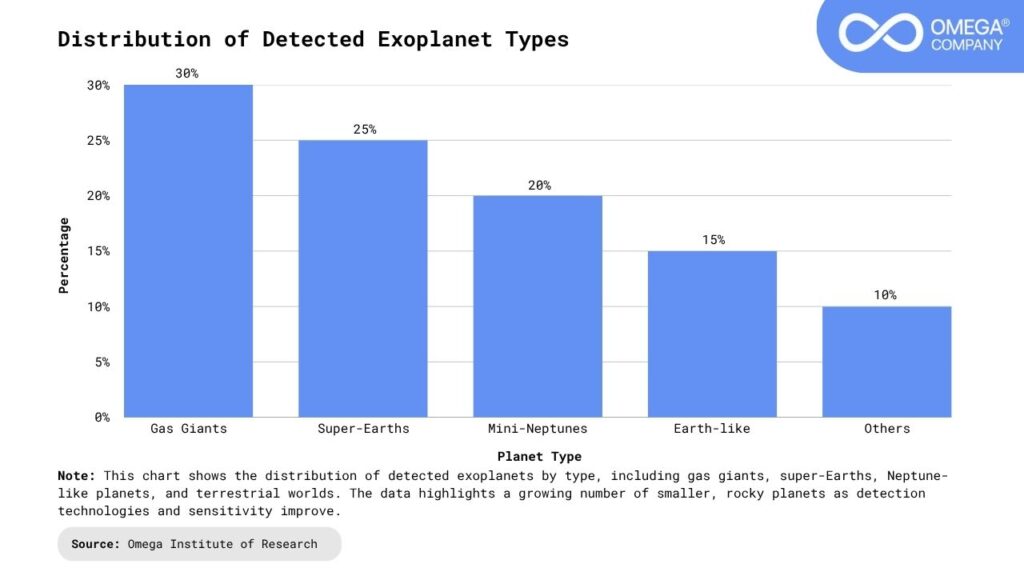
Before the 1990s, the idea of planets orbiting other stars remained purely theoretical. Then came 51 Pegasi b the first confirmed exoplanet around a Sun-like star in 1995. Since that landmark moment, astronomers have discovered over 5,000 exoplanets, each unveiling a new piece of the cosmic puzzle. This incredible leap forward wasn’t just luck; it was powered by innovation in astronomical instruments, data analytics, and space observatories. From ground-based telescopes equipped with ultra-sensitive spectrometers to space missions like Kepler and TESS scanning the skies, the tools of discovery have become increasingly sophisticated. Machine learning now aids in detecting subtle planetary signals buried in vast datasets, accelerating new findings. As technology advances, our ability to explore and understand these alien worlds deepens, marking a new era where science fiction becomes scientific reality.
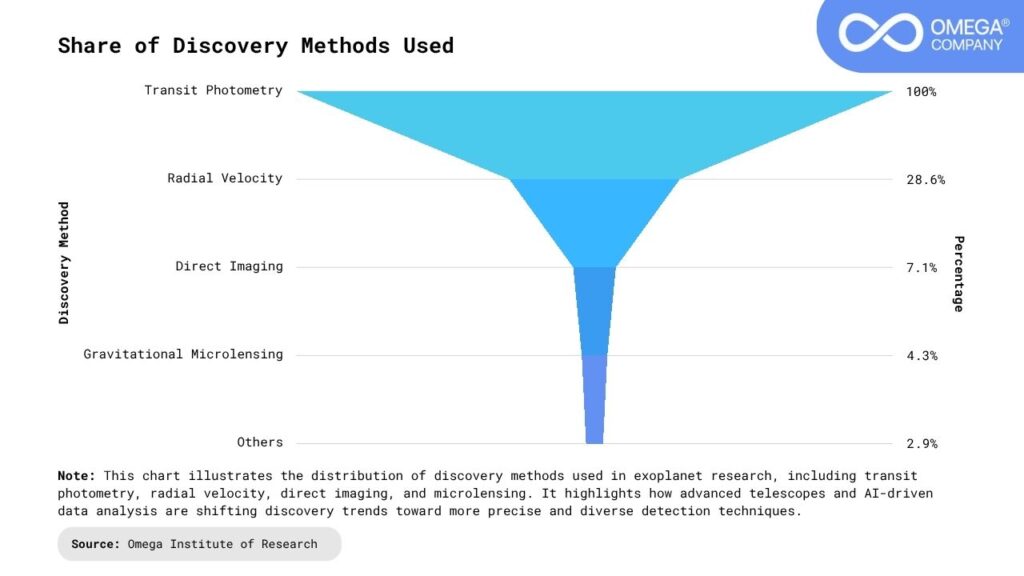
Transit Photometry: Watching Shadows in the Stars
One of the most successful methods of exoplanet detection is transit photometry, a technique that measures the slight dimming of a star’s light when a planet passes (or transits) in front of it. This method allows astronomers to determine not just the presence of a planet, but also its size and orbital distance with remarkable precision. By observing repeated transits, scientists can confirm planetary candidates and even study multiple-planet systems around the same star.
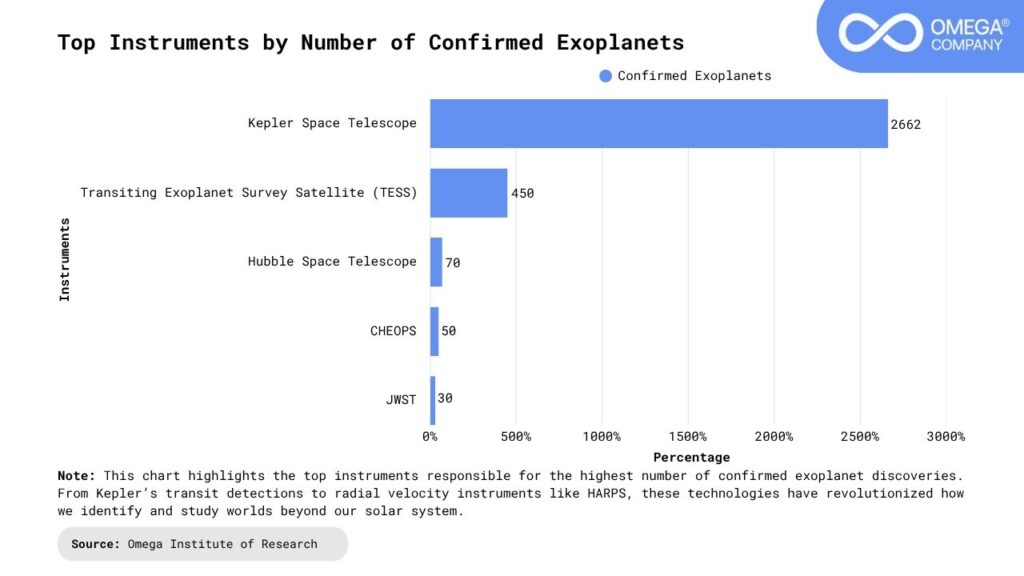
Kepler Space Telescope (NASA): Revolutionized the field by discovering thousands of exoplanets between 2009 and 2018. It provided a statistical foundation for understanding how common planets are in our galaxy, showing that most stars host at least one planet. Kepler’s long-term, high-precision observations paved the way for identifying Earth-sized worlds in habitable zones, a milestone in modern astronomy.
TESS (Transiting Exoplanet Survey Satellite): Continues Kepler’s legacy, scanning almost the entire sky for nearby exoplanets. TESS focuses on bright, closer stars, making it easier for ground-based observatories to conduct follow-up studies and atmospheric analysis. Its rapid-scan approach allows scientists to catalog a wide variety of worlds from super-Earths to mini-Neptunes creating a treasure map for future space missions.
When combined with follow-up observations, transit data can reveal a planet’s size, orbital period, and even clues about its atmosphere. For instance, variations in light wavelength during transit hint at the presence of gases like water vapor, methane, or carbon dioxide markers of potential habitability. As technology evolves, next-generation observatories like the James Webb Space Telescope (JWST) are now using transit photometry to analyze exoplanet atmospheres in greater detail than ever before, bringing us closer to identifying truly Earth-like worlds.
Radial Velocity Method: Listening to Stellar Wobbles
Every planet exerts a small gravitational pull on its host star. This tug causes the star to wobble slightly, a movement detectable through Doppler shifts in its light spectrum. This is known as the radial velocity method. It remains one of the most reliable techniques for confirming exoplanet candidates, as it directly measures a planet’s influence on its star. When combined with transit data, it allows scientists to estimate a planet’s true mass and density, offering insights into whether it’s rocky, gaseous, or something in between.
HARPS (High Accuracy Radial velocity Planet Searcher): Mounted on the ESO’s La Silla Observatory, HARPS can detect velocity changes as small as 1 meter per second. Its unparalleled precision has led to the discovery of hundreds of super-Earths and Neptune-like planets. HARPS has also played a key role in long-term monitoring, helping astronomers refine orbital models and uncover multi-planet systems that were once invisible to other techniques.
ESPRESSO (Echelle Spectrograph for Rocky Exoplanet and Stable Spectroscopic Observations): A next-generation spectrograph capable of detecting Earth-mass planets around Sun-like stars. Installed on the Very Large Telescope (VLT) in Chile, ESPRESSO pushes the limits of stability and accuracy, opening the door to detecting true Earth analogs. By integrating ultra-precise calibration and real-time correction mechanisms, it represents the future of precision exoplanet spectroscopy.
Direct Imaging: Capturing Exoplanets in Light
While most exoplanets are discovered indirectly, direct imaging allows astronomers to actually see them. This method isolates the faint light of a planet from the overwhelming brightness of its star, a challenging feat that requires extreme precision. It is particularly useful for studying young, massive planets that emit infrared light as they cool. Direct imaging bridges the gap between detection and characterization, allowing detailed exploration of planetary atmospheres and climates.
Coronagraphs: Devices that block a star’s light, allowing faint planets nearby to become visible. Modern coronagraphs use adaptive optics and precision masks to minimize glare, enhancing contrast and revealing hidden celestial companions. Their integration in space telescopes has dramatically improved the clarity and depth of exoplanet imaging.
Adaptive Optics: Systems that correct for Earth’s atmospheric distortion in real time, sharpening the image. These technologies allow ground-based telescopes to achieve near-space quality visuals. Adaptive optics have made it possible to detect planets orbiting relatively close to their stars, a task once thought nearly impossible from Earth’s surface.
James Webb Space Telescope (JWST): Equipped with infrared imaging and coronagraphy tools to capture detailed visuals and spectra of exoplanet atmospheres. JWST’s sensitivity enables the observation of thermal emissions, revealing temperature gradients and potential weather systems. It’s already transforming how we visualize distant worlds, taking humanity one step closer to viewing another Earth.
Gravitational Microlensing: Bending Light to Find Hidden Worlds
When a massive object like a star passes in front of another star, its gravity bends and magnifies the background light, an effect called gravitational microlensing. If a planet orbits the foreground star, it can produce a distinct, temporary brightening signature. This rare but powerful method can detect planets far beyond the reach of other techniques. It doesn’t depend on the planet’s light or orbital orientation, making it especially effective for finding distant or rogue planets.
OGLE (Optical Gravitational Lensing Experiment): Ground-based project detecting microlensing events from Chile. OGLE has provided critical data on the frequency and distribution of planets across the Milky Way. Its long-term surveys have revealed planets around stars thousands of light-years away, expanding our galactic census.
Nancy Grace Roman Space Telescope: Future NASA mission expected to discover thousands of exoplanets using microlensing, particularly in regions not visible to other methods. Roman will offer unparalleled precision and continuous monitoring, identifying planetary systems at unprecedented distances. Its results are expected to reshape our understanding of how planetary systems form and evolve across the galaxy.
Spectroscopy: Unveiling Exoplanet Atmospheres
Once a planet is detected, the next challenge is to understand its chemical makeup. This is where spectroscopy plays a vital role. By splitting the starlight that passes through or reflects off a planet’s atmosphere, astronomers can identify its molecular fingerprints. Each element or compound absorbs specific wavelengths, revealing whether an atmosphere contains gases like oxygen, methane, or carbon dioxide key indicators of life-friendly conditions.
JWST and Hubble Space Telescope: Have detected molecules like water vapor and methane in exoplanet atmospheres. These observations offer the first real glimpses into weather systems, atmospheric layering, and potential climate conditions of alien worlds. Together, they’re building the foundation for future biosignature studies.
ARIEL (Atmospheric Remote-sensing Infrared Exoplanet Large-survey): An upcoming ESA mission focused on analyzing hundreds of exoplanet atmospheres in detail. ARIEL aims to uncover patterns in atmospheric composition and evolution, providing a statistical understanding of how different planetary environments develop. It will be instrumental in distinguishing between habitable and hostile worlds.
Future Missions: Expanding the Cosmic Map
The next decade promises a new wave of exploration with missions designed to probe deeper into the galaxy. These missions will search for Earth-like worlds, study planetary systems in detail, and analyze atmospheres for potential biosignatures. Together, they aim to answer the most profound question: how common is life beyond Earth? The future of exoplanet science lies in synergy combining space-based telescopes, ground observatories, and AI-driven analytics to create a comprehensive cosmic map. Each mission will expand the boundaries of what humanity knows about the universe.
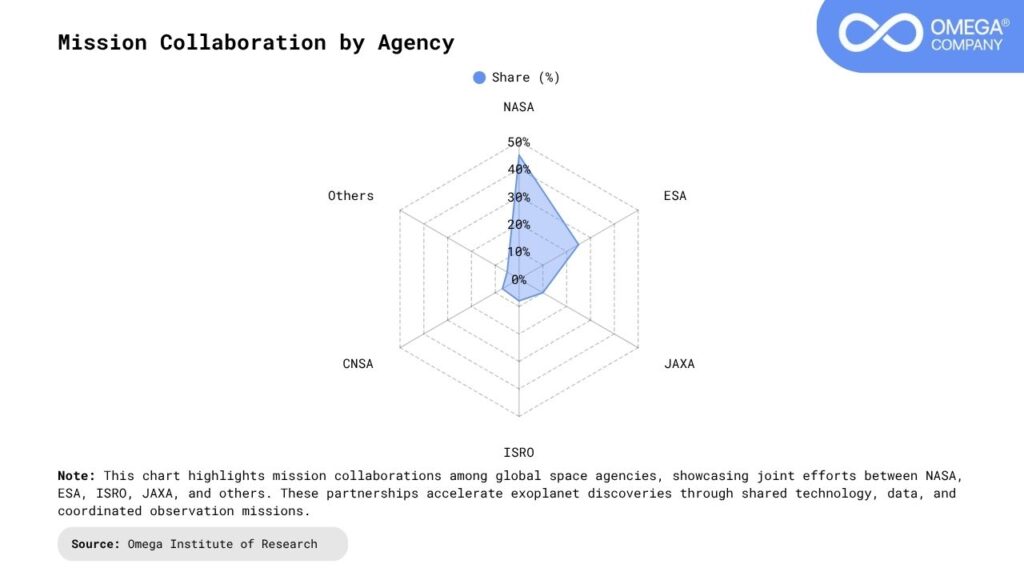
LUVOIR (Large UV Optical Infrared Surveyor): A proposed NASA flagship telescope to directly image Earth-like exoplanets. LUVOIR’s powerful optics will enable high-contrast imaging and spectroscopy, revealing details of distant worlds previously unimaginable. It’s envisioned as the most ambitious observatory ever built for exoplanet science. Beyond exoplanets, LUVOIR will also study galaxies, nebulae, and cosmic evolution offering a complete picture of our place in the universe.
PLATO (Planetary Transits and Oscillations of Stars): ESA mission to study rocky planets in habitable zones. PLATO’s precise light measurements will help determine planetary sizes, compositions, and even star ages, improving our understanding of planetary evolution. It will focus on bright, nearby stars, creating an essential catalog for future direct-imaging missions. With PLATO, scientists hope to find planets that not only resemble Earth in size but also in stability and environment.
HabEx (Habitable Exoplanet Observatory): Designed to find and analyze potentially life-supporting worlds using advanced coronagraphy. It aims to provide direct images of exoplanets and detect atmospheric gases associated with life. HabEx will take humanity’s search for another Earth to a new frontier. It also plans to work in tandem with LUVOIR and JWST, forming a coordinated system of observatories dedicated to uncovering life’s cosmic footprint.
Conclusion
Exoplanet exploration stands as one of humanity’s greatest scientific adventures. From the first wobbles detected by early spectrographs to breathtaking infrared images captured by JWST, every breakthrough reshapes our understanding of the cosmos. As technology evolves — merging precision optics, space engineering, and AI analytics — the dream of discovering another Earth no longer feels distant. The stars we once gazed at for wonder are now destinations of discovery, revealing that our universe is teeming with possibilities waiting to be found. Each new mission expands the cosmic horizon, transforming distant points of light into vibrant, diverse worlds. The ongoing quest fuels not just scientific progress but also a deeper philosophical reflection on our place in the universe. As we continue to explore, we move closer to uncovering the truth that life may be a common thread woven throughout the fabric of the cosmos.
- https://link.springer.com/article/10.1007/s12210-025-01335-3
- https://www.primescholars.com/articles/exoplanet-discovery-unveiling-new-worlds-beyond-our-solar-system-130466.html
- https://arxiv.org/html/2404.09143v1
- https://www.planetary.org/worlds/exoplanets
- https://www.bbc.com/future/article/20130829-the-new-hunt-for-alien-worlds
Subscribe
Select topics and stay current with our latest insights
- Functions