

- Industries
Industries
- Functions
Functions
- Insights
Insights
- Careers
Careers
- About Us

From Migration to Modernization: What’s Next After the Cloud Move?







Cloud adoption has transformed how businesses operate, enabling organizations to embrace scalability, flexibility, and cost efficiency by shifting workloads, applications, and infrastructure to the cloud. For years, the primary focus was on migration, ensuring that businesses could transition from traditional on-premises systems to cloud platforms with smoother operations and reduced overheads. However, migration is only the beginning of the journey, as it lays the foundation but does not unlock the full benefits of the cloud. The true value emerges when businesses go beyond the initial move and modernize their systems, processes, and strategies to fully leverage cloud potential. Cloud modernization involves re-architecting applications, adopting cloud-native services, automating workflows, and embedding advanced technologies like AI and analytics to drive innovation. It ensures that organizations are not just operating in the cloud but thriving within it by enhancing agility, resilience, and customer experiences. So, what comes after migration? The next step is cloud modernization, an evolution that enables businesses to innovate, remain competitive, maximize return on investments, and position themselves for long-term success in an increasingly digital-first world.
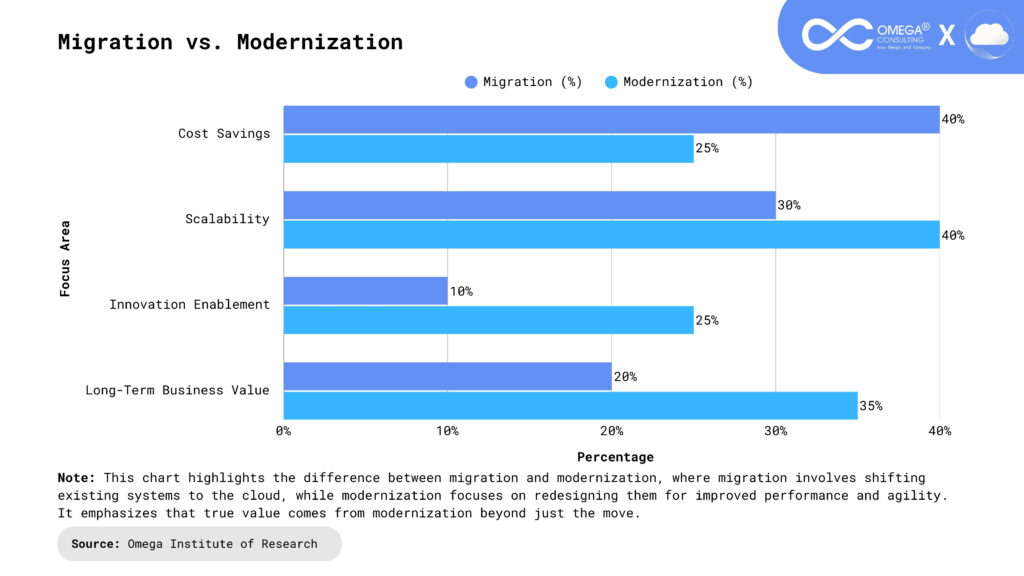
Migration vs. Modernization: Understanding the Difference
Cloud Migration: This is the process of shifting data, applications, and IT resources from on-premises systems to cloud environments. It’s often about “lift and shift”—moving existing systems with minimal changes. Migration is typically the first step organizations take to reduce infrastructure costs and gain basic cloud benefits like scalability and availability. However, it does not always optimize performance, as legacy systems may still carry inefficiencies. Businesses often see migration as a foundation, but without modernization, they may fail to unlock the full competitive advantage of the cloud.
Cloud Modernization: This goes beyond relocation. Modernization focuses on rearchitecting applications, optimizing performance, and adopting cloud-native capabilities such as microservices, serverless computing, and AI-driven automation. It transforms legacy systems into agile, flexible, and future-ready platforms that can easily integrate with emerging technologies. Modernization also enables continuous innovation, allowing businesses to respond quickly to market shifts and customer demands. Unlike migration, which is about moving, modernization is about evolving ensuring businesses maximize cloud ROI and stay ahead in a fast-changing digital landscape.
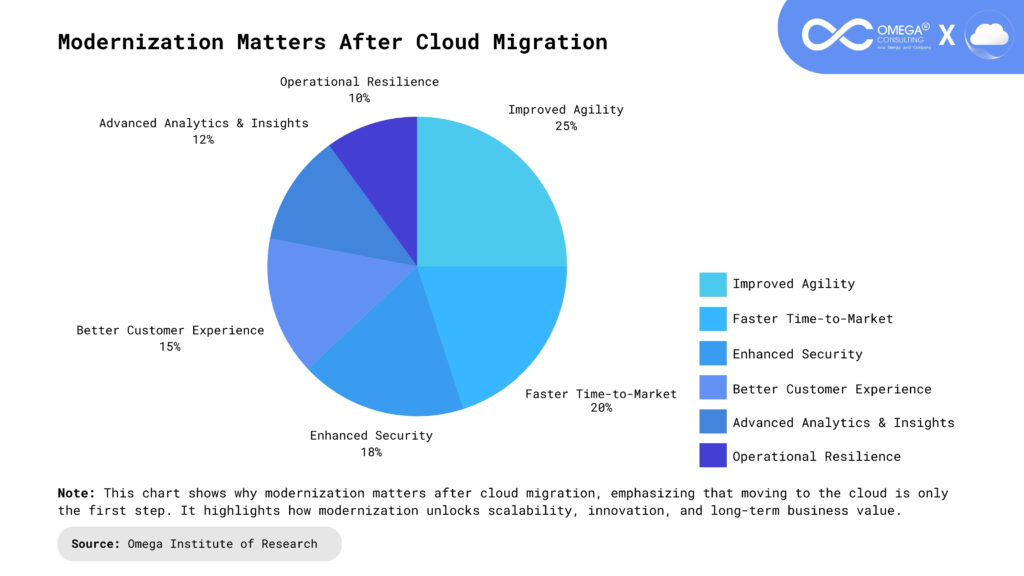
Why Modernization Matters After Cloud Migration
Many organizations mistakenly assume migration is the end goal. But without modernization, businesses face challenges such as rising costs, underutilized resources, and missed innovation opportunities. Here’s why modernization matters:
Unlocking Innovation: Cloud-native technologies like containers, Kubernetes, and serverless platforms allow faster development, experimentation, and deployment. This enables companies to roll out new features and services at record speed. By leveraging modern architectures, businesses can integrate AI, IoT, and advanced analytics directly into their operations. This not only accelerates product cycles but also fosters a culture of continuous innovation where teams can quickly test, learn, and scale successful ideas. Organizations that embrace modernization become industry leaders by setting trends rather than reacting to them.
Optimizing Costs: Migration may reduce capital expenses, but modernization fine-tunes workloads for cloud efficiency. Automated scaling, right-sizing, and pay-per-use models prevent unnecessary spending. With modernization, organizations gain deeper visibility into resource utilization, ensuring every dollar spent delivers maximum business value. They can eliminate hidden costs tied to legacy systems while achieving predictable, optimized cloud bills. Over time, this financial efficiency translates into higher ROI and frees up budgets for innovation and growth initiatives.
Enhancing Security & Compliance: Modern cloud solutions come with zero-trust security models, continuous monitoring, and AI-powered threat detection, ensuring organizations remain resilient against evolving cyber risks. Beyond standard protection, modernization introduces automated compliance checks, encryption by default, and advanced identity management systems. These capabilities allow businesses to meet global regulatory requirements seamlessly, reducing legal and reputational risks. By embedding security into every layer of the cloud, organizations safeguard customer trust and create a more secure digital environment for long-term growth.
Boosting Agility & Resilience: Modernized architectures are designed for resilience. Businesses can recover faster from disruptions and adapt quickly to changing market conditions. With built-in redundancy, disaster recovery, and real-time monitoring, organizations gain the confidence to scale operations without fear of downtime. Modernization also empowers companies to pivot strategies when new opportunities or challenges arise. Ultimately, agility becomes a competitive advantage, ensuring businesses remain future-ready no matter how unpredictable the market becomes.
Key Strategies for Cloud Modernization
Application Modernization: Move away from monolithic architectures and embrace microservices, APIs, and containerization. This enables faster innovation and seamless scaling. By breaking applications into smaller, independent services, businesses can update or deploy features without disrupting the entire system. Application modernization also allows better integration with emerging technologies, ensuring long-term adaptability. Ultimately, it empowers organizations to create agile, future-ready applications that meet customer needs more effectively.
Data Modernization: Leverage cloud-based analytics, AI, and machine learning to turn raw data into actionable insights. Modern data platforms enable real-time decision-making and predictive capabilities. They also allow businesses to unify fragmented data sources, eliminating silos that hinder growth. With advanced data pipelines and governance, companies can ensure accuracy, security, and compliance while extracting maximum value. Data modernization transforms information into a powerful strategic asset that drives innovation and competitive advantage.
Automation and DevOps: Implement CI/CD pipelines, infrastructure as code (IaC), and AI-driven automation to streamline operations and accelerate software delivery. This reduces manual intervention, minimizes errors, and shortens release cycles. Automation enhances consistency across environments, ensuring faster deployment with fewer risks. Coupled with DevOps practices, it fosters a culture of collaboration, continuous improvement, and rapid innovation. As a result, businesses can respond to market demands more quickly and deliver superior customer experiences.
Embracing Multi-Cloud and Hybrid Strategies: Modern organizations rarely rely on a single provider. Hybrid and multi-cloud strategies offer flexibility, cost optimization, and business continuity. This approach reduces vendor lock-in while allowing organizations to leverage the strengths of multiple cloud platforms. It also improves resilience, as workloads can be distributed and shifted across providers during outages. By adopting multi-cloud and hybrid models, companies gain greater control, scalability, and freedom to adapt to evolving needs.
Cloud Security Modernization: Adopt advanced security frameworks, encryption, and compliance automation to safeguard sensitive information while staying audit-ready. Modern security strategies integrate identity and access management, zero-trust principles, and AI-driven monitoring for proactive defense. They ensure continuous compliance across multiple jurisdictions, minimizing regulatory risks. By embedding security directly into cloud operations, businesses strengthen resilience and build customer confidence. In today’s threat landscape, modernized cloud security is not optional, it’s essential for sustainable growth.
The Role of Emerging Technologies in Modernization
Cloud modernization isn’t just about efficiency it’s about enabling the adoption of next-gen technologies:
Artificial Intelligence & Machine Learning: Personalized customer experiences, predictive analytics, and automation. AI and ML empower organizations to analyze vast datasets in real time, uncovering trends and opportunities that would otherwise remain hidden. Businesses can use predictive models to anticipate customer needs, optimize supply chains, and detect anomalies before they escalate. Additionally, automation powered by AI reduces manual workloads, freeing employees to focus on strategic tasks. By embedding AI and ML into cloud ecosystems, companies gain a powerful competitive edge in both speed and innovation.
Edge Computing: Processing data closer to where it’s generated for faster response times. This reduces latency significantly, making it ideal for applications such as autonomous vehicles, healthcare monitoring, and smart manufacturing. Edge computing also enhances reliability by ensuring critical processes can function even when cloud connectivity is limited. It brings intelligence to the edge, enabling localized decision-making for real-time operations. When combined with cloud modernization, edge solutions create seamless, efficient, and resilient digital experiences.
Internet of Things (IoT): Connecting devices and creating smarter ecosystems across industries. IoT platforms allow organizations to collect and analyze continuous streams of data from sensors, machines, and connected products. This enables predictive maintenance, operational efficiency, and new service-driven business models. For example, in healthcare, IoT devices can monitor patients remotely, while in manufacturing, they optimize production lines. When powered by modern cloud infrastructure, IoT ecosystems become more scalable, secure, and impactful across diverse sectors.
Generative AI: Enhancing customer service, marketing, and content creation with advanced AI capabilities. Generative AI can automate tasks such as drafting reports, creating personalized marketing campaigns, and even generating code for faster software development. It also improves customer engagement through AI-driven chatbots, voice assistants, and dynamic personalization. Beyond efficiency, it opens creative opportunities, allowing businesses to design new products, experiences, and content at scale. As organizations modernize their cloud infrastructure, generative AI becomes a catalyst for reimagining how value is delivered.
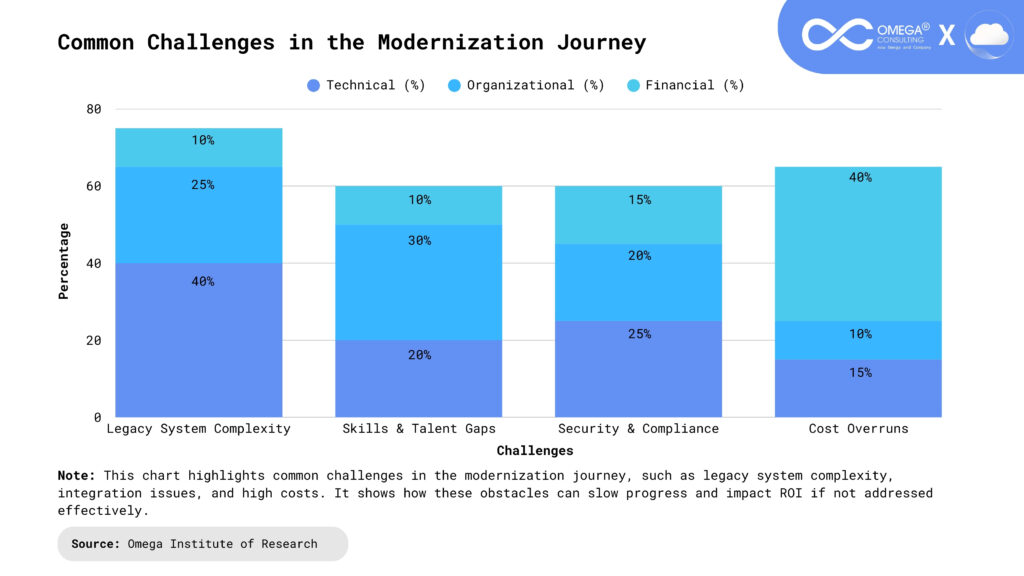
Common Challenges in the Modernization Journey
While modernization is essential, organizations often face obstacles such as:
Legacy Dependencies: Legacy dependencies that are hard to rearchitect remain one of the biggest hurdles. Many enterprises still rely on monolithic applications built decades ago, tightly coupled with outdated hardware or proprietary systems. Rebuilding these applications for cloud-native environments is often costly and time-consuming. Additionally, legacy dependencies can cause compatibility issues, data migration difficulties, and integration bottlenecks. Without a structured modernization strategy, organizations risk creating hybrid systems that are inefficient, costly, and prone to disruption. The key lies in prioritizing critical applications for reengineering while gradually phasing out outdated technologies.
Skill Gaps in Cloud-Native Development and DevOps: Modernization requires new expertise in areas like microservices, containers, serverless computing, and DevOps automation. However, many organizations face significant skill gaps in cloud-native development and operational practices. Traditional IT teams may lack hands-on experience with continuous integration/continuous deployment (CI/CD) pipelines or infrastructure as code (IaC). This knowledge gap leads to slower project timelines, increased risk of errors, and over-reliance on external consultants. Bridging this challenge requires strategic investment in upskilling, training programs, and partnerships with cloud providers. Companies that invest in talent development will be better equipped to sustain modernization efforts long term.
Balancing Costs Between Migration, Modernization, and Operations: One of the most common challenges is financial: balancing ongoing operational expenses with the investments needed for migration and modernization. While the cloud promises cost savings, modernization projects often require upfront investments in new tools, platforms, and skilled resources. Organizations also face the risk of “cloud sprawl,” where underutilized resources lead to unexpected cost overruns. Striking the right balance involves creating a phased roadmap, optimizing workloads for cost-efficiency, and applying cloud financial management practices like FinOps. Companies that treat modernization as a strategic investment rather than a short-term cost are more likely to achieve sustainable ROI.
Resistance to Change Within the OrganizationL: Even with the best technologies in place, human resistance to change can hinder modernization. Employees accustomed to legacy systems may view modernization as a threat to their roles, leading to reluctance in adopting new tools or processes. Similarly, leadership teams may hesitate due to perceived risks, compliance concerns, or disruption to business continuity. This cultural barrier can be as challenging as the technical ones. Overcoming it requires clear communication of benefits, strong leadership support, and change management initiatives that engage employees at every level. By fostering a culture of adaptability and innovation, organizations can ease the transition and accelerate their modernization journey.
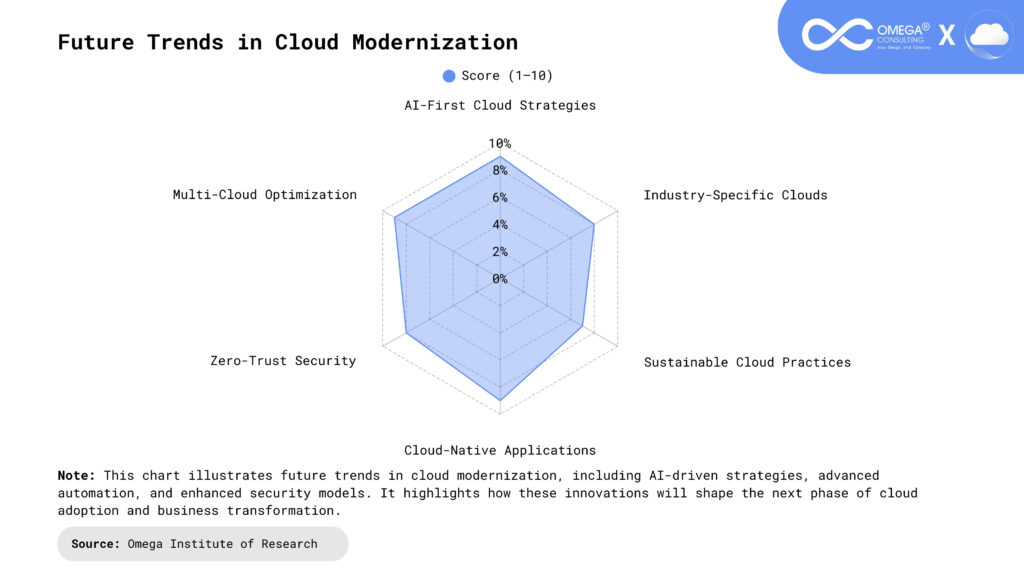
Future Trends in Cloud Modernization
The future of cloud modernization is shaped by rapid innovation and evolving business needs. Here are some key trends to watch:
AI-First Cloud Strategies: Cloud providers are embedding artificial intelligence and machine learning at the core of their services, paving the way for AI-first cloud strategies. From predictive infrastructure management to AI-driven application development, businesses will increasingly depend on these intelligent solutions. Not only will AI automate repetitive tasks, but it will also empower organizations to make smarter, data-backed decisions in real time. Companies that adopt AI-first approaches early will enjoy faster innovation cycles, more personalized customer experiences, and streamlined operations. Over time, AI in the cloud will evolve from being a competitive advantage to becoming a fundamental requirement for relevance in the digital economy.
Sustainable Cloud (Green IT): As organizations pursue environmental, social, and governance (ESG) goals, the rise of sustainable cloud solutions is inevitable. Providers are focusing on optimizing energy efficiency, reducing carbon footprints, and powering data centers with renewable energy sources. Customers and regulators are also demanding greater transparency regarding sustainability commitments, making green cloud initiatives more important than ever. Beyond environmental impact, sustainable cloud strategies also drive financial efficiency by lowering energy-related costs. In the future, true industry leaders will be those who integrate sustainability as a central driver of their modernization efforts.
Industry-Specific Clouds: Another trend shaping modernization is the emergence of industry-specific cloud platforms. These vertical solutions, tailored to sectors such as healthcare, finance, retail, and manufacturing, come with pre-built compliance frameworks, analytics, and AI-driven capabilities. By reducing the time and cost of customization, they allow businesses to innovate faster while meeting regulatory requirements. For industries with strict compliance needs, such as healthcare or finance, these specialized platforms provide the perfect balance of agility and security. Over time, the one-size-fits-all cloud model will give way to specialized solutions, making industry-specific clouds the dominant approach in enterprise modernization.
Cloud and Edge Integration: With the continued expansion of IoT and 5G technologies, cloud and edge integration is becoming a cornerstone of modernization. This approach enables organizations to process data closer to its source while still leveraging the scalability of the cloud. The result is minimized latency, enhanced real-time decision-making, and improved user experiences. Sectors like healthcare, autonomous vehicles, and manufacturing will especially benefit from this model, where milliseconds can make a difference. The convergence of cloud and edge computing will create architectures that are more resilient, adaptive, and capable of handling next-generation workloads.
Composable Business Architecture: Enterprises of the future will increasingly adopt composable business architectures modular, API-driven systems that allow rapid assembly and deployment of applications. This modular approach reduces reliance on outdated legacy systems and gives organizations the flexibility to innovate faster. By reusing pre-built components rather than building everything from scratch, businesses can adapt quickly to shifting market demands. Composable architectures will become the foundation of digital transformation, enabling agility and continuous improvement as core business strengths.
Cloud-Driven Cybersecurity: Finally, the modernization journey will lean heavily on advanced cloud-driven cybersecurity. Traditional, reactive security methods will no longer be sufficient to counter increasingly sophisticated cyber threats. Instead, businesses will rely on AI-powered, autonomous security platforms capable of predicting, detecting, and neutralizing risks in real time. These cloud-native solutions will offer continuous monitoring, compliance automation, and predictive intelligence, strengthening defenses against evolving attacks. For organizations in highly regulated industries such as finance and healthcare, proactive, cloud-driven cybersecurity will be critical not just for compliance, but also for survival in an increasingly digital and interconnected world.
Conclusion
Cloud migration is just the starting point, but true transformation comes from modernization that unlocks innovation, agility, and long-term value. By embracing cloud-native technologies, automation, and emerging tools like AI, IoT, and edge computing, organizations can future-proof their operations and stay competitive. Modernization also ensures smarter cost optimization, stronger security, and faster adaptability in a rapidly changing digital landscape. Companies that hesitate risk falling behind, while those that modernize will lead the next wave of digital growth. Ultimately, the future of business success lies not in migration alone, but in thriving through continuous cloud modernization.
- https://aws.amazon.com/blogs/mt/transitioning-from-migration-to-modernization-on-the-cloud/
- https://blog.aspiresys.com/cloud/its-time-to-move-beyond-lift-and-shift-migration-to-cloud-modernization/
- https://www.netsolutions.com/hub/application-modernization/lift-and-shift/
- https://www.sourcefuse.com/resources/blog/defining-cloud-migration-and-modernization-in-todays-world/
- https://jfrog.com/devops-tools/article/cloud-migration-vs-cloud-modernization/
Subscribe
Select topics and stay current with our latest insights
- Functions