

- Industries
Industries
- Functions
Functions
- Insights
Insights
- Careers
Careers
- About Us

Haptic Internet: Experiencing Touch in Virtual Spacesument







The internet has revolutionized how humans interact, from instant messaging and video calls to streaming and online shopping, yet one crucial element has always been missing: the sense of touch. The emerging Haptic Internet aims to bridge this gap by transmitting tactile sensations such as pressure, texture, and vibration across digital platforms, allowing people to not only see and hear but also feel in virtual environments. By integrating haptic technology with ultra-fast networks like 5G and 6G, this innovation has the potential to transform industries including healthcare, education, gaming, e-commerce, and communication, making digital interactions more immersive, realistic, and human. As this technology matures, it promises to redefine how people connect emotionally and professionally in the digital world. The Haptic Internet is not just about innovation, it’s about bringing digital experiences closer to the richness of real-life interactions.
What Is Haptic Internet?
The Haptic Internet is the next generation of digital communication that enables users to experience the sense of touch in virtual spaces by transmitting tactile sensations such as pressure, vibration, and texture in real time. Unlike traditional internet interactions that rely on visuals and sound, it combines haptic devices like gloves, suits, and controllers with ultra-fast networks such as 5G and 6G to deliver near-instant feedback that feels lifelike. Imagine attending a virtual class and feeling the pulse of a 3D heart model, or a surgeon performing remote operations with precise tactile feedback. This is the potential of haptic technology. Derived from the Greek word haptikos, meaning “able to touch,” the Haptic Internet opens the door to immersive experiences that make digital interactions more tangible and human. As this innovation develops, it is expected to blur the boundaries between physical and virtual realities. Ultimately, it represents a major step toward creating a fully sensory internet where touch is as natural as sight and sound.
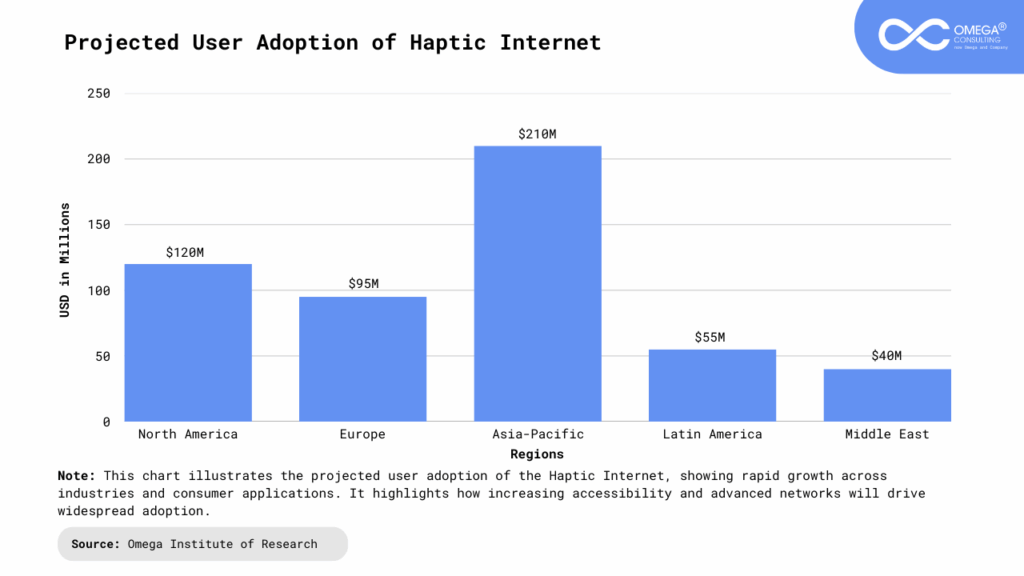
How Does Haptic Internet Work?
To make the sense of touch possible across digital networks, the Haptic Internet relies on three main components:
Sensors and Actuators: Sensors capture tactile information such as force, movement, and pressure from the user’s interaction. These signals are then transmitted through the internet to the connected device. On the receiving end, actuators convert that data into physical sensations, recreating the exact feeling of the action. This makes it possible for someone far away to feel what you are touching or holding. These systems can replicate a wide range of textures and resistances, from the softness of fabric to the firmness of a solid object. As the technology advances, the accuracy of these sensations will continue to improve, making remote touch experiences nearly indistinguishable from real ones.
Ultra-Low Latency Networks: The human sense of touch is highly sensitive to delays, so even a slight lag can break immersion. This is why high-speed technologies like 5G and upcoming 6G are crucial for the Haptic Internet. These networks ensure that touch signals are transmitted in milliseconds, creating real-time feedback that feels natural and responsive. Without ultra-low latency, haptic experiences would feel robotic and disconnected. In industries like telemedicine or remote surgery, this reliability is not just about convenience but also about safety and precision. Achieving consistent ultra-low latency will be the key to scaling haptic applications across different fields.
Integration with VR and AR: Virtual Reality (VR) and Augmented Reality (AR) already provide immersive visual and audio experiences. However, adding touch feedback completes the experience by giving users a sense of physical presence. For example, VR gamers could feel the recoil of a weapon, or AR shoppers could touch and test the softness of clothes. Together, haptics, VR, and AR create a truly lifelike digital environment. This integration not only enhances entertainment but also supports learning, training, and remote collaboration in ways that were previously impossible. As VR and AR devices evolve, haptics will serve as the bridge that makes digital experiences truly multi-sensory.
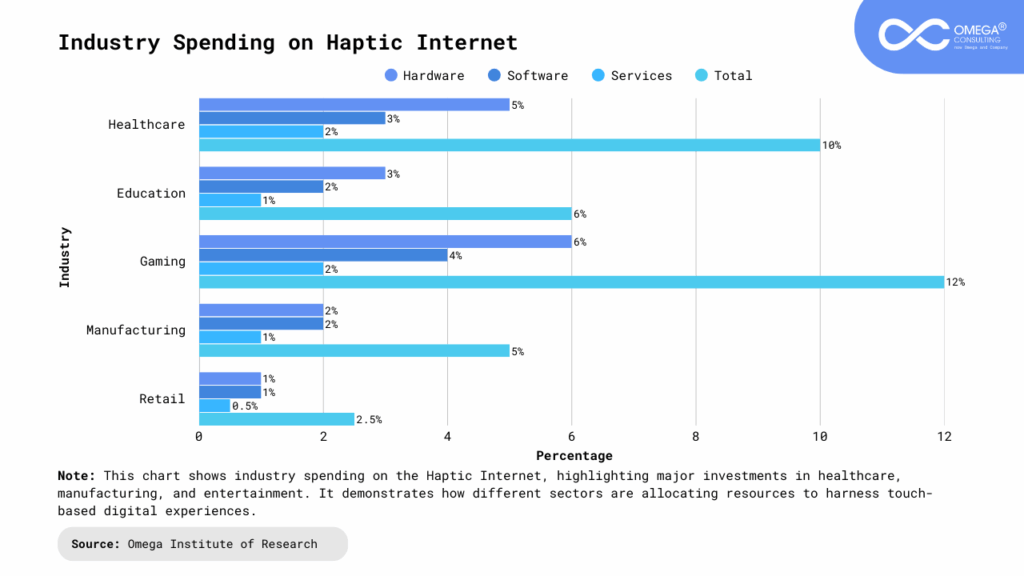
Applications of Haptic Internet
The applications of the Haptic Internet are not just futuristic concepts, they are being researched and tested across multiple industries today.
Healthcare and Remote Surgery: Doctors will be able to perform complex surgeries remotely using robotic arms connected with haptic feedback. This means they could feel the tissue, muscles, and pressure exactly as if they were physically present with the patient. Such advancements would make high-quality healthcare accessible in rural areas and save lives during emergencies where immediate surgical intervention is needed. By removing geographical barriers, this technology could also enable global collaboration between top surgeons and specialists. In the future, patients may have access to world-class medical expertise regardless of where they live.
Education and Training: Students will be able to learn practical skills in safe and controlled digital environments. For instance, trainee pilots could experience the controls of an aircraft, including turbulence, without leaving a simulator. Similarly, medical students could practice surgical techniques and feel tissue resistance without putting real patients at risk. This hands-on approach would enhance learning outcomes significantly. Beyond professional training, everyday education could also become more interactive, where students feel the texture of historical artifacts or the movements of molecules in science labs. Such innovations could make learning more engaging and accessible worldwide.
Gaming and Entertainment: The gaming industry is poised to benefit massively from the Haptic Internet. Gamers could feel the vibrations of an explosion, the kickback of a weapon, or even the texture of in-game objects. Entertainment experiences, such as movies or theme park rides, could also be enhanced with tactile feedback, making them more immersive and emotionally engaging than ever before. Developers will be able to design new kinds of experiences that merge storytelling with physical sensations. This could create entertainment worlds that blur the boundaries between reality and imagination.
E-commerce: Online shopping will evolve from a purely visual experience into a tactile one. Shoppers could feel the fabric of clothes, test the firmness of furniture, or gauge the weight of jewelry before making a purchase. This level of sensory interaction would reduce return rates, increase buyer confidence, and provide e-commerce businesses with a competitive edge. For retailers, haptics could create a more personalized shopping journey, tailoring touch-based previews to individual preferences. Over time, this shift may completely redefine customer expectations in digital commerce.
Social and Communication: Digital communication will take on a more emotional and human touch. Friends and family separated by distance could send hugs, handshakes, or even simple touches through haptic devices. Business meetings could become more personal with virtual handshakes that feel real. This would create stronger emotional bonds and make virtual interactions more meaningful. Social media platforms could also evolve, allowing users to share tactile experiences alongside photos and videos. Ultimately, this could bridge emotional distances and make online connections feel more authentic.
Benefits of Haptic Internet
The adoption of Haptic Internet offers significant advantages across industries and daily life:
Enhanced Realism: Haptic feedback adds depth and authenticity to digital interactions, making virtual environments feel as natural as real life. This realism not only improves user experience but also helps businesses and educators deliver more impactful results. It can transform entertainment into unforgettable experiences while enhancing professional applications such as remote design or engineering. As a result, users will feel more engaged and connected in digital worlds.
Improved Learning: Training through haptic simulations provides learners with hands-on practice without risks. By feeling the process instead of just watching or hearing, students can develop practical skills more effectively and retain knowledge longer. This sensory engagement ensures that abstract concepts are better understood and applied in real-world scenarios. In the long run, it has the potential to revolutionize how education and vocational training are delivered worldwide.
Accessibility: For people with disabilities, the Haptic Internet could provide better ways to interact with digital tools and the physical world. For example, visually impaired users might rely on haptic signals to navigate online shopping or educational platforms. It could also enable more inclusive communication, allowing users to interpret touch-based cues alongside sound and visuals. By bridging accessibility gaps, this technology empowers more individuals to participate fully in digital life.
Stronger Emotional Bonds: Physical gestures like hugs or handshakes in virtual settings bridge emotional gaps in long-distance relationships. This makes digital communication more human and meaningful, fostering deeper personal connections. It adds an emotional richness that voice and video alone cannot convey. Over time, this could reshape how people maintain personal and professional relationships in a digital-first world.
Global Collaboration: Haptics allows professionals in different parts of the world to work together as if they were side by side. Whether it’s scientists sharing lab work or engineers designing products, the technology promotes seamless teamwork across borders. This can speed up innovation by allowing real-time, hands-on cooperation without the need for travel. Ultimately, it fosters global inclusivity by connecting talent and expertise regardless of geography.
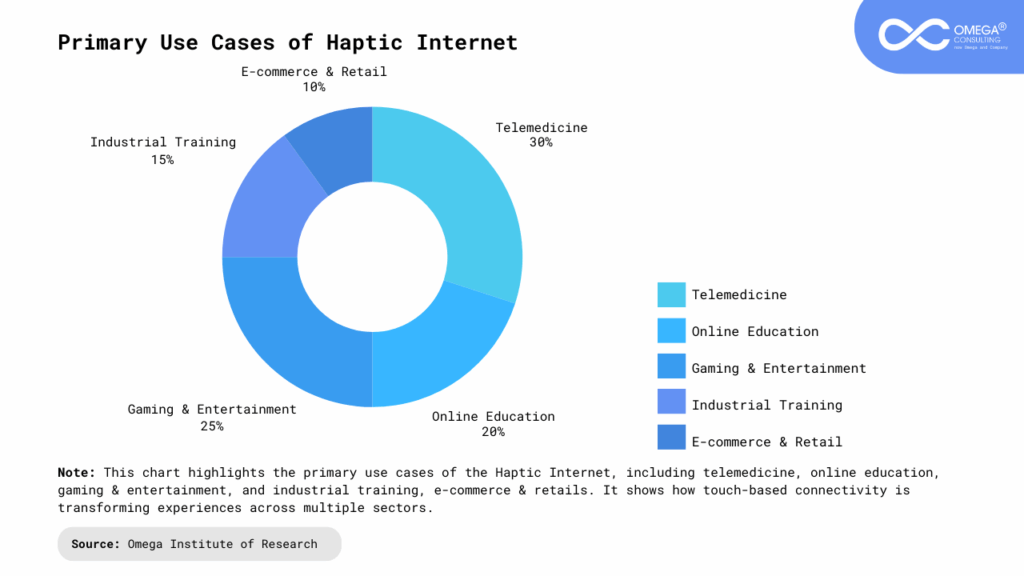
Challenges Ahead
While exciting, the Haptic Internet also faces hurdles before mass adoption:
Infrastructure Limitations: The technology relies on ultra-fast, stable networks like 5G and 6G, which are not yet available everywhere. In regions with weak infrastructure, it will be nearly impossible to transmit haptic signals smoothly. This uneven access could create a digital divide where only advanced nations benefit. Overcoming this challenge will require large-scale investment in network development and global connectivity initiatives.
High Costs: Specialized devices such as haptic gloves, suits, and controllers are currently expensive to produce. Initially, only industries like healthcare or defense may afford them. Over time, as manufacturing scales up, costs may fall but affordability remains a barrier for mainstream adoption. Mass adoption will depend on whether companies can produce consumer-friendly devices at reasonable prices.
Standardization: Currently, there are no global standards for transmitting touch data across networks. Without uniform protocols, devices from different manufacturers may not work together. Standardization is critical for scaling the technology across multiple industries and platforms. International cooperation will be essential to ensure interoperability and prevent fragmented ecosystems.
Security and Privacy: Touch data is deeply personal and sensitive, raising new cybersecurity concerns. If hacked, malicious actors could misuse the sensation signals or create harmful feedback. Therefore, strong encryption and data protection standards must be implemented before widespread use. Building user trust will be essential for adoption, especially in areas like healthcare and communication where sensitive information is involved.
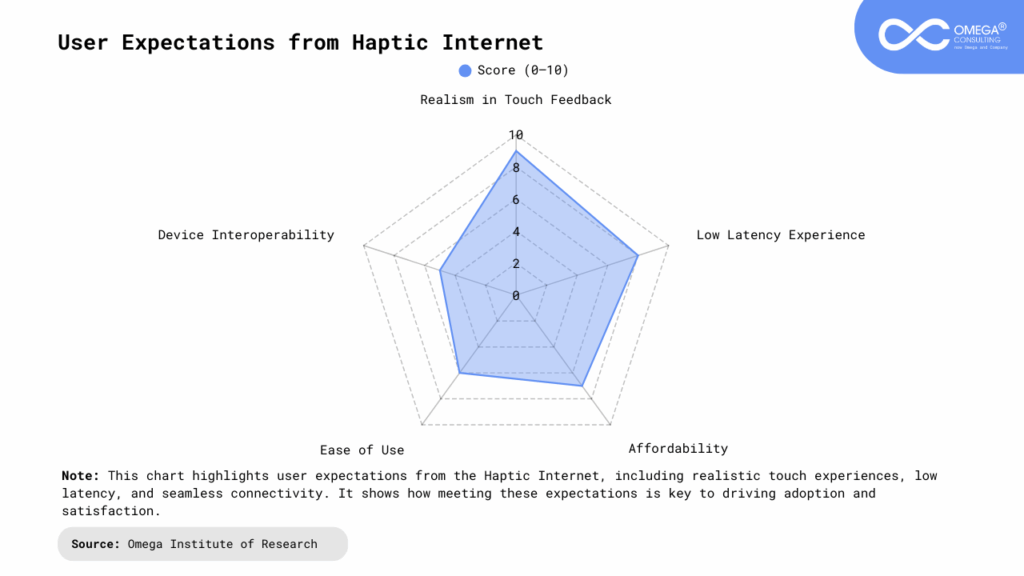
The Future of Haptic Internet
The future of the Haptic Internet is promising, as advancements in 5G, 6G, AI, and affordable hardware will make touch-based digital interactions widely accessible. In the coming years, we can expect classrooms where students feel virtual experiments, shopping malls where customers touch products before buying, and telemedicine networks where doctors treat patients remotely with precision. Beyond these, a fully haptic-enabled metaverse may emerge, blending physical and digital realities seamlessly. Ultimately, the Haptic Internet will humanize technology, making online experiences as immersive, emotional, and tactile as real life. As more industries adopt this technology, it could redefine standards of communication, learning, and entertainment on a global scale. In essence, the Haptic Internet is not just an upgrade to connectivity, it represents a leap toward a future where digital and physical worlds coexist in harmony.
Conclusion
The Haptic Internet represents the next leap in digital innovation, transforming the internet from a medium of sight and sound into one of touch. By adding the sense of touch, it enhances realism, revolutionizes industries like healthcare and education, and deepens human connections across distances. While challenges such as infrastructure, cost, and security must be overcome, the potential is immense. As networks become faster and devices more affordable, the Haptic Internet will reshape how we live, learn, shop, play, and communicate. The future of the internet won’t just be about what we see and hear, it will be about what we can feel, making digital life far more engaging and authentic. In this evolution, the boundaries between physical and virtual worlds will continue to blur, creating a truly multisensory digital era.
- https://lumenalta.com/insights/haptic-internet-in-digital-communications
- https://www.frontiersin.org/journals/virtual-reality/articles/10.3389/frvir.2023.1242587/full
- https://pmc.ncbi.nlm.nih.gov/articles/PMC8454010/
- https://www.haptic.ro/haptic-internet-pave-the-way-of-internet-of-things/
- https://sparks.learning.asu.edu/videos/haptic-technology-simulating-the-sense-of-touch
Subscribe
Select topics and stay current with our latest insights
- Functions