

- Industries
Industries
- Functions
Functions
- Insights
Insights
- Careers
Careers
- About Us


Hydrogen-Powered Aviation: Flying Without Fossil Fuels







As the world pushes toward a net-zero future, one industry remains notoriously difficult to decarbonize: aviation. Air travel connects countries, economies, and cultures, but it also contributes significantly to global carbon emissions. Now, a breakthrough shift is taking shape in hydrogen-powered aviation, an innovation that promises to make flight cleaner, quieter, and dramatically more sustainable. With major aerospace companies and governments accelerating investments in hydrogen technologies, the dream of flying without fossil fuels is becoming a real, disruptive possibility. This transition is not just a technological evolution but a strategic move toward reshaping global mobility. Hydrogen’s high energy density and zero-emission profile make it a compelling alternative for short-, medium-, and eventually long-haul flights. As infrastructure, aircraft designs, and production capacity advance, hydrogen aviation is moving from early experimentation to mainstream adoption positioning itself as a game-changing solution for the future of air travel.
Why Hydrogen Matters: The Fuel That Could Redefine Flight
Hydrogen’s appeal in aviation comes down to its performance and sustainability profile. Unlike conventional jet fuel, hydrogen emits zero CO₂ when used in a fuel cell, and even when burned in modified turbines, emissions are drastically lower. It also delivers three times more energy per kilogram than traditional fuels, giving aircraft greater range potential with significantly lower environmental impact. More importantly, hydrogen offers a scalable path to truly green aviation especially when produced using renewable energy sources like wind, solar, or hydro. This makes it one of the most promising long-term alternatives to kerosene-based fuels. Its versatility allows it to be used in multiple propulsion systems, from electric fuel cells to hydrogen combustion engines, giving manufacturers more flexibility in aircraft design. As global investments in clean hydrogen ramp up, production costs are expected to fall rapidly, making hydrogen increasingly competitive with traditional fuels. Ultimately, hydrogen represents not just a cleaner fuel but a transformational energy source that could redefine how the world flies for decades to come.
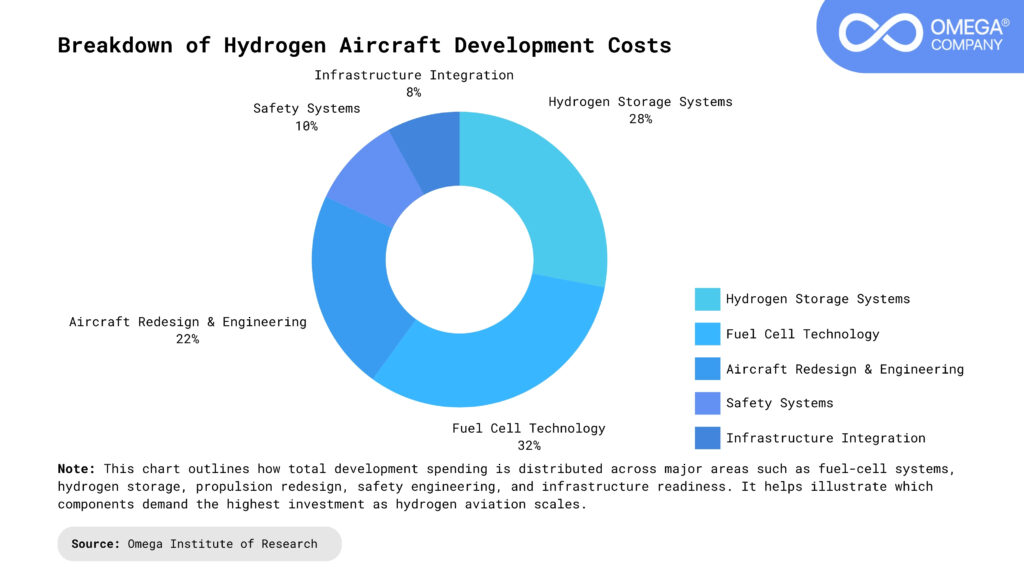
How Hydrogen-Powered Aircraft Work
Hydrogen can power aircraft through two main methods, each offering unique advantages:
Hydrogen Fuel Cells
Fuel cells convert hydrogen into electricity, powering electric motors that drive the aircraft’s propellers or fans. This approach:
- Produces zero CO₂: Fuel-cell systems create only water vapor as a byproduct, making them one of the cleanest propulsion options. They completely eliminate carbon emissions during flight, helping airlines meet aggressive sustainability targets. This makes fuel cells ideal for regions pushing strict environmental policies.
- Reduces noise significantly: Electric motors run much quieter than traditional jet engines, improving both passenger comfort and airport noise conditions. This could enable more flexible flight schedules, especially in noise-restricted urban areas. Quieter operations also open new opportunities for regional air mobility.
- Offers high efficiency in short- and medium-haul flights: Fuel cells deliver strong energy efficiency, making them well-suited for flights under 1,500 km. This efficiency reduces operating costs while enabling cleaner regional aviation networks. As battery limitations persist, hydrogen fuel cells bridge the gap between sustainability and practicality.
Hydrogen Combustion Engines
In this method, hydrogen is burned in gas turbines, similar to traditional aviation engines. Advantages include:
- Familiar technology for manufacturers: Aviation firms can adapt current engine architectures, reducing development time and cost. This makes hydrogen combustion an attractive near-term solution for major aerospace companies. It also integrates smoothly into existing pilot training and maintenance programs.
- Faster integration into existing aircraft designs: Because hydrogen combustion resembles today’s jet engines, retrofitting becomes far more feasible. Aircraft can be updated without requiring full redesigns of airframes or control systems. This accelerates adoption and enables airlines to transition more affordably.
- Potential for long-distance flight capabilities: Hydrogen’s high energy density allows combustion engines to support larger aircraft and longer routes in the future. This could eventually enable hydrogen-powered flights across continents, bridging the gap between sustainability and long-haul travel needs. As tank and storage technology improves, range limitations will continue to decrease.
Key Innovations Driving Hydrogen Aviation Forward
Cryogenic Hydrogen Storage: Hydrogen must be stored at –253°C to remain liquid. Innovations in lightweight, super-insulated tanks allow aircraft to carry the fuel safely and efficiently. These next-generation tanks use advanced composite materials that minimize heat transfer and reduce boil-off during flight. Engineers are also designing integrated storage systems that fit seamlessly into aircraft fuselage structures for better balance and aerodynamics. As cryogenic technology becomes more compact and affordable, it will play a crucial role in scaling hydrogen-powered aircraft for commercial use.
Hybrid Powertrains: Blending hydrogen fuel cells with battery systems gives aircraft higher power output during takeoff and smoother operation during cruise. This dual-power approach allows aircraft to use batteries for quick bursts of energy while relying on fuel cells for steady, long-duration efficiency. It also improves overall reliability by distributing load across multiple energy sources, reducing wear on individual components. As control algorithms and power electronics evolve, hybrid hydrogen systems are becoming even more capable of supporting larger aircraft classes.
Hydrogen Airports: Worldwide, airports are beginning to install hydrogen infrastructure from on-site electrolyzers to mobile refueling stations as they prepare for the next generation of clean aviation. Rotterdam The Hague Airport is leading adoption by producing green hydrogen on-site and testing refueling operations with prototype aircraft. Singapore’s Changi Airport is developing hydrogen hubs that will support ground vehicles first and eventually regional aircraft. Across Europe and the U.S., several test facilities are exploring hydrogen logistics and storage solutions to guide future global standards.
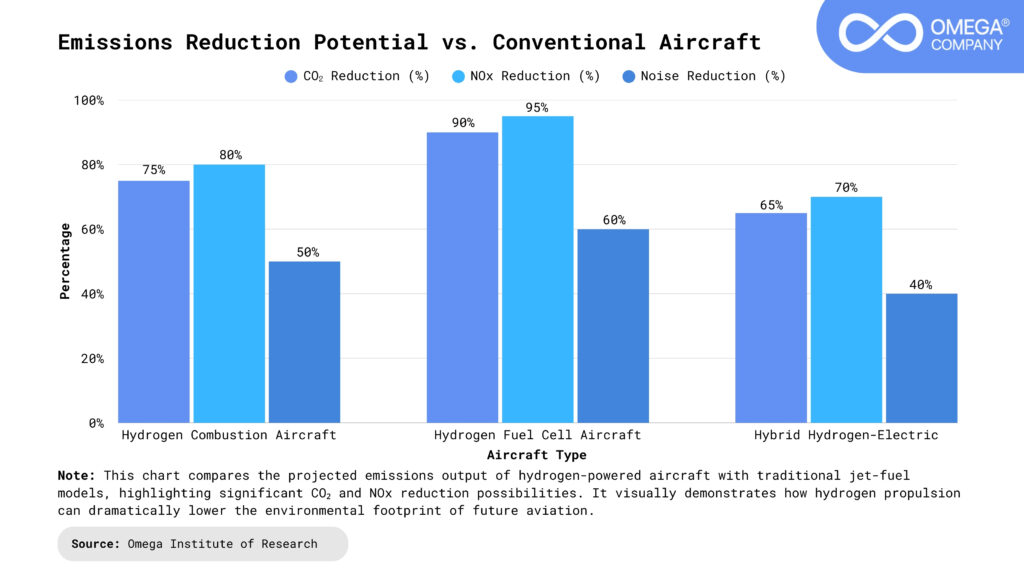
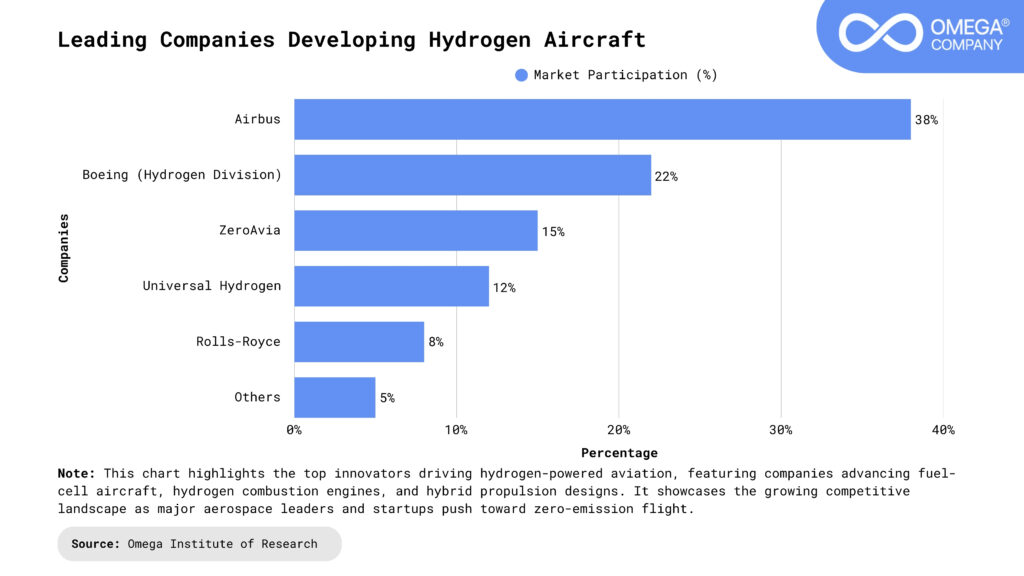
Global Leaders Pushing Hydrogen Aviation Ahead
Airbus: Airbus launched its ZEROe initiative, unveiling hydrogen-based aircraft concepts that could enter service by 2035. The company is exploring multiple designs, including turboprop, turbofan, and blended-wing concepts specifically optimized for hydrogen propulsion. Airbus is also investing heavily in cryogenic storage and fuel-cell integration to overcome the engineering challenges of large-scale hydrogen use. As part of its roadmap, Airbus is collaborating with governments and airports worldwide to build hydrogen infrastructure. Its long-term vision positions Airbus as the central driver of hydrogen-powered commercial aviation.
ZeroAvia: A frontrunner in hydrogen fuel-cell aviation, ZeroAvia has already completed successful test flights and aims to introduce commercial hydrogen aircraft for regional routes by 2027. The company’s prototype aircraft have demonstrated the viability of zero-emission powertrains in real operating conditions. ZeroAvia is also developing modular hydrogen powertrains that can be integrated into existing aircraft models. With partnerships across Europe and the United States, the company is accelerating certification and scaling hydrogen supply networks. Its rapid progress is pushing hydrogen aviation from concept to near-term commercial reality.
Rolls-Royce: Rolls-Royce is testing hydrogen combustion engines in partnership with EasyJet, marking a significant step toward fossil-fuel-free large-aircraft propulsion. The company has successfully run ground tests proving that hydrogen can be safely and efficiently burned in modified jet engines. Rolls-Royce is also working on next-generation turbine materials to maximize performance under hydrogen’s unique combustion properties. Its research aims to develop engines capable of powering future mid- to long-haul hydrogen aircraft. These efforts signal Rolls-Royce’s commitment to decarbonizing aviation at scale.
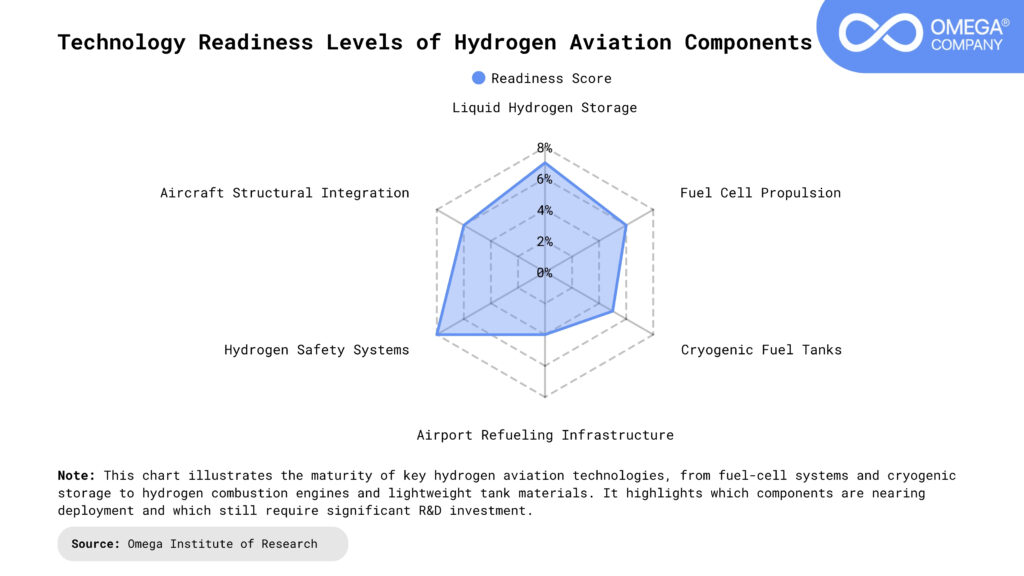
Challenges on the Path Ahead
Despite its enormous potential, hydrogen aviation still faces barriers that must be overcome:
Fuel Production: Green hydrogen production must increase dramatically to support global aviation demand. Current production levels are far too low to fuel commercial fleets, and most hydrogen today is still produced using fossil fuels. Scaling renewable-powered electrolysis facilities is essential to make hydrogen truly sustainable. Governments and private companies must accelerate investment in clean energy sources to close this gap. Without massive expansion in green hydrogen supply, aviation cannot fully transition to zero-emission operations.
Infrastructure: Most airports lack hydrogen storage and refueling systems. Large-scale investment is required worldwide. Building cryogenic storage, transport pipelines, and safe fueling stations poses technical and regulatory challenges. Airports must redesign ground operations to handle hydrogen safely and efficiently. The development of global hydrogen corridors will be crucial to supporting international flight routes.
Aircraft Redesign: Hydrogen tanks require more space, prompting major design changes for future aircraft. Engineers must rethink fuselage layouts, weight distribution, and aerodynamics to integrate large cryogenic tanks. These redesigns will likely lead to new aircraft shapes and configurations never seen before in commercial aviation. Developing and certifying these new architectures will take time and extensive testing. Despite the challenges, such redesigns offer opportunities for improved efficiency and next-generation aircraft innovation.
Cost: Both fuel production and aircraft manufacturing remain expensive, although costs are expected to fall as technology scales. Early hydrogen aircraft and infrastructure require significant upfront investment, making adoption slower for airlines. However, long-term operational savings and reduced carbon penalties can offset these initial costs. As technology matures and demand rises, economies of scale will drive prices down rapidly. Over the next decade, hydrogen is expected to become increasingly competitive with traditional aviation fuels.
The Future: Hydrogen Aviation in 2035 and Beyond
By the mid-2030s, hydrogen-powered aircraft are expected to transform short- and medium-haul travel, making regional flights cleaner, quieter, and increasingly fossil-fuel-free. Hydrogen-hybrid systems could significantly reduce emissions across global routes, easing aviation’s long-standing environmental impact. As the technology matures, the entire aviation ecosystem from aircraft design to airport refueling will shift toward hydrogen as production becomes cheaper and more sustainable. By 2050, hydrogen could play a central role in aviation’s transition to true net-zero flight. This shift will also unlock new aircraft architectures designed specifically around hydrogen storage and propulsion. With growing government support and industry collaboration, hydrogen aviation is positioned to become one of the defining breakthroughs in the future of air travel.
Conclusion
Hydrogen-powered aviation is more than an innovation; it is a revolution redefining the future of flight. With major breakthroughs in fuel-cell systems, combustion technologies, and cryogenic storage, hydrogen is emerging as a clean, powerful, and scalable alternative to traditional jet fuel. As countries and companies invest heavily in net-zero aviation, hydrogen will help the world achieve what was once impossible: flying without fossil fuels. The journey is just beginning, but the path toward clean skies is clear and its destination is a world where aviation supports sustainability rather than challenges it. In the coming decades, hydrogen will not only reshape aircraft technology but also transform global air-travel infrastructure from the ground up. As momentum accelerates, this transition marks one of the most hopeful and impactful shifts in the history of aviation.
- https://arxiv.org/html/2412.15137v1
- https://taoclimate.com/the-future-of-sustainable-aviation-can-we-fly-without-fossil-fuels/
- https://montel.energy/resources/blog/can-hydrogen-make-air-travel-more-eco-friendly
- https://responsibletourismpartnership.org/hydrogen-powered-flight/
- https://www.greenairnews.com/?p=2471
Subscribe
Select topics and stay current with our latest insights
- Functions