

- Industries
Industries
- Functions
Functions
- Insights
Insights
- Careers
Careers
- About Us


Hyperloop Technology: Testing Ultra-Fast Ground Transportation Globally







The promise of the Hyperloop reads like a page from a science-fiction novel: sleek pods gliding through low-pressure tubes at airline speeds, zipping passengers or cargo between cities in minutes instead of hours. Since Elon Musk’s initial 2013 white paper sparked the idea, a patchwork of startups, universities, and national test centers have been racing to turn the concept into something real and safe. This article walks through the technology that makes Hyperloop possible, where and how it’s being tested around the world, the hurdles engineers face, and what a realistic timeline might look like for seeing Hyperloop move beyond prototypes and into everyday transport. Beyond being just another transport innovation, Hyperloop represents a bold reimagining of mobility, sustainability, and global connectivity. It has the potential to reshape how people live, work, and interact across vast distances. If successful, it could redefine the future of travel much like the airplane did a century ago.
What is Hyperloop
The Hyperloop is a futuristic transportation system that moves passenger or cargo pods through low-pressure (almost vacuum) tubes to drastically reduce air resistance. These pods are propelled and guided using magnetic or air-bearing systems and powered by linear electric motors that enable smooth acceleration and deceleration. Because the air pressure inside the tube is so low, the pods experience minimal aerodynamic drag, allowing them to travel at speeds comparable to, or even faster than, airplanes while using far less energy. Essentially, the Hyperloop works more like a network of autonomous, high-speed shuttles traveling through sealed tubes than a traditional continuous train. Designed for both comfort and efficiency, it aims to eliminate delays caused by weather, traffic, and terrain. If realized on a global scale, Hyperloop networks could connect cities in minutes rather than hours, revolutionizing how people and goods move. This innovation represents a bold step toward sustainable, high-speed ground transportation for the future.
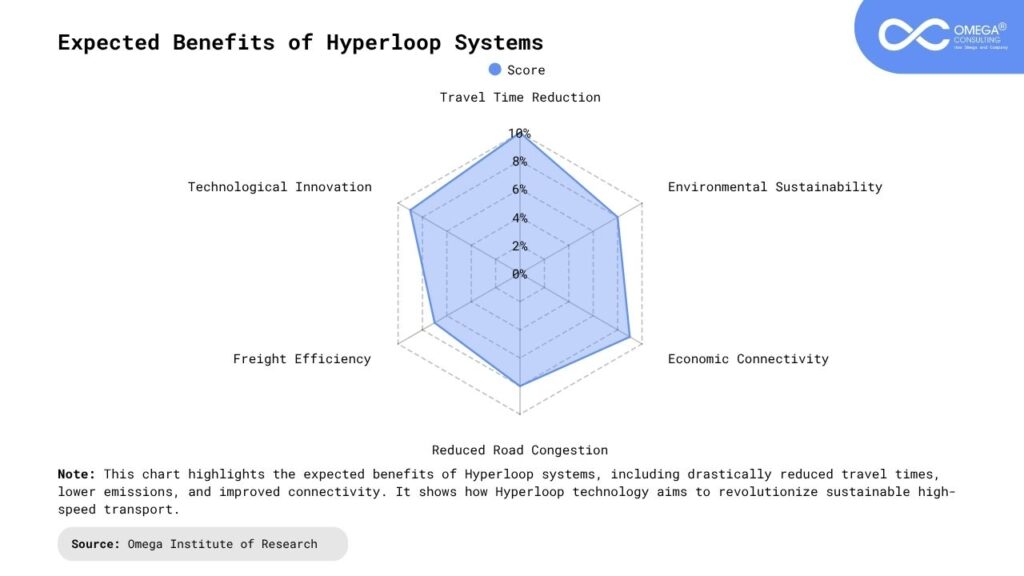
Key Hyperloop Technologies
Vacuum or partial-vacuum tube: Reducing air pressure inside the tube lowers drag, allowing pods to travel much faster with less energy. Achieving and maintaining that low pressure over long distances is a major engineering and maintenance challenge. Engineers must design airtight seals, powerful vacuum pumps, and pressure monitoring systems that can operate reliably for years. Even minor leaks or pressure variations could affect pod performance, making precision engineering and real-time monitoring critical to system safety and efficiency.
Levitation and guidance: Some designs use magnetic levitation (maglev), others use air bearings (thin air cushions), and some hybrid concepts are emerging. Each has tradeoffs in complexity, cost, and reliability. Magnetic levitation offers smooth, frictionless travel but requires strong electromagnets and continuous power control. Air-bearing systems, while simpler, demand precise airflow management. Ongoing research focuses on creating hybrid solutions that balance speed, energy use, and system stability for long-term operational safety.
Linear propulsion: Instead of spinning motors that turn wheels, linear induction or synchronous motors accelerate the pod directly along the tube. This enables smooth, rapid acceleration and deceleration without physical contact, reducing wear and maintenance needs. These propulsion systems also allow for precise speed control and synchronization across multiple pods. The challenge lies in managing electromagnetic forces efficiently while maintaining consistent performance over extended routes spanning hundreds of kilometers.
Thermal management & braking: At high speeds, small amounts of heating, friction, or emergency braking must be controlled safely. Regenerative braking and emergency refuge designs are essential to dissipate excess heat and protect passengers. Advanced cooling systems, thermal insulation, and heat recovery technologies are being explored to ensure comfort and safety during travel. Maintaining temperature stability across long, sealed environments is crucial for both pod performance and passenger well-being.
Controls, communications & safety systems: Autonomous control, redundant sensors, and rapid diagnostics are mandatory to protect passengers and prevent collisions or decompression events. Real-time communication networks must monitor pod position, speed, and environmental conditions at all times. Backup systems, AI-based fault detection, and automated response mechanisms ensure safety even in extreme conditions. Together, these systems create a digital nervous system that keeps the Hyperloop running smoothly, efficiently, and securely.
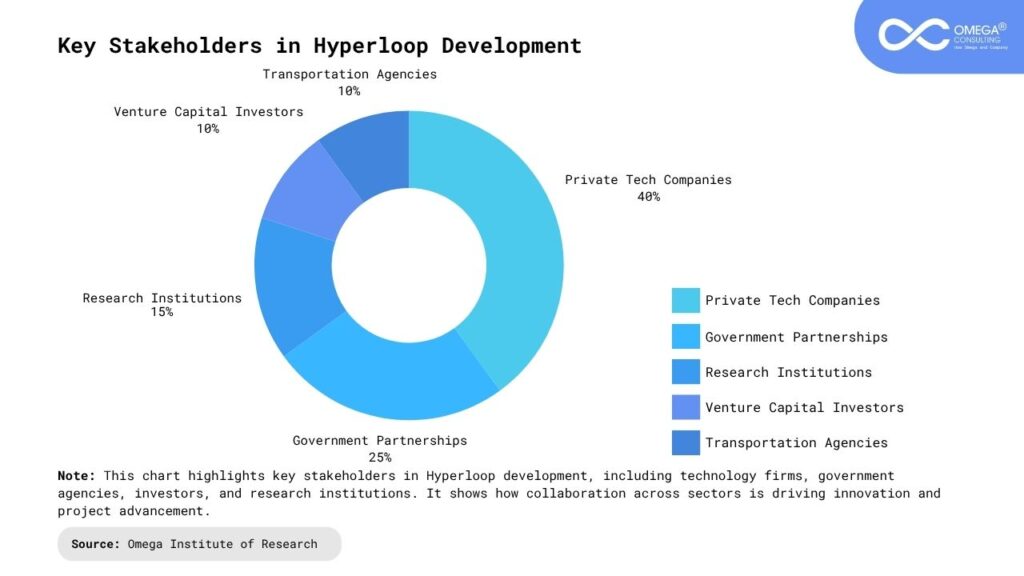
Global Testing Sites
Hyperloop development has never been centralized; instead, many groups have pursued different approaches. Notable testing programs and facilities include:
SpaceX / Pod Competition (Hawthorne, California): SpaceX built a purpose-built one-mile test tube that hosted university and independent teams in the Hyperloop Pod Competition. The track allowed teams to trial subsystems and acceleration profiles in a controlled short-range environment and jumpstarted the engineering community around Hyperloop R&D. The competition also fostered collaboration, mentorship, and cross-pollination of ideas among the next generation of transportation engineers.
Nevada / Las Vegas test site (Hyperloop One / Hyperloop One tests): Commercial teams built test facilities in Nevada to run uncrewed and crewed experiments. Hyperloop One (also known as Virgin Hyperloop) ran hundreds of tests at its Nevada site and notably completed a first human passenger test in November 2020 — an important demonstration of passenger safety under controlled conditions. These tests provided critical data on vehicle dynamics, safety systems, and passenger comfort that will inform future full-scale deployments.
European test centers (Groningen and others): Europe has invested in shared R&D facilities such as the European Hyperloop Center in Groningen (a 420-m test track) to let multiple companies and research groups validate components and vehicle concepts in vacuum-like conditions without each party building a private track. These open innovation hubs accelerate iteration and standardization. They also enable academic-industry partnerships that drive innovation while sharing costs and technical expertise.
Independent and scale-model testbeds (Swisspod and others): Universities and smaller companies have achieved notable records with scale models and longer vacuum runs — for example, a European facility recently reported the longest vacuum capsule journey for a scale Hyperloop system, demonstrating progress in sealing, propulsion and control for long runs. Such milestones show steady progress in subsystems that will need to scale up for commercial routes. Additionally, these smaller-scale experiments allow rapid testing of new ideas without the expense or risk of full-scale construction.
Pilot & feasibility efforts worldwide: Governments and private consortia in the UAE, India, and parts of Europe have announced studies, memorandums of understanding, and pilot projects. Some projects focus on passenger travel (e.g., city-to-city corridors), while others are shifting to freight, which can relax some safety constraints and speed early adoption. These initiatives are helping to define regulatory frameworks, economic models, and infrastructure requirements that will shape the first operational Hyperloop systems.
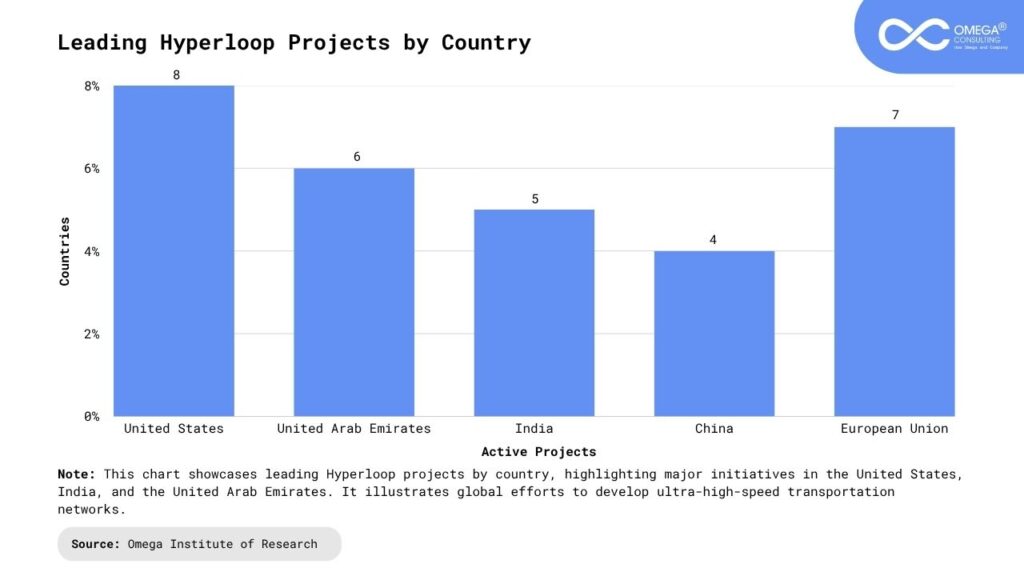
Freight-First Strategy
Shifting early Hyperloop deployments to cargo makes strong commercial sense. Freight systems can be designed with different safety and comfort requirements, carry higher masses per pod, and operate more flexibly, such as during off-peak hours. This approach allows companies to generate revenue sooner while refining operational reliability, testing propulsion, braking, and control systems under real-world conditions. Early freight operations also help optimize scheduling, loading procedures, and route efficiency, providing valuable insights that reduce risk for eventual passenger services. Moreover, focusing on cargo enables infrastructure and regulatory frameworks to mature gradually, allowing teams to build scalable, adaptable systems. By tackling freight first, Hyperloop developers can demonstrate economic viability, attract investors, and build public confidence, setting the stage for a smoother transition to passenger transport.
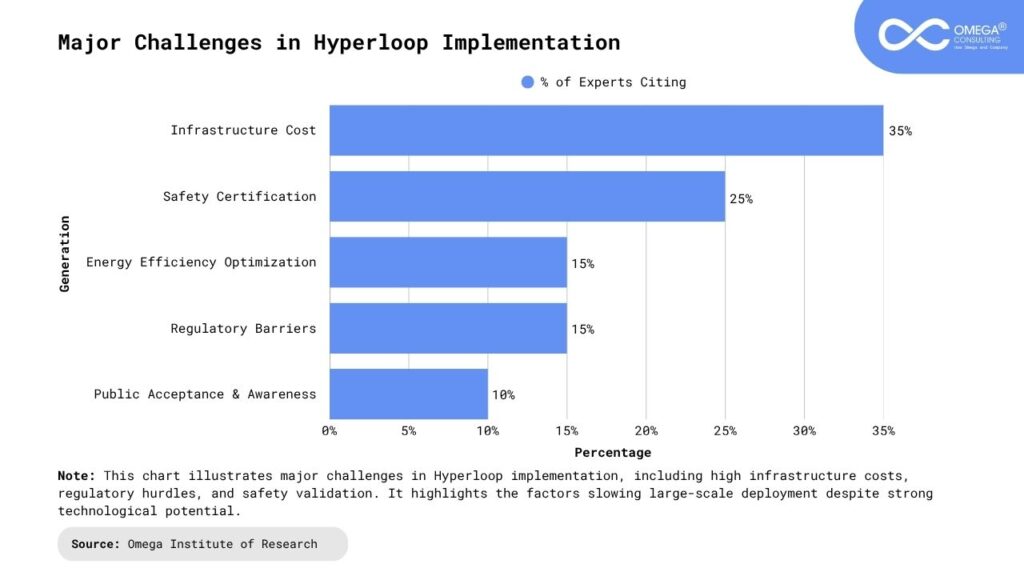
Economics of Hyperloop
Building Hyperloop infrastructure involves trade-offs: elevated tubes reduce tunneling costs but require long, robust supports, while tunnels are expensive but sometimes unavoidable due to urban or environmental constraints. Energy efficiency, shorter travel times, and minimal weather disruption make Hyperloop highly attractive compared to conventional rail or short-haul flights. However, construction and maintenance costs remain significant hurdles, particularly for maintaining vacuum conditions and ensuring long-term structural integrity. Land acquisition, regulatory approvals, and potential environmental mitigation add to overall expenses. Companies are exploring phased implementations, starting with shorter corridors or freight-only lines to manage financial risk. Despite high upfront costs, proponents argue that long-term operational efficiency and rapid transit could offset initial investments, especially on high-demand routes.
Policy and Standardization
Governments play a critical role in Hyperloop’s success by establishing clear regulations and safety protocols. Land rights, construction permits, and environmental approvals must be carefully coordinated to avoid delays. Certification frameworks will need to account for a new type of transportation that blends elements of aviation, rail, and autonomous systems. Collaborative test centers and shared data allow regulators to monitor performance, safety outcomes, and emergency response protocols. International cooperation may also help standardize designs, safety testing, and operational guidelines, which could accelerate adoption across borders. Public-private partnerships are likely to play a central role in funding infrastructure and ensuring compliance with both technical and social requirements. Ultimately, policy clarity will be as crucial as engineering innovation in determining Hyperloop’s feasibility and scalability.
Why Hyperloop Still Matters
Even if large-scale deployment takes time, Hyperloop research is pushing engineering boundaries in vacuum systems, magnetic propulsion, autonomous controls, and efficient infrastructure. These advances will benefit high-speed rail, maglev, and even long-distance freight transport. The innovations also encourage new approaches to energy efficiency, safety protocols, and real-time monitoring of transport systems. Lessons learned from Hyperloop R&D can be applied to urban mobility, reducing congestion and travel times in densely populated regions. Moreover, technological progress inspires broader collaboration between governments, academia, and private companies, accelerating innovation across the transportation sector. Ultimately, Hyperloop serves as a testing ground for next-generation transport technologies that could redefine the way people and goods move globally. These breakthroughs may also influence future infrastructure planning, making cities smarter, faster, and more connected than ever before.
Conclusion
Hyperloop represents one of the most ambitious transportation concepts of the 21st century, blending cutting-edge engineering with visionary thinking. While significant technical, regulatory, and economic challenges remain, global testing programs, prototype pods, and pilot projects are steadily advancing the technology step by step. Freight corridors and regional pilot lines will pave the way for eventual passenger services, demonstrating feasibility and safety along the way. Beyond its immediate goal of ultra-fast travel, Hyperloop research is driving innovation in energy efficiency, autonomous control, and infrastructure design, offering lessons that extend across the transportation sector. The next decade will be critical in determining whether Hyperloop becomes a transformational mode of travel or serves as a stepping stone toward smarter, faster, and greener mobility worldwide.
- https://www.frontiersin.org/journals/sustainable-cities/articles/10.3389/frsc.2022.842245/full
- https://www.britannica.com/technology/Hyperloop
- https://www.ccam-tac.org/news/hyperloop-may-be-the-ultra-fast-transportation-of-the-future-but-investors-are-slow-to-come-around/
- https://www.mapfreglobalrisks.com/en/risks-insurance-management/article/hyperloop-the-future-of-transportation/
- https://compass.rauias.com/current-affairs/hyperloop-technology/
Subscribe
Select topics and stay current with our latest insights
- Functions