

- Industries
Industries
- Functions
Functions
- Insights
Insights
- Careers
Careers
- About Us

Job Disruption in Marketing and Advertising with AI







Artificial Intelligence (AI) is reshaping the world of marketing and advertising at a pace never seen before. From personalized content to programmatic ad buying, AI is transforming how brands interact with consumers. But this evolution is not without consequences especially for the workforce behind the scenes. Many traditional roles in marketing are undergoing significant disruption, as AI technologies streamline operations, reduce human dependency, and optimize decision-making. While some fear widespread job loss, the truth is more nuanced. AI is not eliminating jobs wholesale, it is redefining them. As automation takes over repetitive and data-driven tasks, new opportunities are emerging that demand a blend of creativity, strategic thinking, and tech-savviness. This article delves into the core of this disruption, examining which roles are most affected, the emerging AI tools changing the game, and what marketers can do to stay ahead in this dynamic digital ecosystem.
The Rise Of AI In Marketing And Advertising
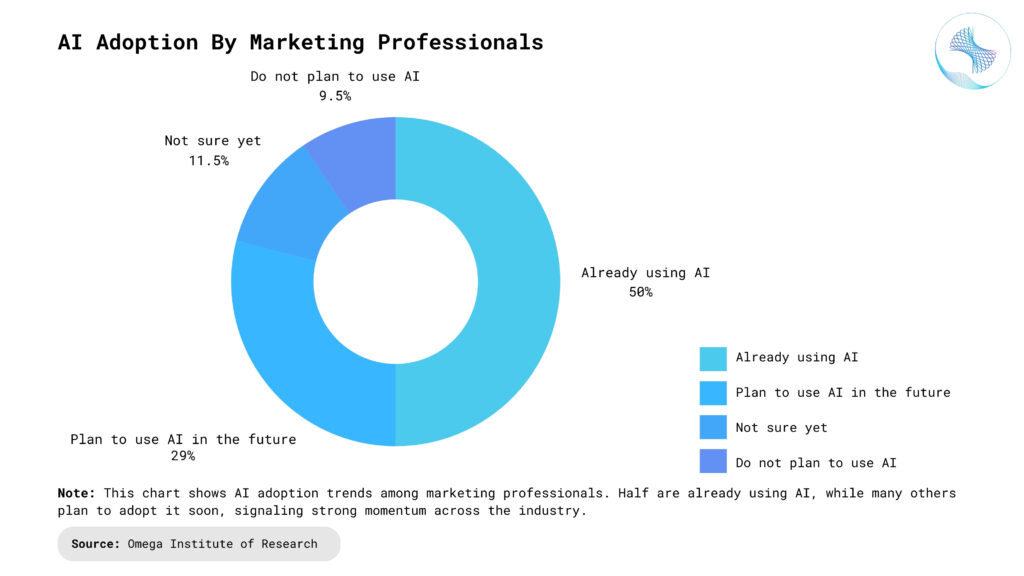
AI in marketing is not limited to chatbots or recommendation engines; it now powers everything from customer segmentation and campaign analysis to content generation and influencer identification. Tools like ChatGPT, Jasper AI, and Google Performance Max campaigns are revolutionizing how ads are created, tested, and optimized. These platforms use machine learning to analyze historical data, identify patterns, and automate decision-making at scale, with minimal human intervention. AI can now write product descriptions, generate A/B tested ad copies, analyze customer sentiment across social channels, and recommend marketing budgets all within seconds. This level of automation is streamlining operations but also reducing dependency on certain human roles.
Roles Most At Risk
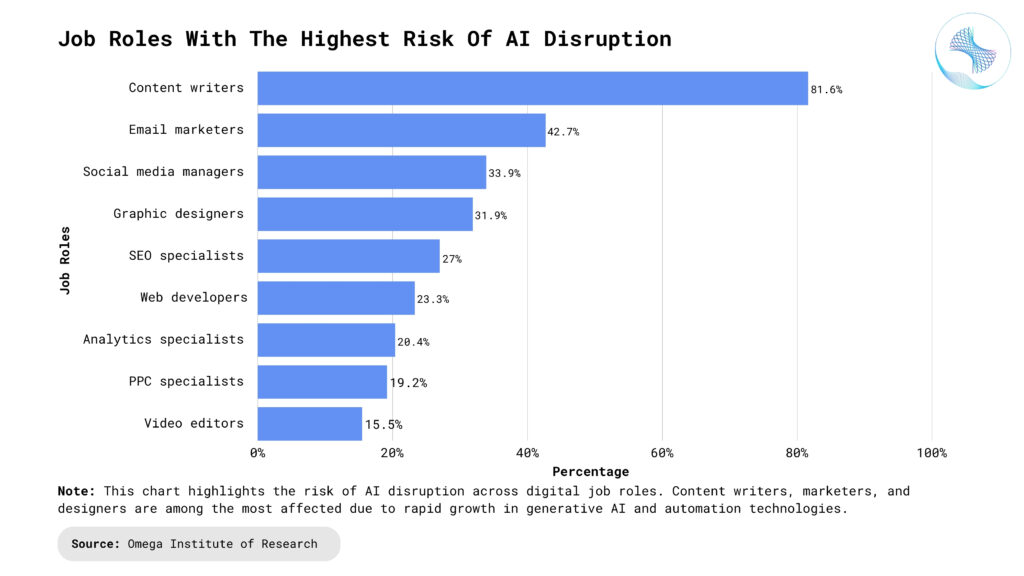
Media Buyers and Ad Planners: Programmatic advertising platforms now use algorithms to purchase and place ads in real time, rendering traditional media planning roles increasingly obsolete. These tools evaluate massive datasets instantly to optimize ad placements and bidding strategies, reducing the need for manual negotiation and monitoring.
Content Writers (Routine and SEO): AI content generators can produce SEO-optimized articles, social media captions, and product descriptions at scale. While high-concept writing still needs human input, low-level content creation is being automated. This automation increases efficiency for brands but reduces demand for entry-level or repetitive writing roles.
Marketing Analysts and Data Interpreters: AI tools can process data and generate insights faster than humans, reducing reliance on analysts for performance reports and A/B testing conclusions. With platforms like Google Analytics 4 offering real-time insights, analysts are expected to move toward strategic interpretation rather than data crunching.
Customer Support Agents: AI-powered chatbots and virtual assistants handle queries, provide recommendations, and resolve basic issues, reducing the need for human-led customer service. These bots can work 24/7, manage multiple queries simultaneously, and improve over time using natural language processing and machine learning.
Email and Campaign Managers: AI-driven marketing platforms automate email scheduling, personalization, segmentation, and performance optimization, minimizing manual intervention. This has shifted the role from execution to strategy, with a greater focus on overseeing AI workflows and refining campaign direction.
Impact Of AI In Job Disruption
Sentiment analysis: AI can be used to analyze customer sentiment by analyzing customer reviews and social media posts. This can help businesses understand how customers feel about their products or services and make necessary changes.
Predictive analytics: AI can be used to predict customer behavior patterns. This can help businesses determine what customers are likely to buy or do in the future and plan accordingly.
Targeted advertising: AI can be used to target advertising more effectively. By understanding customer behavior patterns, AI can help businesses target ads specifically to those who are more likely to be interested in them.
Personalization: AI can be used to personalize experiences for customers. This could involve tailoring content, recommendations, and other aspects of the customer experience based on individual preferences and interests.
Automation: Many marketing tasks that were previously done manually can now be automated with AI, such as email marketing, social media posting, and targeted ads. This can free up time for marketers to focus on other tasks.
Emerging Opportunities And Job Roles
AI Marketing Strategists: These professionals understand how to deploy AI tools to optimize campaigns, develop prompt strategies, and align outputs with brand objectives. They combine marketing expertise with technological know-how to design data-driven campaigns that maximize ROI. By continuously analyzing AI performance metrics, they refine strategies to stay ahead of market trends. Their role is critical in ensuring AI-generated content resonates with target audiences while maintaining brand integrity.
Prompt Engineers: Specialists who craft effective prompts to guide AI tools toward producing accurate, brand-consistent, and creative outputs across content types. They have deep knowledge of AI language models and use their skills to translate marketing goals into precise instructions that AI can interpret. Prompt engineers experiment with different phrasing and context to unlock the full creative potential of AI systems. Their work helps bridge the gap between human intention and machine-generated content.
Ethics and Compliance Officers: As AI adoption grows, so does the need for professionals who ensure responsible use of data and adherence to privacy laws and ethical guidelines. These officers develop and enforce policies that safeguard user information and prevent bias in AI outputs. They work closely with legal and technical teams to navigate complex regulations and maintain organizational trust. Their vigilance is key to fostering ethical AI practices that protect both consumers and companies.
Customer Experience Designers: Focused on building emotionally resonant, personalized user journeys that AI alone cannot replicate. These designers blend human empathy with AI-powered insights to craft seamless, engaging experiences across digital platforms. They identify pain points and opportunities in the customer journey and tailor interactions that create loyalty and satisfaction. Their role is essential in ensuring technology enhances rather than replaces authentic human connection.
Performance Analysts and AI Auditors: Instead of doing manual data crunching, these professionals interpret AI-generated insights and make high-level strategic decisions. They evaluate the accuracy, fairness, and impact of AI models, ensuring results align with business goals. By identifying trends and anomalies in AI outputs, they provide actionable recommendations to optimize future campaigns. Their analytical expertise helps companies leverage AI as a powerful tool while mitigating risks.
Skills For The AI Driven Era
Data Literacy: Being able to read, interpret, and act on data insights is essential for effective decision-making in digital marketing. It allows marketers to identify trends, measure campaign success, and make data-driven adjustments that improve results.
AI Tool Mastery: Familiarity with AI tools like Jasper, HubSpot AI, ChatGPT, and Canva AI is becoming a must-have skill. These tools help automate routine tasks, speed up content creation, and deliver personalized marketing experiences at scale.
Creative Conceptualization: While AI can generate content, it can’t originate truly creative ideas. Human creativity and storytelling are vital to developing compelling campaigns that emotionally engage and inspire audiences.
Customer Empathy: AI lacks emotional intelligence, so marketers who deeply understand customer needs and emotions add unique value. This empathy helps create authentic connections and tailor experiences that resonate personally.
Ethical Awareness: As personalization relies more on data, ethical awareness is crucial. Marketers must use data responsibly, protect privacy, and ensure transparency to build and maintain customer trust over time.
Challenges And Threats Faced
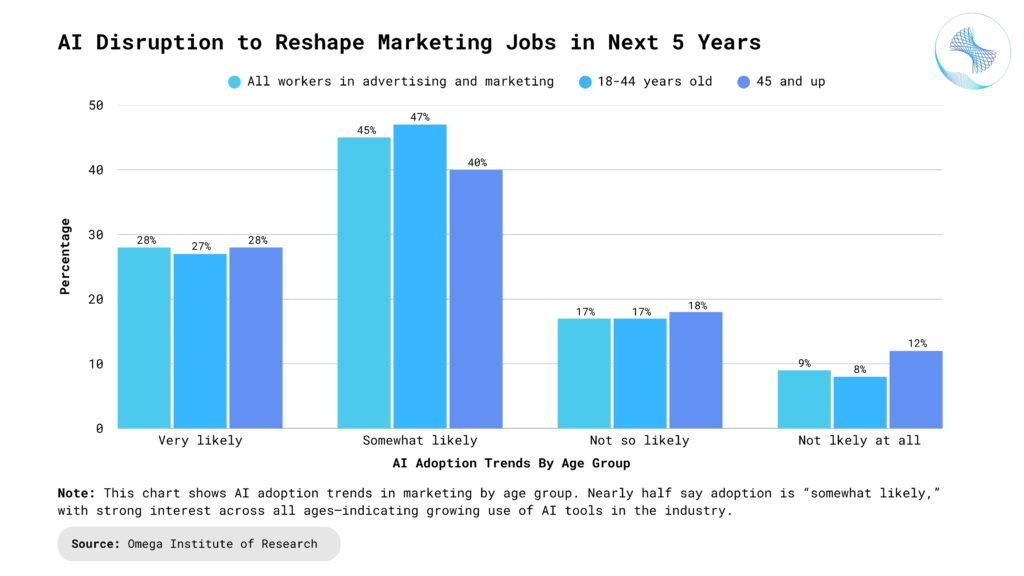
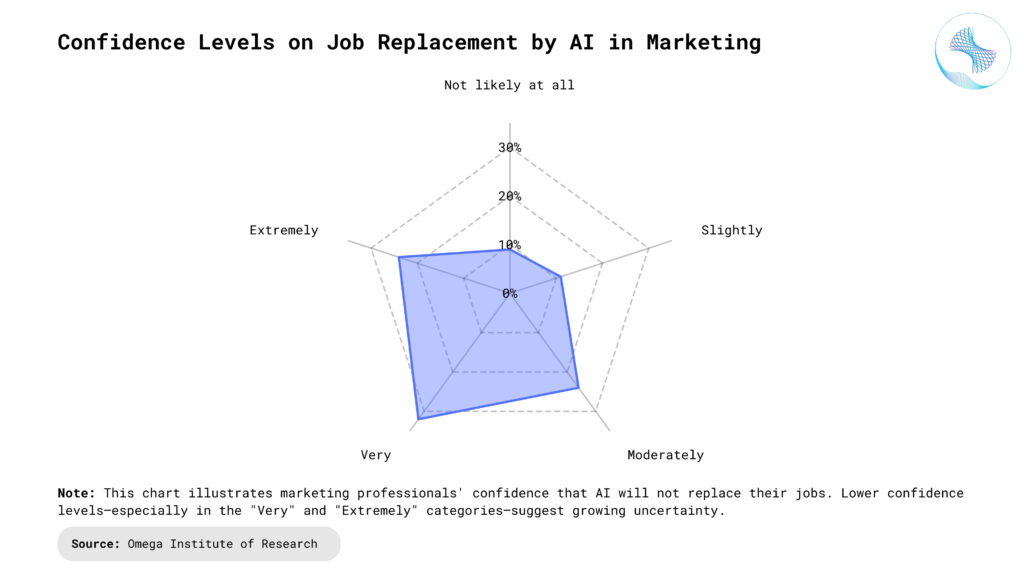
Job Displacement: It’s undeniable that AI technology may replace some traditional marketing roles as manual tasks become automated. However, this doesn’t necessarily mean marketers will be left entirely without work. Instead, they must adapt their skill sets and learn to harness AI’s power to thrive in a changing environment.
Constant Learning: Maintaining relevancy in the marketing industry now requires constant learning and skill development. With AI tools and capabilities evolving rapidly, marketers must stay up-to-date with the latest advancements and learn how to apply them effectively in their daily work.
Data Privacy and Ethics: As AI technology grows in its ability to collect and process data, concerns over data privacy and ethical data usage will continue to arise. As a result, marketers need to be vigilant in ensuring that their use of AI complies with data privacy regulations and ethical standards.
Data Management: One of the biggest challenges of using AI in marketing is managing the data that is used to train the AI models. This data can come from a variety of sources, including social media, website interactions, and customer surveys. It can be difficult to clean and organize this data so that it can be used effectively by the AI models. Additionally, this data can be sensitive and must be managed carefully to protect customer privacy.
Content Creation: Another challenge of using AI in marketing is creating content that is engaging and relevant to customers. This content must be able to capture the attention of customers and encourage them to take action. Additionally, it must be updated regularly so that it remains relevant as customer needs change over time. Creating this type of content requires a deep understanding of both customer needs and AI capabilities.
Measurement: Finally, one of the challenges of using AI in marketing is measuring the results of campaigns to determine whether they are successful. This can be difficult because there are often many different factors that contribute to campaign success or failure. Additionally, AI-powered campaigns can evolve quickly, making it hard to track all aspects of the campaign.
Future Outlook
Strategic Leadership over Tactical Execution: As automation takes over routine marketing tasks, marketers need to shift their focus toward big-picture vision, strategic planning, and collaborating across teams. Leading with strategy rather than just executing day-to-day activities will become essential for driving growth.
Hybrid Job Titles Will Dominate: New roles combining traditional marketing skills with AI expertise will emerge, such as “AI Content Curator” or “Marketing Automation Architect.” These hybrid positions reflect the evolving landscape where AI fluency is a key part of the job.
Continuous Learning is Non-Negotiable: The most successful marketers will be those who consistently update their skills, adapt to new tools, and deepen their understanding of changing consumer behaviors. Lifelong learning is essential to stay competitive in a fast-moving environment.
Responsible Innovation is Key: Future marketing leaders will not only drive AI adoption but also ensure it’s used responsibly. They will champion inclusivity, fairness, and transparency, balancing ethical considerations with business objectives.
Conclusion
The integration of AI into marketing and advertising is undeniably transformative—streamlining processes, optimizing performance, and unlocking unprecedented personalization. But with this transformation comes disruption, especially to traditional roles and responsibilities. Rather than resisting this change, professionals must view it as an invitation to evolve. The future of marketing lies not in choosing between human and machine, but in leveraging the strengths of both. Marketers who can blend strategic thinking with AI fluency, creativity with data-driven insight, and ethics with innovation will lead the charge in shaping brand experiences of tomorrow. As AI continues to mature, the most valuable assets in marketing will be those who adapt, upskill, and bring the human element to technology-driven storytelling. The age of AI is not about job replacement it’s about job reinvention, and the possibilities are only just beginning.
- https://www.forbes.com/sites/forbestechcouncil/2023/06/22/the-future-of-marketing-ai-and-the-human-touch/
- https://www.contentgrip.com/impact-of-ai-on-marketing-careers/
- https://www.salesforce.com/blog/how-ai-is-changing-the-marketing-landscape/
- https://www.wordstream.com/blog/ws/2023/10/05/ai-marketing-tools
- https://www.ama.org/marketing-news/the-evolving-role-of-marketers-in-an-ai-driven-world/
Subscribe
Select topics and stay current with our latest insights
- Functions