

- Industries
Industries
- Functions
Functions
- Insights
Insights
- Careers
Careers
- About Us

Leading Hybrid Teams of Humans and AI Systems







The rapid advancement of artificial intelligence is transforming the way organizations operate, giving rise to hybrid teams where human employees and AI systems work together to achieve shared goals. Unlike traditional technologies that primarily automated routine tasks, modern AI can analyze data, generate insights, support decision-making, create content, and enhance productivity across various functions. As a result, leadership is evolving beyond managing people alone to orchestrating effective collaboration between human talent and intelligent systems. Successfully leading these hybrid teams requires balancing the unique strengths of humans—such as creativity, empathy, critical thinking, and relationship-building with the speed, accuracy, and scalability of AI. Leaders must also establish clear governance, promote trust in AI-driven processes, and ensure ethical and responsible use of intelligent technologies. Organizations that master this collaboration can unlock greater innovation, efficiency, agility, and competitive advantage, making the ability to lead hybrid human-AI teams one of the most important leadership capabilities in the digital era.
Understanding the Hybrid Team Model
Effective leadership in the age of artificial intelligence requires understanding how hybrid teams of humans and AI systems function and create value together. In this model, AI serves as a collaborative partner that supports employees by automating repetitive tasks, analyzing large volumes of data, generating insights, and improving decision-making speed, while humans provide creativity, emotional intelligence, ethical judgment, adaptability, and strategic thinking. Leading such teams involves aligning the strengths of both human talent and intelligent technologies to achieve shared objectives more efficiently and effectively. Across industries, leaders are increasingly responsible for managing workflows where people and AI work side by side, ensuring that technology enhances human performance rather than replacing it. By fostering trust, establishing clear roles, and encouraging collaboration between employees and AI systems, organizations can unlock higher levels of productivity, innovation, and agility. The success of hybrid teams ultimately depends on leadership that can balance technological capabilities with human expertise, creating a workforce that is greater than the sum of its parts.
Redefining Leadership in the Age of AI
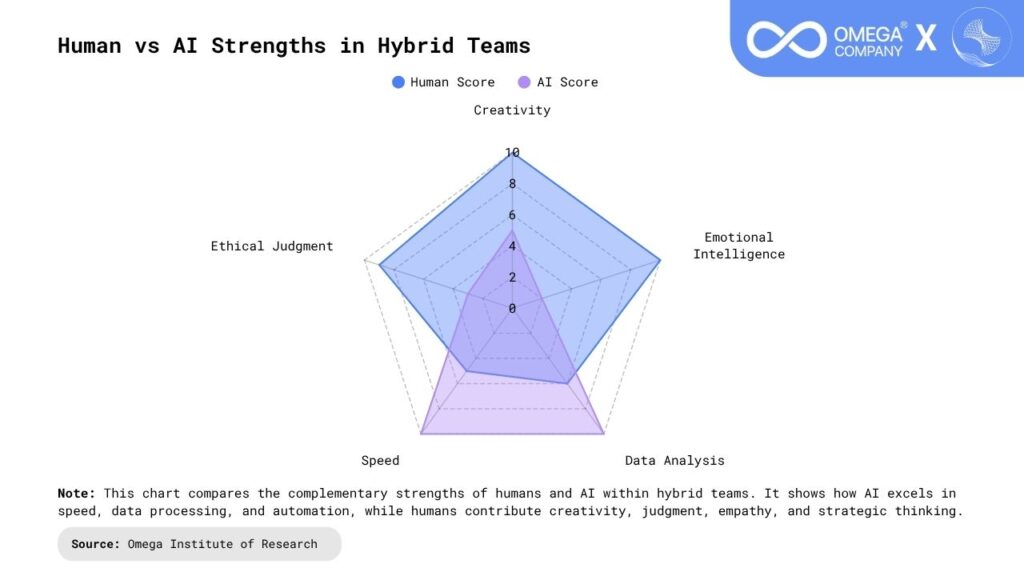
Balancing Human and AI Strengths: Leading hybrid teams requires understanding the unique capabilities of both people and AI systems. While AI excels at processing data, identifying patterns, and automating routine tasks, humans contribute creativity, emotional intelligence, critical thinking, and ethical judgment. Effective leaders ensure that these strengths complement one another to maximize team performance.
Designing Collaborative Workflows: Successful hybrid teams depend on well-structured workflows that define how humans and AI interact. Leaders must determine which tasks should be automated, which require human expertise, and where collaboration between the two creates the greatest value. Clear role definition helps improve efficiency while reducing confusion and duplication of effort.
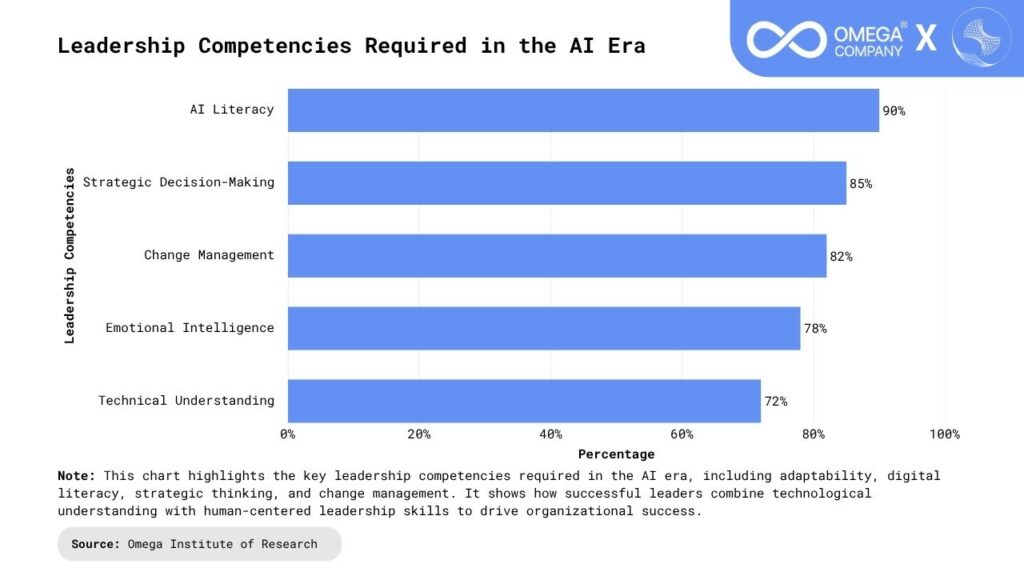
Designing Structured process: Successful hybrid teams depend on well-structured workflows that define how humans and AI interact. Leaders must determine which tasks should be automated, which require human expertise, and where collaboration between the two creates the greatest value. Clear role definition helps improve efficiency while reducing confusion and duplication of effort. A strong foundation in AI literacy enables leaders to make informed decisions, evaluate AI-driven recommendations, and identify opportunities for innovation. This knowledge is essential for effectively managing technology-enabled teams.
Maintaining Trust, Accountability, and Oversight: As AI becomes more involved in decision-making and daily operations, leaders must ensure transparency, accountability, and ethical governance. Human oversight remains critical for validating outcomes, addressing bias, and aligning AI-driven actions with organizational values. Building trust in both human and AI contributions is essential for creating a productive and sustainable hybrid workforce.
Building Trust Between Humans and AI Systems
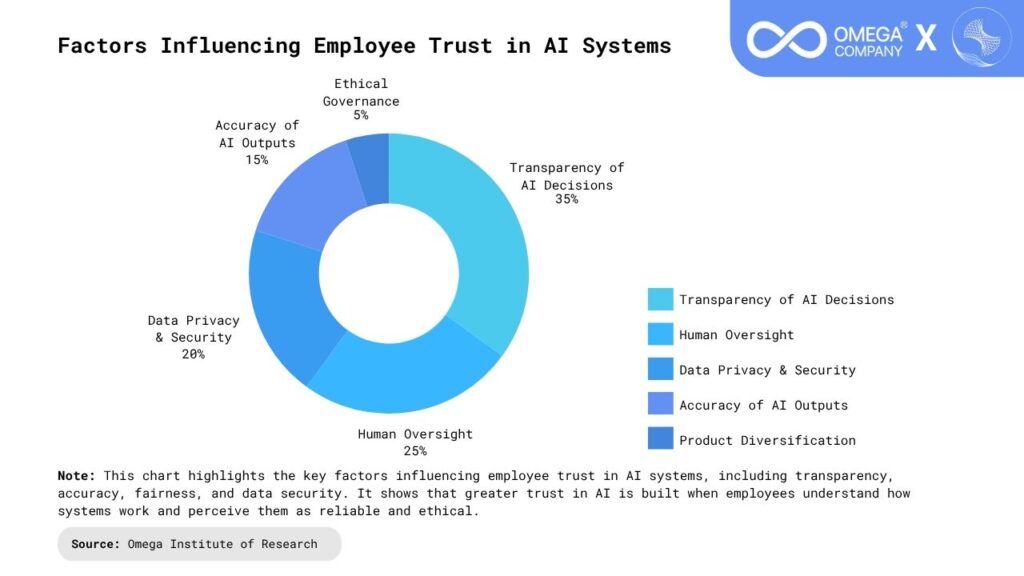
Promoting Transparency and Understanding: Trust is a fundamental requirement for successful collaboration between humans and AI systems. Employees are less likely to embrace AI if they view it as unreliable, biased, opaque, or a threat to their roles. Leaders can address these concerns by clearly explaining how AI systems work, what data they use, and the limitations that influence their outputs.
Establishing Appropriate Levels of Trust: Effective leadership involves creating balanced trust in AI technologies. Too little trust can limit adoption and reduce the value AI delivers, while excessive trust may lead employees to accept AI recommendations without sufficient scrutiny. Leaders should encourage critical evaluation of AI-generated insights while recognizing the benefits these systems provide.
Ensuring Accountability and Human Oversight: Accountability remains essential in hybrid teams, particularly when AI influences important decisions. Leaders must define clear responsibilities for reviewing, approving, and acting on AI-generated recommendations. Human oversight is especially critical in high-stakes environments where accuracy, fairness, and ethical considerations have significant consequences.
Positioning AI as a Performance Enhancer: Employees are more likely to trust AI when they see it improving their daily work rather than replacing their expertise. By automating repetitive tasks, reducing administrative burdens, and providing faster access to insights, AI can help individuals focus on higher-value activities. Leaders who highlight these practical benefits can foster greater acceptance, collaboration, and confidence in AI-driven workflows.
Designing Roles and Responsibilities in Hybrid Teams
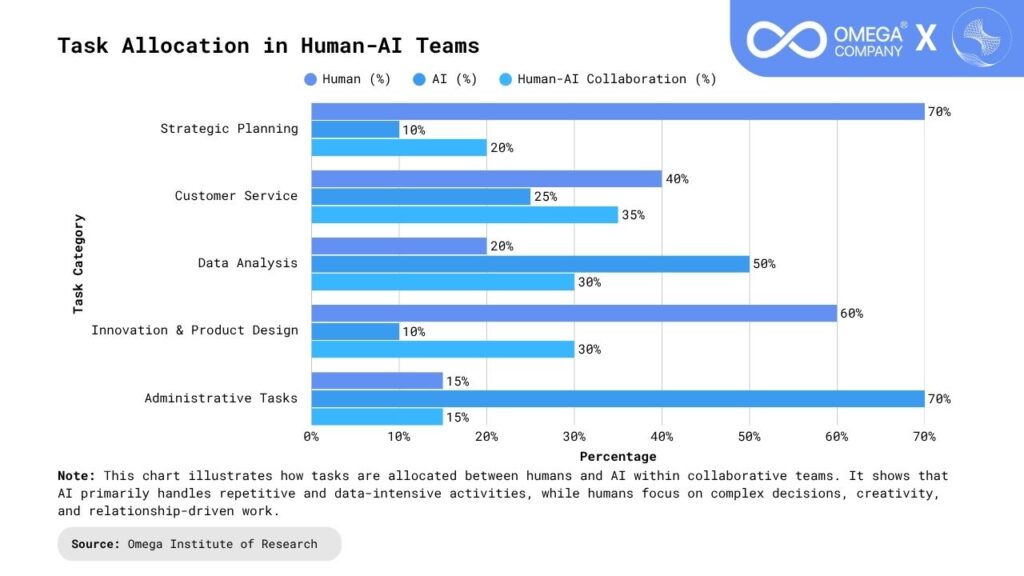
Designing roles and responsibilities is one of the most important aspects of leading hybrid teams of humans and AI systems. Effective leaders must carefully determine how work is distributed to ensure that both human talent and AI capabilities are utilized to their fullest potential. Tasks involving routine processing, large-scale data analysis, forecasting, and repetitive activities are often best handled by AI, while responsibilities requiring creativity, empathy, ethical judgment, negotiation, and relationship management remain fundamentally human-driven. The greatest value, however, emerges when humans and AI collaborate within integrated workflows, combining machine speed and analytical power with human insight and contextual understanding. For example, AI can generate strategic recommendations, identify trends, or provide real-time customer insights, while employees evaluate broader implications and make informed decisions based on experience and business context. Clear role definitions also help reduce confusion, strengthen accountability, and improve coordination across teams. By focusing on complementarity rather than replacement, leaders can create hybrid teams that enhance productivity, accelerate innovation, improve decision quality, and build a more agile and resilient organization capable of adapting to changing business demands.
Developing New Skills for the AI-Augmented Workforce
The rise of hybrid teams is reshaping workforce skill requirements. Technical expertise remains important, but organizations increasingly value skills that complement AI capabilities rather than compete with them. Critical future skills include:
Critical Thinking: In an era of AI-generated content, critical thinking serves as the essential filter for organizational truth and accuracy. While AI can synthesize vast amounts of information, it often lacks the ability to detect subtle biases or verify the underlying logic of its own outputs. Humans must step in to question assumptions, evaluate the source’s credibility, and interpret data within the specific context of their industry. This skill ensures that automated insights are not followed blindly but are instead scrutinized for strategic soundness. Ultimately, critical thinking transforms raw machine output into reliable, actionable intelligence that protects the company from algorithmic errors.
Complex Problem-Solving: AI excels at solving “closed” problems with defined parameters, but it struggles with “wicked” problems that are ambiguous and interconnected. Complex problem-solving involves navigating high-stakes situations where there is no single right answer and variables are constantly shifting. Humans bring a holistic perspective, identifying how a solution in one department might trigger a secondary crisis in another. This requires a level of systems thinking and intuition that current models cannot simulate. By focusing on the “big picture,” humans address the root causes of systemic issues while using AI as a tool to handle the granular data-crunching along the way.
Creativity: Creativity is the engine of innovation, moving beyond the mere recombination of existing data that characterizes generative AI. While a machine can produce variations based on past patterns, human creativity is driven by lived experience, abstract inspiration, and the ability to imagine what does not yet exist. It involves taking “leaps of faith” and connecting disparate concepts in ways that are surprising and culturally resonant. In a hybrid workforce, AI can handle the iterative drafting process, but the original spark and the final “soul” of a project remain uniquely human. This ensures that products and services feel fresh and authentic rather than derivative or formulable.
Emotional Intelligence: Emotional intelligence (EQ) is the cornerstone of effective leadership and team cohesion in an increasingly automated world. While AI can analyze sentiment in text, it cannot truly feel empathy or build the deep trust required for high-performing teams. Humans with high EQ can read unstated social cues, manage office politics, and provide the psychological safety needed for employees to adapt to technological change. This skill is vital for resolving conflicts, motivating a diverse workforce, and managing the “human side” of AI integration. As technical tasks are offloaded to software, the ability to connect on a person-to-person level becomes the ultimate competitive advantage.
The Future of Leadership in Hybrid Organizations
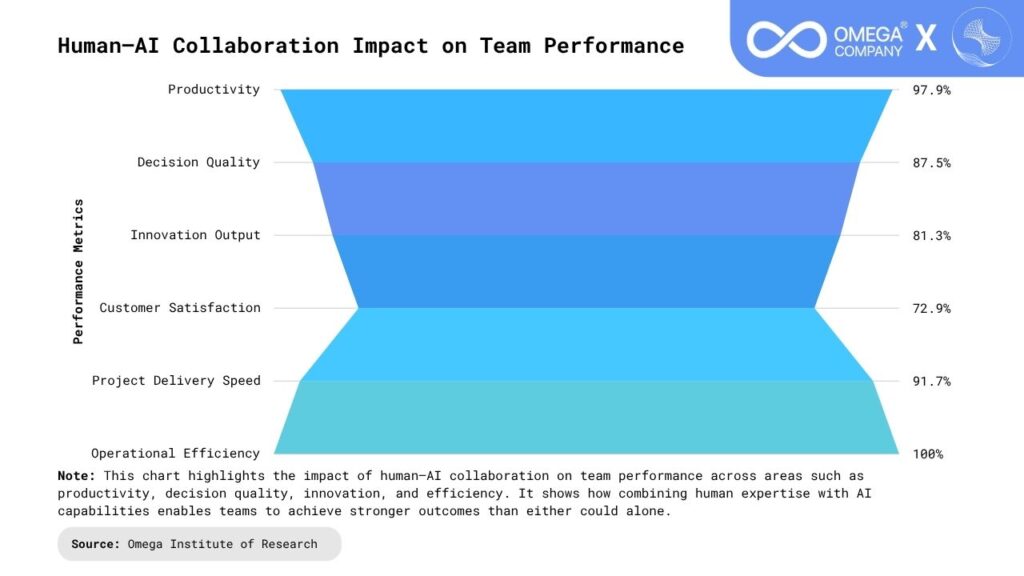
As organizations increasingly adopt artificial intelligence, the ability to lead hybrid teams of humans and AI systems will become a critical leadership capability. Effective leaders will need to balance technological innovation with human-centered management, ensuring that AI enhances productivity, decision-making, and operational efficiency while preserving the creativity, judgment, and empathy that people bring to the workplace. Success will depend on understanding how to integrate AI into daily workflows, define clear roles and responsibilities, foster trust, and encourage seamless collaboration between human employees and intelligent systems. Leaders who can effectively orchestrate the strengths of both human and artificial intelligence will be better positioned to drive innovation, improve agility, and achieve sustainable growth. As AI assumes a larger role in organizational operations, leadership will become even more important in shaping vision, culture, ethics, accountability, and strategic direction, ensuring that technology serves as a powerful enabler of human potential rather than a substitute for it.
Conclusion
Leading hybrid teams of humans and AI systems is rapidly becoming one of the most important leadership responsibilities in the modern workplace. As AI assumes a greater role in automation, data analysis, and decision support, leaders must focus on creating environments where human expertise and intelligent technologies complement one another effectively. Success is not about choosing between people and machines but about leveraging the unique strengths of both to achieve superior outcomes. Organizations that foster trust, establish clear roles and responsibilities, maintain ethical oversight, and encourage continuous learning will be better positioned to unlock the full value of hybrid teams. Effective leadership will also require adaptability, strong communication, and a commitment to balancing innovation with human-centered values. Those who successfully integrate AI into their workforce strategy can enhance productivity, accelerate innovation, improve decision-making, and build a more agile organization. Ultimately, the most successful leaders will be those who can seamlessly orchestrate collaboration between human and artificial intelligence, creating resilient, future-ready organizations capable of thriving in an increasingly digital and AI-driven world.
- https://www.weforum.org/publications/the-future-of-jobs-report-2025/
- https://www.ibm.com/thought-leadership/institute-business-value/en-us/report/ceo-generative-ai
- https://oecd.ai/en/ai-principles
- https://business.linkedin.com/learn/resources/workplace-learning-report
- https://unesdoc.unesco.org/ark:/48223/pf0000381137
Subscribe
Select topics and stay current with our latest insights
- Functions