

- Industries
Industries
- Functions
Functions
- Insights
Insights
- Careers
Careers
- About Us

Low-Power Quantum Devices: Making Quantum Computing Energy Efficient







Quantum computing has long been hailed as the future of computation—capable of solving complex problems far beyond the reach of classical computers. However, one of its biggest challenges lies not in performance, but in power consumption. As quantum systems scale up, the energy required for cooling, control, and error correction grows exponentially. To truly bring quantum technology into the mainstream, scientists and engineers are racing to develop low-power quantum devices that can deliver revolutionary performance without draining massive energy resources. These innovations focus on optimizing qubit efficiency, minimizing cryogenic energy demands, and integrating sustainable materials into quantum hardware. With advancements in superconducting circuits, photonic qubits, and spin-based technologies, the quest for energy-efficient quantum systems is gaining momentum. Ultimately, low-power quantum devices represent a crucial step toward scalable, eco-friendly quantum computing that can transform industries without compromising sustainability.
The Energy Challenge in Quantum Computing
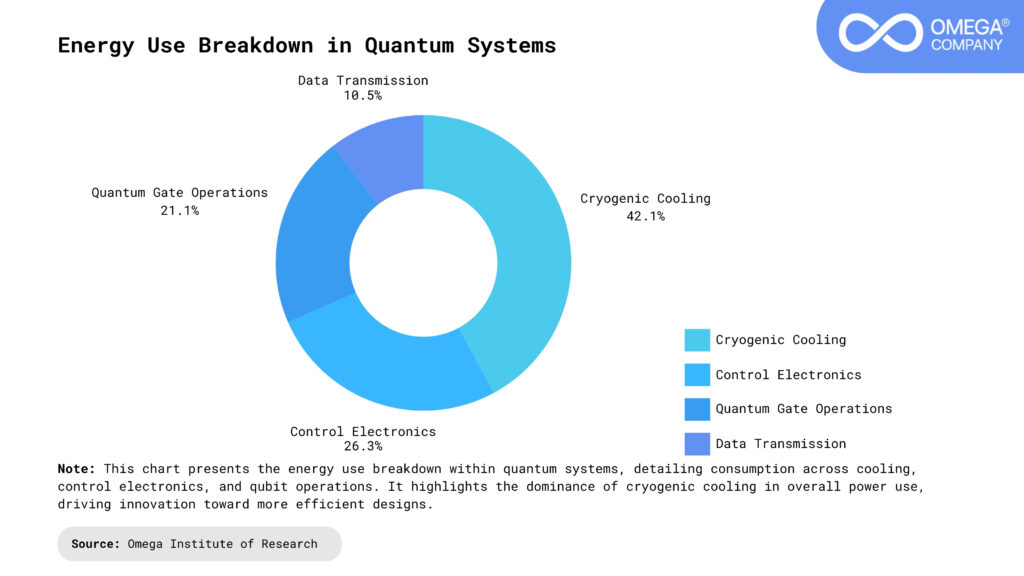
Unlike traditional processors, quantum computers rely on qubits that can exist in multiple states simultaneously, enabling vast parallelism. But maintaining these fragile quantum states (or “coherence”) demands extreme conditions, often near absolute zero temperatures. Cooling systems, cryogenic electronics, and quantum control mechanisms require enormous energy input. For instance, superconducting qubits need dilution refrigerators that consume kilowatts of power, even when operating on a handful of qubits. As quantum systems scale to thousands or millions of qubits, energy efficiency becomes a critical bottleneck. Moreover, the supporting infrastructure ranging from high-precision lasers to control electronics further amplifies the total energy footprint. Without breakthroughs in thermal management and low-power control architectures, the operational costs could offset the computational advantages. Hence, tackling the energy challenge isn’t just about sustainability; it’s essential for making quantum computing truly practical, scalable, and globally accessible.
Why Low-Power Quantum Devices Matter
Energy efficiency is more than a sustainability concern; it’s the key to scalability. Low-power quantum devices promise:
Reduced Operational Costs: Lower energy consumption cuts costs for data centers and research labs. By reducing the need for heavy-duty cryogenic infrastructure, organizations can allocate resources to innovation rather than maintenance. This also allows more institutions to experiment with quantum technology without prohibitive energy bills, democratizing access to advanced computation. Ultimately, cost-effective energy use will accelerate real-world quantum adoption across industries.
Improved Portability: Energy-efficient quantum processors could lead to compact, deployable quantum systems. With reduced cooling and power requirements, these systems could eventually operate outside specialized lab environments. This opens doors for field applications such as quantum sensing, communication, and encryption in defense, healthcare, and aerospace. Portability transforms quantum computing from a lab-based technology into a widely usable tool for global innovation.
Sustainable Innovation: Aligns with the global push for green computing and eco-friendly technologies. Developing low-power quantum hardware supports sustainability goals while minimizing carbon emissions associated with large-scale computations. It bridges the gap between high-performance technology and environmental responsibility. As industries shift toward net-zero targets, sustainable quantum solutions will become a competitive advantage.
Longer System Stability: Less heat generation minimizes interference, improving quantum coherence and reliability. Stable systems mean fewer errors, reduced recalibration needs, and more consistent performance across experiments. Enhanced stability also allows for longer computational runs, expanding the range of solvable problems. In essence, energy efficiency directly enhances both the accuracy and longevity of quantum operations.
Innovations Driving Energy-Efficient Quantum Design
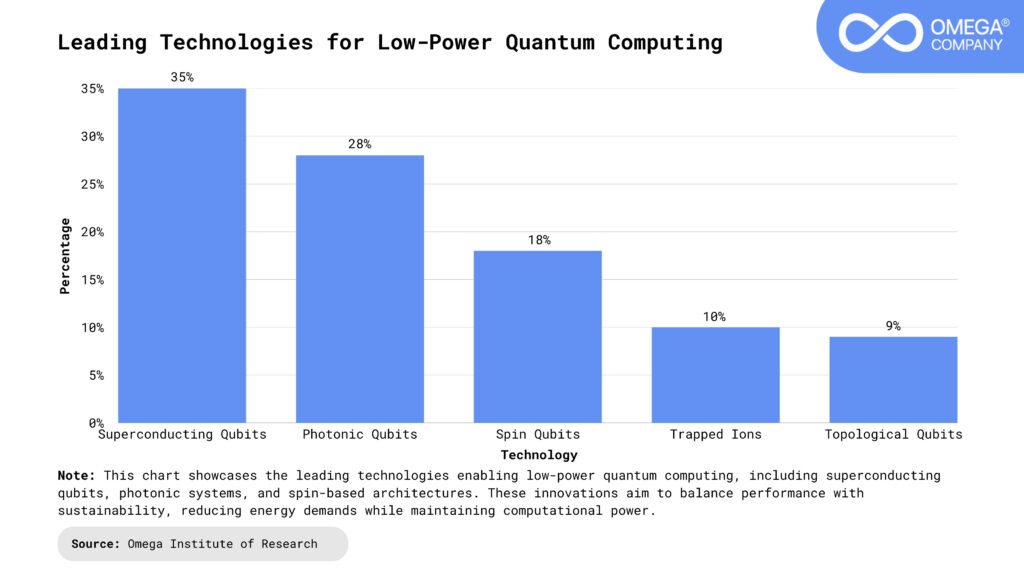
Researchers are now reimagining every layer of quantum architecture from materials and hardware design to control systems to minimize power draw.
Cryogenic CMOS Control Electronics: Traditional control circuits operate at room temperature, forcing signals to travel through layers of cooling, causing heat losses. The rise of cryogenic CMOS (complementary metal-oxide-semiconductor) technology allows control electronics to function directly in ultra-cold environments, drastically cutting power needs and signal distortion. This approach eliminates much of the thermal mismatch between control and quantum layers, improving signal integrity. Moreover, it enables compact integration, paving the way for scalable, low-energy cryogenic quantum processors.
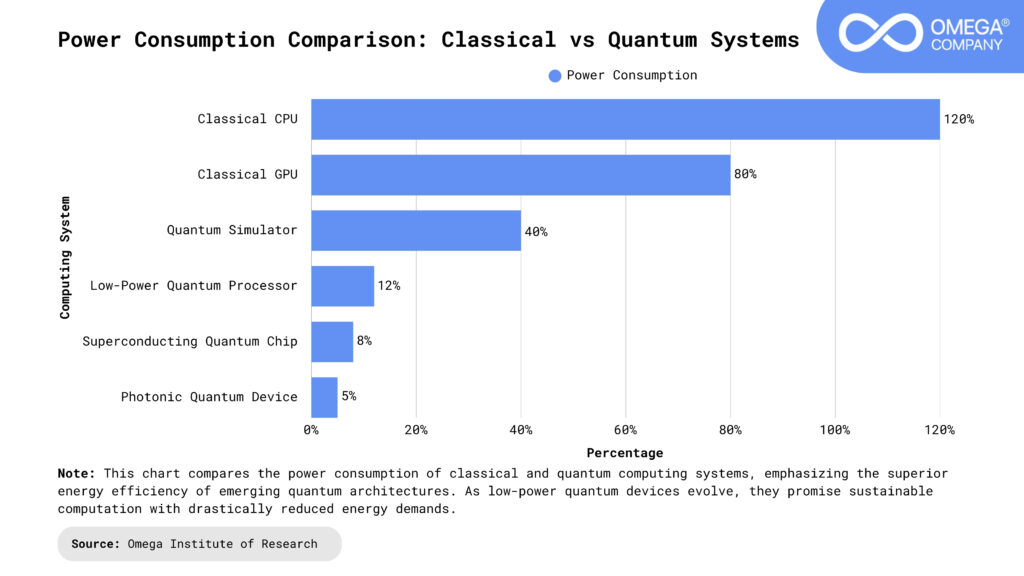
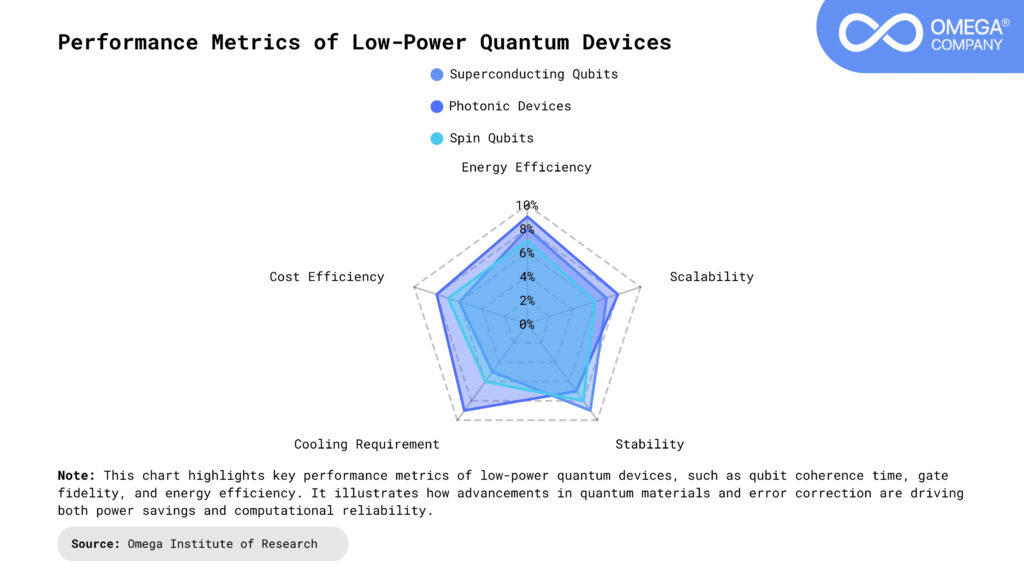
Spin and Photonic Qubits: Superconducting qubits are powerful but power-hungry. Alternatives like spin qubits (in silicon quantum dots) and photonic qubits (using light particles) operate at higher temperatures and require less cooling energy. These architectures promise scalable and energy-efficient quantum chips suitable for real-world deployment. Spin qubits, in particular, can leverage existing semiconductor fabrication methods, making them cost-effective and easier to produce. Meanwhile, photonic qubits offer near-room-temperature operation and reduced energy overhead, ideal for long-distance quantum communication.
Quantum Materials with Minimal Heat Loss: New materials such as topological insulators and 2D superconductors reduce resistance and dissipate less heat, helping maintain coherence without excessive cooling. These advanced materials enable robust qubit performance under less stringent cryogenic conditions. In addition, they enhance device durability and open avenues for designing thinner, lighter, and more efficient quantum components. Material innovation lies at the heart of reducing both energy consumption and operational complexity in future quantum devices.
Hybrid Quantum-Classical Processors: Integrating low-power classical processors within quantum systems optimizes computations, ensuring that only essential tasks are handled by energy-intensive quantum hardware. This hybrid model maximizes output while minimizing total energy use. By assigning simpler operations to classical chips, the system reduces unnecessary quantum workload, leading to greater overall efficiency. It also allows adaptive energy management strategies that dynamically balance power needs based on computational intensity.
Error Correction Efficiency: Quantum error correction (QEC) consumes immense resources, often requiring multiple physical qubits to represent a single logical qubit. Researchers are designing energy-aware QEC algorithms and fault-tolerant architectures that maintain accuracy with fewer resources. These optimizations drastically lower power requirements for both data storage and computation. Enhanced QEC also means longer coherence times and fewer interruptions, allowing quantum processors to perform more with less energy.
Industrial Efforts Toward Energy Efficiency
Major technology firms and startups alike are recognizing the urgency of low-power innovation in quantum computing:
IBM and Intel: IBM and Intel are experimenting with cryogenic control chips and spin-based quantum systems to reduce power demands. Their research focuses on integrating cryogenic CMOS technologies to minimize energy loss during signal transmission. Both companies are also developing scalable hardware architectures that combine performance with thermal efficiency, aiming to make large-scale quantum systems more sustainable. Through these innovations, IBM and Intel are setting the foundation for greener, high-performance quantum infrastructures.
Google Quantum AI: Google Quantum AI is exploring error correction optimization and energy-efficient qubit design for its next-generation processors. The company’s focus on refining quantum error correction aims to reduce the number of physical qubits needed, cutting both energy use and hardware complexity. Additionally, Google is investing in superconducting qubit research to enhance stability and minimize cryogenic cooling requirements. These advancements move the company closer to achieving fault-tolerant, low-power quantum processors ready for practical commercial applications.
PsiQuantum: PsiQuantum is developing photonic quantum computers that can operate at near room temperature, eliminating massive cooling overheads. By using light-based qubits instead of superconducting circuits, the company avoids the need for extreme cryogenic environments altogether. Its approach not only reduces power consumption but also enables easier scalability and deployment in standard data center environments. PsiQuantum’s photonic platform represents a transformative leap toward sustainable, high-capacity quantum computing that aligns with global clean-energy goals.
The Path Forward: Balancing Power and Performance
To achieve energy-efficient quantum computing, the industry must strike a delicate balance between performance, stability, and energy use. This involves:
Advancing Quantum Hardware Miniaturization: Miniaturizing quantum components reduces energy leakage, shortens signal pathways, and minimizes cooling requirements. Compact designs allow better integration of control electronics with qubits, leading to more efficient energy transfer and reduced latency. Continued innovation in nanoscale fabrication and material science will help create lightweight, power-optimized quantum chips that maintain high computational performance. Such miniaturization is key to achieving both scalability and sustainability in next-generation quantum systems.
Investing in Quantum Thermodynamics Research: Understanding the fundamental relationship between quantum mechanics and energy consumption is vital for building efficient systems. Quantum thermodynamics research helps identify how energy flows and dissipates within qubit networks and control circuits. By applying these insights, scientists can develop quantum engines and cooling processes that reuse or recycle heat effectively. This research paves the way for self-regulating systems capable of maintaining coherence with minimal power input.
Designing Adaptive Cooling Systems with Smart Regulation: Traditional cooling systems consume massive energy to sustain cryogenic temperatures. Adaptive cooling technologies driven by AI and smart sensors can dynamically regulate power based on real-time system demands. These intelligent systems reduce unnecessary energy consumption during low workloads while maintaining stability during peak performance. Over time, smart cooling will become an integral part of sustainable quantum infrastructure, drastically improving efficiency without compromising reliability.
Developing Energy-Aware Algorithms that Minimize Wasteful Computation: Quantum algorithms optimized for energy efficiency can significantly lower overall system power use. Researchers are now designing software that prioritizes computational routes requiring fewer quantum operations and less error correction. By aligning algorithmic efficiency with hardware constraints, quantum workloads can achieve maximum output per unit of energy consumed. This approach transforms software from a passive component into an active driver of sustainability in quantum computing.
Conclusion
Low-power quantum devices are redefining the future of computation. They symbolize the shift from pure performance pursuit to responsible, energy-conscious innovation. As breakthroughs in quantum materials, AI optimization, and cryogenic engineering converge, energy-efficient quantum systems are moving from possibility to inevitability. In the coming decade, the success of quantum computing will no longer be measured solely by speed or qubit count but by how sustainably it harnesses the laws of physics. The path to quantum advantage is not just about thinking differently, it’s about powering wisely. Energy efficiency will become the foundation upon which truly scalable, accessible, and environmentally conscious quantum technologies are built. By prioritizing power optimization alongside performance, researchers and industries can ensure that the quantum revolution aligns with global sustainability goals and shapes a future where innovation and responsibility advance hand in hand.
- https://epjquantumtechnology.springeropen.com/articles/10.1140/epjqt/s40507-025-00351-4
- https://www.pasqal.com/blog/quantum-computing-rethinking-energy-consumption/
- https://www.mdpi.com/1996-1073/17/5/1039
- https://www.techbriefs.com/component/content/article/12375-low-power-quantum-computers
- https://www.meegle.com/en_us/topics/quantum-computing-applications/quantum-computing-in-quantum-energy-efficiency
Subscribe
Select topics and stay current with our latest insights
- Functions