

- Industries
Industries
- Functions
Functions
- Insights
Insights
- Careers
Careers
- About Us

Multi-Agent Systems







Imagine a bustling airport with hundreds of planes, thousands of passengers, and seamless real-time coordination among ground crew, air traffic controllers, and pilots—all happening autonomously through intelligent systems that communicate, adapt, and respond on their own. This is the essence of Multi-Agent Systems (MAS), a branch of AI where multiple intelligent entities, known as agents, operate independently yet collaboratively to achieve shared or individual goals. These agents think, react, learn, and interact much like organisms in a natural ecosystem, but they exist in forms such as software, robots, drones, and digital networks. MAS is transforming industries by enabling distributed problem-solving, improving system resilience, and reducing the need for centralized control. From traffic management and smart grids to collaborative robotics and virtual assistants, MAS is the invisible intelligence behind complex automation. As our world grows more connected and dynamic, these systems are becoming essential to managing complexity and driving innovation.
What Is a Multi-Agent System?
A Multi-Agent System (MAS) is a network of autonomous units, or agents, that perceive their environment, make decisions, and act independently without relying on centralized control. These agents are not merely executing commands; they are self-driven, capable of negotiating, resolving conflicts, and adapting to changing conditions in real time. MAS mirrors the behavior of natural systems like swarming bees, flocking birds, or human teamwork, where each individual contributes to a larger objective while pursuing its own goals and using its own methods. By distributing intelligence across the system, MAS enhances flexibility, scalability, and resilience in complex environments. This decentralized approach allows for robust responses to dynamic scenarios and greater fault tolerance. As a result, MAS is increasingly being used in areas like robotics, logistics, smart cities, and defense systems.
Key Characteristics of MAS
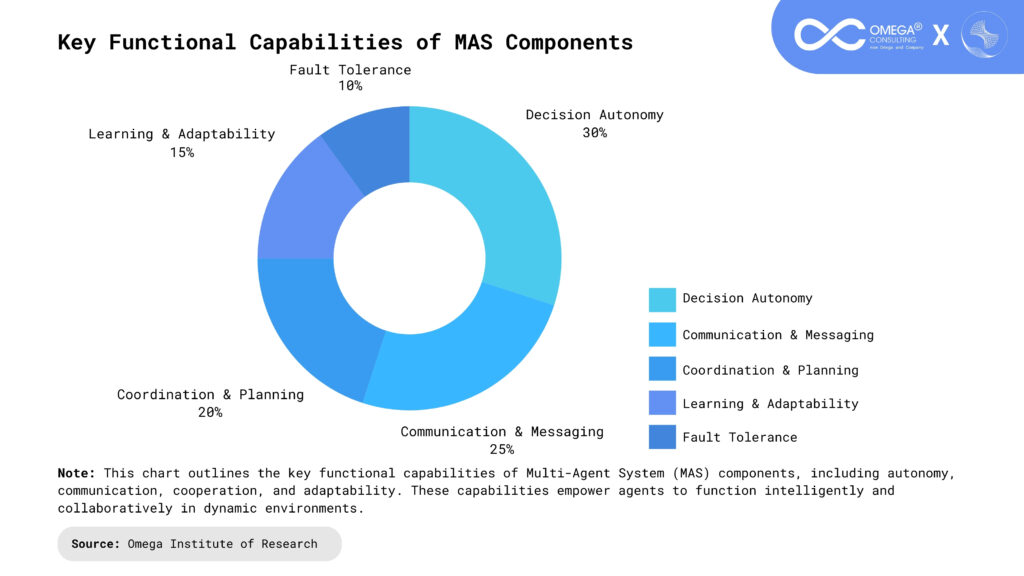
Multi-Agent Systems aren’t just groups of bots. They are designed with some powerful traits that make them fit for dynamic, real-world environments:
Autonomy: Each agent in a MAS has full control over its own actions and decision-making processes, without depending on a central authority to dictate its behavior. This decentralized control ensures the system can function even if individual agents fail or are removed. Agents can assess their local environment, make judgments, and take initiative based on their internal goals or programmed logic. This autonomy leads to better scalability and fault tolerance, allowing MAS to operate across diverse scenarios without bottlenecks or single points of failure.
Local View, Global Impact: Agents typically have limited, localized knowledge of the environment; they can’t see the whole system. However, through their individual interactions and behaviors, they contribute to a coherent and often intelligent global outcome. This mirrors natural phenomena, such as how ants find food through pheromone trails or birds form complex flight patterns without a leader. The power of MAS lies in emergent behavior, where complex problem-solving arises from simple agent interactions. This characteristic allows MAS to be efficient and effective in large-scale systems like traffic management or supply chain optimization.
Communication and Coordination: Agents in a MAS are capable of exchanging information, negotiating roles, and synchronizing their activities with others to meet collective or competing goals. They use protocols or shared languages to interact ensuring cooperation when needed or competition when necessary. This allows the system to divide labor, allocate resources efficiently, and resolve conflicts dynamically. Whether coordinating robotic arms in a manufacturing line or managing drones in a surveillance grid, communication is the backbone that enables distributed agents to act as a cohesive unit.
Adaptability: MAS are designed to handle dynamic environments, meaning they can adjust their behaviors in response to changes, disruptions, or new information. Agents often incorporate learning mechanisms like reinforcement learning or rule adaptation to refine their responses over time. This makes them highly suitable for environments where conditions evolve quickly, such as stock trading, autonomous driving, or emergency response systems. By continuously learning and optimizing, MAS improves performance and decision-making accuracy without human intervention, ensuring long-term system efficiency and resilience.
Real-World Applications: Where MAS Is Quietly Running the Show
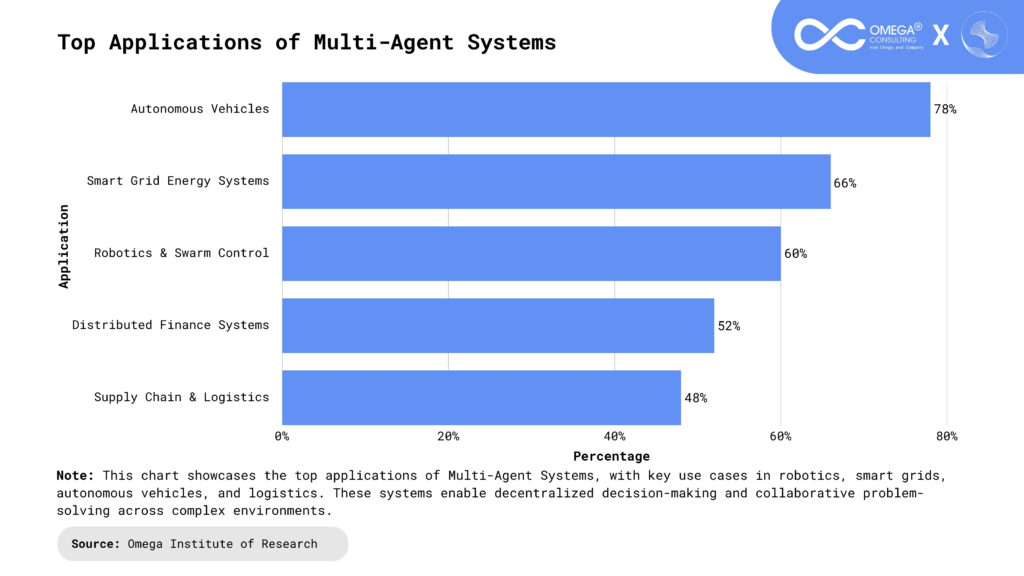
Cooperative Traffic Management: In smart cities, MAS enables vehicles, traffic lights, and public transport systems to communicate and make real-time decisions. Self-driving cars coordinate to reduce congestion, optimize routes, and avoid collisions without needing a central controller. Agents monitor local conditions like speed, traffic density, and accidents to adjust strategies instantly. This results in smoother traffic flow, reduced travel time, and enhanced safety across the network.
Decentralized Energy Grids: With the growing integration of renewable energy sources, MAS helps balance the load between solar panels, wind turbines, batteries, and the central power grid. Each component acts as an agent, dynamically managing supply and demand to maintain grid stability and efficiency. These systems can automatically reroute energy or shift storage priorities during peak or low production. As a result, they reduce power outages and improve the sustainability of energy distribution.
E-Commerce Logistics: MAS drives warehouse automation, where autonomous robots store, retrieve, and package products in response to real-time orders. Delivery drones and route optimization software act as intelligent agents, adapting continuously to factors like traffic, weather, and delivery windows. Each agent operates independently while sharing data to streamline fulfillment. This not only speeds up delivery but also reduces operational costs and increases reliability in last-mile logistics.
Cybersecurity: MAS is crucial in monitoring and protecting large, distributed digital networks. Intelligent agents survey different endpoints, detect anomalies, and share threat data instantly across the system. These agents can isolate compromised nodes, initiate countermeasures, or trigger alerts without waiting for centralized approval. The result is faster, smarter, and more adaptive security that evolves alongside emerging threats.
Healthcare Coordination: MAS supports operational efficiency by scheduling surgeries, managing staff and room availability, and tracking patient flow. Agents analyze real-time hospital data to allocate resources where needed most, minimizing delays and overcrowding. In telemedicine, MAS matches patients with doctors based on urgency, specialty, and availability. This improves patient outcomes while optimizing the use of medical personnel and infrastructure.
Why Multi-Agent Systems Matter
We live in a decentralized world from smart homes to digital finance. MAS embraces this complexity and turns it into an advantage.
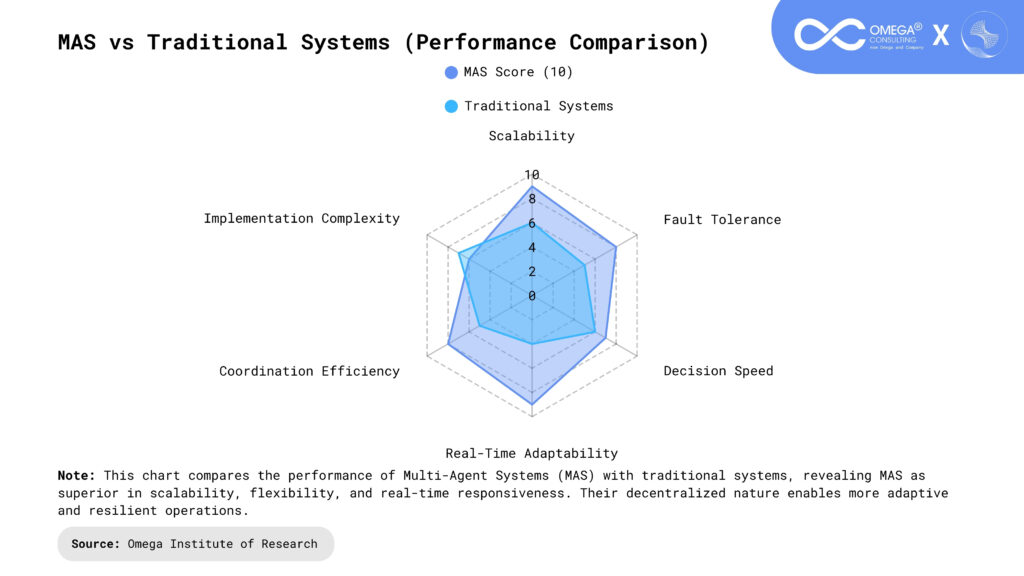
Highly Scalable: MAS architecture is inherently modular, meaning more agents can be added to a system without fundamentally changing its structure. Whether its 10 smart thermostats managing a building’s temperature or 10,000 autonomous drones coordinating a delivery network, the system grows without bottlenecks. Each agent operates with localized intelligence, so scaling doesn’t overload a central processor or require redesign. This makes MAS ideal for industries like logistics, finance, or IoT environments where expansion is constant.
Failure Resilience: One of MAS’s most powerful features is its decentralized nature—there’s no single point of failure. If one agent malfunctions, others can continue functioning independently or take over its tasks, ensuring continuity. This design mimics natural ecosystems where redundancy and distributed roles maintain balance even under stress. Whether it’s in power grids, battlefield robots, or cloud computing networks, this resilience is critical for mission-critical systems where uptime is non-negotiable.
Real-Time Intelligence: MAS allows agents to perceive environmental changes and act instantly, without waiting for centralized decision-making or human input. Each agent processes local data, makes autonomous decisions, and adapts in real-time enabling responsive behavior in dynamic settings like traffic management, stock trading, or cybersecurity. This real-time intelligence gives organizations a competitive edge by accelerating reaction times, increasing accuracy, and improving service delivery across time-sensitive applications.
Cost-Effective: By distributing intelligence and reducing dependency on centralized human oversight, MAS significantly lowers operational costs. Systems that once required constant monitoring, scheduling, and manual adjustments can now function independently, freeing up human resources for higher-value tasks. In logistics, healthcare, or manufacturing, this results in leaner operations, faster execution, and better resource utilization. The efficiency gained from MAS leads not only to financial savings but also to improved scalability and performance.
Common Challenges
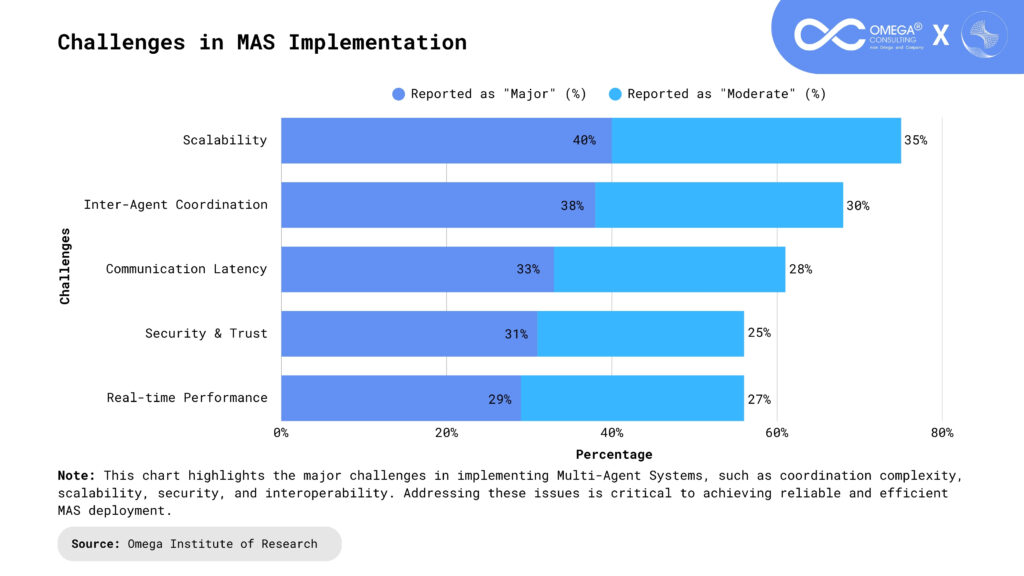
While Multi-Agent Systems offer impressive capabilities, they also come with inherent complexities that require careful design, management, and mitigation. The decentralized and autonomous nature of MAS, while powerful, introduces unique challenges not seen in traditional, centralized systems. Understanding these challenges is crucial for building robust, secure, and effective MAS applications.
Coordination Complexity: One of the core challenges in MAS is ensuring agents can coordinate their actions effectively, especially when they have different goals, knowledge, or priorities. Since agents operate autonomously and often have only partial views of the system, aligning their behaviors to achieve shared outcomes can be tricky. Misalignment can lead to inefficiencies, conflicts, or even system breakdowns such as robots duplicating work or autonomous vehicles taking contradictory actions. Developing robust coordination protocols and decision-making rules is essential to manage this complexity.
Security Risks: Security is a serious concern in MAS, particularly because of the interconnected and autonomous nature of agents. If one agent is compromised either through hacking, data corruption, or manipulation it can disrupt the entire system by feeding false information, influencing other agents, or taking malicious actions. For instance, in a smart grid, a compromised energy agent could misallocate power, creating instability. Ensuring each agent has authentication, secure communication protocols, and the ability to detect anomalies is critical for safeguarding MAS integrity.
Communication Overload: While communication between agents is vital for coordination and collaboration, excessive or poorly managed messaging can lead to overload. In large-scale MAS, agents continuously exchanging updates, queries, and status reports can saturate the network, slowing down responses or causing missed signals. This is especially problematic in real-time systems like autonomous traffic control or battlefield drones. Implementing efficient communication strategies like prioritized messaging or event-triggered updates helps prevent this bottleneck and keeps the system responsive.
Design Difficulty: Designing a MAS is far more complex than building a centralized system. Developers must ensure that agents behave appropriately in diverse scenarios, interact harmoniously, and collectively fulfill system-wide goals all without centralized oversight. This requires deep expertise in AI, distributed systems, and behavioral modeling. Poorly designed agents may exhibit unexpected behaviors, fail to cooperate, or create feedback loops. Testing, simulation, and iterative design are essential to developing agents that are both autonomous and aligned with the broader system’s purpose.
Future Trends in MAS: What’s Next?
Web3 and Blockchain Integration: MAS is increasingly being integrated with blockchain technologies to ensure secure, tamper-proof communication and transactions among agents. Blockchain’s decentralized architecture aligns perfectly with MAS principles, enabling agents to execute smart contracts, log data immutably, and achieve consensus without central oversight. For example, agents in decentralized finance (DeFi) ecosystems can autonomously negotiate trades or settle contracts using blockchain. This synergy enhances transparency, trust, and resilience, especially in systems where agent interactions involve value exchange or critical decisions.
Learning Agents with Reinforcement AI: A major advancement in MAS is the incorporation of reinforcement learning, allowing agents to improve through trial and error over time. These agents observe their environment, take actions, receive feedback (rewards or penalties), and update their strategies accordingly, becoming more effective with each interaction. This evolution makes MAS capable of solving increasingly complex and unpredictable problems. In areas like robotic control, autonomous trading, or adaptive traffic systems, learning agents can optimize performance in dynamic environments without human intervention.
Space Exploration: Organizations like NASA and ESA are exploring MAS to manage operations in deep space, where communication delays and unpredictable conditions make centralized control impractical. MAS can coordinate satellite constellations, distribute tasks among autonomous spacecraft, and help Mars rovers collaborate to explore terrain, collect samples, and manage energy usage. These intelligent agents can make decisions locally, ensuring missions continue smoothly even when contact with Earth is delayed or lost. This approach significantly increases autonomy, efficiency, and safety in extraterrestrial missions.
Intelligent Surveillance: Surveillance systems are evolving from static camera setups to dynamic, intelligent networks powered by MAS. Swarm-based camera agents can autonomously monitor environments, track individuals or objects, and share insights in real time. Each camera functions as an agent, deciding when to alert, follow, or hand off a subject to another node in the network. This enables scalable, decentralized public safety systems for airports, smart cities, and critical infrastructure enhancing threat detection, reducing blind spots, and minimizing response times without relying on a centralized command.
Conclusion
Multi-Agent Systems (MAS) aren’t just a technical innovation—they represent a transformative shift in how intelligence is structured and applied, mirroring nature’s decentralized, adaptive, and cooperative mechanisms. In an increasingly complex world where responsiveness, resilience, and scalability are critical, MAS emerges as the digital nervous system driving tomorrow’s smart ecosystems. From automating urban infrastructure to revolutionizing global supply chains, MAS is silently but profoundly reshaping the way we design and operate intelligent systems enabling a future where systems think and act beyond the limitations of a single brain. As AI continues to evolve, MAS will become a foundational layer for real-time decision-making in autonomous environments. Their ability to learn, communicate, and self-organize will unlock new levels of efficiency and innovation across industries. Ultimately, MAS isn’t just about smarter machines, it’s about building systems that reflect the intelligence and adaptability of life itself.
- https://ieeexplore.ieee.org/document/8352646
- https://arxiv.org/abs/2402.03578
- https://www.turing.ac.uk/research/interest-groups/multi-agent-systems?utm_source
- https://medium.com/%40seaflux/transforming-ai-with-multi-agent-systems-and-decentralized-agents-110fc020a50f
- https://www.researchgate.net/publication/367228899_Past_Present_and_Future_Trends_in_Multi-Agent_System_Technology?utm_source
Subscribe
Select topics and stay current with our latest insights
- Functions