

- Industries
Industries
- Functions
Functions
- Insights
Insights
- Careers
Careers
- About Us

Multimodal Artificial Intelligence







Artificial Intelligence (AI) has evolved rapidly over the past decade, transforming business operations, customer interactions, and strategic decision-making across industries. While traditional AI systems typically process a single type of data such as text, images, audio, or video, Multimodal Artificial Intelligence represents the next stage of AI evolution by combining multiple data formats to understand and interpret information in a way that more closely resembles human intelligence. Just as people naturally rely on speech, facial expressions, body language, visual cues, and environmental context to make sense of the world, Multimodal AI integrates these diverse inputs into a unified system capable of delivering richer insights, greater accuracy, and more context-aware decisions. As organizations generate and analyze vast amounts of information across multiple channels, Multimodal AI is emerging as a transformative technology, driving innovation and enabling smarter, more intuitive solutions across industries such as healthcare, finance, retail, manufacturing, education, and customer experience.
What is Multimodal Artificial Intelligence?
Multimodal Artificial Intelligence refers to AI systems that can process, understand, and generate information by simultaneously integrating multiple types of data, including text, images, audio, video, speech, sensor data, documents, time-series data, and even 3D models. Instead of analyzing each data type in isolation, Multimodal AI learns the relationships between these different modalities to develop a deeper contextual understanding, enabling more accurate reasoning, context-aware decision-making, and human-like interactions. This integrated approach allows AI to recognize complex patterns that would be difficult to identify using a single data source, resulting in more reliable insights and intelligent automation. For example, a multimodal AI assistant can read and analyze a PDF report, interpret embedded charts and graphs, listen to spoken questions, examine uploaded images, generate comprehensive written summaries, and even create visual presentations based on the combined information. By seamlessly connecting information across different formats, Multimodal AI delivers richer user experiences, improves operational efficiency, and supports advanced applications across enterprise, research, and consumer environments.
Why Multimodal AI Matters
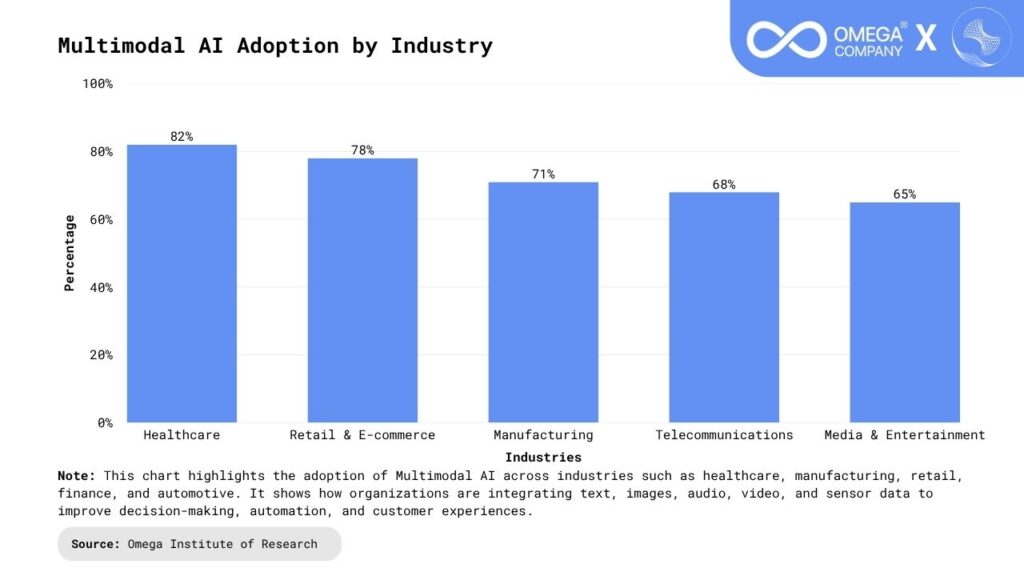
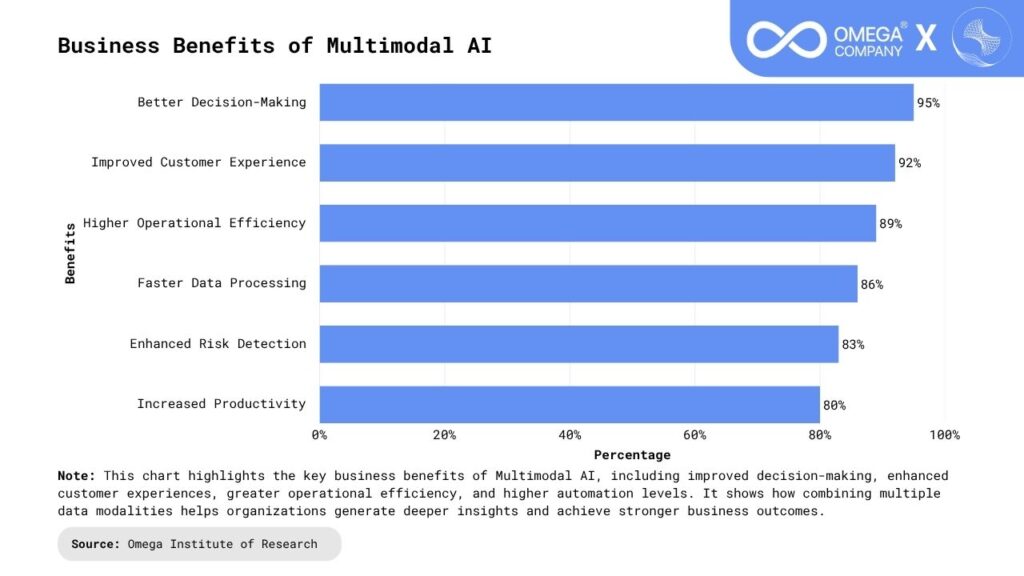
Better Decision-Making: By combining insights from multiple data sources, Multimodal AI provides a comprehensive understanding of business situations that single-data systems cannot achieve. It evaluates information from text, images, audio, and other inputs simultaneously, helping organizations identify hidden patterns and trends. This enables business leaders to make faster, more strategic decisions with greater confidence while reducing uncertainty and operational risks.
Higher Prediction Accuracy: Analyzing text, images, audio, video, and sensor data together allows AI models to detect relationships that would otherwise remain unnoticed. This holistic approach significantly improves forecasting, predictive analytics, fraud detection, and risk assessment across industries. As a result, organizations gain more reliable predictions, enabling proactive planning and better resource allocation.
Improved Automation: Multimodal AI automates complex workflows by interpreting multiple forms of information simultaneously instead of relying on a single input source. It can process documents, recognize images, understand speech, and analyze real-time data within one intelligent workflow. This reduces manual effort, minimizes human error, accelerates business processes, and increases overall operational efficiency.
Enhanced Customer Experiences: AI can understand customer intent by analyzing conversations, facial expressions, uploaded images, behavioral patterns, and contextual information together. This enables highly personalized recommendations, faster issue resolution, and more natural interactions across digital channels. The result is improved customer satisfaction, stronger brand loyalty, and a more engaging user experience.
Stronger Business Intelligence: Integrating information from multiple enterprise systems creates a unified and comprehensive view of organizational performance. Businesses can identify market trends, monitor operational performance, and uncover growth opportunities with greater precision and speed. These richer insights support long-term strategic planning, encourage innovation, and provide organizations with a significant competitive advantage.
How Multimodal AI Works
Data Collection: The first step in a Multimodal AI system is collecting information from a wide range of sources, including documents, emails, images, videos, voice recordings, databases, IoT devices, and enterprise applications. Gathering diverse data provides a comprehensive view of the problem rather than relying on a single source. This broad collection process ensures that the AI has access to both structured and unstructured information for deeper analysis. As a result, the system builds a strong foundation for accurate and context-rich intelligence.
Data Encoding: After data is collected, each modality is transformed into numerical representations known as embeddings that AI models can process efficiently. Text is converted into language embeddings, images into visual embeddings, audio into acoustic embeddings, and videos into spatio-temporal embeddings while preserving their essential characteristics. These standardized representations enable the AI to compare and relate information across different formats within a shared feature space. This step is essential for enabling seamless interaction between multiple data types during analysis.
Feature Fusion: Once the data has been encoded, the different embeddings are merged using advanced multimodal fusion techniques to create a unified representation. This process enables the AI to identify meaningful relationships between different sources, such as matching speech with facial expressions, connecting images with written descriptions, or validating documents using video evidence. By integrating multiple perspectives, the system gains a richer and more accurate understanding of complex situations. Feature fusion significantly enhances the quality, reliability, and contextual depth of AI-generated insights.
Context Understanding: Advanced transformer architectures analyze the fused information to understand the broader context behind the data rather than processing individual inputs independently. The AI identifies intent, emotions, relationships, objects, events, and environmental context, allowing it to interpret information in a way that closely resembles human reasoning. This contextual awareness enables the system to distinguish subtle differences in meaning and respond appropriately. As a result, Multimodal AI delivers more intelligent, relevant, and personalized outcomes across a wide range of applications.
Decision Generation: In the final stage, the AI converts its understanding into actionable outputs such as reports, predictions, recommendations, answers, images, videos, code, or speech based on the user’s objectives. These outputs combine insights from multiple data sources, making them more accurate, comprehensive, and context-aware than those generated by traditional AI systems. The generated results can support decision-making, automate business processes, enhance customer interactions, and improve operational efficiency. This capability makes Multimodal AI a powerful tool for solving complex real-world problems across industries.
Core Components of Multimodal AI
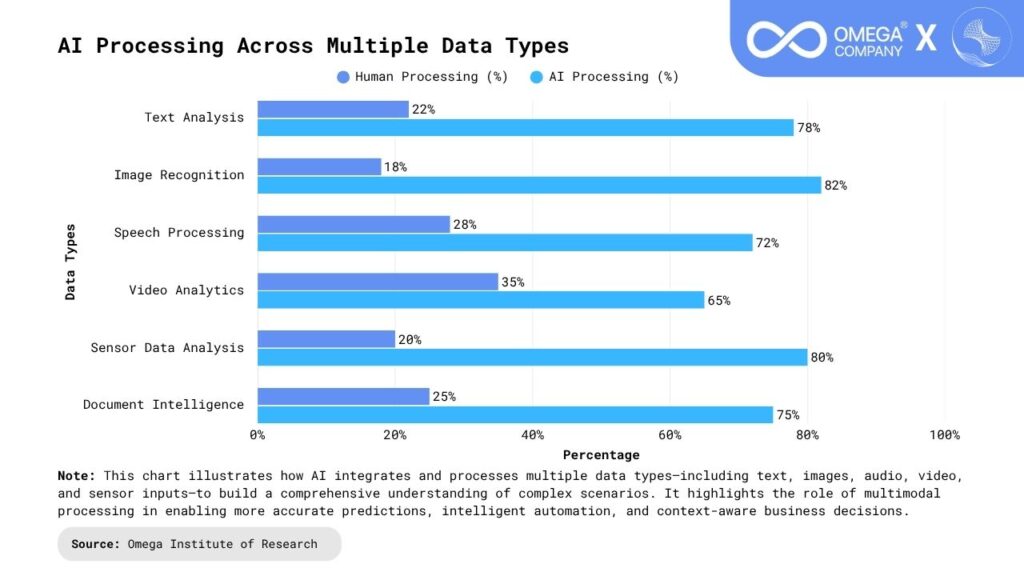
Large Language Models (LLMs): Large Language Models (LLMs) form the foundation of Multimodal AI by providing advanced language understanding, reasoning, and content generation capabilities. They interpret user instructions, answer complex questions, summarize lengthy documents, and generate natural, context-aware responses. Beyond processing text, LLMs also connect information received from images, audio, and video to deliver more comprehensive insights. Their ability to understand context and perform logical reasoning makes them central to intelligent multimodal systems.
Vision Models: Vision models enable Multimodal AI to interpret and analyze visual information from images, medical scans, manufacturing inspections, satellite imagery, product photographs, and other visual sources. They identify objects, detect patterns, recognize faces, classify scenes, and locate anomalies with high accuracy. These models transform raw visual data into meaningful insights that can be combined with other data types. This capability supports applications ranging from healthcare diagnostics to quality control and autonomous systems.
Speech Recognition: Speech recognition technology converts spoken language into accurate text while analyzing tone, pronunciation, emotion, and user intent. It enables AI systems to understand natural conversations and interact with users through voice-based interfaces. Modern speech models can distinguish different speakers, handle multiple languages, and improve communication in noisy environments. This makes voice interactions faster, more intuitive, and highly effective across customer service, healthcare, and enterprise applications.
Audio Processing: Audio processing models analyze a wide variety of non-text audio signals, including music, environmental sounds, machine vibrations, human emotions, and speaker identity. By recognizing subtle acoustic patterns, these models can detect equipment failures, identify individuals, monitor environmental conditions, and interpret emotional cues. This additional layer of understanding enhances AI’s ability to make context-aware decisions. Audio intelligence plays a critical role in industries such as manufacturing, security, entertainment, and healthcare.
Video Understanding: Video understanding combines computer vision with temporal analysis to interpret motion, activities, human interactions, security footage, and sports performance over time. Rather than analyzing individual frames independently, the AI understands sequences of events and the relationships between actions. This enables real-time monitoring, behavior analysis, anomaly detection, and intelligent surveillance. Video AI is increasingly used in public safety, retail analytics, autonomous vehicles, and smart city applications.
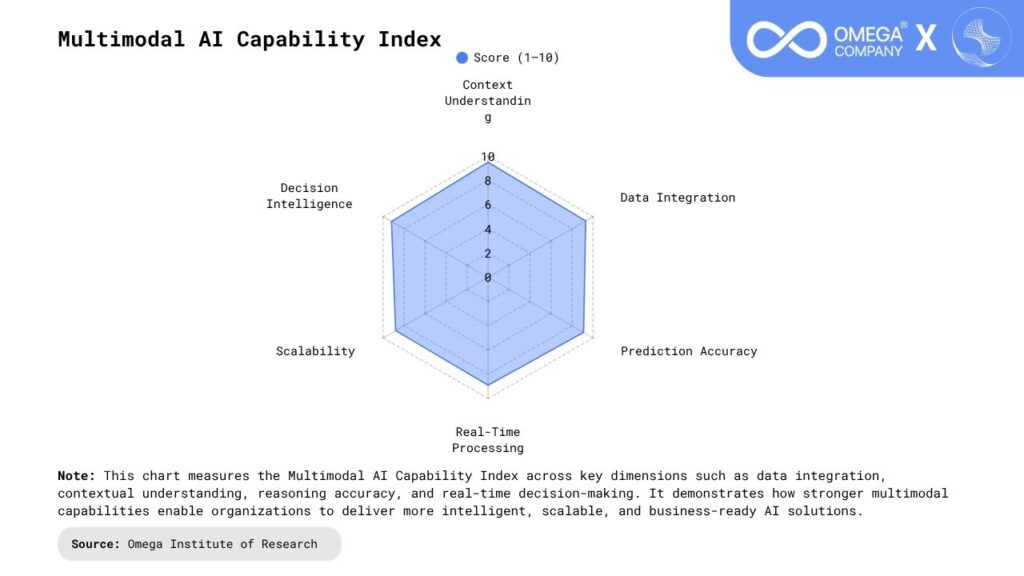
Multimodal Fusion Models: Multimodal fusion models serve as the central intelligence that combines information from language, vision, speech, audio, and video into a unified understanding. They identify relationships across different data types, allowing the AI to interpret complex situations with greater accuracy and contextual awareness. By integrating diverse sources of information, these models produce more reliable predictions, recommendations, and responses than single-modality systems. This fusion capability is what enables Multimodal AI to closely replicate human-like perception and decision-making.
Types of Data Modalities
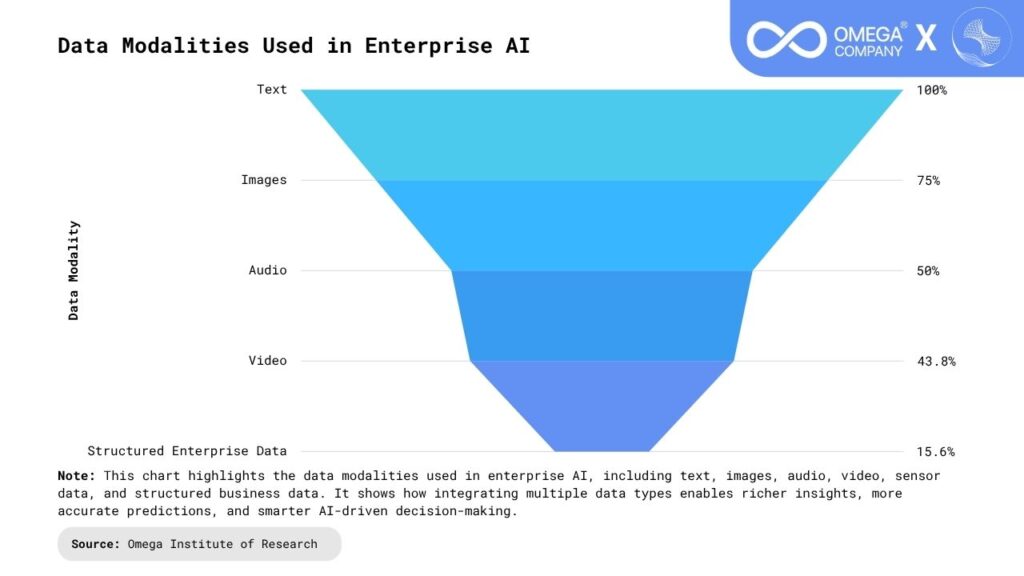
Multimodal Artificial Intelligence is designed to process and understand multiple types of data, known as data modalities, allowing AI systems to develop a richer and more contextual understanding of information. These modalities include text, such as emails, reports, books, and chat conversations; images, including X-rays, medical scans, product photographs, and satellite imagery; audio, such as phone calls, podcasts, and environmental sounds; video, including CCTV footage, virtual meetings, and surveillance recordings; and speech, which powers voice assistants, virtual agents, and conversational AI applications. In addition, Multimodal AI analyzes sensor data generated by IoT devices and industrial equipment, time-series data such as stock prices, weather forecasts, and financial transactions, documents including PDFs, invoices, contracts, and forms, and 3D data used in engineering designs, digital twins, architecture, and manufacturing. By integrating these diverse data modalities into a unified intelligence framework, Multimodal AI can identify complex relationships, understand context more effectively, and deliver more accurate predictions, recommendations, and business insights than traditional single-modality AI systems.
Advantages of Multimodal AI
Improved Accuracy: Multimodal AI combines information from multiple data sources, enabling it to make more accurate predictions and informed decisions than traditional single-modality systems. By analyzing text, images, audio, video, and other inputs together, it reduces ambiguity and minimizes the risk of incorrect interpretations. The ability to validate information across different modalities strengthens the reliability of AI-generated insights. This leads to better outcomes in applications such as healthcare, finance, manufacturing, and customer service.
Better Context Awareness: Unlike conventional AI models that rely on a single type of input, Multimodal AI understands information from multiple perspectives simultaneously. It evaluates the relationships between language, visuals, audio, and contextual signals to gain a deeper understanding of complex situations. This holistic approach enables the AI to interpret intent, emotions, and environmental context more effectively. As a result, it delivers more relevant, intelligent, and context-aware responses.
Enhanced Human-AI Interaction: Multimodal AI enables users to interact naturally using text, voice, images, videos, or a combination of these communication methods. This creates a more intuitive and seamless user experience, allowing people to communicate with AI in ways that closely resemble human conversations. The system can understand diverse inputs and respond appropriately across different channels. Such natural interactions improve accessibility, usability, and overall customer satisfaction.
Increased Automation: By processing multiple forms of data within a single workflow, Multimodal AI can automate complex business processes that previously required significant human intervention. It can simultaneously analyze documents, recognize images, interpret speech, and process sensor data to complete tasks efficiently. This reduces manual effort, accelerates operations, and improves productivity across organizations. Increased automation also enables businesses to scale operations while maintaining high levels of accuracy.
Better Personalization: Multimodal AI analyzes customer interactions across various channels, including emails, voice conversations, browsing behavior, images, and social media activity. This comprehensive understanding allows businesses to deliver highly personalized recommendations, services, and experiences tailored to individual preferences. Personalized interactions strengthen customer engagement and build long-term loyalty. They also help organizations improve conversion rates and create greater value for their customers.
Reduced Errors: One of the greatest strengths of Multimodal AI is its ability to cross-validate information from different data modalities before generating a response or recommendation. By comparing evidence from text, images, audio, video, and other sources, the system can detect inconsistencies, eliminate false assumptions, and reduce the likelihood of errors. This significantly improves the reliability and trustworthiness of AI outputs. Consequently, organizations can make more confident decisions while minimizing operational and business risks.
Challenges of Multimodal AI
Despite its transformative capabilities, Multimodal Artificial Intelligence faces several significant challenges that organizations must overcome to achieve successful adoption. Processing and integrating multiple data modalities requires substantial computational power, large-scale training datasets, and sophisticated techniques to synchronize information across different formats and timeframes. Organizations must also address critical concerns related to data privacy, cybersecurity, and bias within multimodal datasets to ensure fair, secure, and trustworthy AI systems. Additionally, the complexity of explaining AI-generated decisions, integrating multimodal models with legacy enterprise systems, and managing high infrastructure and operational costs can hinder deployment. Ensuring consistent data quality across diverse modalities and maintaining model performance in real-world environments further add to the implementation complexity. Overcoming these challenges requires robust AI governance, ethical development practices, scalable cloud infrastructure, continuous monitoring, and ongoing model optimization to ensure reliable, transparent, and responsible AI implementation.
Best Practices for Enterprise Adoption
Successful enterprise adoption of Multimodal Artificial Intelligence requires a well-defined implementation strategy aligned with organizational goals and long-term business objectives. Organizations should prioritize high-value use cases, establish strong data management and governance practices, and ensure that information from multiple modalities is accurate, consistent, and securely managed. Building scalable infrastructure, integrating AI solutions with existing enterprise applications, and implementing continuous monitoring for model performance, fairness, and compliance are essential for sustainable deployment. Equally important is fostering an AI-ready workforce through training and change management initiatives, enabling employees to confidently use multimodal AI solutions and drive innovation, operational efficiency, and competitive advantage.
The Future of Multimodal AI
The future of Multimodal Artificial Intelligence is centered on building more intelligent, autonomous, and collaborative systems capable of seamlessly processing text, images, audio, video, speech, and sensor data in real time. As advances in edge computing, efficient multimodal architectures, and enhanced reasoning capabilities continue to accelerate, AI systems will become faster, more scalable, and increasingly accessible across industries. Emerging innovations include AI-powered digital assistants that can see, hear, and communicate naturally, autonomous robots that understand and adapt to complex environments, real-time multilingual communication, AI-driven scientific research, and immersive augmented and virtual reality experiences. These next-generation capabilities will transform enterprise automation, healthcare, manufacturing, education, finance, and customer engagement by enabling smarter decision-making, highly personalized services, and more intuitive human-AI collaboration. As Multimodal AI continues to mature, it is expected to become a foundational technology that powers the next wave of digital transformation, unlocking new levels of productivity, innovation, and business value across the global economy.
Conclusion
Multimodal Artificial Intelligence represents a significant advancement in the evolution of AI by enabling systems to process and understand multiple forms of data within a unified framework, closely mimicking the way humans perceive and interpret the world. Unlike traditional AI models that rely on a single data modality, Multimodal AI integrates text, images, audio, video, speech, and sensor data to deliver more accurate, context-aware, and intelligent insights. For organizations, this technology unlocks new opportunities to improve decision-making, streamline operations, enhance customer experiences, accelerate innovation, and gain a competitive advantage across diverse industries. As the volume and diversity of enterprise data continue to grow, Multimodal AI will become a cornerstone of next-generation intelligent applications, driving responsible digital transformation, fostering human-AI collaboration, and enabling businesses to create smarter, more adaptive, and future-ready solutions in an increasingly data-driven world.
- https://www.superannotate.com/blog/multimodal-ai
- https://www.splunk.com/en_us/blog/learn/multimodal-ai.html
- https://www.tiledb.com/blog/multimodal-ai-guide
- https://www.techtarget.com/searchenterpriseai/definition/multimodal-AI
- https://dl.acm.org/doi/10.1145/3716553.3757099
Subscribe
Select topics and stay current with our latest insights
- Functions