

- Industries
Industries
- Functions
Functions
- Insights
Insights
- Careers
Careers
- About Us

Ocean Energy: Harnessing Waves and Tides for Global Power







As the world races to transition away from fossil fuels, one vast and largely untapped resource continues to move relentlessly across our planet: the ocean. Covering more than 70% of Earth’s surface, the oceans hold immense potential to generate clean, reliable, and predictable electricity. Ocean energy, particularly from waves and tides, is emerging as a powerful solution in the global renewable energy mix, one that could play a critical role in meeting future power demands while reducing carbon emissions. Unlike solar and wind, ocean energy is highly consistent and less dependent on weather fluctuations, making it a stable source of power. Advances in marine engineering and energy storage are accelerating its commercial viability. As coastal populations grow and energy needs rise, harnessing the power of the ocean is becoming both an environmental necessity and an economic opportunity.
What Is Ocean Energy?
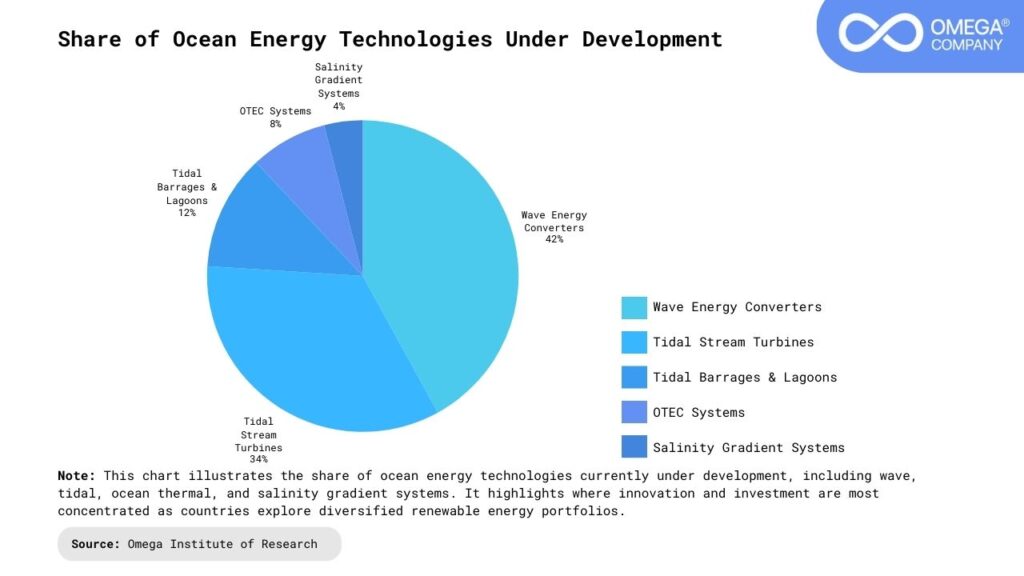
Ocean energy refers to electricity generated from the natural movement of seawater. Unlike solar or wind, which depend heavily on weather conditions, ocean-based energy systems benefit from the consistent and predictable behavior of tides and waves. The two most prominent forms are:
Wave Energy: Wave energy captures power from surface waves generated by wind moving across the ocean. These waves contain significant kinetic and mechanical energy that can be converted into electricity using floating devices, oscillating water columns, or submerged systems. Wave energy is especially effective along coastlines with strong and consistent wave activity, offering a reliable source of renewable power. When integrated with other renewable technologies, wave energy can help balance energy supply during periods when solar and wind generation are lower.
Tidal Energy: Tidal energy harnesses the rise and fall of sea levels as well as fast-moving tidal currents created by the gravitational interaction between the Earth, moon, and sun. Unlike many renewable sources, tidal patterns are highly predictable, allowing for accurate long-term power forecasting. Technologies such as tidal barrages, tidal lagoons, and underwater turbines are used to convert tidal movement into electricity. With long infrastructure lifespans and minimal visual impact, tidal energy presents a stable and dependable option for sustainable power generation.
How Wave Energy Works
Wave energy systems convert the kinetic and potential energy of ocean waves into electricity using specialized devices called wave energy converters (WECs). These systems are typically installed offshore or near coastlines and move with the motion of waves.
Point Absorbers: Point absorbers are compact, floating structures that move vertically as waves pass beneath them. This up-and-down motion drives internal mechanical systems that convert wave energy into electricity. Because of their small size and modular design, point absorbers can be deployed in arrays to increase total energy output. They are well-suited for deep-water locations and can operate efficiently across a range of wave conditions.
Oscillating Water Columns: Oscillating water columns capture wave energy by allowing waves to enter a partially submerged chamber. As waves rise and fall inside the chamber, they compress and decompress the trapped air above the water surface. This airflow drives a turbine connected to a generator, producing electricity. These systems can be built into coastal structures or deployed offshore, offering flexibility in design and location.
Attenuators: Attenuators are long, floating structures positioned parallel to the direction of incoming waves. As waves travel along the length of the device, the segments flex and bend, creating mechanical energy. This motion is converted into electricity through hydraulic systems or generators housed within the structure. Attenuators are particularly effective in capturing energy from long, rolling waves and are often used in offshore wave energy farms.
Understanding Tidal Energy Systems
Tidal energy is one of the most predictable renewable energy sources available today. Because tides follow precise lunar cycles, energy output can be forecast years in advance, an advantage for grid stability.
Tidal Stream Generators: Tidal stream generators function much like underwater wind turbines, using fast-moving tidal currents to rotate their blades. These turbines are anchored to the seabed or mounted on floating platforms in areas with strong tidal flows. The spinning motion drives generators that convert kinetic energy into electricity. Because they operate below the surface, tidal stream systems have minimal visual impact and can coexist with marine activities.
Tidal Range Systems: Tidal range systems, such as barrages and lagoons, capture energy from the difference in water height between high and low tides. Water is allowed to flow through turbines as tides rise and fall, generating electricity in both directions. These systems can also provide additional benefits like flood control and coastal protection. However, careful environmental planning is essential to minimize impacts on marine ecosystems and sediment flow.
Why Ocean Energy Matters for the Global Power Transition
Ocean energy offers several strategic benefits that make it a compelling addition to the renewable energy landscape:
High Energy Density: Ocean energy has a significantly higher energy density compared to wind and solar power, meaning more electricity can be generated from smaller installations. The continuous movement of seawater carries immense power, even at lower speeds. This makes ocean energy particularly attractive for regions with limited space for large renewable projects. Higher energy density also translates into more stable output and improved efficiency over time.
Consistent and Predictable Output: One of the greatest advantages of ocean energy, especially tidal power, is its consistency and predictability. Tidal cycles are governed by well-understood astronomical forces, allowing energy production to be forecast years in advance. This reliability reduces uncertainty for grid operators and improves overall energy planning. As a result, ocean energy can play a stabilizing role alongside more variable renewable sources.
Minimal Land Use: Unlike large solar farms or onshore wind installations, ocean energy systems require very little land. Most infrastructure is located offshore or along coastlines, preserving valuable land for agriculture, housing, and natural habitats. This makes ocean energy especially suitable for densely populated regions with limited available space. Reduced land use also helps minimize conflicts with local communities.
Reduced Visual Impact: Ocean energy infrastructure is largely hidden beneath the water’s surface, resulting in minimal visual disruption. Submerged turbines and wave devices preserve coastal landscapes and scenic views. This lower visual impact can increase public acceptance compared to more visible renewable installations. It also allows ocean energy projects to coexist with tourism and recreational activities.
Environmental and Economic Considerations
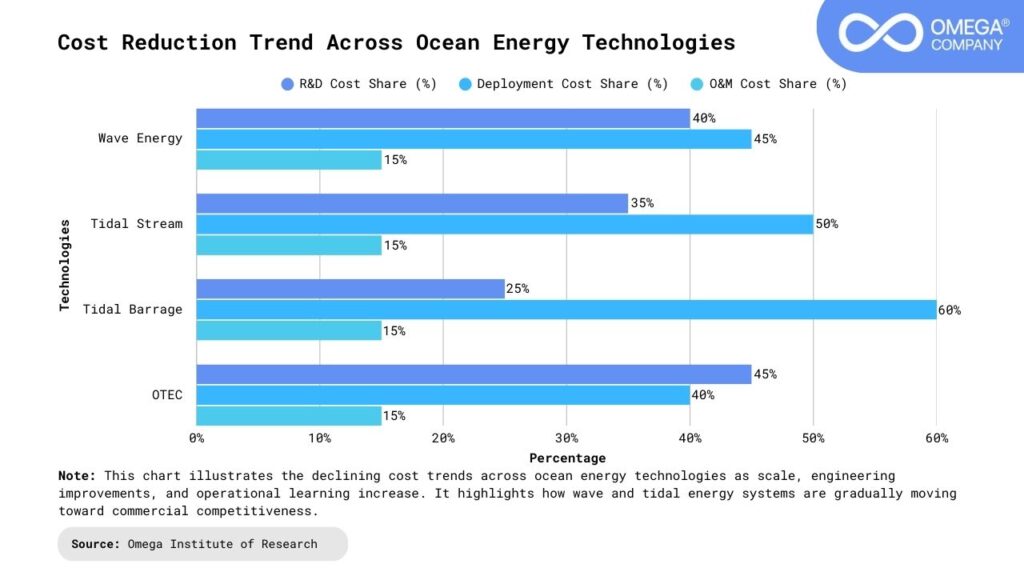
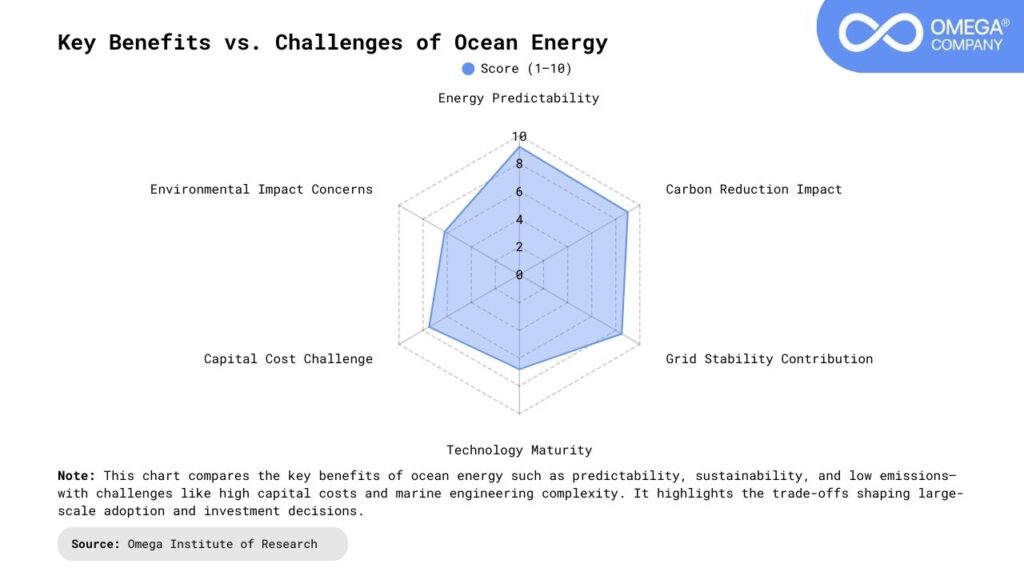
Like any large-scale infrastructure, ocean energy projects must be developed responsibly, as they can affect marine ecosystems, sediment movement, and local biodiversity if not carefully managed. However, modern ocean energy designs increasingly prioritize eco-friendly materials, slow-rotating turbines, and strategic site selection to reduce environmental disruption and support long-term ecosystem health. From an economic standpoint, ocean energy is still in an early growth phase, with high upfront costs driven by complex installations and challenging marine conditions. Yet, as technologies advance and projects scale up, costs are expected to decline mirroring the trajectory of solar and wind energy over the past two decades. Beyond clean power generation, ocean energy also brings economic value by creating jobs in engineering, marine construction, research, and ongoing coastal operations.
The Future of Wave and Tidal Power
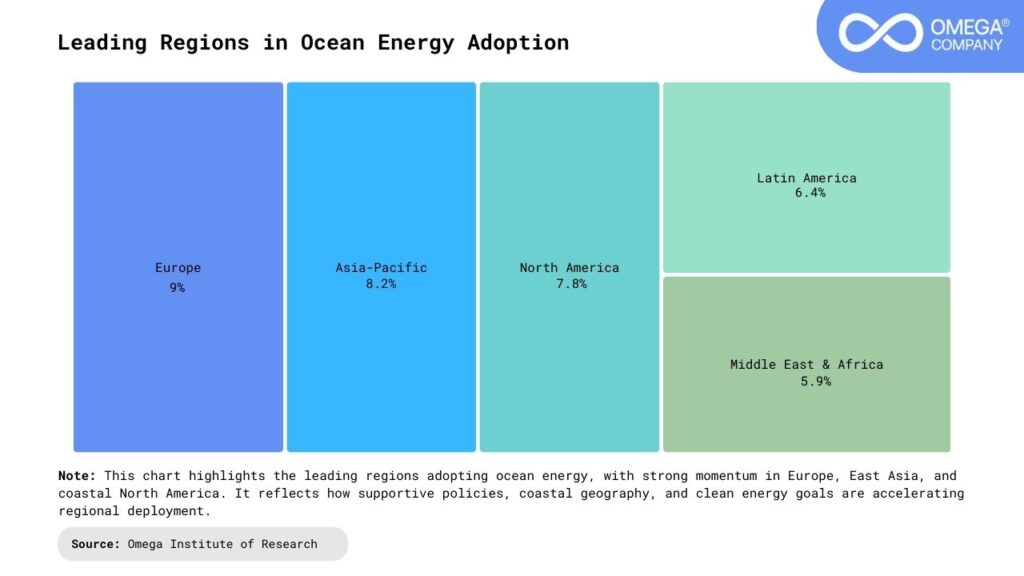
Advancements in materials science, AI-driven monitoring, and offshore engineering are rapidly accelerating the viability of ocean energy, with innovations such as floating platforms, modular turbine systems, and hybrid offshore projects that combine wind, wave, and tidal power already under development. At the same time, governments and private investors are increasingly recognizing the strategic importance of ocean energy for meeting long-term climate goals, strengthening energy security, and diversifying renewable portfolios. With continued technological innovation, falling costs, and supportive regulatory frameworks, wave and tidal power have the potential to supply a meaningful share of global electricity and play a key role in the clean energy transition over the coming decades. As grid integration improves and storage solutions advance, ocean energy can provide reliable baseload support for coastal regions. Ultimately, harnessing the power of waves and tides represents a long-term investment in a more resilient, sustainable, and climate-aligned global energy system.
Conclusion
Ocean energy represents a powerful convergence of nature and technology. By harnessing the constant motion of waves and tides, humanity has the opportunity to unlock a clean, predictable, and virtually inexhaustible energy source. While challenges remain, the promise of ocean energy is clear: a resilient pathway toward sustainable global power, driven by the rhythm of the seas themselves. As innovation continues and deployment expands, ocean energy can complement existing renewables and strengthen energy systems worldwide. Its ability to deliver reliable power positions it as a critical asset in the fight against climate change. In the decades ahead, the oceans may not only connect the world but also help power it. With strategic investment and global collaboration, this potential can be transformed into scalable, real-world impact. Ocean energy stands as a testament to how working with nature can shape a cleaner and more resilient energy future.
- https://www.waterpowermagazine.com/analysis/harnessing-wave-and-tidal-power-a-sustainable-energy-frontier/
- https://tethys.pnnl.gov/publications/harnessing-power-ocean-energy-comprehensive-review-power-generation-technologies
- https://www.energy.gov/eere/water/articles/harnessing-marine-energy-resources-clean-reliable-power
- https://theogm.com/2024/07/02/harnessing-the-power-of-the-oceans-the-future-of-tidal-wave-energy
- https://planetaryhealthfirstmarsnext.substack.com/p/ocean-energy-firms-harnessing-waves
Subscribe
Select topics and stay current with our latest insights
- Functions