

- Industries
Industries
- Functions
Functions
- Insights
Insights
- Careers
Careers
- About Us


Personal Air Mobility Devices: Jetpacks and Flying Suits







Humanity has dreamed of flying as effortlessly as birds not in massive aircraft, but through compact, controllable, and individually operated airborne suits and jetpacks. By 2026, this once-futuristic vision is rapidly becoming a practical and regulated reality, as Personal Air Mobility Devices (PAMDs), including modern jetpacks and flying suits, move beyond laboratories and Hollywood into real-world use. These technologies are emerging as viable tools for specialized transportation, rapid response missions, defense and rescue operations, and recreational aviation, driven by advances in propulsion, materials, and control systems. As regulations evolve and safety standards mature, PAMDs may also lay the foundation for a new chapter in personal and urban air mobility.
What Are Personal Air Mobility Devices?
Personal Air Mobility Devices (PAMDs) refer to compact airborne platforms designed for one-person flight. The most prominent categories include:
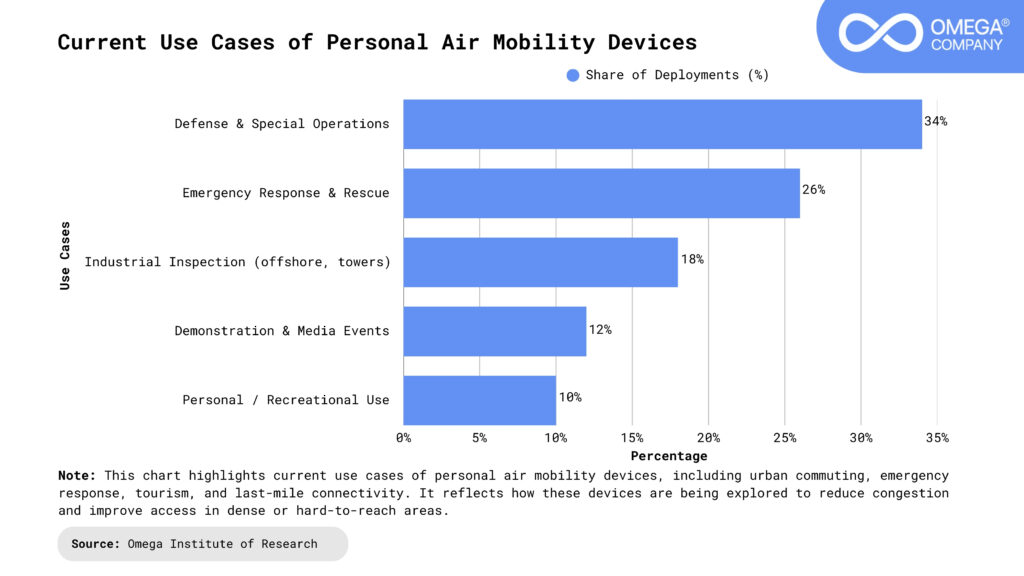
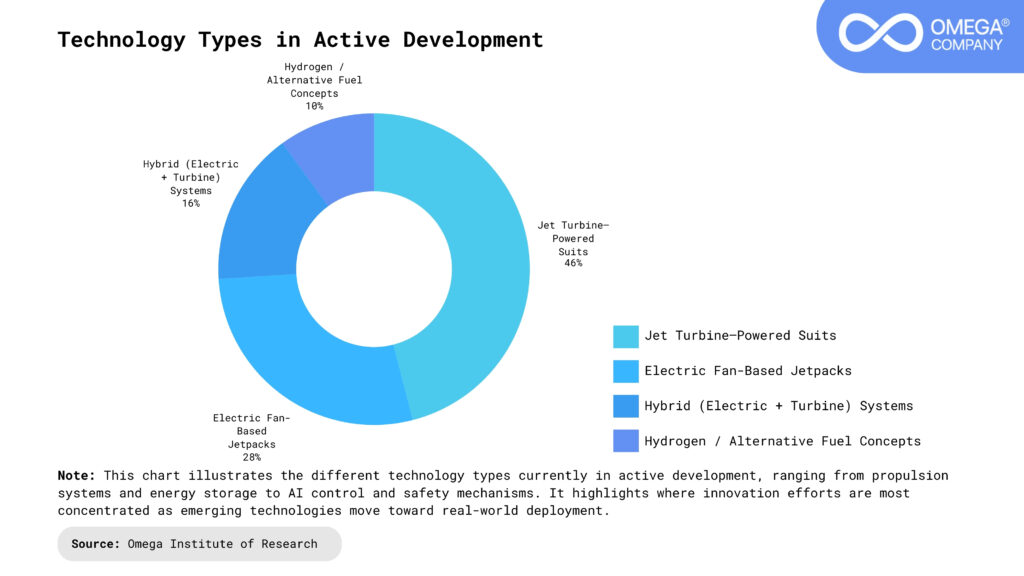
Jetpacks: Propulsion-driven units worn on the back that generate vertical thrust to lift and sustain personal flight. Modern jetpacks use advanced turbine or electric propulsion, offering improved stability, longer flight times, and precise maneuverability for rescue, defense, and demonstration purposes.
Flying Suits: Advanced exosuits or winged suits that combine aerodynamic surfaces with onboard propulsion for sustained, controlled flight. By integrating multiple micro-jets and intelligent control systems, flying suits allow pilots to maneuver with body movement, enabling higher speeds, longer range, and greater flight efficiency.
Hoverboards & Lift Platforms (transitional tech): Devices that float above the ground using ducted fans or magnetic and air-cushion systems, typically with limited elevation and range. While not true free-flight systems, they serve as stepping stones toward full PAMDs, supporting training, short-range mobility, and controlled recreational use.
Current State of Jetpacks and Flying Suits
Mature Prototypes and Early Production Units
Several companies have progressed beyond proof-of-concept and now offer operational units:
Gravity Industries: A pioneer in jet-suit technology, Gravity Industries has refined its designs with increased thrust, improved flight control algorithms, and enhanced safety redundancies. Their jet suits are actively used for demonstration flights, professional training, search-and-rescue simulations, and entertainment events, proving reliability outside laboratory conditions.
Jetpack Aviation: Known for high-thrust jetpacks capable of reaching speeds of 80–120 km/h, with flight durations approaching 10–15 minutes. Ongoing improvements in fuel efficiency, thrust vectoring, and pilot ergonomics are steadily expanding operational range and mission flexibility.
European Emerging Builders: A growing wave of innovators in France, Germany, and the Netherlands is developing hybrid and electric propulsion suits focused on cleaner emissions and quieter operation. These efforts are positioning Europe as a key hub for sustainable personal air mobility and next-generation propulsion research.
Improved Safety Systems
Safety has been the biggest barrier to personal flight. By 2026, significant strides include:
Advanced Stabilization Modules: AI-assisted flight control systems now actively monitor balance, thrust distribution, and environmental factors, reducing pilot workload and compensating for wind gusts or sudden movement. This makes personal flight more accessible to trained users with shorter learning curves.
Redundant Propulsion Circuits: Modern jetpacks and flying suits incorporate multiple independent engines or power units, allowing continued controlled flight even if one component fails. This redundancy dramatically increases survivability during mechanical or fuel-related malfunctions.
Emergency Parachute Systems: Integrated ballistic parachutes can deploy automatically when sudden loss of control, extreme tilt, or critical system failure is detected. These systems act as a last-resort safety layer, especially during high-altitude or high-speed operations.
Geofencing & Smart Restrictions: Software-based geofencing enables devices to limit altitude, reduce thrust, or shut down near restricted airspace such as airports or urban no-fly zones. Combined with real-time GPS and airspace data, this helps prevent collisions and supports regulatory compliance.
Why PAMDs Are Gaining Traction Now
Power-to-Weight Improvements: Breakthroughs in lightweight composites, high-strength alloys, and advanced manufacturing techniques have significantly reduced structural mass while improving durability. At the same time, higher energy-density fuel cells and next-generation batteries enable pilots to carry sufficient thrust and fuel without excessive weight. These gains directly translate into longer flight times, better maneuverability, and safer lift profiles for personal air mobility devices.
AI Flight Assistance: Modern PAMDs increasingly rely on AI-driven flight assistance systems that continuously analyze balance, thrust vectors, body posture, and environmental conditions. Auto balance algorithms and real-time sensor fusion help stabilize flight, automatically correct minor errors, and reduce pilot fatigue. As a result, trained novices can achieve controlled flight with lower risk, shorter training periods, and greater confidence.
Miniaturized Sensors & Connectivity: Advances in compact GNSS modules, altitude and inertial sensors, and high-speed onboard processors have made real-time flight awareness far more precise. Integrated telemetry systems transmit performance data to ground stations or companion devices, improving monitoring and diagnostics. Together, these technologies make personal flight more reliable, predictable, and easier to integrate into regulated airspace frameworks.
Key Challenges Slowing Adoption
Despite impressive technological progress, several limitations continue to slow the widespread adoption of Personal Air Mobility Devices (PAMDs):
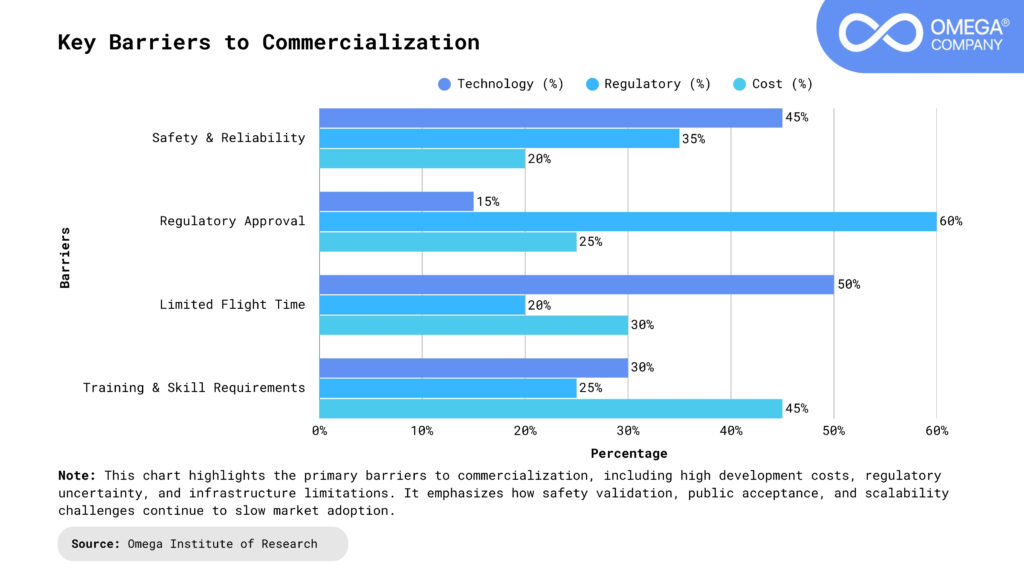
Limited Endurance: Most jetpacks and flying suits still operate for relatively short durations, typically between 10–20 minutes, which restricts their practicality for long-distance travel. This limits their use primarily to demonstrations, emergency response, or short-hop missions rather than everyday transportation. Until energy storage and fuel efficiency improve significantly, endurance will remain a core constraint.
High Cost: PAMDs are extremely expensive, often costing hundreds of thousands of USD or EUR due to advanced materials, precision engineering, and limited production scale. These high costs place them far beyond the reach of individual consumers and restrict adoption to military, research, or elite commercial operators. Broader market penetration will depend on mass manufacturing, supply-chain optimization, and cost reductions in propulsion systems.
Noise and Emissions: Hydrocarbon-based thrust systems generate significant noise and emissions, making them unsuitable for dense urban environments. The high acoustic footprint raises public acceptance issues and regulatory hurdles, especially near residential areas. While electric and hybrid propulsion systems are advancing, current battery energy density still limits flight duration and payload capacity.
Safety & Public Perception: Even with structured training programs and multiple safety layers, personal flight carries inherent risk that can be amplified by high-profile accidents. Public perception remains cautious, with concerns around mid-air failures, pilot error, and urban safety. Building long-term trust will require consistent safety records, transparent regulations, and gradual introduction into controlled airspace.
What’s Emerging: The Next 5 Years
Hybrid Electric Propulsion: Hybrid electric propulsion is expected to become a defining breakthrough for Personal Air Mobility Devices, combining fuel cells with next-generation battery systems. This approach promises longer flight times by optimizing energy usage across multiple power sources while significantly reducing emissions compared to traditional hydrocarbon engines. In parallel, quieter propulsion systems will improve public acceptance and make PAMDs more viable in urban and environmentally sensitive areas. As these technologies mature, hybrid designs may become the default standard for next-generation personal flight.
Urban Air Mobility Integration: PAMDs are likely to gradually integrate into broader Urban Air Mobility (UAM) ecosystems alongside air taxis, vertiports, and managed aerial corridors. Rather than operating independently, personal flight devices could become part of coordinated airspace systems with shared navigation, traffic management, and safety protocols. This integration would allow controlled short-range travel, emergency access, and specialized missions within cities. Over time, such coordination could transform how low-altitude airspace is planned and regulated.
Semi-Autonomous Modes: Future PAMDs are expected to incorporate semi-autonomous flight modes that significantly reduce pilot workload. Pilots may be able to set destinations or predefined routes while onboard AI manages stabilization, obstacle avoidance, and optimal flight paths. These systems could also dynamically respond to weather changes and airspace restrictions in real time. Semi-autonomy would make personal flight more accessible while maintaining human oversight for critical decisions.
Lower Costs via Scaling: As manufacturing processes mature and production volumes increase, the cost of PAMDs is likely to decline steadily. Greater competition, standardized components, and shared propulsion platforms will further drive down prices. This economic shift could open the door to broader commercial use, training centers, and regulated recreational access. Over the next five years, cost reduction may be the key factor that determines whether PAMDs remain niche tools or move toward wider adoption.
Conclusion
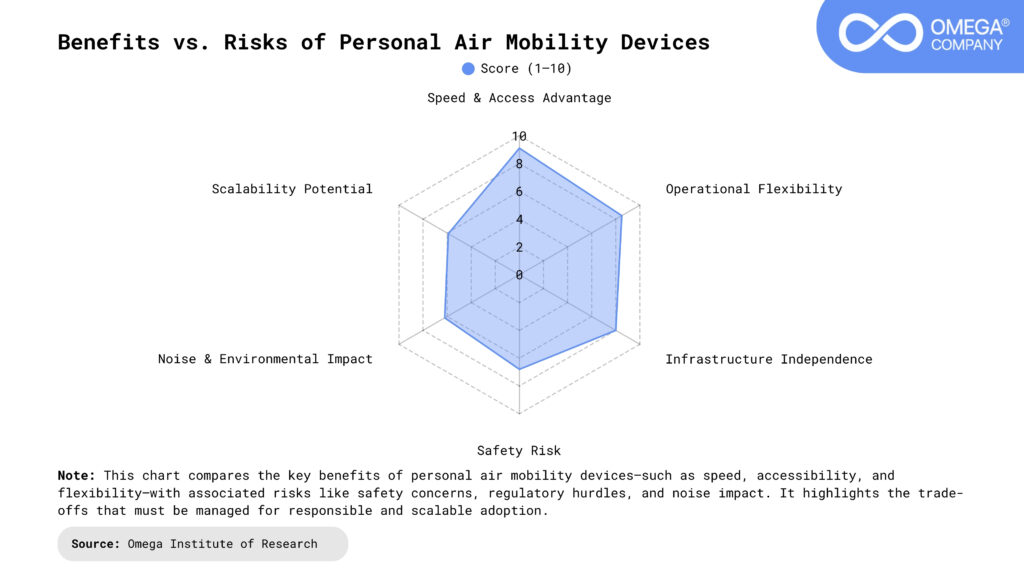
Personal air mobility devices such as jetpacks and flying suits are rapidly evolving from experimental curiosities into purpose-built, regulated tools with clearly defined real-world applications. While they are not yet positioned as mainstream transportation solutions, their technological maturity and fast-paced iteration signal strong momentum. Continued advances in propulsion, safety systems, AI-assisted flight control, and supportive regulatory frameworks suggest that personal flight could play a meaningful supporting role in the broader aerial mobility ecosystem of the 2030s. Whether deployed for emergency response, industrial operations, or as early predecessors of future airborne commuting, jetpacks and flying suits stand as one of the most exciting and transformative frontiers in modern mobility.
- https://www.cnbc.com/2020/12/20/jetpack-suits-and-flying-motorcycles-for-human-flight.html
- https://www.flightglobal.com/flight-international/is-personal-jet-pack-set-for-thrust-into-mass-market/141124.article
- https://ijarcce.com/wp-content/uploads/2023/05/IJARCCE.2023.12580.pdf
- https://www.linkedin.com/pulse/what-flying-jetpacks-uses-how-works-top-companies-2025-pyfwf/
- https://www.aerosociety.com/news/the-fall-and-rise-of-jetpacks/
Subscribe
Select topics and stay current with our latest insights
- Functions