

- Industries
Industries
- Functions
Functions
- Insights
Insights
- Careers
Careers
- About Us

Revolutionizing Supply Chain Efficiency with AI







In an era defined by volatile markets, intricate global networks, and evolving customer demands, the traditional supply chain model faces unprecedented pressures. Residing at the heart of operational efficiency and competitive advantage, the supply chain’s ability to adapt, predict, and optimize is no longer merely a desirable trait but a strategic imperative. This pivotal shift is where Artificial Intelligence (AI) emerges as a transformative force, fundamentally reinventing how organizations manage and enhance their supply chain operations. AI, encompassing advanced analytics, machine learning, and automation, empowers businesses to move beyond reactive decision-making to proactive, intelligent optimization. Unlike conventional, siloed supply chain systems that often struggle with data overload, AI-driven solutions offer dynamic, predictive, and holistic insights, making them an indispensable strategic tool for building resilient, agile, and cost-effective supply chains that thrive amidst complexity and drive comprehensive digital transformation.
What is AI in Supply Chain Optimization?
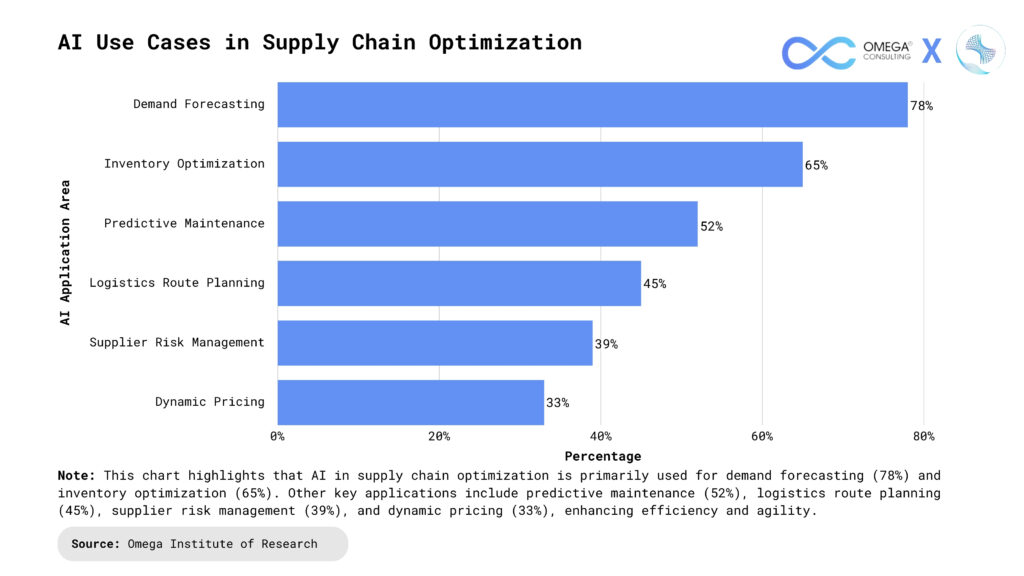
Fundamentally, AI in Supply Chain Optimization refers to the application of advanced artificial intelligence technologies—including machine learning (ML), deep learning, predictive analytics, natural language processing (NLP), and computer vision to enhance every facet of the supply chain lifecycle. Its primary objective is to transform traditional, often reactive, supply chain processes into intelligent, proactive, and self-optimizing systems. By leveraging vast amounts of data from diverse sources (e.g., historical sales, market trends, weather patterns, sensor data, logistics information), AI algorithms can identify patterns, predict future events, automate decisions, and recommend optimal actions, thereby optimizing efficiency, reducing costs, and improving resilience across the entire value chain. Key components and applications that define AI in Supply Chain Optimization include:
Predictive Analytics & Forecasting: AI processes vast data, including historical sales and external factors like market trends, to generate highly accurate demand forecasts. This proactive capability identifies subtle patterns, leading to significantly improved predictions for inventory and resource allocation. It minimizes stockouts and overstocking, directly impacting profitability and customer satisfaction by moving beyond traditional statistical methods.
Intelligent Inventory Management: AI optimizes inventory levels by dynamically adjusting to predicted demand and supply fluctuations. It categorizes inventory based on criticality and cost, recommending optimal reorder points and quantities. This minimizes carrying costs, reduces waste, and ensures product availability without tying up excessive capital, shifting from static rules to adaptive, data-driven strategies.
Optimized Logistics & Transportation: AI algorithms analyze numerous variables, such as routes, traffic, fuel prices, and capacity, to optimize transportation planning. This includes dynamic routing and load consolidation, minimizing shipping costs and transit times. AI also monitors shipments in real-time, predicting delays and suggesting alternatives, enhancing logistics efficiency and reliability.
Autonomous Planning & Decision-Making: Moving beyond human-led planning, AI can automate routine supply chain decisions, like purchase order generation and scheduling adjustments. Through reinforcement learning, AI models learn optimal strategies for various scenarios, making real-time, adaptive decisions that respond to immediate changes in the supply chain without manual intervention, accelerating response times and improving overall agility.
Risk Management & Resilience: AI enhances supply chain resilience by identifying potential risks before they materialize. It analyzes global news, supplier performance, and geopolitical shifts to predict disruptions (e.g., natural disasters, supplier bankruptcies). By assessing risk probability and impact, AI recommends proactive mitigation strategies, enabling organizations to build more robust and disruption-proof supply chains.
Supplier Relationship Management & Sourcing: AI evaluates supplier performance based on criteria like reliability, quality, and cost. It automates supplier selection, identifies potential single points of failure, and predicts future supplier risks. This empowers more strategic sourcing decisions, fostering stronger, more reliable relationships with a high-performing supplier network, optimizing the entire procurement process.
Key Capabilities: Driving Business Outcomes and Digital Transformation
AI in Supply Chain Optimization comes equipped with a rich set of capabilities that deliver advanced predictive insights, robust automation, and profound data analysis, directly translating into tangible business advantages and accelerating digital transformation initiatives:
Advanced Demand Forecasting & Anomaly Detection: AI models produce highly accurate, granular demand forecasts by analyzing vast datasets including sales history, promotions, and external factors like economic indicators or social media sentiment. This dramatically reduces forecast errors, optimizing inventory and minimizing lost sales. AI also detects subtle anomalies, providing early warnings of disruptions or opportunities, enhancing responsiveness.
Real-time Visibility & Control Tower Capabilities: AI integrates data from disparate sources IoT sensors, ERP systems, supplier portals—to create a comprehensive, real-time “control tower” view of the entire supply chain. This unparalleled visibility enables organizations to monitor KPIs, track goods, identify bottlenecks, and react instantaneously to changes, which is foundational for building truly agile and responsive supply chains.
Prescriptive Analytics & Automated Decision-Making: Beyond predicting outcomes, AI leverages prescriptive analytics to recommend optimal actions. If a disruption is predicted, AI suggests alternative suppliers, rerouting options, or production adjustments, complete with cost-benefit analyses. For routine decisions, AI can even automate actions based on learned strategies, significantly accelerating decision cycles and reducing manual effort.
Dynamic Pricing & Promotion Optimization: AI analyzes market demand, competitor pricing, inventory levels, and customer behavior to recommend dynamic pricing strategies and optimize promotional offers in real-time. This ensures products are priced optimally to maximize revenue and clear inventory efficiently, responding swiftly to market elasticity and competitive pressures. This capability directly enhances profitability and market responsiveness.
AI-Powered Warehouse and Logistics Optimization: Within warehouses, AI-driven robotics and automation optimize picking paths, slotting, and inventory placement, significantly increasing throughput and reducing labor costs. For logistics, AI provides dynamic route optimization considering real-time traffic and weather, minimizing fuel consumption and delivery times. It also optimizes load planning, ensuring maximum vehicle utilization for faster fulfillment and lower costs.
Enhanced Risk Sensing and Resilience Planning: AI leverages external data feeds (news, social media, geopolitical analyses) with internal operational data to proactively identify and assess potential supply chain risks from natural disasters to supplier instability. By providing early warnings and probabilistic assessments, AI enables robust contingency plans, diversified sourcing, and pre-emptive buffer stock, building inherently more resilient supply chains.
Strategic Applications Across Industries
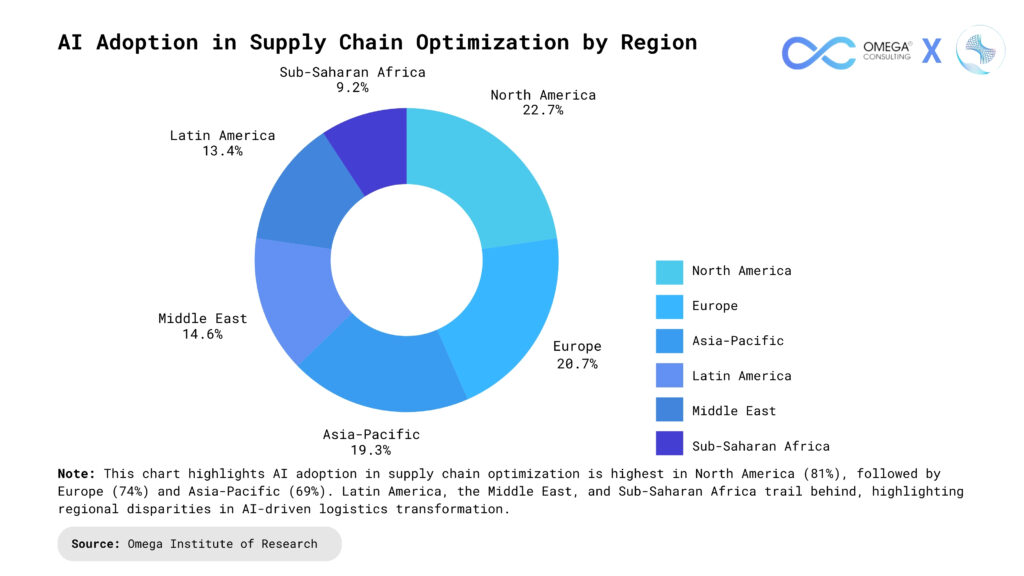
AI in Supply Chain Optimization is fundamentally transforming operational capabilities and strategic positioning across diverse sectors, acting as a powerful catalyst for digital transformation:
Manufacturing: AI optimizes manufacturing by enabling predictive maintenance for machinery, precise production scheduling, and enhanced quality control via computer vision. It facilitates highly accurate raw material forecasting, minimizing waste and optimizing inventory. For complex assembly lines, AI balances workloads and simulates scenarios to maximize throughput and efficiency, leading to significant cost savings and faster time-to-market.
Retail and E-commerce: In this fast-paced sector, AI is critical for hyper-accurate demand forecasting at granular levels, managing omnichannel inventory visibility, and optimizing last-mile delivery routes. It enables dynamic pricing based on real-time data and competitor actions, and facilitates personalized product recommendations, all of which enhance customer experience, reduce stockouts, and improve profitability in a highly competitive market.
Automotive: AI is instrumental in optimizing the complex global automotive supply chain, from managing vast supplier networks to enhancing assembly line efficiency. It enables predictive maintenance for vehicle components, streamlines logistics for just-in-time parts delivery, and improves quality control. AI also optimizes after-sales service parts inventory and distribution, ensuring high customer satisfaction.
Healthcare and Pharmaceuticals: In this regulated industry, AI optimizes the supply chain for medical devices, pharmaceuticals, and critical supplies. It improves demand forecasting for seasonal illnesses, manages cold chain logistics for sensitive medicines, and enhances hospital inventory to prevent shortages. AI also aids in product traceability to combat counterfeiting and ensure regulatory compliance, benefiting patient outcomes.
Food and Beverage: AI addresses unique challenges in the food and beverage supply chain, such as managing perishable goods, seasonal demand, and complex cold chain logistics. It optimizes farm-to-fork traceability, predicts demand to minimize spoilage, and optimizes delivery routes for freshness and efficiency. AI also plays a role in quality assurance and food safety monitoring throughout the distribution network.
High-Tech and Electronics: For industries with short product lifecycles and rapid innovation, AI is crucial for managing component obsolescence, accelerating new product introduction (NPI), and optimizing global sourcing. It helps predict supply shortages for critical components, manages complex global logistics for quick market entry, and optimizes inventory for diverse product portfolios, ensuring agility in dynamic markets.
Benefits: Fueling Business Growth and Resilience
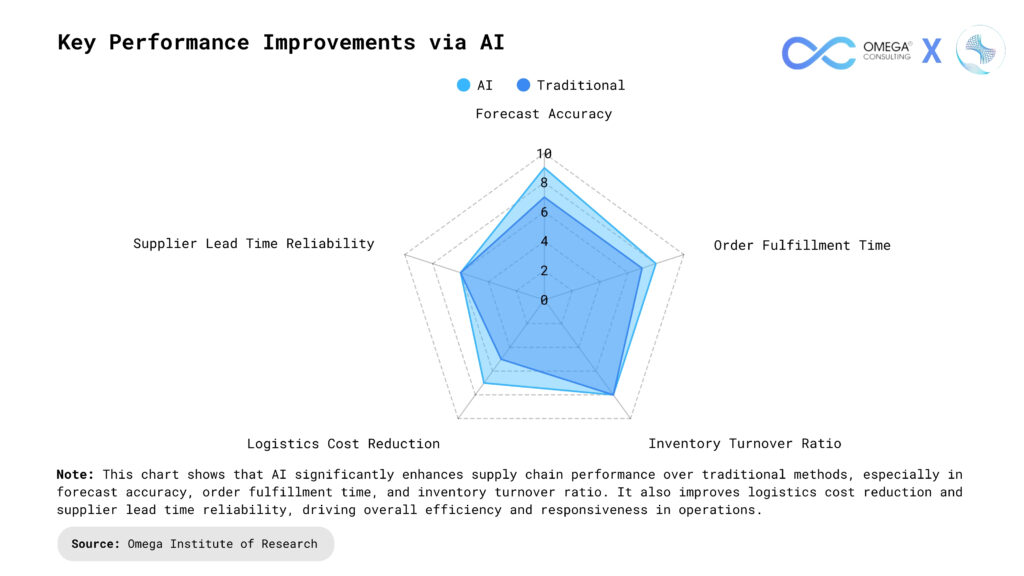
Implementing AI in Supply Chain Optimization delivers a myriad of significant strategic advantages that are crucial for enabling and sustaining modern, competitive businesses, and indeed, for any organization pursuing a robust digital transformation agenda:
Enhanced Operational Efficiency and Cost Reduction: AI automates tasks and optimizes resource allocation (inventory, transportation, labor), identifying inefficiencies across the supply chain. This leads to significant reductions in operational costs, including inventory holding, logistics, and waste. Streamlined processes also translate into faster cycle times and improved throughput, directly impacting the bottom line.
Increased Agility and Responsiveness to Market Changes: By providing real-time visibility, predictive insights, and automated decision-making, AI enables supply chains to react rapidly to sudden shifts in demand, supply disruptions, or market conditions. This agility allows organizations to seize new opportunities, pivot quickly, and maintain a competitive edge in volatile environments, ensuring business continuity.
Improved Forecast Accuracy and Demand-Supply Matching: AI’s superior ability to analyze complex data patterns leads to more precise demand forecasting and better alignment with supply capabilities. This minimizes stockouts (ensuring customer satisfaction and preventing lost sales) while reducing excess inventory (lowering carrying costs), optimizing the delicate balance between supply and demand for maximal efficiency.
Greater Supply Chain Resilience and Risk Mitigation: AI proactively identifies potential risks—from supplier failures and geopolitical events to logistics bottlenecks—before they escalate into major disruptions. By providing early warnings and suggesting mitigation strategies, AI empowers businesses to build more robust, anti-fragile supply chains that can withstand unforeseen challenges and ensure business continuity.
Data-Driven Decision Making and Strategic Insights: AI transforms raw supply chain data into actionable intelligence. By uncovering hidden patterns, correlations, and causal relationships, AI provides decision-makers with deeper insights into performance drivers, potential bottlenecks, and areas for strategic improvement. This enables more informed planning, better resource allocation, and a proactive approach to supply chain management.
Sustainability and Environmental Impact Reduction: By optimizing routes, reducing empty mileage, minimizing waste from overproduction or spoilage, and improving energy efficiency in warehouses, AI contributes significantly to a more sustainable supply chain. This not only aligns with corporate social responsibility goals but can also lead to substantial cost savings through reduced resource consumption and improved resource management.
Key Considerations for AI in Supply Chain Optimization Implementation
While AI in Supply Chain Optimization offers immense strategic benefits, organizations should be aware of certain key considerations during its implementation and ongoing management to ensure optimal outcomes and maximize ROI:
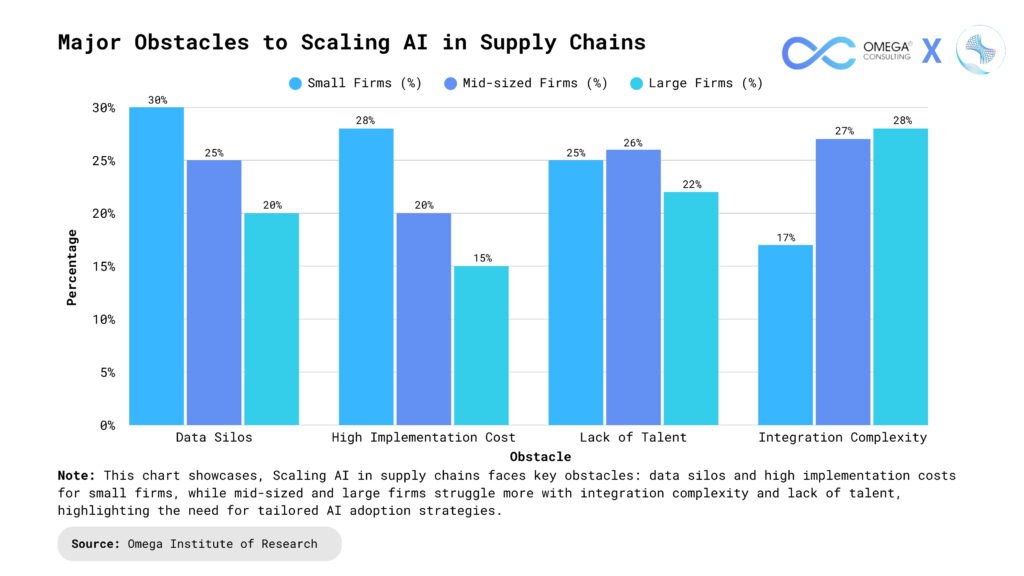
Data Quality, Integration, and Governance: AI models rely heavily on high-quality data. Poor data, fragmented sources across various systems (ERP, WMS), and a lack of clear governance can severely hinder AI’s effectiveness. Significant effort is often required to cleanse, standardize, and integrate data from diverse internal and external sources for reliable AI outputs.
Defining Clear Use Cases and Measurable ROI: Organizations must strategically identify specific, high-impact use cases where AI can deliver clear, quantifiable value. Starting with well-defined problems (e.g., reducing forecast error, decreasing inventory costs) and measurable KPIs is crucial for demonstrating ROI and gaining stakeholder buy-in, ensuring a focused and successful implementation.
Integration with Existing Legacy Systems: Many organizations operate with complex, entrenched legacy systems for ERP, warehousing, and transportation. Integrating new AI platforms with these existing systems can be technically challenging, time-consuming, and costly. This often requires robust API strategies and potentially significant modernization efforts to ensure seamless data flow and operational synergy.
Managing Change and User Adoption: AI-driven automation and predictive insights fundamentally alter existing workflows and decision-making processes. Resistance to change from employees accustomed to traditional methods can be a significant hurdle. Effective change management strategies, clear communication, and comprehensive training are essential to foster user adoption and build trust in AI-powered tools.
Ethical Considerations and Bias: AI models can inadvertently perpetuate biases from their training data, leading to suboptimal or unfair outcomes (e.g., biased route optimization, discriminatory resource allocation). Organizations must establish robust ethical AI guidelines, monitor for bias, and ensure transparency and fairness in AI-driven decisions to maintain trust and responsible innovation.
Scalability and Performance Requirements: As supply chains grow in complexity and volume, the AI models must scale to handle increasing data loads and computational demands while maintaining performance. Ensuring the underlying infrastructure and model architecture can support future growth is a critical technical consideration for long-term viability and consistent operational efficiency.
Conclusion
Artificial Intelligence has unequivocally emerged as an indispensable cornerstone of modern supply chain management and a fundamental enabler for successful digital transformation initiatives. It empowers organizations to transcend traditional limitations, building highly intelligent, agile, and resilient supply chains capable of navigating unprecedented complexity and volatility. By transforming raw data into actionable insights, automating critical decisions, and enabling proactive risk mitigation, AI fundamentally enhances operational efficiency, significantly reduces costs, and delivers a superior customer experience. While its implementation necessitates careful consideration of factors like data quality, talent development, and integration complexities, the transformative strategic benefits—in terms of enhanced agility, improved forecast accuracy, increased resilience, and profound cost efficiencies—make it an absolutely critical component of any forward-thinking digital strategy and enterprise-wide investment roadmap. As global supply chains continue their rapid evolution, AI will remain at the forefront.
- https://throughput.world/blog/ai-in-supply-chain-and-logistics/
- https://www.sap.com/resources/ai-in-supply-chain-management
- https://codewave.com/insights/ai-transform-supply-chains-logistics/
- https://www.gpsi-intl.com/blog/the-role-of-artificial-intelligence-in-supply-chain-optimization/
- https://www.researchgate.net/publication/387972381_AI_IN_SUPPLY_CHAIN_OPTIMIZATION_IMPROVING_EFFICIENCY_THROUGH_MACHINE_LEARNING-_IPE_Journal_of_Management_-UGC_Care_Listed
- https://rtslabs.com/ai-driven-supply-chain-optimization
Subscribe
Select topics and stay current with our latest insights
- Functions