

- Industries
Industries
- Functions
Functions
- Insights
Insights
- Careers
Careers
- About Us

Scaling Beyond $10M/$50M/$100M: The Operational Shifts Required at Each Stage







Scaling a business is rarely a straight path, because the strategies, systems, and structures that help a company reach $1 million in revenue often become ineffective at $10 million, while processes that support $10 million growth may create bottlenecks at $50 million or $100 million. True scaling is not only about increasing sales but also about transforming operations, leadership, technology, talent management, and decision-making frameworks to handle growing complexity. As organizations expand, they face new challenges related to efficiency, customer experience, financial control, employee productivity, and organizational alignment, making operational evolution essential for sustainable growth. Companies that fail to adapt their operational foundations often struggle with rising costs, slower execution, declining customer satisfaction, and internal inefficiencies. To successfully transition from startup to growth-stage and eventually enterprise-level operations, businesses must rethink how teams collaborate, how data and technology support expansion, and how leadership drives strategic execution. This article explores the critical operational shifts required as organizations scale beyond $10 million, $50 million, and $100 million in revenue, highlighting the structural, technological, financial, and cultural transformations needed at each stage of growth.
Understanding Growth Stages in Business Scaling
Each revenue milestone introduces a fundamentally different operating environment:
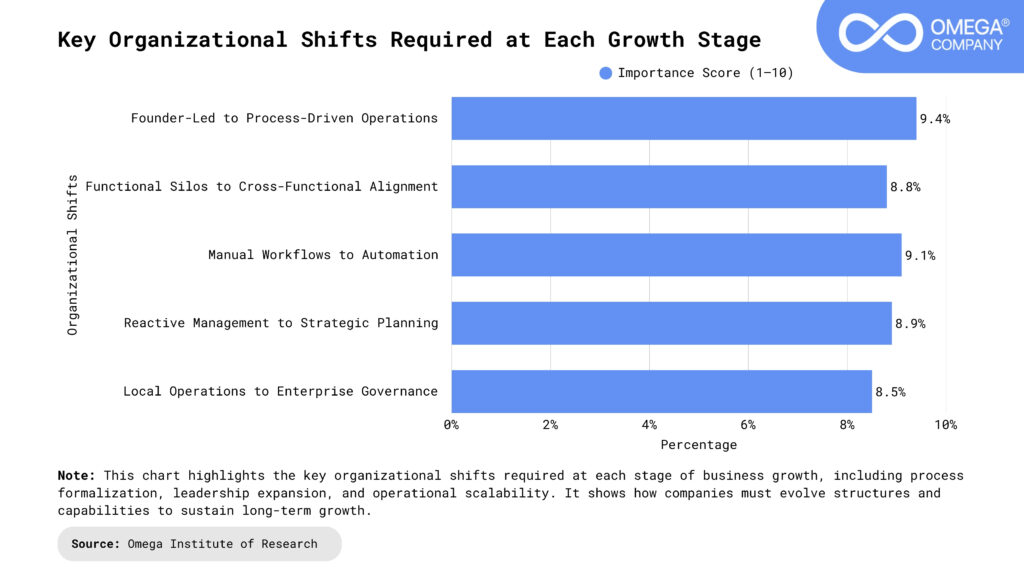
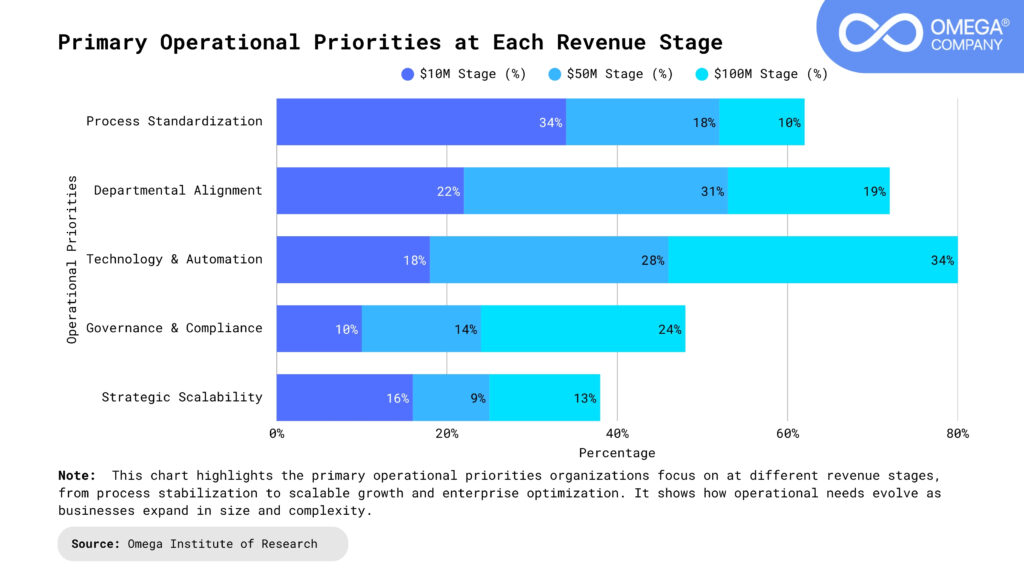
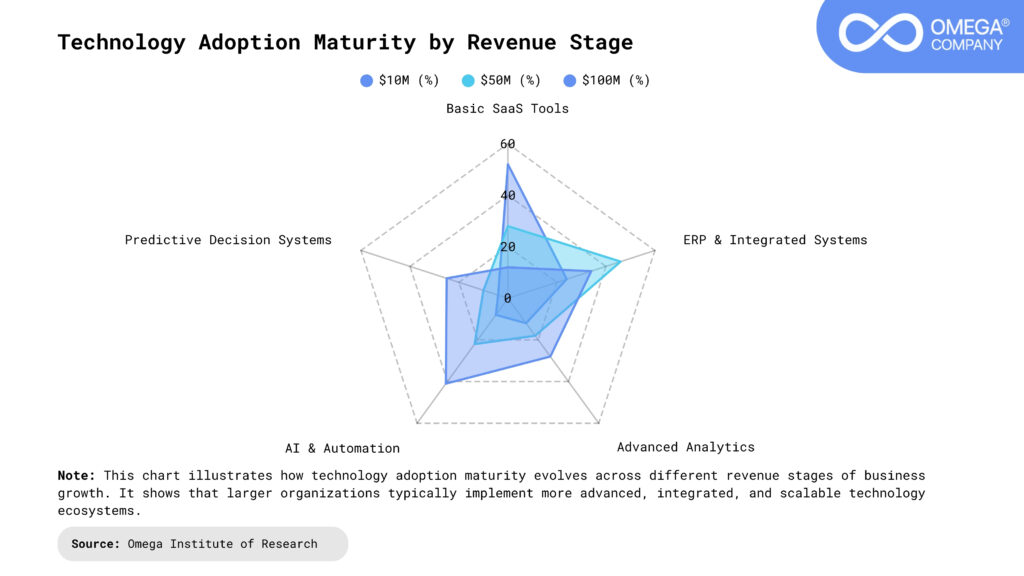
$10M Stage: At the $10M stage, businesses transition from founder-led execution to process-driven operations. Companies begin documenting workflows, creating standard operating procedures, and reducing dependence on founders for daily decision-making. Leadership teams start focusing on building repeatable systems, improving operational consistency, and hiring specialized talent to support sustainable growth and customer satisfaction as the organization expands.
$50M Stage: Reaching the $50M stage requires businesses to build scalable management systems and strengthen departmental alignment. Organizations must improve communication between teams, establish stronger middle-management structures, and create clear accountability across functions. At this level, companies also invest heavily in operational efficiency, performance tracking, and integrated technology platforms to manage increasing complexity, larger workforces, and expanding market demands.
$100M Stage: At the $100M stage, companies begin operating like mature enterprises with advanced governance, automation, and strategic scalability. Leadership focuses on enterprise-wide risk management, process optimization, and automation to maintain efficiency across large-scale operations and multiple business units. Strategic priorities shift toward long-term innovation, global expansion, mergers and acquisitions, and building resilient organizational structures capable of sustaining continuous growth in highly competitive markets.
The Operational Reality of Scaling
Scaling creates both opportunities and risks. Revenue growth increases customer demand, hiring needs, operational complexity, compliance obligations, and technology requirements. Without operational evolution, businesses commonly face:
Fragmented Communication: As organizations grow, communication gaps often emerge between departments, teams, and leadership levels. Information may become siloed, causing delays in decision-making, misunderstandings, and reduced collaboration across the company. Strong internal communication systems and clear reporting structures become essential to maintaining operational alignment and efficiency.
Inconsistent Customer Experiences: Rapid growth can make it difficult to deliver a consistent customer experience across all channels, products, and locations. Differences in service quality, response times, and support processes may reduce customer satisfaction and damage brand reputation. Businesses must implement standardized processes and customer service frameworks to maintain reliability as they scale.
Inefficient Workflows: Scaling companies often struggle with outdated manual processes that no longer support increasing workloads and operational demands. Teams may experience duplicated efforts, approval bottlenecks, and slower execution, reducing overall productivity. Streamlining workflows through automation and process optimization becomes critical for sustaining operational efficiency.
Rising Operational Costs: Growth frequently brings higher expenses related to staffing, infrastructure, software, logistics, and compliance requirements. Without proper financial oversight and operational planning, costs can rise faster than revenue, reducing profitability. Businesses must focus on resource optimization and scalable systems to maintain healthy financial performance during expansion.
Talent Retention Issues: As organizations expand, maintaining company culture and employee engagement becomes more challenging. Employees may experience increased workloads, unclear career paths, or communication disconnects, leading to higher turnover rates. Companies must invest in leadership development, employee well-being, and growth opportunities to retain top talent.
Leadership Overload: Founders and senior executives often become overwhelmed when trying to manage every operational detail during periods of rapid growth. Decision-making slows down, strategic focus weakens, and leadership burnout can occur if responsibilities are not delegated effectively. Building strong leadership teams and empowering managers is essential for sustainable scaling.
Reduced Profitability: Revenue growth does not always translate into stronger profits if operational inefficiencies continue to increase. Poor cost control, inefficient processes, and unmanaged expansion can negatively impact margins and financial stability. Businesses need scalable operational models and performance measurement systems to protect profitability while growing.
Slower Innovation: As companies grow larger, decision-making processes can become more complex and bureaucratic, slowing innovation and adaptability. Teams may focus heavily on daily operations while neglecting experimentation and long-term strategic initiatives. Maintaining an agile culture and encouraging continuous innovation helps businesses remain competitive in evolving markets.
The Role of Technology in Scaling Operations
Automation: Automation helps businesses reduce manual work, eliminate repetitive tasks, and improve operational efficiency across departments. Companies use automation to streamline workflows in finance, customer support, HR, marketing, and supply chain management, allowing teams to focus on higher-value strategic activities. As organizations scale, automation also improves consistency, reduces human error, accelerates execution speed, and supports cost optimization across growing operations.
AI-Driven Decision-Making: Artificial intelligence enables organizations to analyze large volumes of data, identify trends, and make faster, more informed business decisions. AI-powered systems support predictive analytics, customer behavior analysis, demand forecasting, and operational optimization, helping leadership teams improve accuracy and strategic planning. As businesses expand, AI becomes increasingly important for enhancing agility, improving personalization, and driving data-driven innovation across the enterprise.
Cloud Scalability: Cloud infrastructure provides businesses with the flexibility and scalability needed to support rapid operational growth without major hardware limitations. Cloud-based systems allow organizations to expand resources, manage remote teams, improve collaboration, and deploy applications more efficiently across multiple locations. As companies scale, cloud technology also strengthens business continuity, improves accessibility, and reduces the operational burden of maintaining physical infrastructure.
Cybersecurity: As organizations grow and handle larger amounts of customer, financial, and operational data, cybersecurity becomes a critical operational priority. Businesses must invest in advanced security systems, access controls, compliance management, threat monitoring, and employee cybersecurity training to protect sensitive information and reduce operational risk. Strong cybersecurity frameworks help maintain customer trust, support regulatory compliance, and safeguard business continuity in increasingly digital environments.
Enterprise Integration: Growing companies often operate with multiple software platforms and business systems that can become fragmented over time. Enterprise integration connects departments, applications, and data sources into a unified operational ecosystem, improving collaboration, visibility, and decision-making across the organization. Integrated systems reduce duplication, eliminate data silos, and create more efficient workflows that support scalability and operational consistency.
Data Management: Effective data management ensures that organizations can collect, organize, store, and analyze information accurately as operational complexity increases. Businesses rely on strong data governance practices to improve reporting accuracy, maintain compliance, and support strategic planning across departments. As companies scale, centralized and well-structured data systems become essential for operational visibility, customer insights, forecasting, and performance optimization.
Workflow Orchestration: Workflow orchestration helps organizations coordinate complex business processes across teams, systems, and operational functions in a more structured and efficient manner. Businesses use orchestration platforms to automate task sequencing, improve process visibility, and ensure that operations run smoothly across departments and locations. As operational demands increase, workflow orchestration enhances scalability, reduces bottlenecks, and improves the organization’s ability to deliver consistent performance and customer experiences.
Leadership Evolution During Scaling
Leadership requirements change dramatically across growth stages.
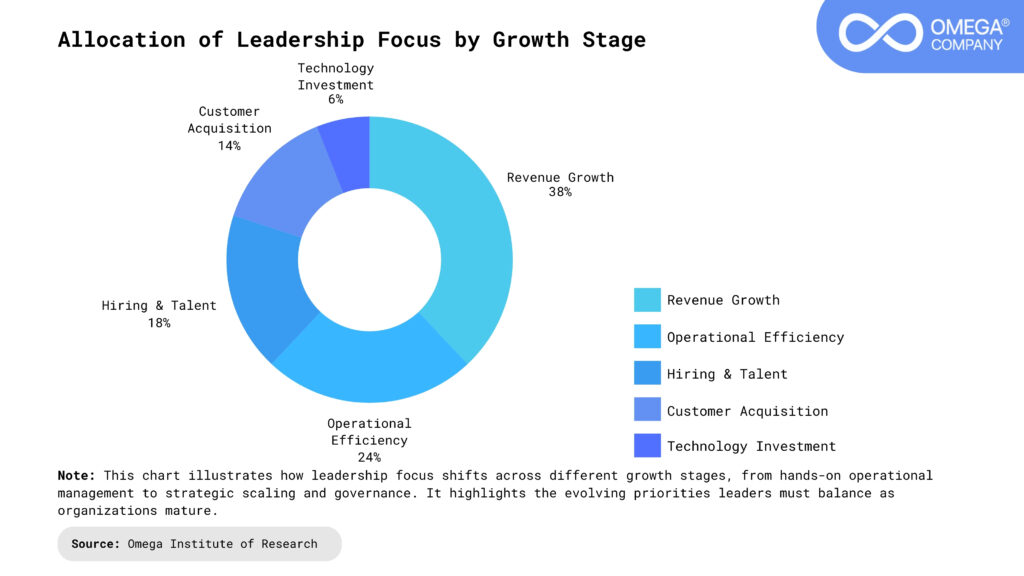
Early Stage Leadership: In the early stages of growth, leadership is typically founder-driven, with decisions made quickly and operations managed through hands-on execution. Communication is often informal, allowing teams to move rapidly and adapt easily to changing business conditions and customer needs. This leadership style supports agility and innovation, but it can become difficult to sustain as operational complexity and team size increase.
Mid-Scale Leadership: As businesses enter the mid-scale stage, leadership priorities shift toward departmental coordination, strategic planning, and process management. Leaders must focus on aligning teams, improving communication across functions, and building systems that support operational consistency and sustainable growth. Team development also becomes increasingly important, requiring managers to strengthen employee performance, accountability, and leadership capabilities throughout the organization.
Enterprise Leadership: At the enterprise stage, leadership becomes more focused on governance oversight, organizational strategy, and long-term scalability. Executives are responsible for managing operational risk, maintaining compliance, driving innovation, and ensuring that the organization remains competitive in complex market environments. Leadership at this level requires a strong emphasis on strategic vision, enterprise-wide coordination, and building resilient systems capable of supporting continuous expansion and transformation.
Common Operational Mistakes During Scaling
Delaying Process Standardization: Many companies scale revenue faster than they scale their operational systems and internal processes. As growth accelerates, the absence of standardized workflows creates execution inconsistencies, operational chaos, employee confusion, and communication gaps across departments. Without clearly documented procedures, businesses often struggle with reduced efficiency, inconsistent customer experiences, slower onboarding, and increased dependency on individual employees to manage critical operations.
Underinvesting in Technology: Outdated systems and disconnected tools eventually limit a company’s ability to scale efficiently and manage increasing operational complexity. Businesses that fail to invest in modern technology often experience reduced visibility, lower productivity, weaker collaboration, and slower decision-making across teams and departments. As organizations grow, integrated platforms, automation tools, and scalable digital infrastructure become essential for improving operational coordination, data accuracy, and long-term business performance.
Hiring Too Late: Waiting too long to hire experienced operational leaders can place significant strain on founders, managers, and existing teams during periods of rapid growth. Without the right leadership structure, decision-making slows down, employee workloads increase, and operational bottlenecks become more difficult to manage effectively. Strong operators should be hired before operational pressure becomes critical so they can build scalable systems, strengthen accountability, and support sustainable organizational growth.
Ignoring Company Culture: Rapid growth can weaken organizational identity if companies fail to intentionally maintain and evolve their internal culture. As employee headcount increases, communication styles, leadership expectations, and workplace values can become inconsistent across teams and locations. Businesses that actively reinforce culture through leadership alignment, employee engagement, clear values, and strong communication are more likely to maintain collaboration, retention, and long-term organizational stability during scaling.
Scaling Without Metrics: Growth without operational visibility creates strategic blind spots that make it difficult for leaders to identify risks, measure performance, and make informed decisions. Companies that lack reliable metrics often struggle with forecasting, resource allocation, profitability management, and operational efficiency as complexity increases. Data-driven management becomes increasingly important at every stage of scaling because accurate reporting and performance tracking help organizations improve agility, optimize operations, and support sustainable long-term growth.
Building a Scalable Operating Model
Successful scaling requires building an operating model that can support long-term business growth, increasing operational complexity, and evolving market demands. A scalable operating model includes clear organizational structures, defined accountability, standardized workflows, integrated technology systems, performance metrics, leadership alignment, and strong operational governance across the enterprise. These elements help businesses improve coordination, reduce inefficiencies, strengthen decision-making, and maintain consistency as teams, customers, and operational demands continue to expand. Companies with scalable operating models are better equipped to adapt to market changes, manage growth effectively, and sustain operational efficiency without sacrificing customer experience or profitability. Strong operational maturity also enables leadership teams to focus on innovation, strategic expansion, and long-term competitive positioning rather than constantly reacting to operational challenges. Scalability is not achieved through revenue growth alone, but through the ability to build resilient systems, disciplined processes, and leadership structures capable of supporting continuous organizational growth over time.
The Future of Operational Scaling
The future of operational scaling is increasingly driven by advanced technologies and digitally connected business environments that enable organizations to grow more efficiently and strategically. Modern scaling now depends heavily on artificial intelligence, automation, predictive analytics, cloud-native infrastructure, remote workforce coordination, and real-time operational visibility to manage increasing complexity and accelerate decision-making. These technologies allow businesses to improve productivity, enhance customer experiences, optimize resource allocation, and respond faster to changing market conditions and operational demands. Future-ready organizations are focusing not only on efficiency but also on building adaptability, resilience, and innovation into their operational models to remain competitive in rapidly evolving industries. Companies that successfully combine scalable systems with organizational agility are better positioned to manage disruption, support continuous growth, and maintain strong performance across global and digital operations. Businesses that can scale operations while preserving innovation, customer focus, and operational flexibility will gain a significant long-term competitive advantage in the future business landscape.
Conclusion
Scaling beyond $10 million, $50 million, and $100 million requires far more than simply increasing revenue, as each stage introduces new operational realities that demand structural, technological, cultural, and leadership transformation. At the $10M stage, businesses must shift from founder-led execution to process-driven operations, while the $50M stage requires stronger organizational alignment, scalable management systems, automation, and cross-functional coordination. Beyond $100M, companies must operate with enterprise-grade governance, advanced analytics, operational excellence, and the ability to scale globally while managing increasing complexity and risk. Organizations that proactively evolve their operations are better positioned to sustain growth, improve efficiency, maintain customer satisfaction, and protect profitability in competitive markets. In contrast, businesses that fail to adapt often encounter operational bottlenecks, leadership strain, declining agility, and rising inefficiencies that slow momentum and increase organizational risk. Ultimately, successful scaling is not just about becoming larger, but about becoming operationally smarter, more resilient, strategically aligned, and fully prepared for long-term sustainable growth.
- https://gowercrowd.com/real-estate-syndication/scale-capital-raising
- https://cfoproanalytics.com/cfo-wiki/fractional-cfo/the-fractional-cfo-guide-to-scaling-from-5m-to-100m/
- https://www.linkedin.com/pulse/strategic-inflection-points-how-ceos-role-changes-each-randy-wootton-ze7ic/
- https://eml.berkeley.edu/~yagan/Capitalists.pdf
Subscribe
Select topics and stay current with our latest insights
- Functions