

- Industries
Industries
- Functions
Functions
- Insights
Insights
- Careers
Careers
- About Us


Self-Healing Robots: Machines That Repair Themselves







Imagine a robot that doesn’t stop working when damaged, a machine that can detect cracks, repair broken components, and continue operating without human intervention. This is no longer science fiction. Self-healing robots represent a transformative leap in robotics, blending artificial intelligence, advanced materials, and autonomous decision-making to create systems capable of repairing themselves. As industries accelerate toward automation, resilience has become just as critical as intelligence, and self-healing robots promise longer lifespans, reduced maintenance costs, and uninterrupted performance. From manufacturing floors and space exploration to healthcare and disaster response, these robots can operate in harsh, unpredictable environments where human repair is difficult or impossible. By minimizing downtime and enhancing reliability, self-healing robotics is redefining how machines interact with the real world and paving the way for truly autonomous systems.
What Are Self-Healing Robots?
Self-healing robots are machines designed to detect damage, diagnose faults, and autonomously restore functionality without external repair, drawing inspiration from biological systems such as human skin healing after injury or bones regenerating after fractures. Their self-healing capabilities can include repairing surface-level damage, reconnecting severed components, reconfiguring internal systems to bypass faults, and even regenerating materials at a molecular or structural level. This allows robots to respond intelligently to wear, accidents, and environmental stress in real time, maintaining operational stability even under continuous use. By minimizing system failures and extending operational life, self-healing robots significantly reduce maintenance costs and downtime. As automation expands across industries, these adaptive machines are becoming essential for operating in remote, hazardous, or mission-critical environments where human intervention is limited or impossible.
How Do Self-Healing Robots Work?
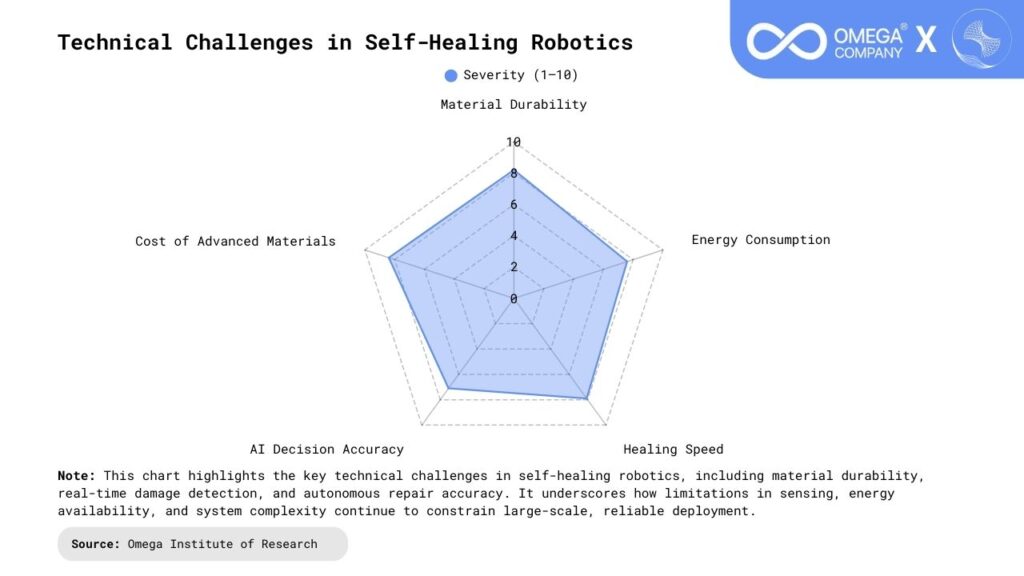
Damage Detection and Sensing: Advanced sensors embedded within the robot continuously monitor stress, pressure, temperature, electrical flow, and structural integrity. When damage occurs such as a tear, crack, or internal malfunction the robot identifies the issue in real time. This constant awareness allows problems to be detected early, often before complete failure occurs. Early detection is critical for maintaining safety, performance, and long-term reliability in complex environments.
AI-Driven Diagnosis: Artificial intelligence analyzes sensor data to determine the severity, type, and precise location of the damage. Machine learning models compare the robot’s current condition with healthy operating patterns to identify abnormalities. Based on this analysis, the AI selects the most effective repair strategy while considering operational priorities. Over time, these systems improve their diagnostic accuracy by learning from past damage and repair outcomes.
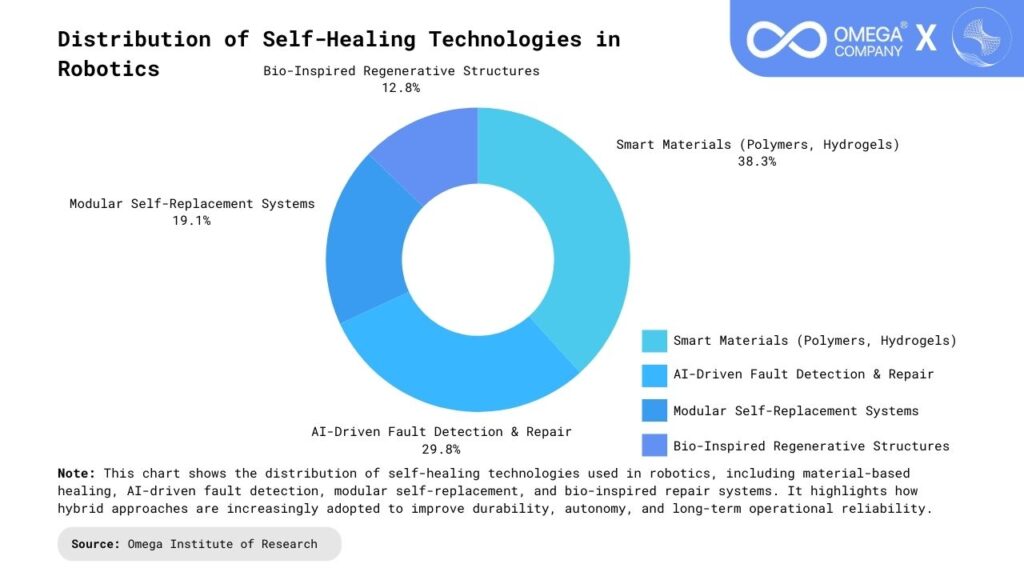
Self-Healing Materials: At the core of self-healing robots are smart materials capable of repairing themselves without external intervention. These materials may re-bond when exposed to heat or pressure, release healing agents from embedded microcapsules to seal cracks, return to their original shape through shape-memory properties, or restore electrical conductivity using specialized gels. Together, these material responses enable the robot to physically and functionally recover from damage. This biomimetic approach allows robots to heal in ways similar to living organisms.
Autonomous Repair Execution: Once the repair method is selected, the robot automatically initiates the healing process by sealing cracks, reconnecting circuits, or reshaping damaged components. In many cases, these repairs occur without shutting down the system, ensuring continuous operation. This autonomy reduces reliance on human maintenance and minimizes costly downtime. As a result, robots can remain functional even in remote, hazardous, or mission-critical environments.
Types of Self-Healing Mechanisms in Robots
Structural Self-Healing: Structural self-healing enables robots to repair physical damage such as cracks, fractures, or punctures in their body, joints, or limbs using regenerative materials. These materials can automatically seal damage, restore strength, and prevent further structural degradation. This capability is especially important for robots operating in harsh environments where physical wear is unavoidable. By maintaining structural integrity, robots can continue functioning safely and efficiently for longer periods.
Electrical Self-Healing: Electrical self-healing focuses on restoring damaged circuits, sensors, or conductive pathways using conductive fluids, self-repairing wiring, or adaptive circuit designs. When a break or short circuit occurs, the system automatically re-establishes electrical connections to ensure uninterrupted signal flow. This prevents system-wide failures caused by minor electrical faults. Continuous electrical integrity is critical for maintaining communication, control, and real-time decision-making in autonomous robots.
Functional Self-Healing: Functional self-healing allows a robot to adapt when certain components cannot be repaired immediately. Instead of shutting down, the robot redistributes tasks, reroutes processes, or relies on redundant systems to maintain performance. This adaptability ensures mission continuity even under partial failure conditions. Over time, the robot may schedule permanent repairs once conditions become favorable, combining resilience with operational intelligence.
Modular Self-Replacement: Modular self-replacement involves robots designed with detachable and interchangeable components. When a module is damaged beyond repair, the robot can isolate, remove, and replace it with a spare or regenerated module autonomously. This approach simplifies maintenance and enables rapid recovery from serious damage. Modular design also supports scalability and upgrades, allowing robots to evolve their capabilities over time.
Real-World Applications of Self-Healing Robots
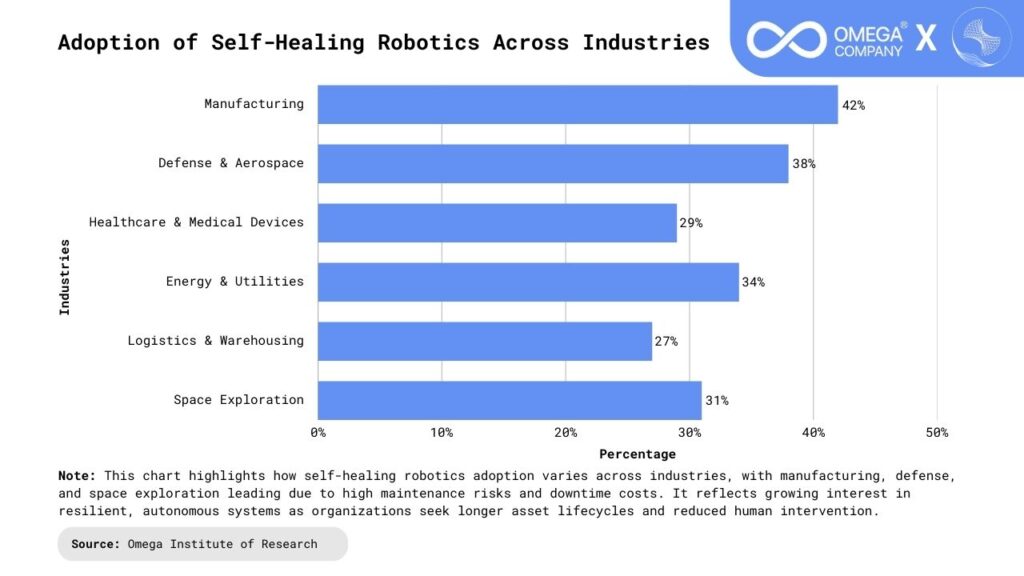
Manufacturing and Industrial Automation: In factories, downtime is costly and directly impacts productivity and revenue. Self-healing robots reduce maintenance interruptions by autonomously repairing wear-and-tear damage during operation. This extends the operational life of robotic systems and lowers maintenance expenses. As a result, production lines become more reliable, efficient, and resilient to unexpected failures.
Space Exploration: Robots operating on Mars, the Moon, or in deep space cannot rely on human intervention for repairs. Self-healing capabilities allow these machines to withstand extreme temperatures, radiation, and mechanical stress. By autonomously repairing damage, robots can continue long-duration missions without interruption. This increases mission success rates and reduces the risk of total system failure in remote environments.
Defense and Disaster Response: In hazardous environments such as battlefields, nuclear sites, or disaster zones, self-healing robots can sustain damage and continue operating. These robots are able to adapt and recover while performing critical tasks like search and rescue, surveillance, and threat detection. Their resilience improves mission reliability and reduces the risk to human responders. This makes them invaluable in high-risk and unpredictable situations.
Healthcare and Soft Robotics: Medical robots, wearable devices, and prosthetics enhanced with self-healing materials improve safety, durability, and long-term reliability. These systems can recover from minor damage caused by continuous use or accidental stress. Self-healing properties also enhance patient comfort by maintaining flexibility and performance. Over time, this leads to improved patient outcomes and reduced replacement costs.
Infrastructure and Inspection: Robots used for inspecting pipelines, bridges, tunnels, and power grids operate in challenging and often inaccessible environments. Self-healing mechanisms allow them to repair minor structural or functional damage on-site. This prevents small defects from escalating into major failures. Additionally, it reduces the need for risky human inspections and lowers overall maintenance costs.
Benefits of Self-Healing Robots
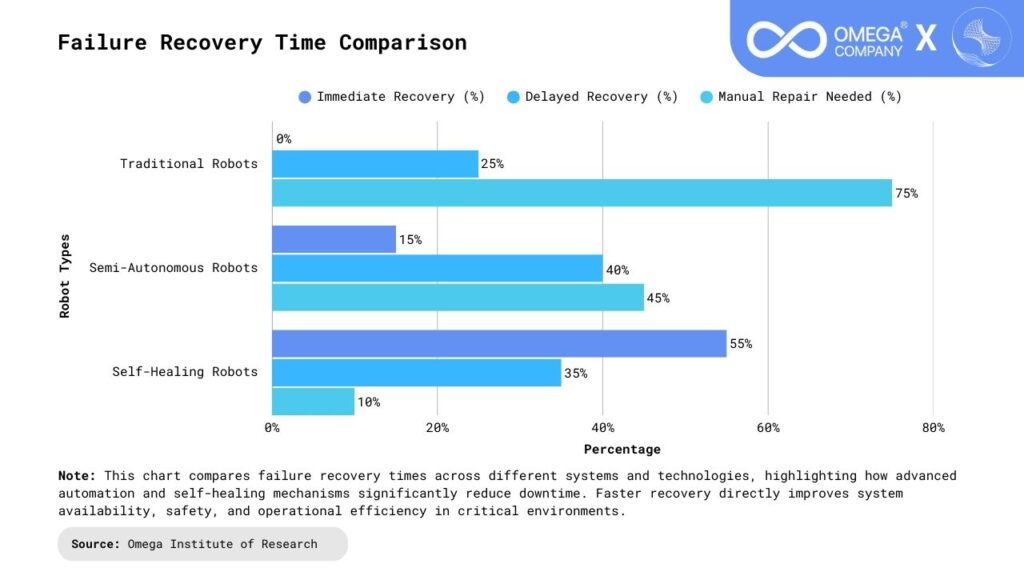
Reduced Maintenance Costs: Self-healing robots significantly lower maintenance expenses by autonomously repairing minor damage without human intervention. This reduces the need for frequent inspections, manual repairs, and replacement parts. Organizations can allocate fewer resources to upkeep while maintaining high system performance. Over time, these cost savings become substantial, especially in large-scale or continuous operations.
Longer Operational Lifespan: By continuously repairing wear, stress fractures, and internal faults, self-healing robots experience less long-term degradation. This ability slows down aging and prevents small issues from escalating into critical failures. As a result, robots remain functional and effective for extended periods. Longer lifespans improve return on investment and reduce the environmental impact of frequent replacements.
Higher Reliability and Resilience: Self-healing capabilities make robots more reliable in unpredictable and demanding environments. Instead of failing abruptly, these systems can adapt, recover, and continue operating under stress. This resilience ensures consistent performance even when components are damaged. High reliability is especially crucial in mission-critical applications where failure is not an option.
Improved Safety in Hazardous Environments: In dangerous settings such as disaster zones, deep-sea exploration, or industrial plants, self-healing robots reduce the need for human presence. Their ability to withstand and recover from damage allows them to operate safely where humans cannot. This minimizes the risk of injury or exposure to hazardous conditions. Enhanced durability also prevents sudden failures that could cause secondary accidents.
Greater Autonomy and Efficiency: Self-healing robots can function independently for long durations without external support. Autonomous repair and adaptation reduce downtime and eliminate the need for constant supervision. This leads to smoother workflows and higher operational efficiency. As autonomy increases, robots become more capable of handling complex, long-term tasks with minimal human involvement.
The Future of Self-Healing Robotics
The future of self-healing robotics points toward fully autonomous and adaptive machines capable of surviving in environments where human repair is impossible. As artificial intelligence continues to advance and materials science evolves, these robots may continuously evolve their structure, learn new repair strategies over time, collaborate with other robots for collective healing, and operate for years without human maintenance. Such systems will be able to anticipate damage before it occurs and optimize their behavior to minimize long-term wear. This shift will enable robots to take on longer, more complex missions with minimal supervision. Ultimately, the convergence of intelligence, autonomy, and resilience could redefine entire industries, from smart factories and critical infrastructure to deep-sea exploration and interplanetary missions.
Conclusion
Self-healing robots mark a pivotal shift in the evolution of machines from tools that break down to systems that can recover, adapt, and endure in ways once thought impossible. By mimicking the regenerative abilities of living organisms, these robots achieve unprecedented levels of autonomy, reliability, and operational efficiency. They can detect damage, repair themselves, and even optimize their functionality over time, reducing downtime and maintenance costs while enhancing performance in challenging environments. As technology continues to advance, self-healing robots will not only repair themselves but also transform how we design, deploy, and interact with intelligent machines, enabling new applications in industries ranging from manufacturing and healthcare to space exploration and disaster response. Ultimately, these resilient systems represent a future where machines are no longer fragile tools but adaptive partners capable of sustaining complex operations with minimal human intervention, fundamentally redefining the role of robotics in a world that demands durability, intelligence, and continuous innovation.
- https://www.asme.org/topics-resources/content/the-rise-of-self-healing-robots
- https://www.nature.com/articles/d41586-024-00597-5
- https://www.automate.org/robotics/blogs/how-self-healing-robots-repair-themselves
- https://www.theguardian.com/technology/2019/aug/07/robot-heal-thyself-scientists-develop-self-repairing-machines
- https://medium.com/@muhammadmananali7/self-repairing-machines-the-future-of-robotics-38382c7693dd
Subscribe
Select topics and stay current with our latest insights
- Functions