

- Industries
Industries
- Functions
Functions
- Insights
Insights
- Careers
Careers
- About Us

Space Debris Cleanup: Technologies Protecting Earth’s Orbit







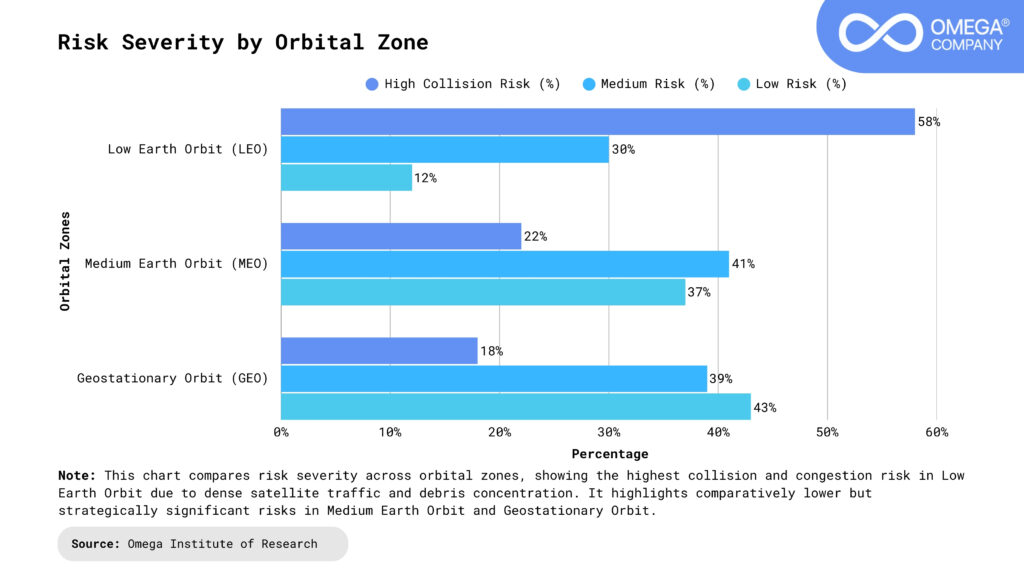
Earth’s orbit is becoming increasingly crowded as satellites support navigation, communication, weather monitoring, and national security systems that modern society depends on every day. Alongside these essential tools, millions of fragments of space debris are circling the planet at extremely high speeds, creating a hidden but serious threat. Even a tiny piece of metal can cause severe damage when traveling faster than a bullet, potentially disabling satellites or endangering crewed missions. Agencies such as NASA and the European Space Agency warn that without intervention, Earth’s orbital environment could become dangerously congested. If this trend continues, future space missions may face higher costs, increased risks, and limited access to key orbital pathways essential for global connectivity and exploration.
Understanding Space Debris
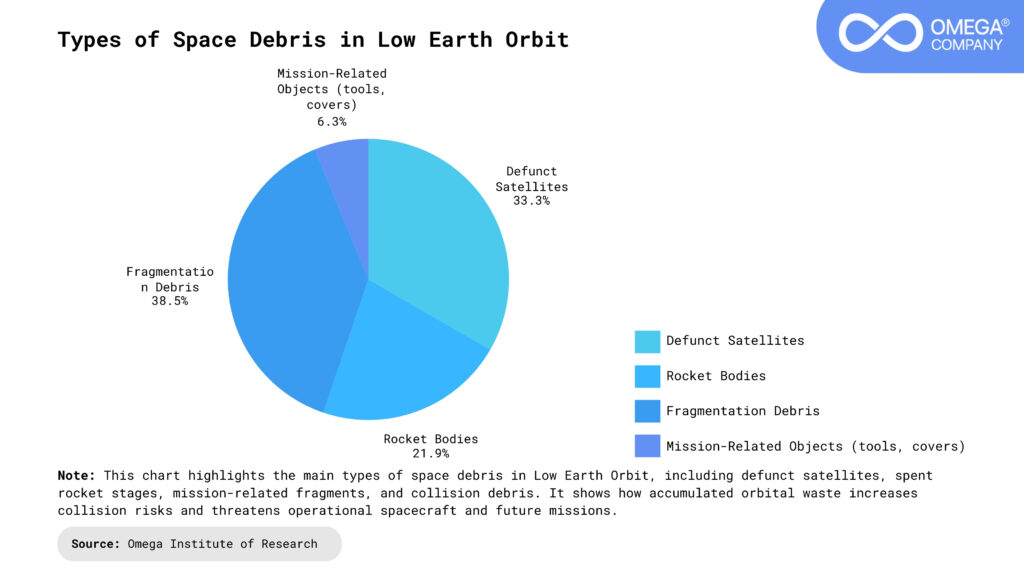
Space debris consists of non-functional satellites, discarded rocket stages, and fragments created by past collisions or explosions in orbit. Some debris pieces are as large as buses, while others are as small as paint flakes. Larger objects can be tracked from Earth using radar and optical systems, but millions of smaller fragments remain undetected and difficult to monitor. Despite their small size, even tiny debris particles can severely damage operational spacecraft due to their extreme velocity, often traveling at speeds exceeding 28,000 kilometers per hour. Over time, the continuous accumulation of these objects increases the risk of chain-reaction collisions, making certain orbital regions more crowded and hazardous for future missions.
Why Space Debris Is Dangerous
Extreme Orbital Speeds: Objects in Earth’s orbit travel at nearly 28,000 kilometers per hour, making even tiny fragments highly destructive. A small piece of debris can damage satellites or spacecraft upon impact. At such speeds, collisions release massive energy comparable to an explosion. Even a paint fleck can puncture protective shielding under these conditions. This extreme velocity leaves little room for error or reaction time during close encounters.
Kessler Syndrome Risk: The cascading collision effect known as Kessler Syndrome was first proposed by Donald J. Kessler. When two objects collide, they create thousands of new fragments. This chain reaction could make certain orbital regions unusable for decades. As debris multiplies, the probability of further collisions increases rapidly. Over time, this self-sustaining cycle could severely limit satellite launches and space exploration missions.
Threat to Operational Missions: Active satellites and human missions constantly face collision risks from floating debris. The International Space Station regularly performs avoidance maneuvers to stay safe. Without monitoring and cleanup, space operations would become increasingly dangerous and costly. Communication, navigation, and weather forecasting systems could also face unexpected disruptions. The safety of astronauts depends heavily on accurate tracking and timely evasive actions.
Robotic Capture Systems
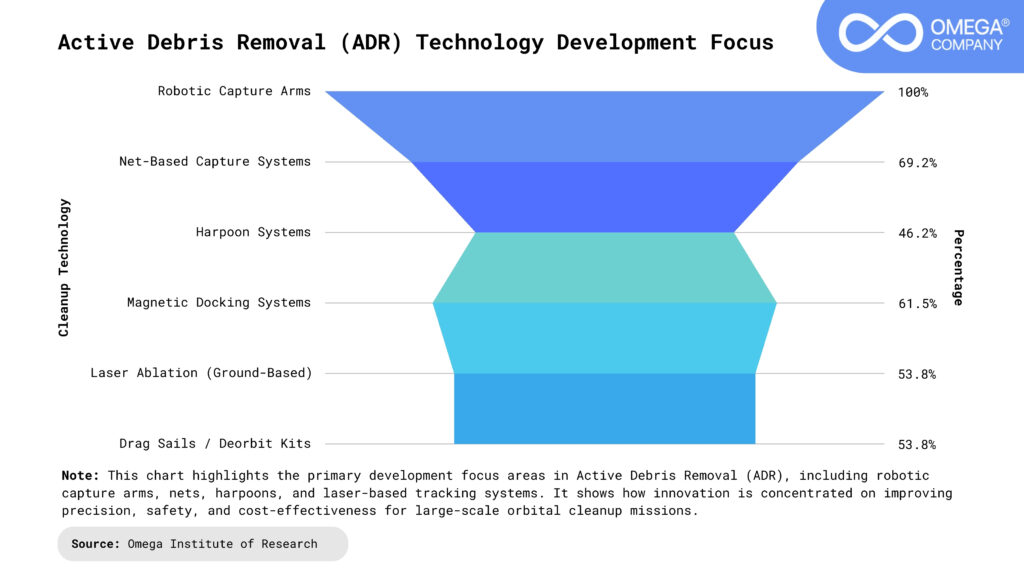
Net and Harpoon Technologies: The Remove DEBRIS mission successfully demonstrated net and harpoon systems in orbit. These tools are designed to capture large debris objects safely. Once secured, the debris can be directed toward Earth’s atmosphere for controlled burn-up. Nets are especially useful for capturing irregularly shaped objects. Harpoons can anchor into solid structures, ensuring a firm grip during deorbiting maneuvers.
Robotic Arms for Precision: Advanced robotic arms can approach and grab non-functional satellites with high accuracy. These systems use sensors and AI-based navigation to minimize collision risks. Precision capture is essential when dealing with fast-moving and unpredictable debris. Robotic arms can adjust their grip based on the debris shape and rotation. This flexibility improves mission success rates and reduces accidental breakage.
Autonomous Navigation Systems: Future cleanup missions rely on autonomous spacecraft capable of independent decision-making. These systems calculate approach angles and timing to ensure safe capture. Automation improves mission efficiency and reduces the need for constant ground control intervention. Real-time data processing allows rapid response to sudden debris movements. Autonomous control also lowers operational costs for long-duration missions.
Magnetic and Docking Mechanisms
Direct Attachment Technology: Magnetic and docking systems allow cleanup spacecraft to attach directly to defunct satellites. Once connected, the servicing vehicle gains control over the debris object. This method ensures stability during orbital adjustments. Secure attachment prevents the debris from tumbling uncontrollably. It also allows smoother propulsion control for safe maneuvering.
Controlled Orbital Descent: After attachment, the debris can be guided into a lower orbit. Atmospheric drag gradually slows the object until it safely burns up. This reduces the risk of uncontrolled re-entry or fragmentation. Engineers can calculate descent paths to avoid populated areas. Controlled deorbiting improves overall safety and regulatory compliance.
Reduced Fragmentation Risk: Unlike explosive or forceful removal methods, docking systems minimize the chance of breaking debris into smaller pieces. A controlled approach ensures safer orbital operations. This method supports long-term sustainability in crowded orbital regions. Preventing additional fragments helps stabilize the space environment. Over time, fewer fragments mean lower tracking and avoidance costs.
Space Tugs and Servicing Vehicles
Extending Satellite Lifespan: Space tugs are designed to refuel, reposition, or repair satellites already in orbit. Instead of abandoning aging satellites, they give them a second life. This approach reduces the number of inactive objects drifting in space. Extending lifespan maximizes the return on investment for satellite operators. It also delays the need for costly replacement launches.
Successful In-Orbit Servicing: Companies like Northrop Grumman have demonstrated successful servicing missions. Their Mission Extension Vehicles dock with satellites and provide propulsion support. These missions prove that orbital maintenance is both feasible and effective. Real-world demonstrations increase confidence in commercial servicing models. They also encourage further innovation in space sustainability technologies.
Preventing Future Debris: By maintaining satellites rather than discarding them, space tugs reduce the creation of new debris. This proactive strategy focuses on prevention rather than cleanup alone. Sustainable servicing models are key to protecting Earth’s orbital environment. Reducing abandoned satellites slows the growth of orbital congestion. Long-term planning ensures safer and more reliable access to space for future generations.
Global Cooperation and Policy Efforts
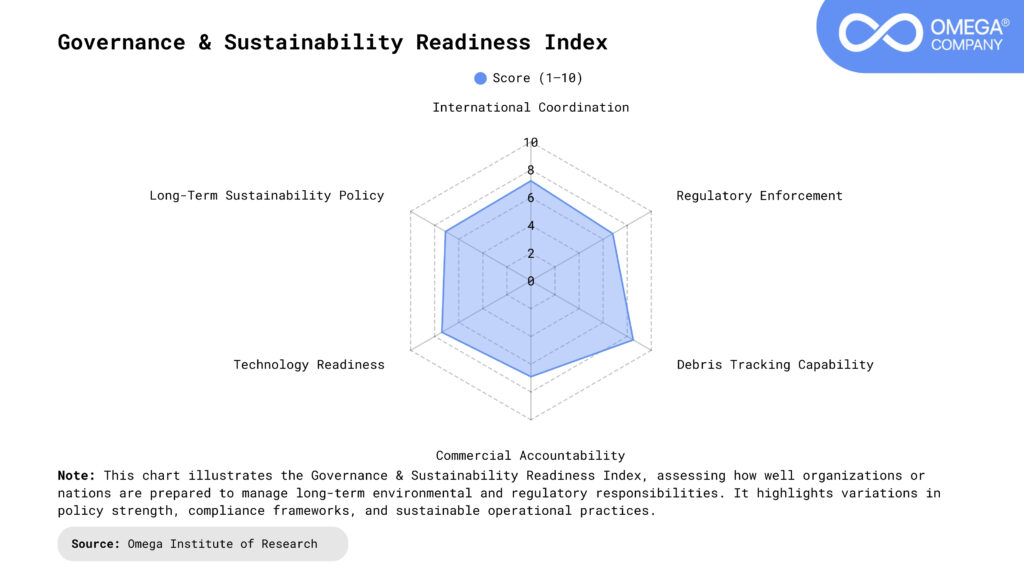
Addressing space debris requires strong global coordination because space activities involve multiple nations and private companies sharing the same orbital environment. Organizations such as the United Nations Office for Outer Space Affairs work to establish international guidelines that promote responsible and sustainable space operations, encouraging transparency, data sharing, and long-term planning. Major agencies including NASA and the European Space Agency support standards for satellite disposal, post-mission deorbiting, and debris mitigation while collaborating on tracking systems that monitor objects and prevent collisions. As commercial space activity continues to expand, stronger international agreements, clearer compliance mechanisms, and shared accountability will be essential to reduce future debris generation and ensure that Earth’s orbital environment remains safe and sustainable for generations to come.
Conclusion
Earth’s orbit is a critical infrastructure zone that supports modern civilization through communication, navigation, weather forecasting, and scientific research, yet it is increasingly threatened by debris accumulation. Technological innovations such as robotic capture systems, laser adjustments, and de-orbit sails offer promising solutions to reduce existing space junk and prevent further congestion. However, long-term sustainability will depend on combining prevention strategies, active removal technologies, responsible satellite design, and strong international cooperation. Protecting Earth’s orbit today ensures that future generations can continue exploring and benefiting from space safely while preserving this shared and valuable environment.
- https://pmc.ncbi.nlm.nih.gov/articles/PMC12106631/
- https://happyeconews.com/space-junk-crisis-how-clean-space-technology-is-protecting-earths-orbital-environment/
- https://ieeexplore.ieee.org/document/9197877
- https://www.sciencedirect.com/science/article/pii/S2666188825004149
- https://link.springer.com/rwe/10.1007/978-3-319-02847-7_75-1
Subscribe
Select topics and stay current with our latest insights
- Functions