

- Industries
Industries
- Functions
Functions
- Insights
Insights
- Careers
Careers
- About Us

Strategic Cloud Adoption & Innovation







Cloud computing has become the backbone of digital transformation. What was once considered a cost-saving alternative to on-premises infrastructure has now emerged as a strategic enabler of growth, innovation, and resilience. Organizations across industries are realizing that the cloud is not just about moving workloads, it’s about reshaping business models, accelerating time-to-market, and driving continuous innovation. It empowers enterprises to stay competitive in a fast-changing marketplace by enabling agility and scalability at every level. With cloud adoption, businesses can harness real-time insights, integrate advanced technologies like AI and IoT, and create customer-centric solutions with greater efficiency. Ultimately, cloud has shifted from being a support function to becoming a cornerstone of enterprise strategy and long-term success.
Evolution of Cloud Adoption
Cloud adoption didn’t happen overnight. It followed a clear progression:
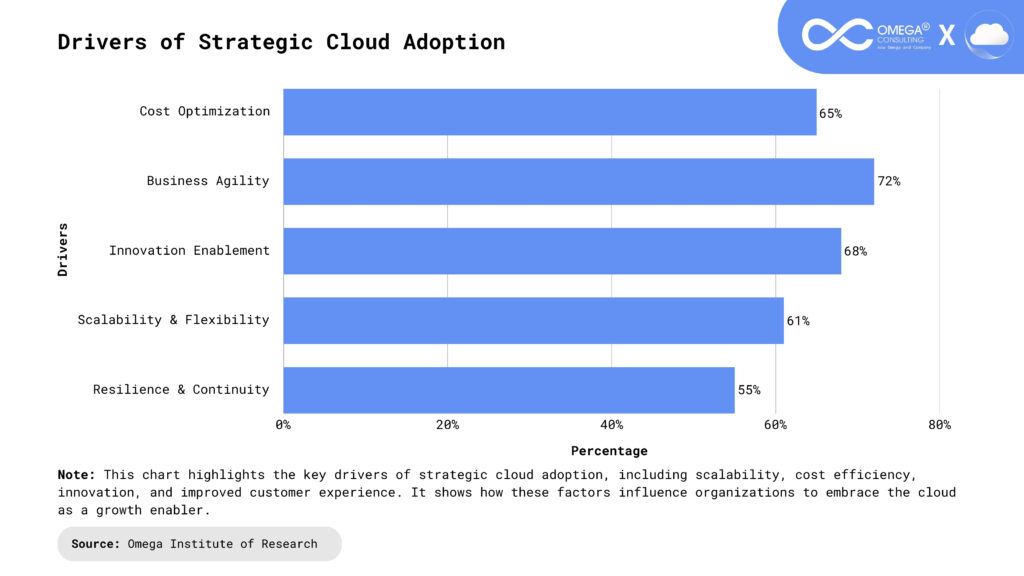
Cost Optimization (Early Adoption Years): In the early stages of cloud adoption (around the 2010s), the driving force was the promise of significantly reducing IT costs. Instead of making heavy capital investments in expensive servers and maintaining complex on-premises data centers, companies began renting computing capacity on demand. This approach, often called the “lift-and-shift” model, involved moving applications to the cloud with minimal changes or restructuring. It provided organizations with immediate financial relief, lowered entry barriers for smaller players, and enabled predictable budgeting through subscription-based pricing. For many businesses, this was the first step toward modernizing IT, even if the cloud was still seen more as a cost-saving utility than a platform for innovation.
Efficiency and Scalability: As cloud adoption matured, organizations began to realize that its true value extended far beyond cost savings. The cloud delivered scalability, reliability, and global accessibility, allowing businesses to operate with a level of flexibility that traditional infrastructure could not provide. Enterprises increasingly turned to cloud-based disaster recovery solutions to safeguard critical data and ensure business continuity during unexpected outages or system failures. Scalability, in particular, proved to be a game-changer, enabling companies to handle massive seasonal surges such as Black Friday or holiday sales without the need for costly, permanent hardware investments. This shift also empowered startups to scale at the same pace as larger enterprises, creating a more level competitive landscape. Ultimately, the cloud evolved into a platform that supported both resilience and rapid growth, laying the groundwork for the next wave of innovation.
Cloud-First to Cloud-Smart: As cloud adoption entered its next stage, the focus shifted from a “cloud-first” mentality migrating everything possible to a more strategic “cloud-smart” approach. Organizations realized that true value came from aligning the right workloads with the right environments. This shift emphasized cloud-native development models like microservices, containers, and serverless computing, which delivered agility and faster innovation. Businesses also leveraged advanced analytics and AI to transform data into real-time insights and personalized customer experiences. For compliance-heavy industries such as healthcare and finance, tailored cloud solutions ensured security without limiting flexibility. Ultimately, the cloud evolved from an operational utility into a strategic enabler of digital transformation and long-term competitiveness.
Strategic Cloud Adoption Framework
Strategic adoption requires a structured approach. A framework helps organizations align technology with long-term goals.
Assessment & Vision Setting: The foundation of a strategic cloud journey begins with assessing the current IT landscape to identify which systems are cloud-ready and which require transformation. At this stage, organizations must define clear business outcomes such as accelerating innovation, improving customer experience, or reducing operational costs. By aligning cloud adoption with corporate vision, companies can ensure that technology investments directly support long-term goals.
Roadmap Development: A successful cloud transformation requires a carefully phased roadmap rather than a one-time migration. Enterprises often begin with quick wins, such as moving non-critical applications to the cloud, before tackling complex core systems that demand modernization. Over time, the ultimate objective is to transition toward building cloud-native solutions, creating a balanced approach that reduces risk while steadily unlocking value.
Governance & Compliance: Without strong governance, cloud adoption can quickly lead to rising costs, shadow IT, and security vulnerabilities. Effective governance establishes clear roles and responsibilities, defines policies for financial oversight, and ensures adherence to regulatory frameworks like GDPR or HIPAA. This disciplined approach provides guardrails that protect sensitive data, control expenses, and maintain trust in highly regulated industries.
Execution & Optimization: Execution strategies vary depending on business priorities, ranging from simple “lift and shift” migrations to re-platforming with minor optimizations or fully refactoring applications into cloud-native architectures. Post-migration, organizations need to adopt FinOps practices to monitor spending, optimize resource usage, and align costs with measurable business outcomes. This continuous cycle of improvement ensures that cloud investments remain efficient and impactful.
Innovation & Transformation: Once a stable foundation is established, the cloud becomes a springboard for innovation and long-term growth. Organizations can leverage advanced technologies such as AI, IoT, blockchain, and real-time analytics to reimagine processes, launch new services, and create disruptive business models. This stage transforms the cloud from a cost-saving tool into a powerful driver of digital reinvention and competitive advantage.
Core Pillars of Strategic Cloud Adoption
To succeed, organizations should build on six pillars:
Business Alignment: Cloud adoption is not just an IT initiative it is a business-driven strategy that must align with organizational goals. Every step of the journey should directly support outcomes such as revenue growth, improved customer satisfaction, and enhanced operational efficiency. When business alignment is prioritized, cloud becomes a catalyst for measurable value rather than just a technological upgrade.
Security & Trust: As cyber threats escalate, building trust in the cloud is as critical as leveraging its functionality. Organizations must adopt zero-trust security models, encrypt sensitive data both at rest and in transit, and continuously monitor for vulnerabilities. By embedding security into every layer of cloud adoption, companies create a safe environment that fosters confidence among customers and stakeholders.
Cloud-Native Development: Enterprises gain the greatest advantage not by lifting old applications into the cloud, but by designing new systems natively for it. Cloud-native approaches such as microservices, containers, and serverless computing bring agility, scalability, and efficiency. This evolution allows organizations to innovate faster and adapt quickly to changing market demands.
Data & AI Integration: Data has become the lifeblood of modern enterprises, and the cloud acts as the refinery where its full potential is unlocked. Centralized data platforms enable real-time analytics, predictive dashboards, and large-scale deployment of machine learning models. By integrating AI into cloud strategies, organizations transform raw information into powerful insights that fuel smarter decision-making.
Financial Discipline (FinOps): While the cloud provides flexibility, it also introduces financial complexity that must be carefully managed. FinOps practices bring accountability by monitoring usage, optimizing costs, and ensuring every investment is tied to business value. With disciplined financial governance, organizations can avoid waste and achieve long-term sustainability in their cloud operations.
Culture & Skills: No cloud strategy succeeds without preparing people for change. Employees must be reskilled in areas such as DevOps, cloud security, and data analytics, while leaders must understand the broader business impact of cloud technologies. A culture of innovation and continuous learning ensures that cloud adoption delivers not only technical progress but organizational transformation.
Key Models of Cloud Adoption
Cloud is not “one size fits all.” Enterprises choose models based on needs:
Public Cloud: The public cloud is the most widely adopted model, offering unmatched flexibility, scalability, and global reach through providers like AWS, Azure, and Google Cloud. It allows businesses to rapidly scale resources up or down without large upfront costs, making it ideal for startups and enterprises alike. Public cloud also accelerates innovation by giving access to advanced tools such as AI, machine learning, and big data analytics on demand.
Private Cloud: Private cloud environments are dedicated solely to a single organization, delivering greater control, customization, and enhanced security. They are often preferred by industries handling highly sensitive data, such as banking, defense, and healthcare, where compliance and privacy are paramount. Though more expensive than public options, private clouds ensure maximum governance and peace of mind.
Hybrid Cloud: Hybrid cloud blends the strengths of on-premises infrastructure with the agility of the public cloud, offering a balance between control and scalability. This model allows organizations to keep sensitive workloads in-house while moving less critical applications to the cloud for cost savings and efficiency. It is particularly valuable for businesses seeking flexibility while managing strict data residency or compliance requirements.
Multi-Cloud: Multi-cloud strategies leverage services from multiple cloud providers, helping organizations avoid vendor lock-in and reducing operational risk. By diversifying their providers, businesses can optimize workloads based on performance, cost, or regional availability. This approach also strengthens resilience, ensuring operations remain unaffected if one provider experiences downtime.
Industry-Specific Clouds: Industry clouds are tailored to meet the compliance, security, and operational demands of highly regulated sectors like healthcare, government, and finance. These specialized platforms come preconfigured with tools and standards that address unique industry challenges, reducing complexity for organizations. By combining domain expertise with cloud innovation, they enable faster adoption while ensuring regulatory alignment.
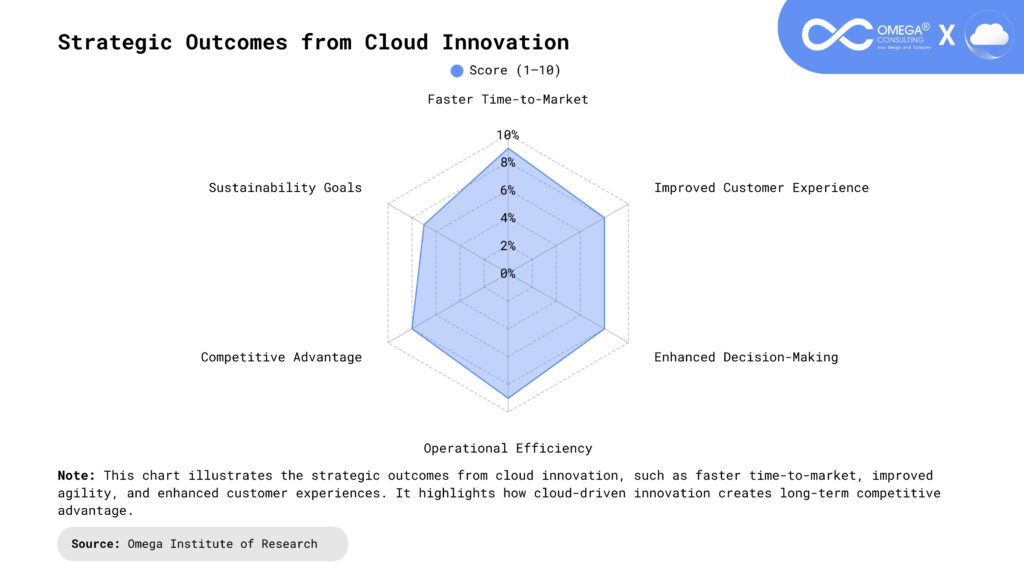
Innovation Enabled by Cloud
Cloud drives new possibilities across industries:
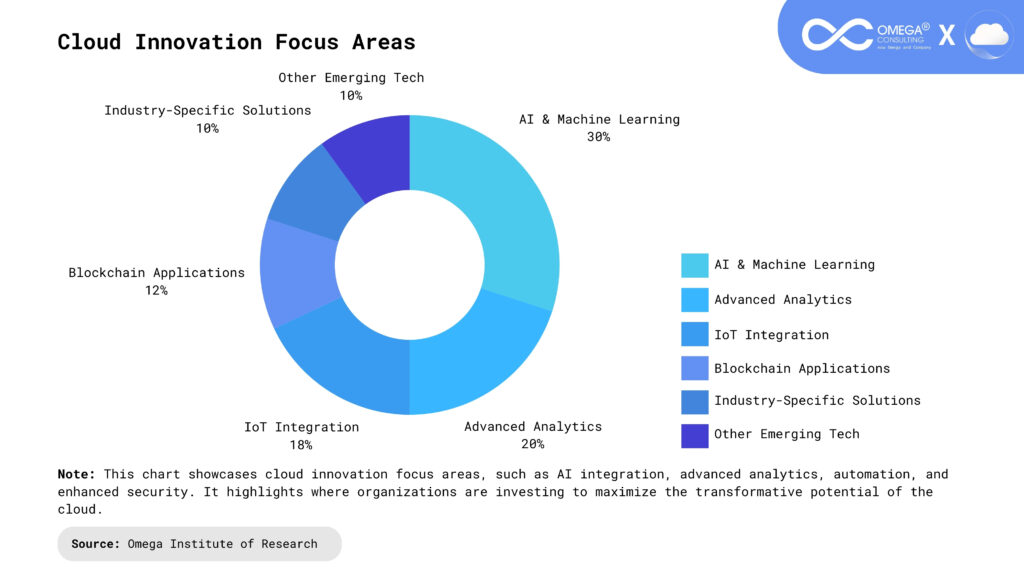
AI & ML: Artificial intelligence and machine learning thrive in the cloud, where massive processing power and scalable storage make advanced use cases possible. From fraud detection in banking to predictive maintenance in manufacturing and personalized medicine in healthcare, AI-driven insights transform industries. The cloud ensures these capabilities are accessible at scale, reducing barriers to adoption for organizations of all sizes.
IoT: The Internet of Things depends on cloud platforms to collect, process, and analyze data from billions of connected devices. Applications such as smart homes, smart factories, and remote healthcare monitoring become possible because the cloud provides centralized intelligence and seamless connectivity. By integrating IoT with cloud services, businesses unlock real-time visibility and efficiency across operations.
Edge Computing: Edge computing brings processing power closer to the source of data, reducing latency and enabling real-time decision-making. This model is critical for innovations such as autonomous vehicles, robotics, and augmented reality, where delays of even milliseconds can be costly. When combined with the cloud, edge computing delivers both localized speed and centralized intelligence, creating powerful hybrid ecosystems.
Blockchain + Cloud: Blockchain integrated with cloud services creates secure, transparent, and scalable digital ecosystems. Enterprises use this combination to build tamper-proof supply chains, safeguard digital identities, and enable trustworthy financial transactions. By leveraging the cloud’s elasticity, organizations can scale blockchain applications quickly without being constrained by infrastructure limitations.
Green Cloud: Sustainability has become a priority, and the “green cloud” leverages renewable energy and optimized infrastructure to reduce environmental impact. Cloud providers are increasingly investing in carbon-neutral data centers, helping organizations meet both operational needs and environmental goals. By adopting green cloud strategies, businesses achieve digital growth while contributing to global sustainability efforts.
Common Challenges in Cloud Adoption
Adoption comes with hurdles:
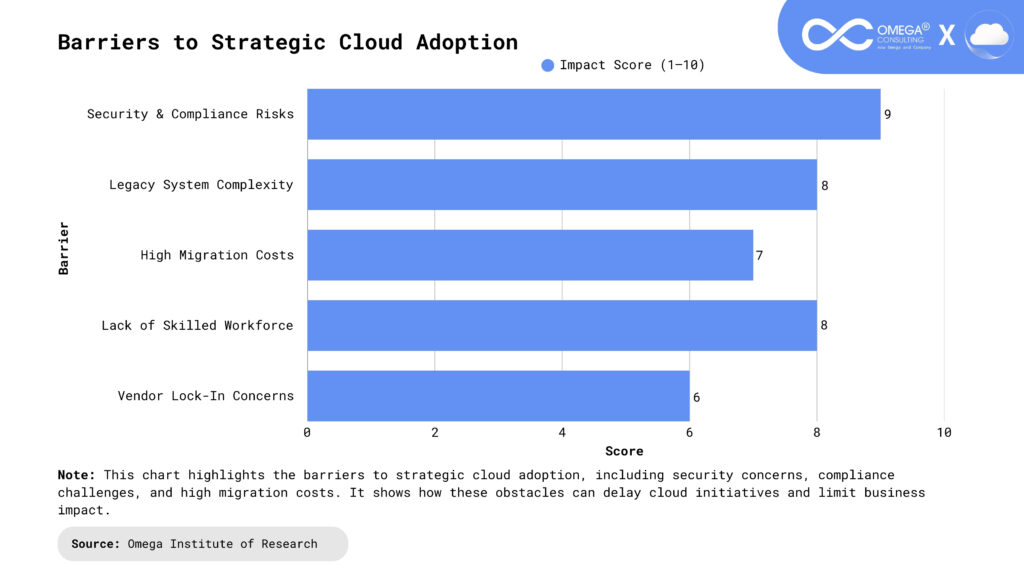
Vendor Lock-In: One of the biggest challenges in cloud adoption is vendor lock-in, where reliance on proprietary services makes switching providers costly and complex. Organizations often struggle to migrate workloads due to compatibility issues, unique APIs, or data transfer limitations. This dependency can reduce flexibility and hinder long-term innovation if not managed carefully.
Security Risks: While cloud providers offer robust security, misconfigurations and poor governance can still expose critical data. Risks such as unsecured databases, weak identity management, or insufficient monitoring often lead to breaches. To mitigate these, enterprises must adopt shared-responsibility models, ensuring security practices are as strong internally as they are at the provider’s end.
Legacy Dependencies: Older applications built for traditional infrastructure often face compatibility issues when moved to the cloud. These legacy systems may require significant refactoring or modernization to function properly in new environments. Without addressing these dependencies, organizations risk slower adoption and higher costs.
Change Resistance: Cloud adoption is as much about people as it is about technology, and employee resistance can slow progress. Staff may be hesitant to embrace new workflows, tools, or cultural shifts that cloud introduces. Overcoming this challenge requires strong leadership, training programs, and a mindset of continuous learning.
Industry Use Cases
Healthcare: The healthcare sector leverages cloud for secure telemedicine, AI-assisted diagnostics, and efficient electronic health record (EHR) management. Cloud enables real-time collaboration among doctors, faster access to patient data, and predictive analytics for better outcomes. This creates a more connected and patient-centered healthcare ecosystem.
Finance: Financial institutions use the cloud to strengthen fraud detection, streamline compliance reporting, and deliver faster digital banking services. Real-time analytics help identify anomalies in transactions, reducing risks while enhancing trust. Cloud adoption also provides agility to adapt to evolving regulatory demands.
Retail: Retailers rely on the cloud to create personalized shopping experiences, enhance supply chain visibility, and manage seasonal demand spikes. By analyzing customer data in real time, businesses can recommend products, optimize inventory, and predict buying trends. This data-driven approach strengthens customer loyalty and improves efficiency.
Manufacturing: Manufacturers use IoT-powered cloud platforms for predictive maintenance, reducing downtime and improving efficiency. Connected devices monitor equipment performance, sending real-time data to the cloud for analysis. This not only minimizes costly failures but also supports smarter production planning.
Education: Cloud technology powers remote learning platforms, enabling students and teachers to connect anytime, anywhere. Scalable infrastructure ensures uninterrupted classes during peak usage, while advanced analytics help personalize learning paths. The cloud has become the foundation of modern, accessible, and inclusive education.
Measuring Success in Cloud Adoption
Cloud success must be measured beyond cost:
Business KPIs: The true measure of cloud success lies in how it impacts core business outcomes. Metrics such as revenue growth, improved customer engagement, and faster innovation cycles demonstrate whether cloud adoption is driving competitive advantage. Organizations that track these KPIs can better link technology to strategic goals.
Operational KPIs: Operational performance is another critical measure, focusing on downtime, application availability, and system responsiveness. The cloud should enhance resilience and ensure smooth day-to-day functioning across all services. Strong operational KPIs indicate that the transition has delivered reliability and scalability.
Financial KPIs: Cost efficiency remains central, but it goes beyond just reducing IT expenses. Financial metrics such as ROI, cost per transaction, and budget adherence highlight whether cloud investments are delivering long-term value. Effective financial monitoring ensures spending aligns with business growth.
Innovation KPIs: Innovation-focused KPIs track how well the cloud accelerates new product development and time-to-market. The number of digital products launched or the speed of introducing new features provides insight into innovation capacity. Strong results in this area confirm the cloud’s role as a driver of transformation.
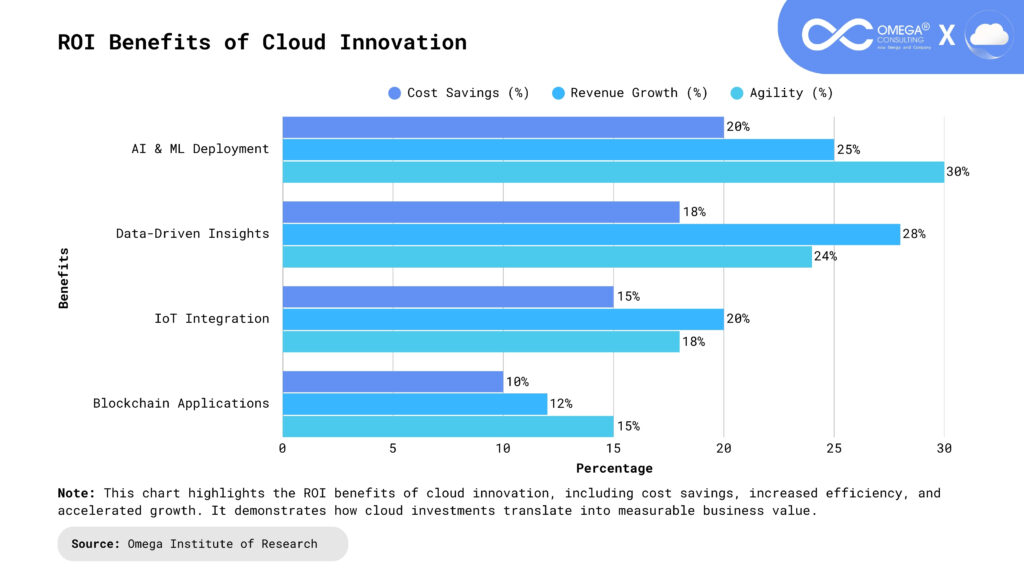
Future of Strategic Cloud Adoption
The future cloud landscape will be shaped by:
AI-Augmented Cloud: The next wave of cloud platforms will be AI-augmented, capable of self-healing, self-optimizing, and automating complex tasks. This will reduce manual intervention while improving performance and resilience. AI-driven cloud services will help enterprises innovate faster while maintaining efficiency.
Quantum Cloud: Quantum computing, delivered through the cloud, promises breakthroughs in solving problems too complex for classical systems. From drug discovery to financial modeling, industries will benefit from immense computational power. Quantum cloud adoption will redefine what is possible in research and innovation.
Industry-Specific Cloud Platforms: The rise of industry-focused clouds will continue, offering preconfigured compliance and domain-specific tools. Healthcare, finance, and government sectors in particular will benefit from tailored platforms that reduce complexity. These solutions will accelerate adoption while ensuring regulatory alignment.
Web3 and Decentralized Cloud: Decentralized cloud models powered by blockchain and Web3 technologies are emerging as alternatives to centralized providers. They promise greater transparency, distributed security, and freedom from vendor lock-in. This trend could reshape the future of trust and ownership in digital infrastructure.
Sustainable Cloud: Sustainability will become a defining factor as carbon-neutral and renewable-powered data centers become industry standards. Green cloud initiatives will reduce environmental impact while meeting corporate social responsibility goals. Businesses that embrace sustainable cloud practices will gain both economic and reputational advantages.
Conclusion
Strategic cloud adoption is not just about IT modernization it is about transforming businesses into digital-first enterprises. When aligned with business goals, secured with trust, and fueled by innovation, the cloud becomes the foundation for resilience and growth. Organizations that embrace the cloud as a strategic driver of innovation, not just an operational shift will thrive in the digital economy. By leveraging cloud-enabled agility, businesses can respond faster to market disruptions, deliver superior customer experiences, and continuously reinvent themselves. The future will belong to companies that treat cloud adoption as an evolving journey, not a one-time project. In this journey, the cloud is more than infrastructure, it is the engine of sustainable innovation and long-term competitiveness.
- https://lumenalta.com/insights/cloud-adoption-strategy
- https://www.sciencedirect.com/science/article/pii/S1877050925004612
- https://journals.sagepub.com/doi/10.1177/18479790221093992
- https://ollion.com/articles/strategic-cloud-integration
- https://www.veritis.com/blog/cloud-adoption-strategy-for-your-company/
Subscribe
Select topics and stay current with our latest insights
- Functions