

- Industries
Industries
- Functions
Functions
- Insights
Insights
- Careers
Careers
- About Us

Succession Planning: Preparing the Business for Leadership Beyond You







Every founder or CEO eventually runs into a question they’d rather not sit with: what happens to this business once they’re no longer the one running it? Most organizations are built, whether anyone admits it or not, around whoever happens to be leading at the time , their instincts, their relationships, the way they make calls under pressure. But the companies that last for generations do something different. They treat leadership as something the business owns, not something one person carries around in their head. Leaders who think this way understand that a transition at the top isn’t really a question of if. Retirement, illness, resignation, or something no one saw coming , it’s coming eventually. The businesses that handle it well tend to look less like a one-person show and more like a system built with redundancy in mind: knowledge, relationships, and decision-making spread across a wider group instead of locked inside a single office. As leadership turnover keeps climbing across industries, getting ahead of succession isn’t just good governance anymore. It’s quickly becoming one of the clearest signs of a company built to outlast its founder.
What is Succession Planning?
At its core, succession planning is a leadership team doing the work of identifying, developing, and preparing the people who will eventually carry the business forward , before a transition forces the issue. That’s a very different thing from scrambling to find a replacement the week after someone resigns, and it’s just as different from assuming the “right” successor will simply reveal themselves when the moment arrives. Done properly, it’s a real, ongoing pipeline of talent and knowledge, not a name scribbled down for emergencies. A leadership team that takes this seriously knows which roles are genuinely irreplaceable, what knowledge exists only in one person’s head, who among the rising talent is actually ready for more, and where the business would be most exposed if a key person left tomorrow. And they start closing those gaps well before anyone has announced they’re going anywhere. Get this right, and you’ve connected the future of the company to the people already inside it , which is exactly what protects continuity, keeps the culture intact, and lets the business survive well past any one leader’s time at the top.
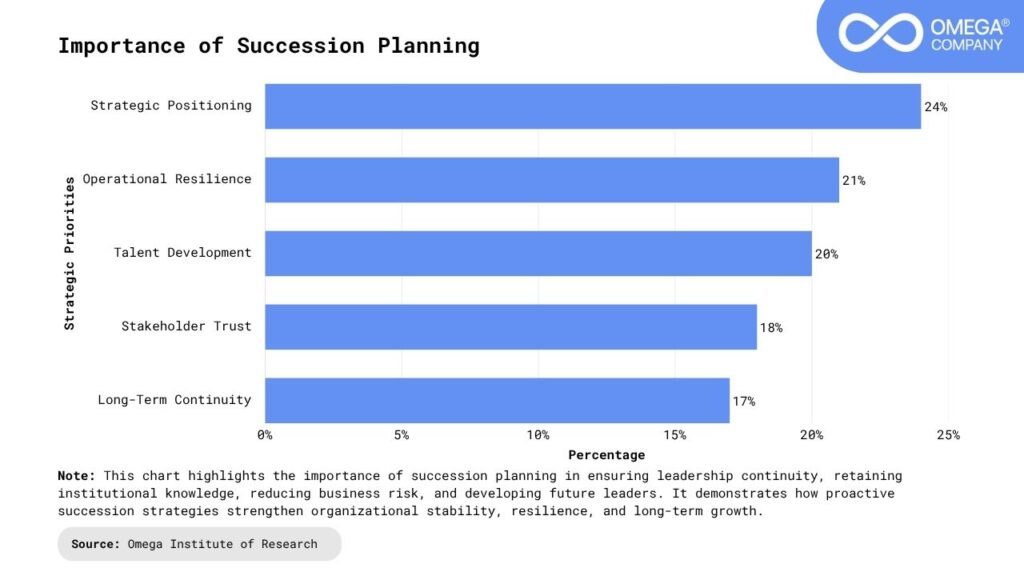
Why Succession Planning Matters Better Strategic Positioning
When successors are identified and depth is built into key roles early, a business stands on much steadier ground than one that only starts thinking about leadership once a seat unexpectedly opens up. Planning years out means the company gets to move on its own timeline instead of scrambling through a crisis.
More Operational Resilience: When decisions, relationships, and processes are documented rather than left to live in someone’s head, dependency risks surface long before they turn into real problems. That kind of groundwork protects day-to-day operations and client relationships alike, and it gives the business breathing room even if a departure comes sooner than anyone expected.
Smarter Use of Talent: Instead of hiring externally out of panic, this approach means investing in the people already there , giving them real responsibility and stretching assignments well before they’re actually needed in a bigger seat. Mentorship, training, and delegation all work together toward the same forward-looking goal, which means less time spent scrambling later and more time spent building leaders who already understand how the business actually works.
More Value for Everyone Involved: Leaders who communicate openly with employees, clients, and investors about how a transition will be handled tend to build a kind of trust that outlasts the transition itself. That transparency keeps good people from walking, reassures clients the relationship isn’t about to fall apart, and strengthens the company’s reputation right when it matters most.
Stronger Long-Term Continuity: Developing several people for leadership, rather than pinning everything on one designated successor, gives a business a genuinely deep bench to draw from. That makes unexpected departures far easier to absorb, keeps momentum intact through a transition, and protects the company from the kind of disruption that comes with losing a key leader nobody prepared to replace.
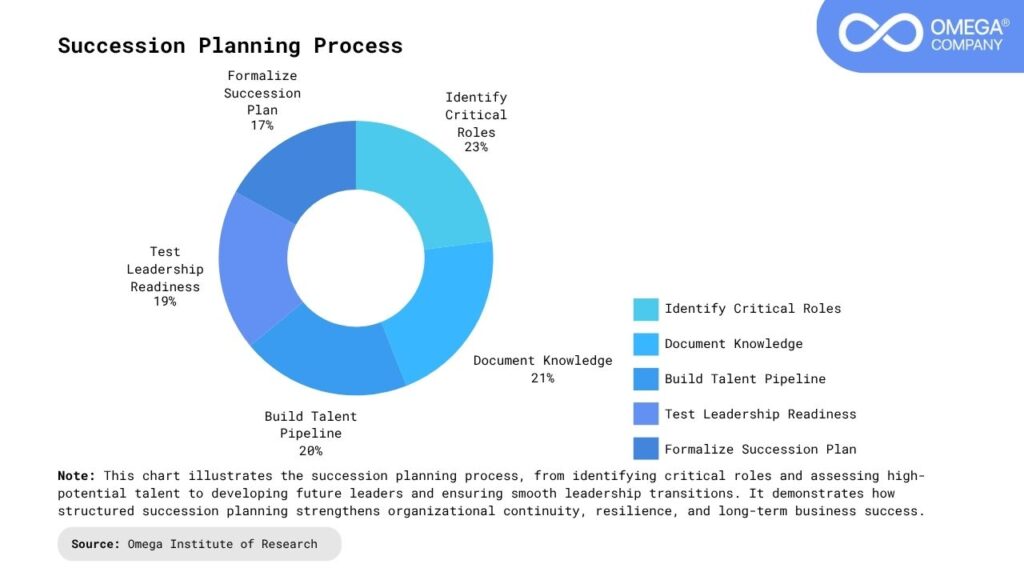
How Succession Planning Actually Works
Identifying Critical Roles: It starts with mapping out which positions actually carry irreplaceable weight , not just job titles, but the decisions, client relationships, and institutional knowledge tied to specific people. Casting a wide net across the whole organization matters more than fixating only on the very top job, because dependency risk has a habit of hiding in roles nobody thought to look at.
Documenting Knowledge: Once those roles are identified, whatever lives only in someone’s head needs to become something the rest of the team can actually use. Decisions only one person can make get turned into documented processes. Relationships held by a single leader get introduced and shared more widely. Judgment calls become written guidelines. Turning tacit knowledge into shared knowledge is what allows the business to keep functioning even when one key person steps away.
Building the Pipeline: Next comes identifying and developing the people who could realistically step into those critical roles. This is where leaders start noticing who’s actually ready , someone quietly excelling in a smaller role, maybe, or a team member who’s been making bigger calls than their title suggests. That fuller picture of talent is what makes everything that follows so much sharper.
Testing the Transition: With a clearer sense of who’s ready and who isn’t, leadership teams can start handing potential successors real responsibility, rather than waiting for a transition to be announced before testing anyone. Real decisions, exposure to strategic conversations, room to make some calls independently , this is where readiness actually gets proven, and where any gaps become obvious while there’s still time to close them.
Putting a Plan on Paper: Eventually, all that preparation needs to turn into an actual documented plan: who takes over which responsibilities, on what timeline, and how the transition gets communicated both inside and outside the company. Because these decisions are grounded in years of development rather than a last-minute scramble, they tend to land far more smoothly than the succession plans most companies only bother writing after someone has already walked out the door.
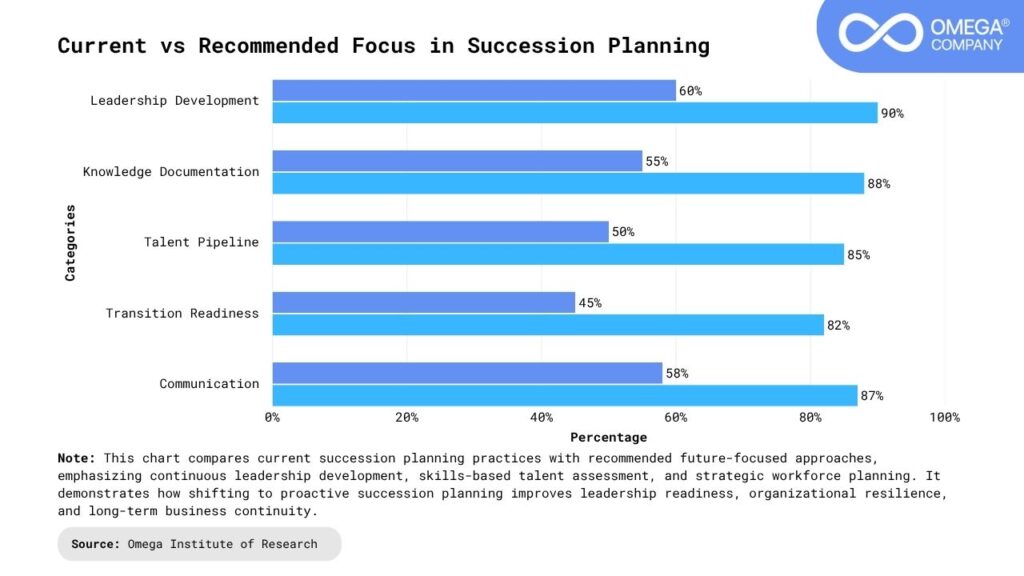
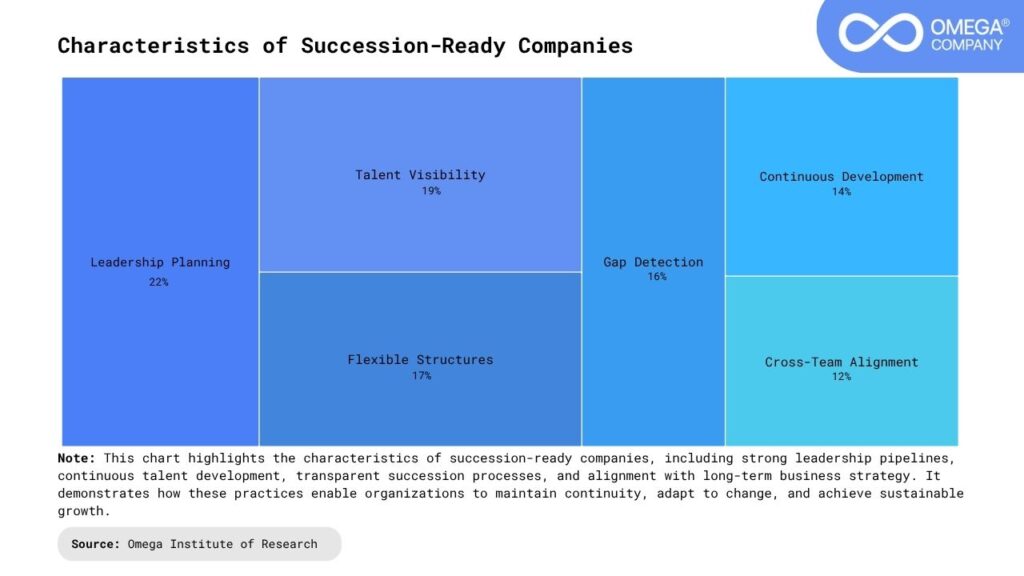
What Makes a Company Succession-Ready
Leadership That Actually Plans Ahead. This is the foundation , a founder or executive team honest enough about their own timeline to talk about it openly, even when there’s no pressure forcing the conversation. They’re the ones identifying critical roles, setting real development milestones, and weighing this quarter’s priorities against the company’s ability to run without them. The best of them build succession into regular leadership reviews, not just something that gets discussed once retirement is finally on the horizon.
Real Talent Visibility. Succession-ready companies actually track who’s growing, who’s ready for more, and where the gaps sit , not just glance at performance reviews once a year and call it done. That turns scattered impressions into something the company can genuinely act on, whether that means fast-tracking someone’s development or bringing in outside experience to plug a specific hole.
Structures That Can Bend. Companies that handle transitions well can redistribute responsibility quickly when someone steps back , sharing decision rights, breaking down single points of failure, moving knowledge to wherever it’s actually needed. Pushing decisions down and out, instead of keeping everything locked with one person, tends to make these shifts faster and a lot less painful.
Systems Built to Catch Gaps Early. These are the systems that quietly look for the risks nobody’s talking about , a role with no backup, a client relationship only one person really owns, a process that lives entirely in someone’s memory , before any of it turns into a real crisis. Catching these gaps early is what lets a company protect its operations and keep running smoothly, even if a leader leaves sooner than anyone planned.
Development That Never Really Stops. Rather than waiting for someone to announce they’re leaving, succession-ready companies treat leadership development as an ongoing effort tied to where the business actually needs to be years down the line. That’s what lets them move quickly when a transition finally happens, and often promote from within with real confidence instead of scrambling to hire from outside.
Everyone Actually Working Together. This is what ties everything together , a shared understanding, across the whole team, of who’s being developed, who holds what knowledge, and how responsibility is meant to shift over time. Companies built to last depend on exactly this kind of alignment to get through leadership transitions without losing their footing.
Why Built-to-Last Companies Win A Real, Sustainable Edge
Companies that develop leadership depth early reach transition points with far fewer blind spots than competitors who only start thinking about succession once someone’s already resigned. Preparing successors long before they’re needed makes the eventual handoff land better, and more consistently, than it otherwise would.
Genuine Agility. Rather than depending on one irreplaceable leader, these companies spread knowledge and decision-making across a wider group, which gives them a much clearer sense of who can step up and exactly when. That readiness is often the entire difference between a smooth transition and a costly one.
Real Staying Power Through Change. These companies build enough depth into their leadership bench that the business can adapt naturally, whether a departure is planned or comes out of nowhere. That built-in resilience is what keeps a company running even while it’s absorbing a major leadership change , and it tends to earn more confidence from clients and better odds of surviving long-term.
Faster Value Creation. Developing several potential leaders at once, instead of betting everything on a single successor, lets a company promote from within, retrain people into bigger roles, and keep moving forward without as much internal friction. That usually means shorter transition periods and more room to grow while still protecting existing client relationships.
Staying Relevant to Clients and Employees. Leaders who communicate clearly about how leadership will change over time manage to keep both client relationships and employee trust intact, even mid-transition. That ongoing transparency is what keeps people loyal through a change in leadership , not a reassurance offered only after the fact.
Fewer Unforced Errors. One of the real strengths of these companies is testing potential successors with genuine responsibility , real decisions, real client exposure, real accountability , before committing to a full handoff. That discipline is what lets leaders make a confident transition without taking on reckless risk.
The Road Ahead: Leading Through Constant Change
As leadership turnover keeps reshaping organizations , through retirements, market pressure, and shifting ideas about what leadership should even look like , long-term success will depend on a company’s ability to develop talent continuously, not reactively. The companies built for what’s next will lean on mentorship, honest communication, documented knowledge, and a genuine bench of leadership talent to stay steady through transitions. Leaders who build a culture of development, trust, and shared responsibility will be far better positioned to hand the business off smoothly and watch it keep thriving long after they’ve stepped away. Rather than trying to control every detail of who comes next, the organizations that succeed will build the depth to handle transitions proactively , staying resilient, holding onto institutional knowledge, and maintaining continuity through whatever changes come, ready or not.
Conclusion
Learning to plan for succession marks a real shift in how companies think about leadership. It means building continuity into the core of the business instead of scrambling for it the moment someone walks out the door. Older thinking assumed the founder or CEO would simply be there until, one day, they weren’t. This approach treats leadership development as something that takes years of deliberate investment. For companies today, getting this right is one of the more reliable ways to protect institutional knowledge, retain good people, reassure clients, and hold onto stability through transitions that are coming whether anyone’s ready or not. As leadership turnover keeps picking up across industries, the ability to prepare for what’s next is quickly becoming less of a nice-to-have and more of a basic requirement for staying in business at all.
- https://hbr.org/topic/subject/succession-planning
- https://en.wikipedia.org/wiki/Succession_planning
- https://www.harvardbusiness.org/wp-content/uploads/2023/11/2021_05_the-high-cost-of-poor-succession-planning.pdf
- https://www.brianheger.com/the-pitfalls-that-undermine-ceo-succession-planning-harvard-business-review/
- https://www.exed.hbs.edu/documents/power-importance-succession-planning.pdf
Subscribe
Select topics and stay current with our latest insights
- Functions