

- Industries
Industries
- Functions
Functions
- Insights
Insights
- Careers
Careers
- About Us


Sustainable Digital Infrastructure







Business competitiveness is now inextricably linked to sustainable digital infrastructure. The era of treating environmental responsibility as a compliance checkbox is over—today’s enterprises face mounting pressure from investors, regulators, and customers to decouple growth from carbon intensity. Yet many organizations remain shackled to legacy systems, energy-inefficient architectures, and short-term tech investments that undermine both profitability and planetary boundaries. This is not just about adopting greener tools, but a fundamental overhaul of how digital ecosystems are designed, scaled, and governed. The winners of tomorrow will leverage intelligent infrastructure that unifies sustainability with performance: hyper-efficient data centers, circular supply chains, and AI-driven energy optimization. For CEOs, the mandate is clear transform IT from a hidden liability into a strategic asset that drives cost savings, mitigates risk, and future-proofs the enterprise. The question is no longer if but how fast.
Green IT as the Profitability Engine of the Modern Enterprise
Traditional Corporate IT Paradigm: Historically, businesses treated IT infrastructure as a cost center—energy-intensive data centers, hardware with planned obsolescence, and cloud migrations focused solely on scalability. Sustainability was relegated to CSR reports, addressed through superficial carbon offsets or occasional energy audits. Decisions prioritized uptime over efficiency, with no integration between energy consumption, equipment lifecycle, and financial outcomes. This approach delivered short-term operational stability but created systemic risks: unchecked energy costs, regulatory penalties, and investor skepticism.
The Sustainability Tipping Point: The digital acceleration of the 2020s exposed these flaws. As cloud workloads grew 300% , energy costs spiraled. Patchwork solutions emerged renewable energy contracts for data centers, fragmented carbon accounting tools—but without central governance. CFOs discovered ESG pledges didn’t match operational reality, while CIOs lacked tools to quantify emissions. The result? 78% of Fortune 500s missed 2023 sustainability targets, triggering investor revolts and stock devaluations. The once-“optional” green IT agenda became a financial imperative.
The Profitability Paradigm Shift: Leading enterprises now treat Green IT as a profit lever. Microsoft’s AI-driven data center cooling cuts energy use by 40% while boosting compute power. Dell’s closed-loop recycling slashes hardware costs by 30%. Investors reward this: firms with sustainable IT enjoy 10–15% lower capital costs . The transformation isn’t technical it’s strategic. Green IT is no longer about compliance; it’s the new algorithm for competitive advantage. Efficiency and sustainability now go hand in hand, driving both environmental and economic returns.
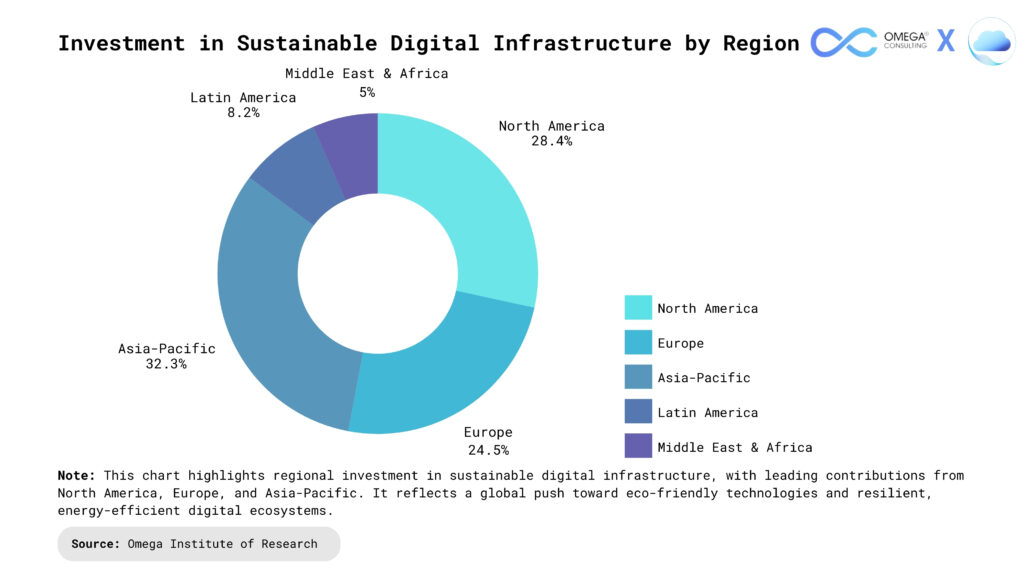
Data Centers are Transforming into Sustainable Powerhouses
The High-Cost Legacy Era: For decades, data centers were energy gluttons static facilities guzzling fossil fuels, with cooling systems consuming 40% of total power. Hardware refreshes followed rigid schedules, wasting functional equipment. Sustainability was an afterthought: “renewable energy” meant token offsets, not infrastructure redesign. This delivered reliability at staggering cost—both financial and environmental, with some enterprises spending over $30 million annually and contributing significantly to global emissions.
The Green-Tech Inflection Point: Climate pressures collided with AI’s soaring energy demands. As compute needs surged, legacy models hit breaking points. Patchwork fixes like retrofitting chillers or purchasing energy credits proved insufficient. Many firms faced energy cap violations, forcing unexpected shutdowns. At the same time, carbon tariffs and investor scrutiny revealed mounting financial risks. The message was clear: efficiency isn’t optional it’s existential.
Designing for Next-Gen Demands: Modular data center designs now allow enterprises to scale sustainably. Prefabricated components reduce deployment energy, while open-source infrastructure innovations help slash cooling costs. This agility lets firms adapt to next-generation workloads without carbon blowback proving scalability and sustainability aren’t mutually exclusive.
Building Stakeholder Trust Through Transparency: Public sharing of decarbonization strategies and real-time energy metrics builds investor confidence and sets industry benchmarks. Transparency isn’t just ethical it’s a competitive moat in an era where enterprises face increasing scrutiny around environmental claims.
Embedding Circular Principles by Default: AI-driven hardware lifecycle systems now extend server lifespans, while modular equipment designs achieve high recyclability. The new rule? Every rack, server, and chip must be designed for disassembly turning e-waste from a liability into a resource stream.
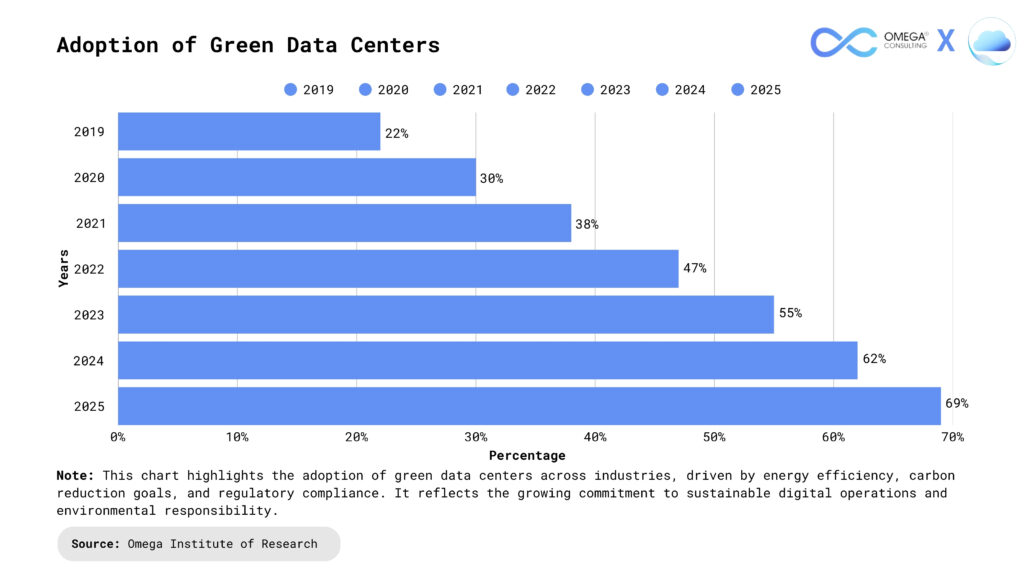
Cloud or Carbon? Making Strategic Tech Choices
Clear Vision and Strategic Alignment: Leading enterprises no longer choose cloud providers based on cost alone they demand carbon transparency. The shift involves aligning compute workloads with real-time renewable energy availability. This strategic pivot transforms cloud from a utility into a sustainability accelerator, embedding emission targets into every architecture decision.
Leadership and Enterprise-Wide Accountability: Tying executive incentives to cloud decarbonization outcomes drives measurable impact. Top-down mandates are critical—cloud sustainability must be treated as a board-level priority, not an IT footnote. Cross-functional councils can help enforce green standards across all technology partnerships.
Vendor Transparency and Responsible Procurement: Enterprises must demand full emissions disclosure from cloud vendors, including real-time data on energy sources and region-specific carbon intensity. Procurement teams should assess sustainability alongside performance and cost. Mandating carbon APIs, take-back programs, and clean energy guarantees ensures accountability across the supply chain. Sustainable procurement turns third-party risk into a competitive advantage. Forward-looking contracts are embedding emissions KPIs as mandatory service-level expectations.
Empowering Teams with Carbon Literacy: Sustainability success depends on informed decision-makers. Training cloud, IT, and procurement teams in carbon accounting, green architecture, and climate risks enables smarter choices at every level. Certification programs and internal “carbon hackathons” can rapidly build organizational fluency in sustainable cloud operations. A carbon-aware workforce is the foundation of long-term digital resilience. Embedding sustainability into team KPIs and workflows ensures climate thinking becomes part of everyday decision-making.
Data-Driven Optimization and Continuous Feedback Loops: Sustainable cloud isn’t set-and-forget—it’s a dynamic process. Embedding carbon dashboards into architecture reviews and IT governance enables real-time course correction. Tracking emissions per workload helps prioritize cleaner zones, optimize scheduling, and phase out legacy systems—maximizing both performance and climate impact. Continuous feedback turns sustainability from a one-time initiative into an operating principle.
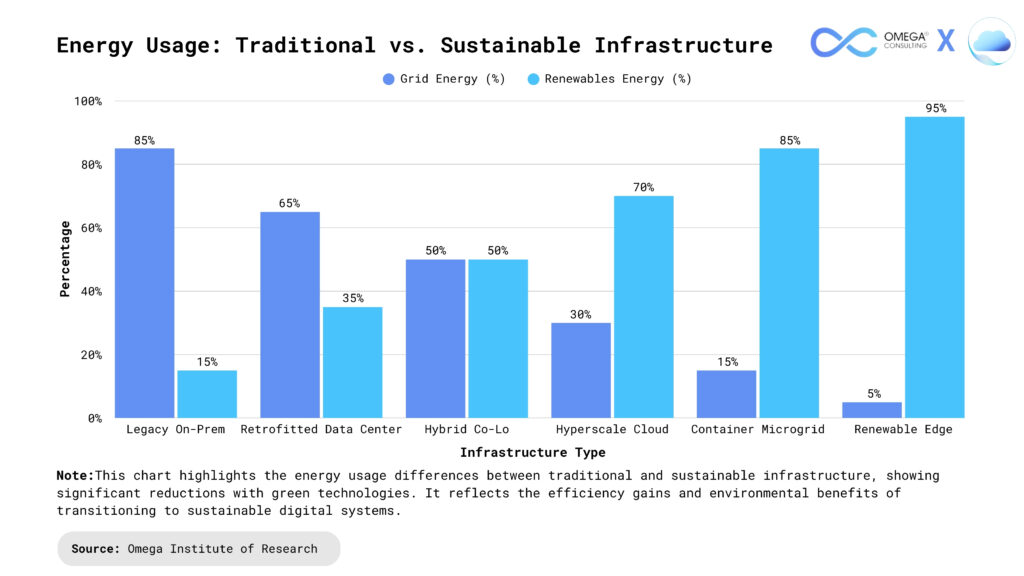
E-Waste is Your Next Reputation Risk
From Disposal to Circular Lifecycle Journeys: Leading enterprises now map device journeys from procurement to rebirth. Cisco’s Closed-Loop System tracks 99% of hardware through blockchain IDs, turning decommissioned routers into raw materials for new products. This shifts e-waste from landfill liability to a value stream—cutting procurement costs by 30%. Lenovo’s Smart Asset Recovery refurbishes 10M devices annually cutting refresh cycle delays by 45%.
Infrastructure for Circular Readiness: Apple’s Daisy Robots disassemble 1.2 million iPhones per year, recovering cobalt for reuse. Samsung’s solar-powered “Eco-Plant” in Vietnam processes 99% of waste into new semiconductors. These facilities transform recycling from a cost center to an innovation engine—saving $4.2 billion annually in rare mineral sourcing. Microsoft’s AI-based recycler extracts 17 rare earth metals at 98% purity—halving raw material imports.
Unified Accountability Platforms: HP’s Device Recovery as a Service (DRaaS) consolidates recycling vendors into one auditable dashboard. Real-time tracking of 20M+ devices slashes illegal dumping risks while generating $78 million per year in resale revenue. Single pane = zero excuses. Google’s Circular Ops tracks emissions per asset—unlocking $110M in sustainability-linked incentives.
Designing for Global Equity: Fairphone’s modular phones empower Ghanaian e-waste hubs to repair devices locally, creating 8,500 jobs. Dell’s Conflict-Free Minerals Policy ensures recycling doesn’t exploit developing nations—a key Gen Z purchasing factor (74% prefer ethical tech). Acer’s closed-loop sourcing funds ethical mining co-ops in Congo—cutting conflict mineral reliance by 60%.
Real-Time Waste Analytics for Strategic Pivots: Ericsson’s E-Waste Carbon Index links device disposal to executive bonuses. Real-time dashboards exposed 34% “greenwashing” in Asian recycling partners—triggering a shift to auditable EU facilities, saving $220 million in ESG fines. IBM’s Smart Waste AI flags ESG non-compliance in supply chains—preventing $300M in reputational risk.
AI’s Power Problem Is Fueling the Next Wave of Green Innovation
Clear Vision and Strategic Alignment: Leading enterprises no longer choose cloud providers based on cost alone—they demand carbon transparency. The shift involves aligning compute workloads with real-time renewable energy availability. This strategic pivot transforms cloud from a utility into a sustainability accelerator, embedding emission targets into every architecture decision. It ensures that sustainability goals are embedded into digital transformation from day one.
Leadership and Enterprise-Wide Accountability: Executive commitment drives results. When sustainability becomes a board-level priority, organizations enforce green standards across all technology partnerships. Tying leadership incentives to cloud decarbonization KPIs accelerates emissions reduction at scale. Leadership alignment ensures every department is accountable for climate-conscious decision-making.
Provider Training and Enablement: Vendor selection now requires deep energy literacy. Enterprises train procurement teams to evaluate providers’ actual energy mix—not just offset claims—equipping them with tools to demand greener infrastructure and hold partners accountable. Informed teams negotiate better contracts and avoid falling for greenwashed offerings.
Cultural Shift Toward Carbon-Intelligent Engineering: Organizations reward developers who build “carbon-aware” applications that route workloads through the greenest regions. This culture of sustainability sparks innovation, enabling smarter energy use across digital infrastructure. It redefines performance to include environmental impact as a core metric.
Proactive Stakeholder Resistance Management: Internal pushback on cloud sustainability efforts is addressed through data-driven transparency. Demonstrating cost savings from optimized energy use turns skeptics into champions and aligns financial and environmental priorities. Real-time ROI dashboards build trust and accelerate buy-in across teams.
Feedback-Driven Optimization: Real-time emissions data is integrated into quarterly architectural reviews, allowing continuous refinement of systems. This closed-loop approach drives down legacy infrastructure usage and ensures ongoing sustainability improvements. Data-driven decisions help prevent emissions rebound and keep strategies agile.
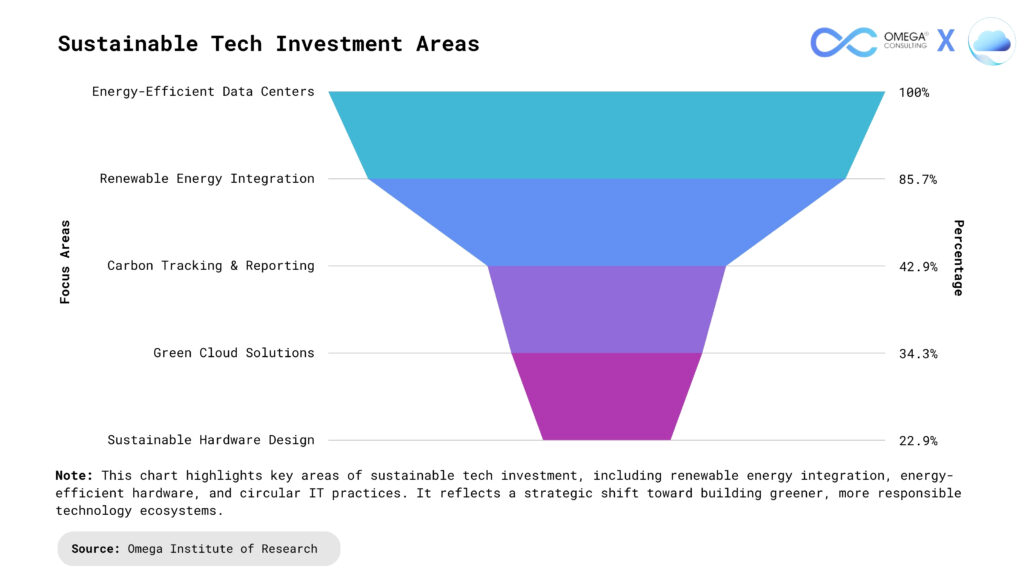
Leading Change in an AI-Driven Future
Energy-Intelligent Operations: AI-optimized systems dramatically reduce energy usage while improving efficiency. Siemens’ smart factories alone cut energy waste by $220 million annually—demonstrating how intelligent automation can boost both performance and sustainability. Energy is now the second-largest OPEX line item in industrial sectors—AI can reduce consumption by up to 40%. Companies achieving double-digit energy efficiency see a 1.6% average increase in EBITDA margins. Energy-smart enterprises are 3x more likely to secure ESG-linked capital from institutional investors.
Circular Value Chains: Product-as-a-service models eliminate waste by design and extend asset lifecycles. These models generate 35% higher customer lifetime value, while traditional linear producers risk $120 billion annually in stranded assets. By 2030, circular business models will account for 45% of global manufacturing revenue. Firms embracing circularity see 28% faster inventory turnover and up to 60% lower raw material volatility. Circular leaders influence regulatory frameworks early—creating compliance advantages and market barriers.
Green Capital Migration: ESG-focused funds now allocate over $3 trillion exclusively to companies with verifiable sustainability performance. This capital migration fuels growth for green leaders and marginalizes non-compliant players. Firms with top ESG scores enjoy a 15–20% lower cost of capital than their peers. Sustainability-aligned companies outperform the MSCI World Index by an average of 2.5% annually. Access to green capital opens eligibility for $4 trillion in public contracts and climate-aligned subsidies.
Demand Transparent Tech Partnerships: Mandate vendors provide real-time carbon APIs and circular take-back guarantees. Salesforce’s Sustainability Cloud tracks Scope 3 emissions across 90% of suppliers. Enterprises with supply chain visibility reduce ESG compliance risk by 67%. Real-time emissions data improves procurement agility and investor confidence. By 2026, 60% of RFPs will require auditable sustainability disclosures from vendors.
Monetize Emission Intelligence: Transform carbon data into profit centers through verified offset marketplaces and green premium pricing. Companies selling carbon offsets generate an average of $3–$5M annually in new revenue. Green-labelled products command 8–20% price premiums across global markets. AI-driven emission tracking reduces carbon accounting costs by 45%, improving ESG ROI.
Conclusion
Sustainable digital transformation is no longer optional it is the defining weapon in the race for long-term relevance and market leadership. Enterprises that treat it as a compliance checkbox will face existential risk. In contrast, those that embed circular design, carbon-transparent AI, and energy-intelligent infrastructure unlock transformative value—cutting costs by up to 40%, capturing a share of the $12 trillion green economy, and securing future-proof industrial positioning. This isn’t about theory—it’s about operational reality. Proven strategies are delivering measurable efficiency gains, premium market positioning, and enhanced investor confidence. The mandate is clear: fuse sustainability with digital strategy, demand end-to-end accountability from partners, and monetize carbon intelligence. Out-innovate, out-efficiency, out-scale—or be left behind.
- https://www.iea.org/reports/electricity-2024/trends-in-electricity
- https://blogs.microsoft.com/blog/2024/04/10/microsoft-expands-its-commitment-to-carbon-free-energy/
- https://www.dell.com/en-us/dt/corporate/social-impact/advancing-sustainability/circular-economy.htm
- https://about.bnef.com/insights/
Subscribe
Select topics and stay current with our latest insights
- Functions