

- Industries
Industries
- Functions
Functions
- Insights
Insights
- Careers
Careers
- About Us

The Business Case for Multi-Cloud: Risk Mitigation or Redundancy?







Cloud computing has shifted from a cost-saving infrastructure solution to the backbone of business agility, innovation, and resilience. Today, companies across industries rely on the cloud to host applications, analyze data, streamline supply chains, and deliver seamless customer experiences. As dependence on these services grows, a critical strategic question arises: should organizations embrace multi-cloud for risk mitigation, flexibility, and vendor independence, or focus on a single provider for efficiency? While multi-cloud offers resilience and choice, it also brings added complexity and potential redundancy, making it essential for businesses to carefully weigh the benefits against the costs and operational challenges.
Why Multi-Cloud Is on the Rise
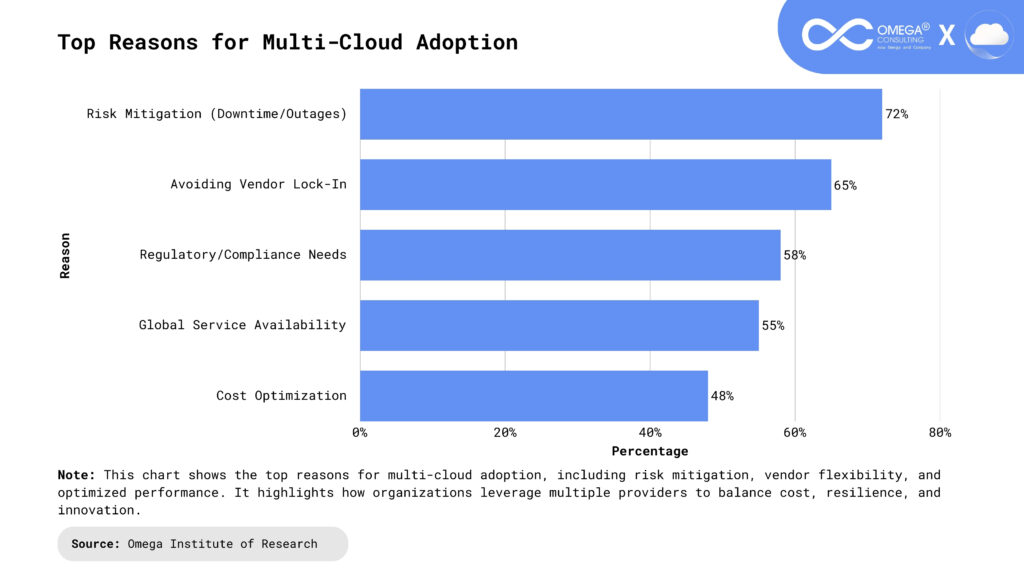
The shift toward multi-cloud is driven by a mix of technical, strategic, and regulatory pressures.
Avoiding Vendor Lock-In: Cloud vendors often incentivize organizations to stay within their ecosystems through proprietary services, bundled pricing, and integrated tools. While convenient, this can limit flexibility. Multi-cloud reduces dependency on one vendor, allowing businesses to negotiate better terms, adopt new innovations faster, and avoid being “trapped” in a single ecosystem. It also empowers IT leaders with more bargaining power and ensures they can pivot strategies without being constrained by one provider’s roadmap.
Risk Mitigation: Outages happen—even for giants like AWS, Azure, and Google Cloud. A single-provider approach can leave companies exposed. Multi-cloud creates an insurance policy: if one provider fails, operations can shift to another, minimizing downtime and financial loss. This redundancy not only enhances resilience but also builds customer trust by ensuring critical services remain available in the face of disruptions.
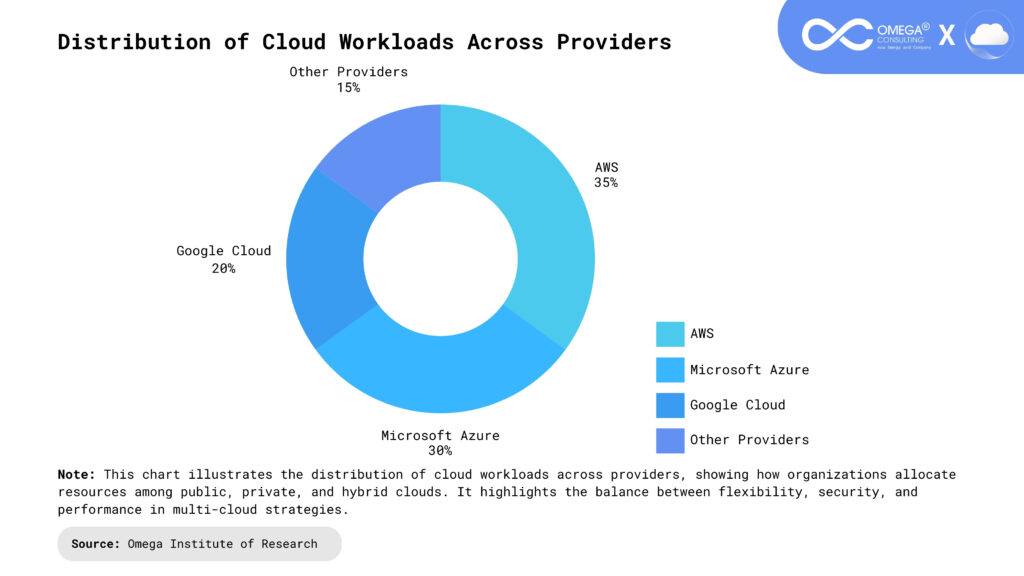
Global Reach and Compliance: Different providers excel in different regions. For example, Azure has strong government partnerships, AWS dominates in North America, and Google Cloud is strong in data analytics and AI. Spreading workloads across them can ensure compliance with country-specific data sovereignty laws and improve performance for global users. It also enables businesses to expand into new markets more seamlessly, while adhering to the unique regulatory and security requirements of each region.
Optimized Workloads: Not all cloud services are equal. Businesses might use AWS for scalability, Google Cloud for AI/ML capabilities, and Azure for enterprise integrations with Microsoft tools. Multi-cloud lets organizations place workloads where they perform best, rather than compromising with one provider. This workload optimization maximizes ROI while ensuring each application runs on the most efficient and advanced platform available.
Multi-Cloud as a Risk Mitigation Strategy
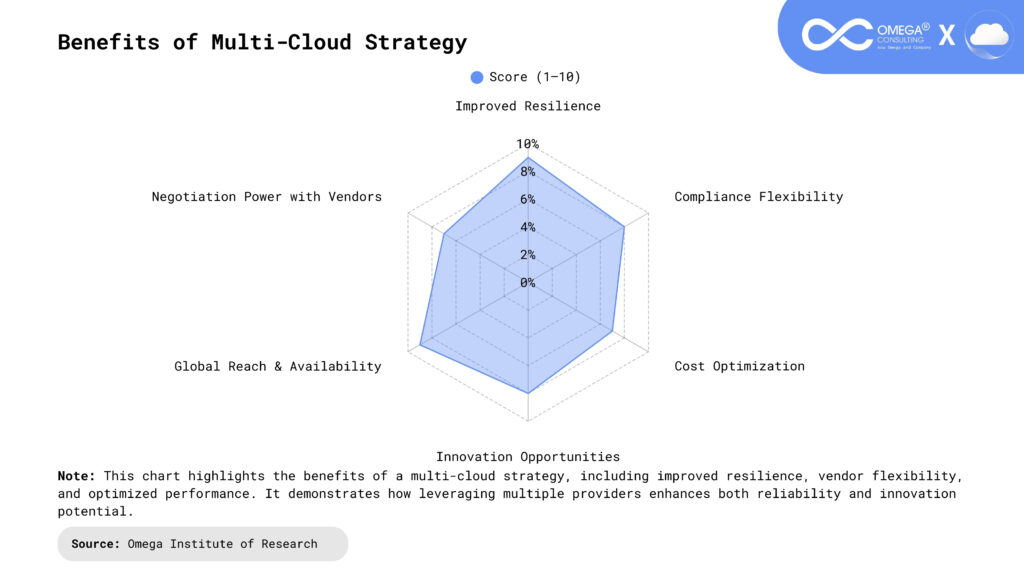
The most compelling business case for multi-cloud is its role as a resilience strategy.
Operational Continuity: For industries like banking, aviation, and healthcare, downtime is not an option. Multi-cloud ensures that critical applications are mirrored or backed up across providers, making operations more resilient. This approach allows disaster recovery strategies to be executed faster and more effectively. It also reassures stakeholders that essential services can remain uninterrupted even under extreme conditions.
Regulatory Compliance: Industries bound by strict data residency laws—such as the EU’s GDPR or India’s data localization requirements may find it easier to comply when they can use specific providers in specific jurisdictions. Multi-cloud enables businesses to design architectures that match regulatory frameworks without compromising efficiency. It also reduces legal risks by ensuring that sensitive information is always stored and processed in accordance with regional mandates.
Cybersecurity Posture: While cloud providers invest heavily in security, breaches and vulnerabilities still occur. Using multiple vendors reduces the risk of a single point of failure in the security chain. It enables organizations to layer diverse security controls, strengthening defenses against advanced threats. Additionally, companies can choose best-in-class security services from different providers, ensuring stronger protection overall.
Strategic Flexibility: Technology evolves quickly. A multi-cloud approach gives companies agility to adopt emerging services from different providers without waiting for their primary cloud to catch up. This flexibility prevents innovation bottlenecks and accelerates digital transformation efforts. It also positions businesses to seize new opportunities and stay competitive in fast-moving industries.
The Redundancy Argument: Is It Overkill?
While risk mitigation is appealing, critics highlight the downsides of multi-cloud, especially for smaller organizations.
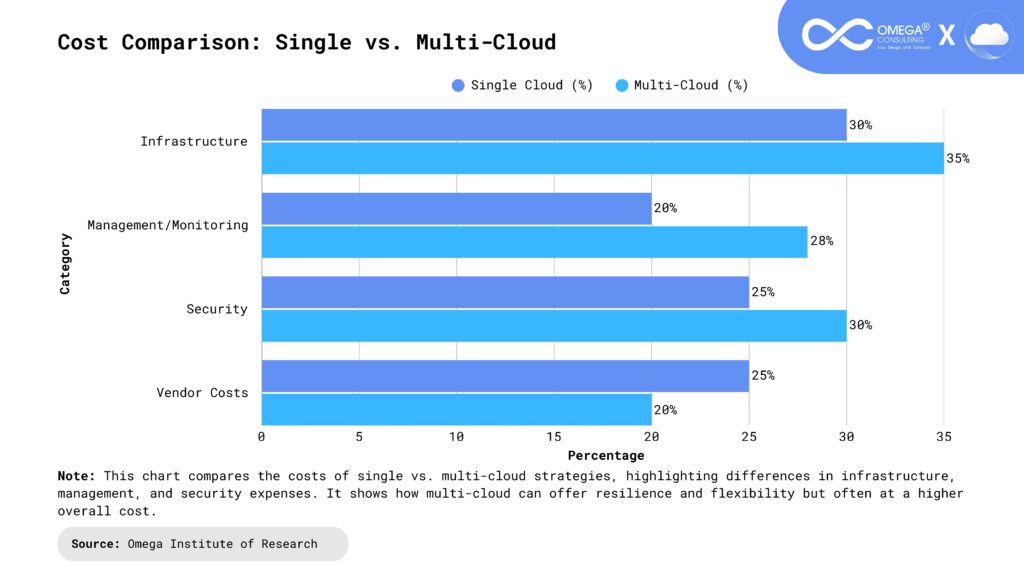
Higher Costs: Managing workloads across multiple providers can increase licensing fees, storage duplication, and training costs. Moreover, economies of scale are reduced because discounts often come from deeper commitment to a single vendor. Additional expenses also arise from the need for cross-cloud management tools and integration platforms. Over time, these hidden costs can erode the financial benefits that organizations expect from cloud adoption.
Talent Gaps and Skills Complexity: Multi-cloud demands expertise in different platforms. Teams must understand each provider’s unique architecture, billing models, and security frameworks. This raises hiring and training challenges, especially in a market already short on cloud talent. Companies must also invest in continuous upskilling to keep pace with frequent updates and innovations from each cloud provider.
Fragmented Governance and Monitoring: Compliance, logging, and monitoring must be unified across providers. Without a strong governance framework, organizations risk shadow IT, security blind spots, and inconsistent policies. Standardizing processes across multiple environments becomes a daunting task for IT teams. Inconsistent enforcement can also lead to regulatory non-compliance and reputational damage.
Integration and Performance Trade-Offs: Moving data between clouds may cause latency, bandwidth costs, and operational inefficiencies. In mission-critical applications, this fragmentation can undermine the very resilience multi-cloud is meant to provide. Businesses may also struggle to achieve seamless interoperability across platforms. In some cases, performance degradation outweighs the flexibility gained from a multi-cloud strategy.
Striking the Balance: When Multi-Cloud Makes Sense
The business case for multi-cloud depends on context size, industry, and risk appetite.
Best Use Cases for Multi-Cloud: Global companies operating across multiple jurisdictions often benefit from multi-cloud strategies because they can meet diverse compliance and data residency requirements without sacrificing performance. For industries where even a few minutes of downtime can cost millions such as airlines or financial trading platforms, multi-cloud provides the necessary operational resilience. Businesses that want to leverage specialized services from different providers also gain an edge, whether it’s AI and analytics from Google Cloud, enterprise apps from Microsoft Azure, or massive scalability from AWS. In these scenarios, multi-cloud delivers flexibility, reliability, and innovation that a single provider cannot always match.
When Single-Cloud May Be Enough: For startups focused on cost efficiency and speed to market, a single-cloud approach often proves more practical. It reduces complexity, minimizes overhead, and enables companies to quickly build and scale products without managing multiple environments. Organizations with smaller or limited IT teams also find single-cloud appealing, as training and maintaining expertise across different platforms can be overwhelming. In such cases, the simplicity and cost advantages of sticking with one provider outweigh the benefits of multi-cloud.
The Hybrid Path: Multi-Cloud with Strategy
A pragmatic approach for many organizations is to adopt selective, intentional multi-cloud strategies rather than going all-in.
Primary-Secondary Cloud Model: In this setup, one provider acts as the “home base” for most workloads, while another serves as a backup or supports specialized use cases. This allows organizations to achieve resilience without duplicating every system across multiple clouds. It offers the benefit of redundancy while still maintaining efficiency in day-to-day operations. Companies adopting this model often view the secondary cloud as an insurance policy against outages or vendor lock-in.
Best-of-Breed Adoption: Some companies take advantage of best-in-class services offered by different cloud providers, combining them into a tailored strategy. For example, a business might use Snowflake on AWS for data warehousing while tapping into Google Cloud’s advanced AI/ML capabilities. This selective adoption ensures workloads always run in environments optimized for their purpose. By carefully mixing and matching, organizations maximize both innovation and performance.
Unified Management: Managing multiple providers can be challenging, but orchestration, governance, and security tools simplify the process. Platforms like Kubernetes, Terraform, and cloud management solutions enable teams to unify operations across environments. This reduces risks of fragmentation while keeping compliance and monitoring consistent. Ultimately, unified management allows companies to harness the benefits of multi-cloud without drowning in complexity.
Conclusion
The debate over whether multi-cloud is a risk mitigation strategy or simply redundancy has no universal answer; it depends entirely on business context. For enterprises in regulated industries, global markets, or mission-critical sectors, multi-cloud delivers resilience, compliance, and a clear strategic edge. Smaller organizations, however, may find the added costs and complexities outweigh the benefits, making a single-cloud model more practical. What matters most is that multi-cloud is not adopted as a trend but as a deliberate, well-aligned choice. Businesses that carefully evaluate their risks, operational priorities, and growth ambitions will discover whether multi-cloud is their path to resilience or an unnecessary complication.
- https://www.digitalocean.com/resources/articles/multi-cloud-strategy
- https://www.bso.co/all-insights/role-of-cloud-to-cloud-redundancy-to-ensure-better-disaster-recovery
- https://online.utulsa.edu/blog/multi-cloud-security/
- https://www.fortinet.com/blog/industry-trends/multi-risks-in-the-multi-cloud-an-industry-perspective
- https://www.xenonstack.com/insights/multi-cloud-security
Subscribe
Select topics and stay current with our latest insights
- Functions