

- Industries
Industries
- Functions
Functions
- Insights
Insights
- Careers
Careers
- About Us

The CEO as Capital Allocator: Where Your Attention Really Matters







In today’s enterprise landscape, the CEO’s role extends well beyond vision-setting and operational oversight. At its core, the CEO’s most consequential responsibility is capital allocation across not only financial resources, but also time, talent, attention, and organizational energy. In an environment shaped by technological disruption, geopolitical uncertainty, and rapidly evolving customer expectations, where a CEO chooses to focus and what they choose to fund ultimately determines whether an organization outperforms or falls behind. This expanded mandate demands clarity, discipline, and intentionality. CEOs must continuously balance short-term performance with long-term value creation, making trade-offs that define the organization’s trajectory. Every allocation decision sends a signal, shaping culture, accelerating (or constraining) innovation, and reinforcing competitive positioning. In this sense, capital allocation is not a supporting activity, it is strategy in action.
Redefining Capital: Beyond Financial Resources
Historically, capital allocation has been narrowly defined as the deployment of financial resources, capex, acquisitions, R&D, and dividends. That definition is no longer sufficient. High-performing CEOs take a broader, more integrated view, actively allocating across four distinct but interdependent forms of capital:
Financial Capital: The disciplined deployment of funds into growth, infrastructure, and innovation initiatives that generate both near-term returns and sustained value creation. This requires rigorous prioritization knowing where to concentrate investment and where to withdraw while maintaining a balance between risk, return, and resilience in volatile conditions.
Human Capital: The strategic alignment of talent, leadership, and organizational design with the company’s ambitions. This extends beyond hiring to include capability building, succession planning, and cultural development. Organizations that outperform treat talent as a dynamic asset, continuously investing in skills, engagement, and leadership pipelines.
Time Capital:
The allocation of executive attention is arguably the scarcest resource in the enterprise. Where CEOs spend their time sets the agenda for the organization, influencing both the pace and quality of decision-making. High-impact leaders are deliberate, focusing their attention on a small number of priorities that disproportionately drive outcomes.Reputational Capital: The accumulation of trust across stakeholders, customers, employees, investors, regulators, and partners. This form of capital is both fragile and powerful, shaping market perception and strategic optionality. CEOs must actively manage and invest in reputation, recognizing that credibility can accelerate growth, while its erosion can impose significant constraints.
The Attention Economy Inside the Enterprise
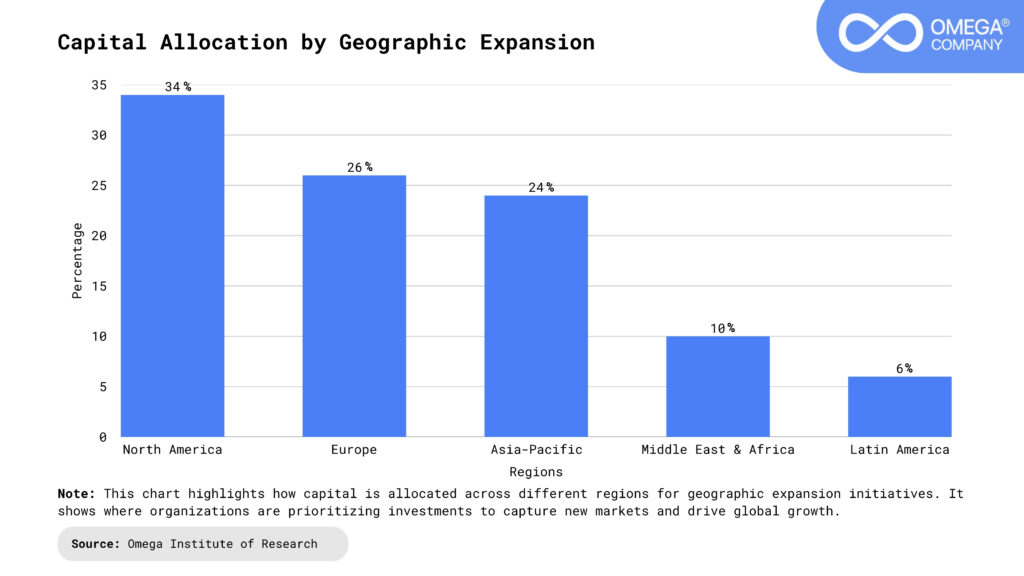
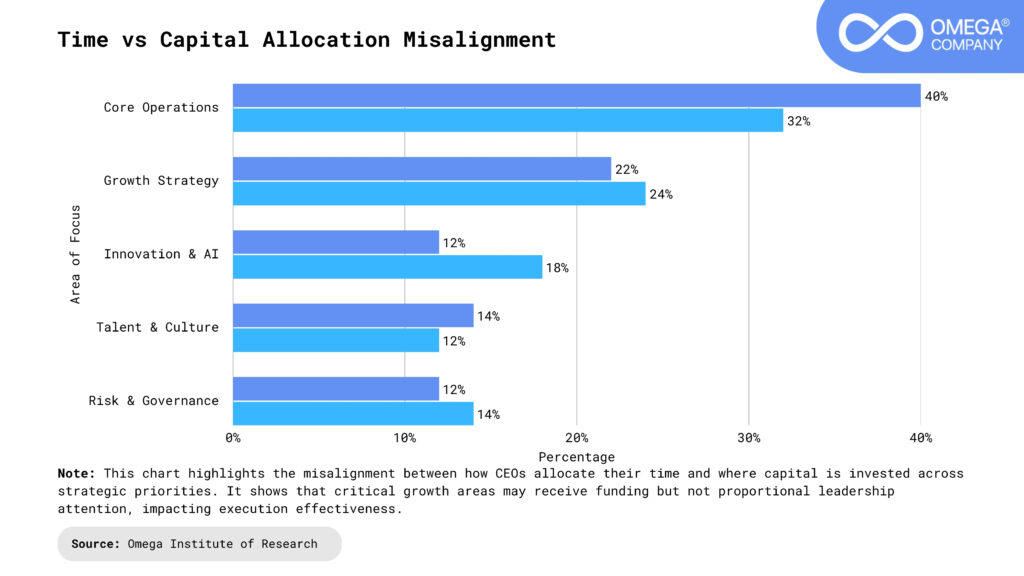
Organizations function as internal attention markets, where focus is among the most valuable and limited resources. Teams compete, often implicitly, for leadership attention through performance, urgency, and visibility. When CEOs disproportionately direct attention toward short-term metrics, firefighting, or legacy operations, they unintentionally signal what matters most, shaping organizational behavior over time. This dynamic often drives teams to prioritize immediate outcomes over long-term innovation and strategic initiatives, creating a persistent gap between stated strategy and actual execution. In practice, employees align more closely with observed leadership focus than with formal plans, making attention one of the most powerful drivers of culture and priorities. High-performing organizations address this challenge by deliberately aligning leadership attention with long-term objectives, ensuring that transformation and growth initiatives receive sustained visibility. CEOs who manage attention with intent reinforce accountability, improve decision-making speed, and create enterprise-wide clarity. Ultimately, where attention flows, energy, resources, and results follow.
Strategic Allocation vs. Reactive Allocation
Many CEOs fall into the trap of reactive allocation, where resources are deployed in response to immediate pressures rather than long-term priorities. This pattern manifests in several ways: Market downturns: During periods of economic uncertainty, leaders often prioritize cost reduction to protect margins and liquidity. While effective in the short term, excessive cost-cutting can erode core capabilities and constrain future growth. A more balanced approach preserves efficiency while safeguarding critical investments that enable recovery and resilience.
Competitor moves: Rapid responses to competitors can lead to rushed, misaligned investments that dilute strategic focus. Rather than simply matching competitor actions, organizations should assess whether such moves strengthen differentiation and long-term positioning. Strategic discipline is essential to avoid entering a reactive cycle.
Operational issues: Persistent operational challenges can consume leadership bandwidth, shifting focus away from long-term priorities. While resolving urgent issues is necessary, a continuous firefighting mode prevents organizations from addressing root causes and building scalable, resilient systems.
Fragmented strategy and underinvestment: Reactive decision-making often results in scattered priorities and inconsistent execution. Resources are diverted from long-term initiatives such as innovation, talent development, and infrastructure limiting the organization’s ability to compete and adapt.
The need for disciplined strategic allocation: Effective CEOs counter these tendencies by defining clear long-term priorities, articulating strong investment theses, and maintaining the discipline to say “no” to distractions. This ensures that resources remain consistently aligned with strategic goals, enabling sustained growth, stronger execution, and organizational clarity.
The CEO’s Allocation Framework: Three Horizons
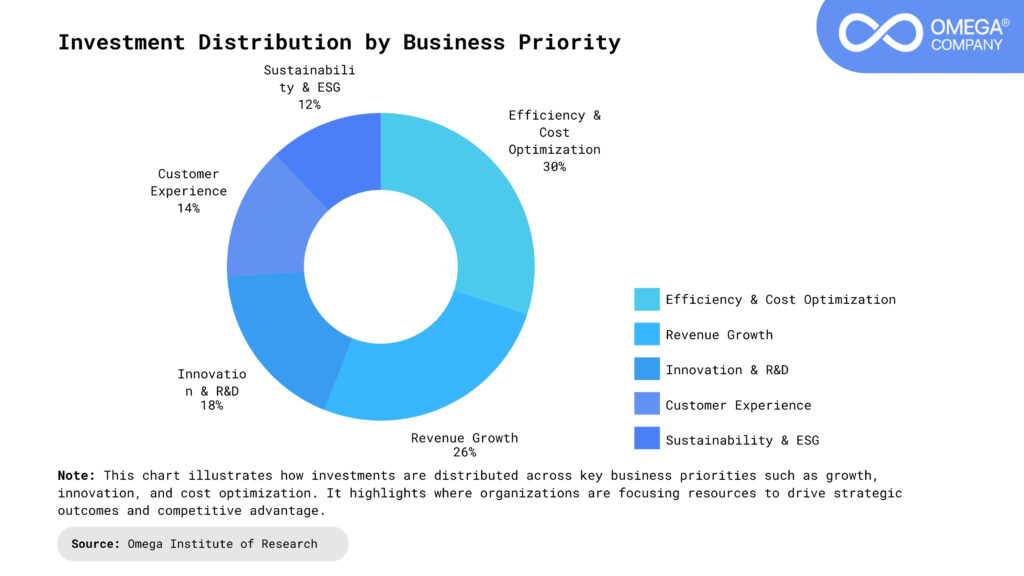
Effective CEOs allocate capital across three distinct time horizons, balancing near-term performance with long-term transformation. This structured approach ensures that organizations remain competitive today while systematically building for the future:
Horizon 1: Core Business (0–2 Years): This horizon focuses on optimizing existing operations, improving margins, and driving efficiency within the current business model. CEOs prioritize operational excellence, cost discipline, and performance improvements to generate stable and predictable cash flows. Protecting market position is critical, requiring a strong focus on customer relationships, product quality, and competitive defense. At the same time, incremental innovation and continuous process improvements ensure the core business remains relevant and resilient in evolving market conditions.
Horizon 2: Growth Initiatives (2–5 Years): The second horizon centers on expansion into adjacent markets and investment in new products or services that build on existing strengths. CEOs allocate resources to scale emerging business models, explore new customer segments, and capture untapped opportunities. Strategic partnerships, targeted acquisitions, and capability building often play a pivotal role in accelerating growth. This horizon demands a careful balance between risk and return, ensuring investments are aligned with long-term strategic priorities while delivering measurable progress over time.
Horizon 3: Future Bets (5+ Years): The third horizon involves investing in disruptive innovation, emerging technologies such as artificial intelligence, automation, and digital ecosystems, as well as experimental ventures that have the potential to redefine the business. CEOs must operate with a high tolerance for uncertainty, recognizing that these investments may not generate immediate returns but can create significant long-term value. Building a culture that encourages experimentation, learning, and disciplined risk-taking is essential. Leading organizations treat these investments as strategic options continuously evaluating, refining, and scaling them to stay ahead of industry disruption.
Capital Allocation in the Age of AI
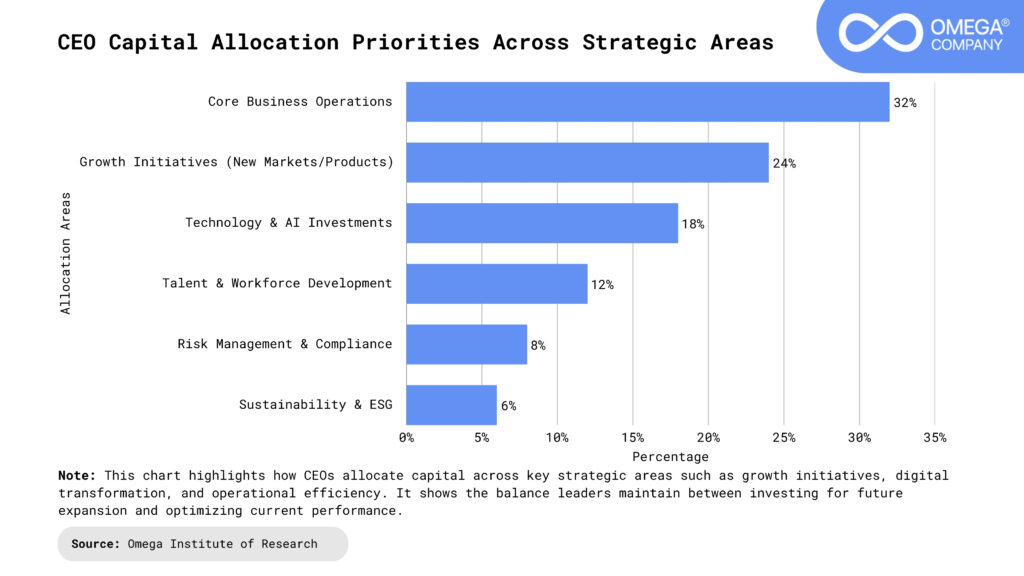
The rise of artificial intelligence has made capital allocation both more complex and more critical. CEOs are now required to make deliberate choices about where and how to invest in AI to generate meaningful, scalable impact.
Common Pitfall: Many organizations spread AI investments too thinly across multiple pilots without scaling any of them, resulting in limited impact and wasted resources. This fragmented approach often produces disconnected use cases that fail to integrate into core business processes. While teams may generate insights or prototypes, the absence of a clear path to production prevents these efforts from delivering measurable value. Over time, this erodes organizational confidence in AI initiatives and slows broader adoption.
Effective Approach: High-performing organizations concentrate their investments on a select number of high-impact use cases that are tightly aligned with strategic priorities and measurable outcomes. They allocate resources for end-to-end transformation, ensuring that AI is embedded into workflows, decision-making processes, and customer experiences rather than treated as a standalone capability. In parallel, they invest in robust data infrastructure, strong governance frameworks, and skilled talent to enable scalability and long-term sustainability. This integrated approach allows organizations to move beyond experimentation and unlock tangible business value from AI.
From Operator to Allocator: The CEO Mindset Shift
Many CEOs reach the top by mastering execution driving results, solving problems, and remaining deeply involved in operations. However, once in the CEO role, success is defined less by how much they do and more by the quality of the choices they make. The mindset must evolve from hands-on execution to deliberate selectivity shifting from managing activities to setting priorities, and from fixing issues to deciding which challenges deserve attention in the first place. This transition requires stepping back to see the broader system, making intentional trade-offs about where to direct the organization’s limited resources. It also demands the confidence to delegate, the discipline to remain focused, and the clarity to align decisions with long-term value creation. Over time, this shift enables leaders to scale their impact by empowering others rather than becoming the bottleneck for decision-making. Ultimately, a CEO’s effectiveness is measured not by activity, but by how well they allocate attention and resources to shape the organization’s future.
Where Your Attention Really Matters
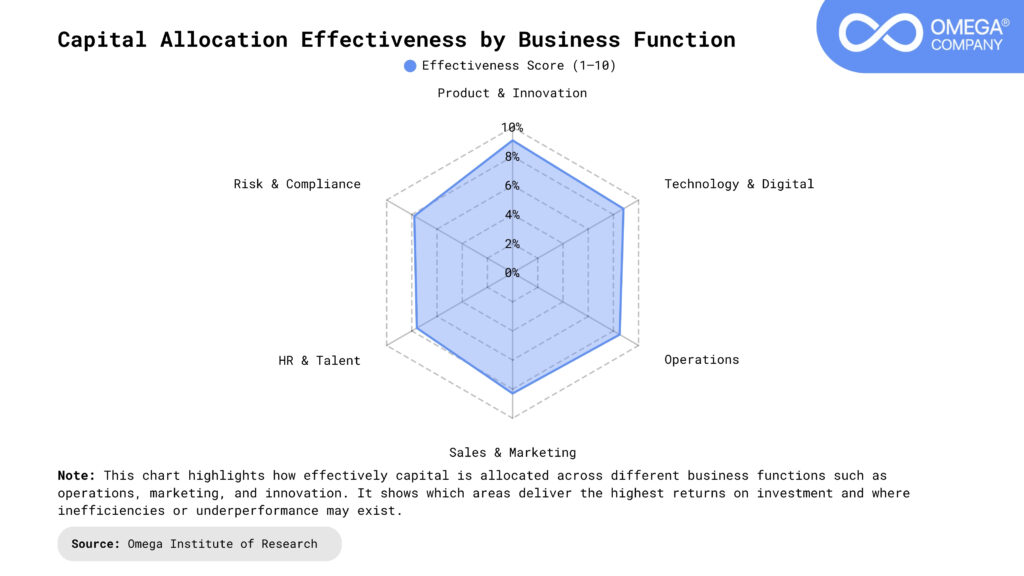
In practice, a CEO’s attention should be concentrated on five high-impact areas:
Strategy and Direction: Defining clear, differentiated priorities that determine where the organization will compete and how it will win. This requires making deliberate choices about what not to pursue, ensuring focus and alignment across the enterprise. A well-articulated strategy provides a foundation for decision-making and enables teams to connect their work to broader objectives. Continuous evaluation and adaptation remain essential as market dynamics evolve.
Talent and Leadership: Building and aligning a leadership team capable of executing the strategy effectively. CEOs must invest consistently in hiring, developing, and retaining top talent while ensuring that critical roles are filled with the right individuals. Strong leadership alignment reinforces consistency in decision-making and organizational direction, while a culture of ownership and accountability strengthens execution at every level.
Capital Allocation Decisions: Directing resources toward initiatives that drive long-term value while maintaining an appropriate balance between risk and return. This requires disciplined evaluation of investment opportunities and the willingness to reallocate capital as conditions change. Effective allocation practices enable sustained growth and reinforce competitive advantage.
Culture and Accountability: Ensuring the organization operates with clarity, discipline, and a strong sense of ownership. Culture shapes how work gets done informing behaviors, decision-making, and performance outcomes. CEOs play a central role in reinforcing values, setting expectations, and modeling desired behaviors. Clear accountability mechanisms translate strategy into consistent execution.
External Positioning: Engaging strategically with investors, partners, and customers to build trust and credibility. CEOs must communicate a compelling narrative around the organization’s vision, strategy, and performance. Strong external relationships unlock opportunities for partnerships and growth, while a well-managed market presence strengthens brand reputation and long-term positioning.
Conclusion
The CEO, as the ultimate capital allocator, shapes the organization’s future through every decision about where to invest time, money, and talent. In an environment defined by complexity, uncertainty, and constant change, success depends on the ability to allocate resources with clarity, discipline, and a long-term perspective. These decisions determine not only what the organization prioritizes, but also how effectively it executes and adapts over time. Consistent, well-aligned allocation builds momentum, reinforces strategic intent, and creates a clear path to sustainable growth. Ultimately, leadership is not just about setting a vision, it is about making deliberate choices and placing informed bets that translate strategy into tangible outcomes.
- https://mineolasearchpartners.com/2022/10/13/the-ceo-as-chief-capital-allocator/
- https://www.bcg.com/publications/2023/corporate-development-finance-function-excellence-art-of-capital-allocation
- https://agicap.com/en/article/capital-allocation/
- https://kaihan.net/the-rational-art-of-capital-allocation/
- https://thefinancecorner.substack.com/p/capital-allocation-the-ceos-most
Subscribe
Select topics and stay current with our latest insights
- Functions