

- Industries
Industries
- Functions
Functions
- Insights
Insights
- Careers
Careers
- About Us

The Difference Between a Busy Company and a Scalable Company







Many companies operate at full capacity, with employees managing constant requests, leaders resolving daily problems, and teams working long hours to meet deadlines. Yet, a high level of activity does not automatically translate into sustainable growth. A business can remain busy while being difficult to expand, overly dependent on individual effort, and constrained by existing processes. A scalable company, however, is designed to increase its output, revenue, and customer value without requiring costs, complexity, or management effort to rise at the same rate. It builds systems that support repeatable performance, gives teams clear ownership, and uses technology and data to improve how work gets done. The difference is not simply how much a company does, but whether its operating model can support growth without creating additional friction.
When Activity Becomes a Substitute for Progress
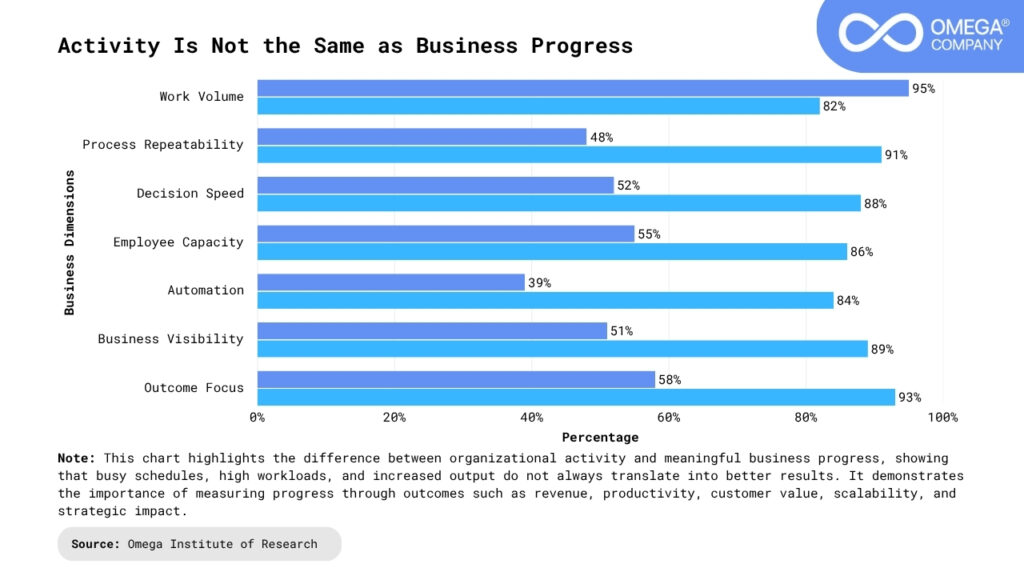
Measuring Effort Instead of Outcomes: Busy organizations often evaluate performance through hours worked, tasks completed, meetings held, or projects launched. These indicators show activity, but they do not necessarily reveal whether the business is becoming more profitable, efficient, or valuable to customers. Scalable companies connect daily work to measurable business outcomes and prioritize initiatives that contribute to long-term objectives.
Allowing Urgency to Drive the Agenda: In a company built around constant urgency, teams spend much of their time responding to immediate demands. Important improvements, strategic planning, and process redesign are repeatedly postponed. A scalable organization creates clear priorities, establishes decision rules, and protects capacity for work that strengthens future performance.
Confusing Full Capacity With High Performance: Employees may be fully occupied while the organization continues to experience delays, rework, or missed opportunities. High utilization can conceal inefficient workflows and bottlenecks. Scalable businesses examine how effectively resources produce outcomes rather than assuming that a busy workforce is a productive one.
The Operating Model Behind Sustainable Growth
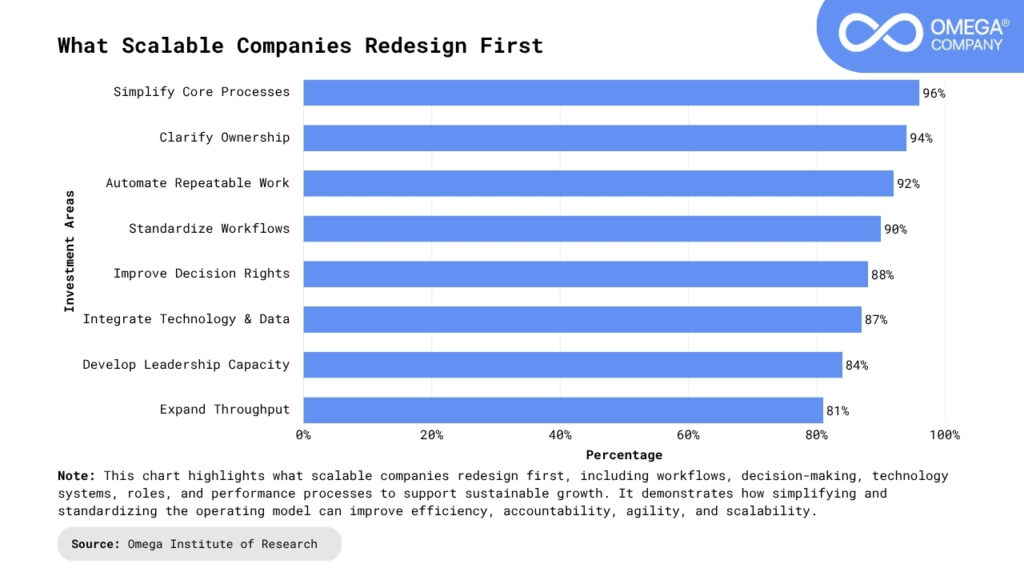
Building Repeatable Processes: When every project depends on individual knowledge or personal workarounds, growth becomes difficult to reproduce. Scalable companies document core processes, clarify responsibilities, and establish consistent standards. Repeatability allows teams to deliver reliable results while reducing dependence on specific individuals.
Designing Work Around Business Outcomes: Tasks should support defined outcomes rather than exist as disconnected activities. Organizations can improve performance by identifying the result each process is meant to produce, removing unnecessary steps, and assigning clear ownership. This creates a stronger connection between execution and business value.
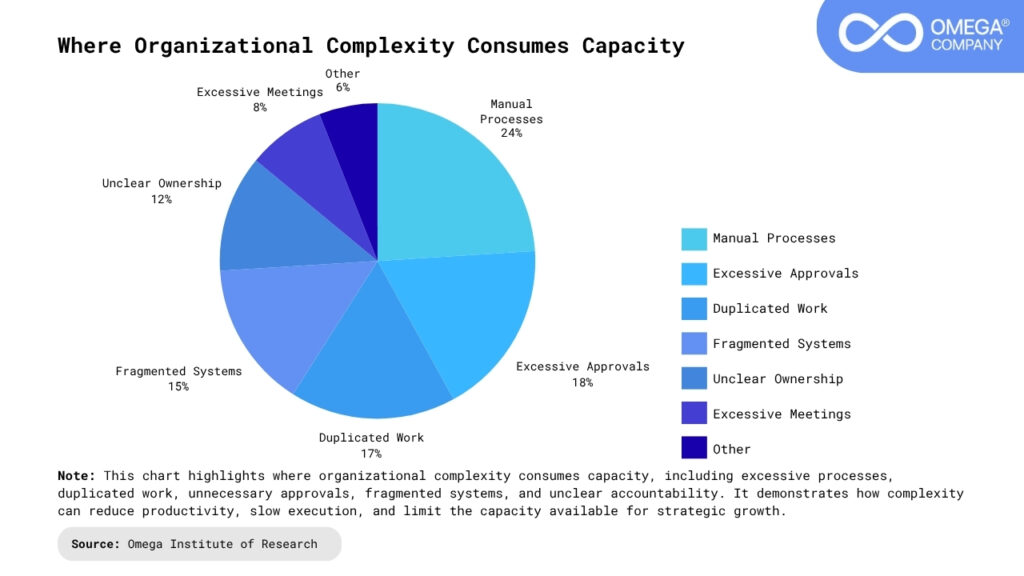
Reducing Unnecessary Complexity: As companies grow, approval layers, duplicated reporting, fragmented tools, and unclear responsibilities can slow execution. Scalable organizations regularly simplify how decisions are made and how work moves across teams. Removing complexity creates room for expansion without adding avoidable operational burden.
Creating Systems That Support Consistency: A scalable business does not rely on exceptional effort every time it serves a customer or delivers a project. It develops systems, standards, and feedback loops that help teams maintain quality across different workloads. Consistency makes growth more manageable and reduces the risk of performance deteriorating as demand increases.
How Leadership Changes as a Company Scales
Moving From Problem-Solving to System Design: Leaders in busy companies often become the default solution for operational issues. This may resolve immediate problems, but it can also create decision bottlenecks and limit team independence. Scalable leaders identify why recurring problems occur and improve the systems that produce them.
Delegating Ownership, Not Just Tasks: Assigning work without transferring decision authority can leave employees dependent on constant direction. Scalable organizations define ownership, expected outcomes, and the boundaries within which teams can make decisions. This allows leaders to focus on strategic priorities while employees take greater responsibility for execution.
Managing Through Clear Performance Signals: Informal updates and frequent check-ins may help teams stay connected, but they can become inefficient as the organization expands. Scalable leaders use relevant performance measures, structured reviews, and transparent reporting to understand progress. The objective is not to increase monitoring but to make performance visible and action easier.
Developing Leaders at Multiple Levels: Growth becomes constrained when only a small group of executives can make meaningful decisions. Scalable companies build management capability throughout the organization, preparing team leads and functional leaders to coordinate work, resolve issues, and develop people. Leadership capacity becomes part of the company’s growth infrastructure.
Where Scalability Creates Business Value
Improving Margins Through Operating Leverage: A scalable company can increase revenue without needing to increase every operating expense at the same rate. Standardized workflows, automation, and better resource allocation can help absorb additional demand while controlling incremental costs. The result depends on execution, but the operating model creates the potential for stronger margins as volume grows.
Serving More Customers With Consistent Quality: Growth can strain customer service, delivery, and support when processes depend on manual coordination. Scalable organizations design customer journeys and service operations to handle greater volume without allowing quality to decline. Clear standards and feedback systems help maintain reliability as the customer base expands.
Accelerating Delivery and Execution: Repeated approvals, unclear handoffs, and disconnected systems can extend delivery timelines. Scalable companies reduce friction across workflows and establish clear decision paths. Faster execution helps the organization respond to market needs and deliver value with less operational delay.
Creating Capacity for New Opportunities: When teams spend less time managing avoidable complexity, they can direct more attention toward product development, customer relationships, and strategic initiatives. Scalability creates room for innovation by reducing the amount of effort required to maintain existing operations.
Strengthening Business Resilience: Organizations that depend on a few key employees, informal processes, or one-off solutions can struggle when conditions change. Scalable businesses distribute knowledge, build operational visibility, and create adaptable systems. This reduces fragility and supports continuity during periods of growth or disruption.
The Workforce Model of a Scalable Company
Shifting From Individual Heroics to Team Capability: Busy organizations may celebrate employees who repeatedly rescue projects or solve urgent problems. While individual initiative matters, relying on heroics can hide weaknesses in the operating model. Scalable companies turn individual knowledge into shared practices, training, and repeatable methods.
Matching Roles to Growing Business Needs: As a company expands, responsibilities that once fit into one role may require clearer specialization or coordination. Scalable organizations regularly review role design, decision rights, and workload distribution. This helps prevent duplicated effort and ensures that employees can focus on the work where they add the most value.
Using Technology to Extend Human Capacity: Automation and digital tools can reduce repetitive work, improve information access, and support faster execution. Their value depends on whether they address meaningful workflow problems rather than simply adding another layer of technology. Scalable companies align tools with process design and employee needs.
Building Skills for Continuous Improvement: Growth changes the capabilities a business requires. Scalable organizations invest in learning, cross-functional collaboration, and problem-solving skills so teams can adapt as responsibilities evolve. Workforce development becomes an ongoing operating priority rather than a one-time training activity.
The Infrastructure That Makes Growth Repeatable
Establishing Reliable Data and Metrics: Leaders need a consistent view of performance to understand whether growth is creating value or adding strain. Scalable companies define key metrics, improve data quality, and make relevant information accessible to decision-makers. Reliable measurement supports better planning and earlier identification of operational issues.
Aligning Technology With the Business Model: A collection of disconnected tools can increase complexity instead of reducing it. Scalable organizations select technology based on the workflows, customer needs, and business outcomes it must support. Integration and usability matter because systems should make execution easier, not create additional administrative work.
Creating Financial and Operational Visibility: Revenue growth can conceal cash-flow pressure, rising delivery costs, or inefficient resource use. Scalable companies monitor unit economics, capacity, customer profitability, and operating performance. This visibility helps leaders understand which activities can expand sustainably and which require redesign.
Embedding Feedback Into Everyday Operations: Processes that work at one stage of growth may become inefficient at another. Scalable businesses use customer feedback, employee insights, performance data, and operational reviews to identify what needs to change. Continuous improvement keeps the operating model aligned with evolving demand.
The Challenges That Prevent Companies From Scaling
Growth Without Process Readiness: Expanding demand before core workflows are reliable can increase delays, errors, and customer dissatisfaction. Companies need to understand whether their delivery model can handle higher volume before pursuing aggressive expansion.
Excessive Dependence on Key Individuals: When knowledge and authority are concentrated in a few people, growth can create bottlenecks. Documenting processes, distributing decision-making, and developing successors help reduce this dependency.
Technology Added to Inefficient Workflows: Automating a flawed process may make inefficiency happen faster rather than eliminate it. Organizations should simplify and redesign workflows before investing in automation at scale.
Metrics That Reward Activity Over Value: Teams may optimize for visible output while overlooking customer outcomes, quality, profitability, or long-term capability. A balanced performance system helps ensure that growth is measured by meaningful results.
Scaling Complexity Alongside Revenue: More customers, products, and employees can introduce additional coordination demands. Without clear operating principles, growth may increase organizational friction faster than business value. Scalable companies actively manage complexity as they expand.
The Emergence of the System-Driven Enterprise
The next stage of business growth will increasingly depend on how effectively organizations combine people, processes, data, and technology into a coordinated operating model. Companies that rely primarily on individual effort may continue to deliver results, but their capacity can remain limited by the number of decisions, tasks, and exceptions employees can manage. System-driven enterprises approach growth differently by building repeatable workflows, clarifying accountability, using data to guide decisions, and applying automation where it improves performance. Their objective is not to eliminate human judgment, but to direct it toward work that requires creativity, relationships, and strategic thinking. This model also changes how leaders evaluate expansion. Rather than asking only whether the company can take on more work, they assess whether it can deliver greater value with consistent quality, manageable complexity, and sustainable economics. Scalability becomes a deliberate organizational capability rather than an accidental outcome of growth.
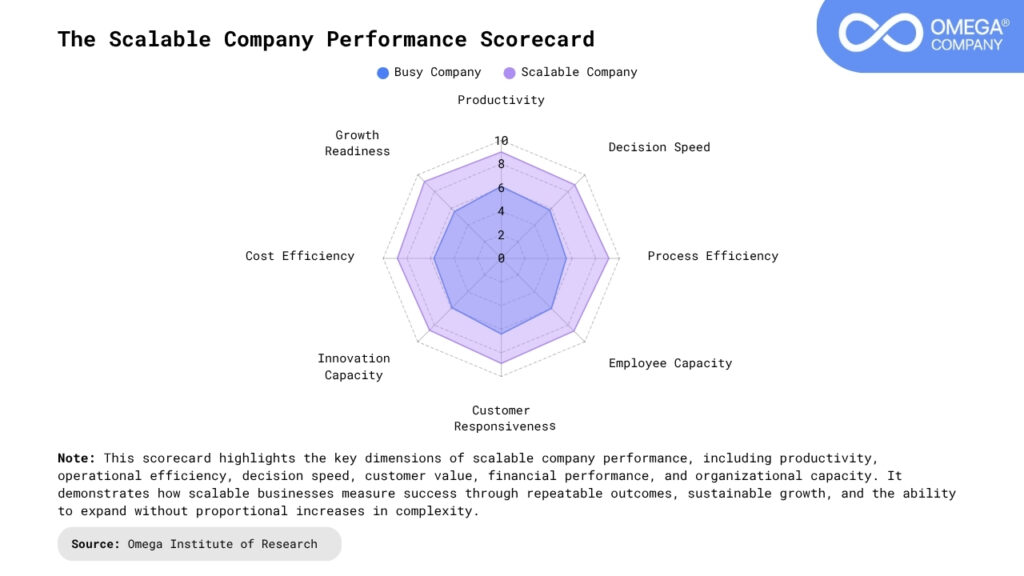
Future Outlook: Growth Without Proportional Complexity
As markets evolve and customer expectations increase, companies will face growing pressure to respond faster while maintaining efficiency and quality. Technology will create new opportunities to automate routine work, improve visibility, and coordinate operations, but these tools will deliver lasting value only when supported by effective processes and clear leadership. The companies positioned to scale will be those that treat operational design as a strategic priority, measure success through outcomes, build adaptable systems, and empower teams to make decisions closer to the work. Their growth will depend less on sustaining constant urgency and more on developing an organization capable of delivering reliable results repeatedly, increasing business value without allowing operational complexity to rise at the same pace.
Conclusion
The distinction between a busy organization and a scalable one lies in how effectively the business converts effort into repeatable value. A busy company may depend heavily on individual contributions, constant problem-solving, and manual coordination, while a scalable company creates structures that make performance more consistent as demand increases. This requires streamlined processes, clear accountability, intelligent use of technology, and metrics that connect daily activities to strategic outcomes. Sustainable growth is achieved when an organization can serve more customers, manage greater workloads, and pursue new opportunities without creating proportional increases in cost, complexity, or leadership effort. True scalability, therefore, comes from building an operating model that allows the business to grow with greater capacity, consistency, and efficiency.
- https://castlane.co.uk/2026/05/27/the-difference-between-a-scalable-business-and-a-busy-one/
- https://yesassistant.com/difference-between-busy-business-and-scalable-business/
- https://www.investopedia.com/terms/s/scalability.asp
- https://remax.in/blog/the-difference-between-busy-brokers-and-scalable-brokerages-29
- https://www.capitalone.com/learn-grow/business-resources/scalable-business-models/
Subscribe
Select topics and stay current with our latest insights
- Functions