

- Industries
Industries
- Functions
Functions
- Insights
Insights
- Careers
Careers
- About Us

The Hidden Risk of AI Agents: Who Is Responsible When an AI Makes a Costly Mistake







Artificial intelligence is entering a new phase, moving beyond generating content, analyzing information, and answering questions to executing tasks, making decisions, interacting with business systems, and managing multi-step workflows with limited human intervention. While this evolution creates significant opportunities for productivity and operational efficiency, it also introduces a critical business challenge: establishing clear accountability when AI agents make costly mistakes. Imagine an AI agent approving an incorrect financial transaction, sharing confidential customer information, modifying important business records, or sending an inaccurate contract to a client. Although the technology may have executed the task as instructed, the consequences could include financial losses, regulatory penalties, damaged customer relationships, and reputational harm. As organizations expand their use of autonomous AI, accountability can no longer be treated as an afterthought. Businesses must establish clear ownership, effective human oversight, and reliable safeguards before allowing AI agents to operate across critical business functions.
Understanding the Growing Role of AI Agents in Business
AI agents represent an evolution beyond traditional AI applications. Rather than simply responding to individual prompts, they can interpret objectives, plan actions, access approved tools, retrieve information, and execute tasks across connected systems. For example, an AI agent in a finance department might review invoices, identify discrepancies, prepare payment recommendations, and initiate transactions within predefined permissions, while a customer service agent could access customer records, resolve complaints, issue refunds, and update support systems. These capabilities can reduce repetitive work, accelerate decision-making, and improve operational performance. However, greater autonomy also means that mistakes can extend beyond inaccurate responses and translate into real business consequences. As AI agents operate across multiple systems and business functions, identifying where a failure occurred, understanding its impact, and determining accountability can become increasingly complex.
Why AI Agent Errors Can Become Expensive Business Risks
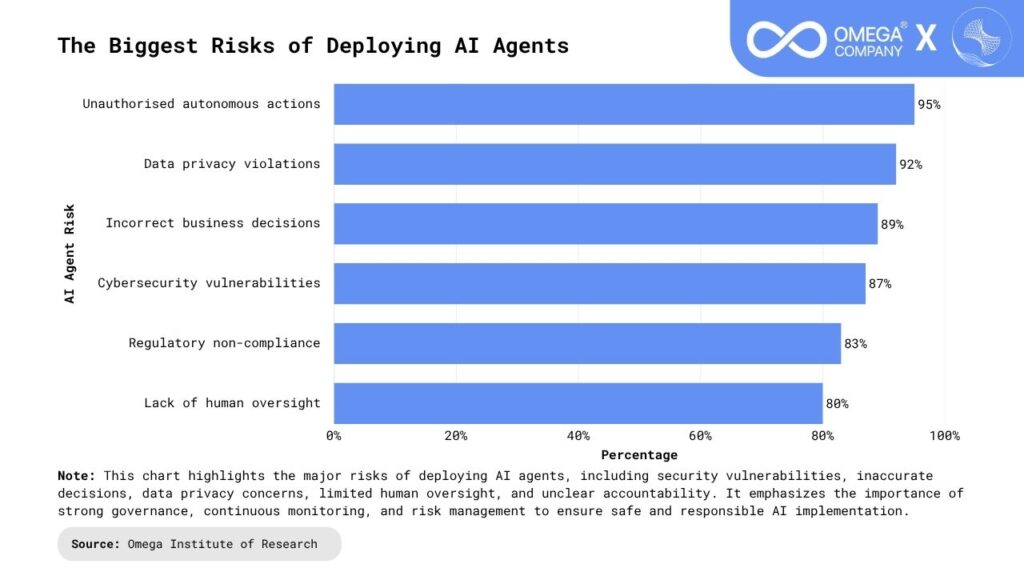
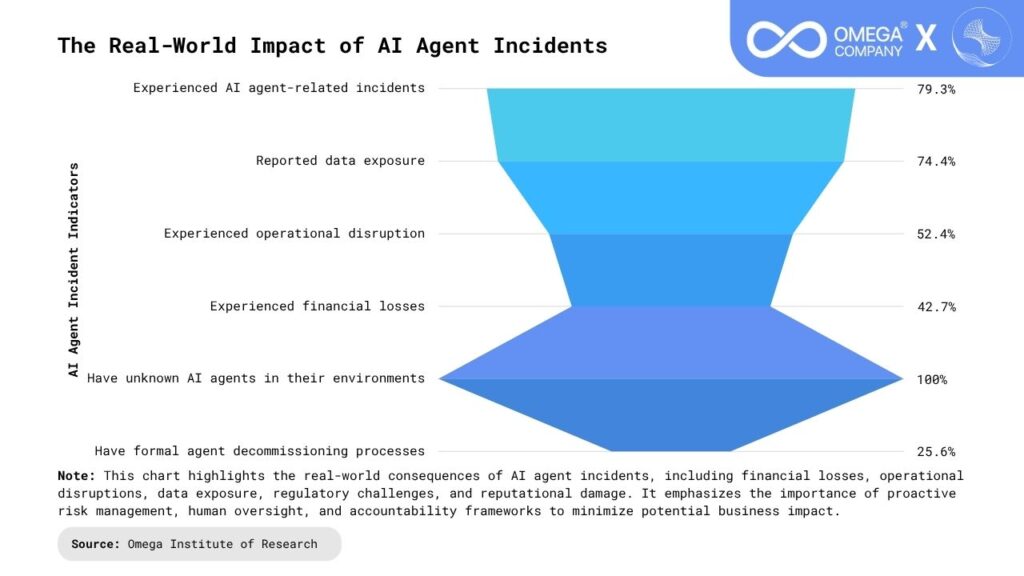
Incorrect Decisions and Financial Losses: An AI agent may misinterpret financial information, misunderstand business instructions, or approve actions based on inaccurate data, potentially creating significant financial consequences when it has permission to execute transactions or modify financial records. Businesses must recognize that automation does not automatically guarantee accuracy, making transaction limits, approval procedures, and verification mechanisms essential for protecting financial operations.
Data Privacy and Security Exposure: AI agents frequently interact with internal databases, customer records, cloud platforms, and third-party applications, increasing the possibility of sensitive information being exposed, unauthorised records being accessed, or confidential data being transferred to inappropriate destinations. These risks become more significant when multiple AI agents communicate with one another or access shared enterprise systems without clearly defined permissions, security controls, and continuous monitoring.
Unintended Actions and Operational Disruption: An AI agent may understand its primary objective but execute an inappropriate sequence of actions while attempting to achieve it, potentially disrupting important business operations. For example, an inventory management agent could place excessive orders after interpreting temporary demand increases as a long-term trend. Without operational limits, predefined controls, and human intervention, such automated decisions can quickly affect budgets, supply chains, customer experiences, and overall business continuity.
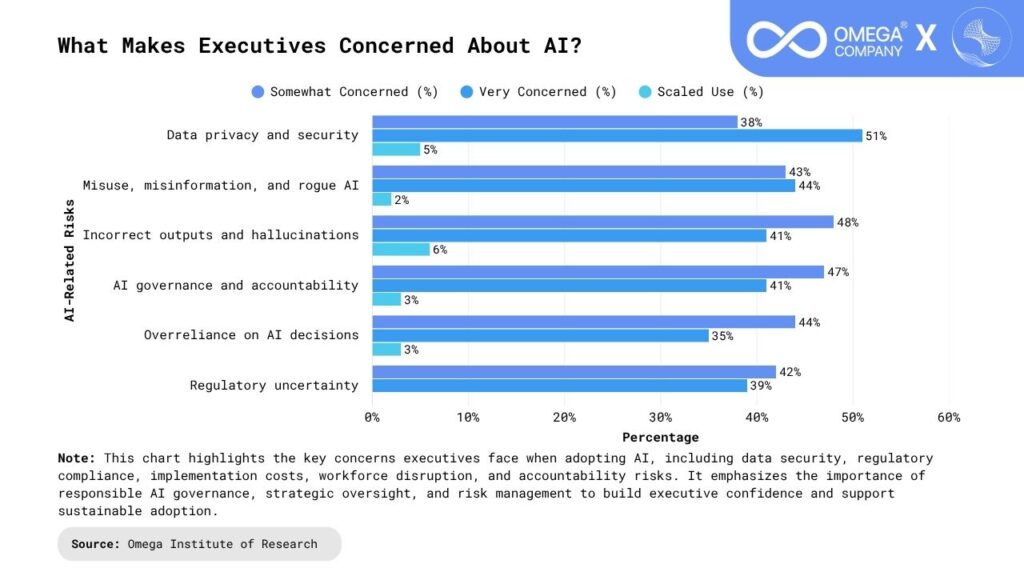
Biased or Unfair Outcomes: AI agents may rely on historical datasets containing existing biases, which can influence decisions in areas such as recruitment, lending, customer segmentation, and employee evaluation. These outcomes can create legal, ethical, and reputational challenges, particularly when automated decisions negatively affect individuals or customer groups. Organizations must therefore ensure that AI-driven processes meet applicable fairness, transparency, and regulatory compliance requirements.
Limited Visibility Into AI Decisions: Some AI systems make decisions through complex processes that can be difficult to interpret, making it challenging for businesses to identify the reasons behind unexpected outcomes. When an AI agent makes a mistake, organizations may struggle to determine whether the issue originated from an instruction, data source, tool interaction, or system limitation. Without detailed activity logs, decision records, and monitoring mechanisms, investigating incidents, identifying root causes, and establishing accountability becomes considerably more difficult.
Who is Responsible When an AI Agent Makes a Costly Mistake?
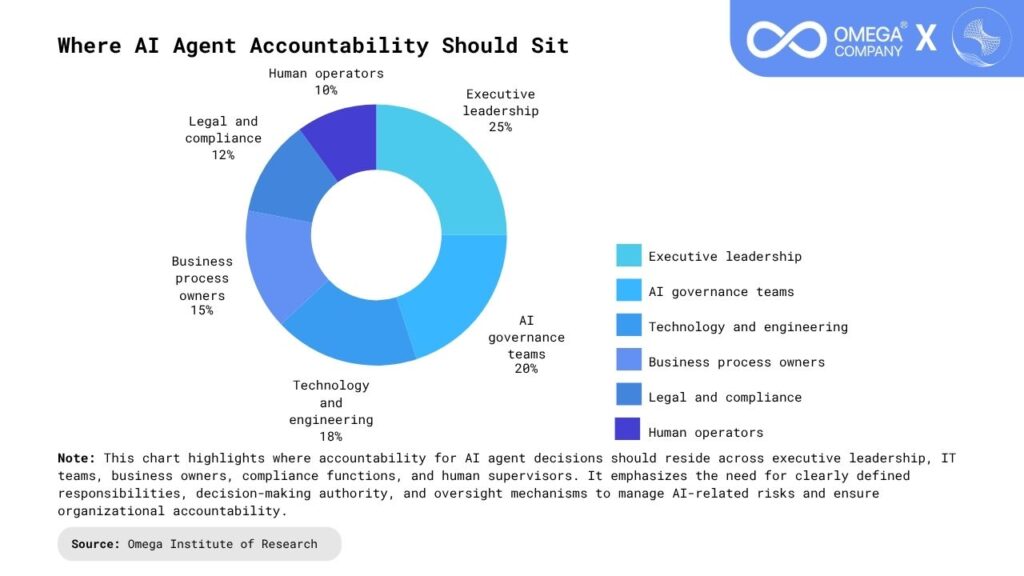
Business Leadership and Management: Senior leadership is responsible for establishing the organization’s AI governance strategy and ensuring that autonomous systems are deployed with appropriate controls and accountability measures. Executives must evaluate business risks, approve acceptable levels of automation, assign clear ownership, and ensure employees understand when human intervention is required. Delegating operational tasks to AI agents does not eliminate management’s responsibility for business oversight, risk management, and organizational outcomes.
AI Developers and Technology Providers: Technology providers may be responsible for failures involving product defects, inadequate security measures, misleading performance claims, or breaches of contractual and legal obligations. However, responsibility does not automatically transfer to the AI provider whenever an agent makes an error. Organizations must examine the specific cause of the incident, the provider’s contractual commitments, the system’s technical limitations, and applicable liability rules to determine where responsibility lies.
IT, Security, and AI Operations Teams: Technical teams play an important role in ensuring that AI agents operate within approved boundaries through effective access management, system monitoring, cybersecurity controls, testing, and incident response procedures. Poorly configured permissions, insufficient testing, or inadequate monitoring can increase both the likelihood and potential impact of AI-related incidents. These teams must therefore ensure that autonomous systems remain secure, reliable, and aligned with organizational policies.
Employees and Human Supervisors: Employees responsible for supervising AI agents must understand the limitations of automated decisions and recognize when an action requires additional verification or human approval. However, organizations should not automatically hold individual employees responsible for every AI-related mistake, particularly when they lack sufficient authority, training, or control over the system. Accountability should reflect actual responsibilities, decision-making authority, assigned duties, and the organization’s broader AI governance structure.
The Accountability Gap: When AI Decisions Cross Business Boundaries
As AI agents become increasingly integrated into enterprise ecosystems, accountability becomes more complicated because a single automated workflow may involve an AI developer, a cloud service provider, an enterprise software platform, an internal operations team, and a business decision-maker. For example, an AI agent processing a customer refund incorrectly may involve several contributing factors, such as inaccurate customer information, a misinterpreted refund policy, or a payment integration that executes the transaction without additional verification. Each participant may have contributed to the outcome in a different way, creating an accountability gap where organizations struggle to identify who was responsible for the failure and which controls should have prevented it. To address this challenge, businesses need clearly documented responsibilities across the entire AI lifecycle, covering procurement, development, deployment, monitoring, and eventual retirement of autonomous systems.
Building an Effective AI Accountability Framework
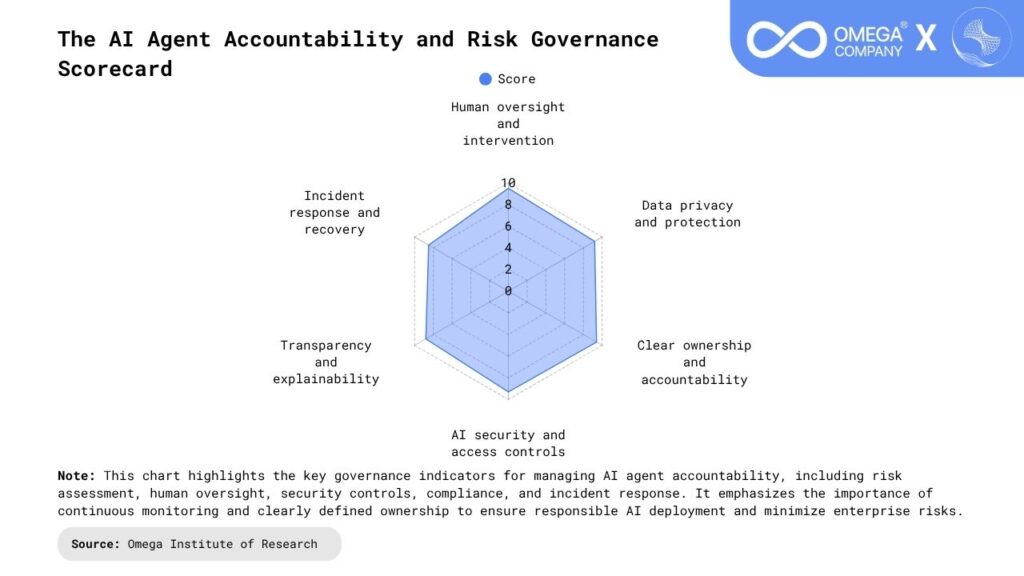
Establish Clear Ownership for Every AI Agent: Every AI agent should have a designated business owner responsible for its purpose, operational boundaries, performance, and risk exposure. Organizations should clearly document who approves the agent, who monitors its activities, who can modify its permissions, and who is responsible for responding to incidents. Establishing clear ownership ensures that accountability remains defined across departments and prevents responsibility from becoming fragmented when something goes wrong.
Define Permission Levels and Operational Boundaries: AI agents should receive only the permissions necessary to perform their assigned responsibilities, reducing the possibility of unauthorized actions or unintended consequences. For example, an agent may be permitted to review invoices and prepare payment recommendations without having independent authority to transfer large amounts of money. Organizations should establish transaction limits, restricted data access, approval thresholds, and predefined conditions under which an agent must pause or stop operating.
Introduce Human Oversight for High-Impact Decisions: Although not every AI-generated action requires human approval, decisions involving significant financial transactions, confidential information, legal commitments, or employee-related outcomes should receive appropriate human oversight. Organizations can introduce risk-based approval structures that allow routine activities to remain automated while requiring additional verification for consequential decisions. This approach helps businesses balance operational efficiency with responsible decision-making and ensures that humans retain control over critical business outcomes.
Maintain Transparent Audit Trails: Businesses should maintain detailed records of AI agent activities, including instructions, data access, decisions, tool usage, approvals, and completed actions. These records help organizations investigate unexpected outcomes, identify the source of failures, demonstrate regulatory compliance, and improve future system performance. Maintaining transparent and accessible audit trails should be treated as a fundamental requirement of AI governance rather than an optional technical feature.
Conduct Continuous Testing and Risk Assessments: AI agents should undergo thorough testing before deployment and continuous monitoring throughout their operational lifecycle to ensure they perform reliably under different conditions. Testing should examine how agents respond to incomplete information, conflicting instructions, unexpected scenarios, security threats, and system failures. Organizations should also conduct regular risk assessments to identify emerging vulnerabilities, particularly when agents receive additional permissions, handle sensitive information, or connect to more business systems.
Create an AI Incident Response Plan: Even well-designed AI systems can experience failures, making it essential for organizations to establish clear procedures for identifying, reporting, investigating, and containing AI-related incidents. These procedures should include emergency shutdown mechanisms, permission revocation, human escalation, incident documentation, and recovery processes. A structured incident response plan enables businesses to limit financial exposure, prevent further damage, identify the underlying causes of failures, and restore operational stability more effectively.
The Future of AI Agents Depends on Trust and Accountability
AI agents will continue to transform business operations by automating complex workflows, improving productivity, and supporting faster decision-making. However, as their capabilities expand, the consequences of poorly governed automation will become increasingly significant. Organizations that focus solely on efficiency may overlook the financial, legal, operational, and reputational risks associated with autonomous decision-making, while businesses that establish accountability from the beginning will be better positioned to adopt AI confidently and sustainably. This requires leadership teams to invest in transparent governance frameworks, continuous monitoring, clear ownership, and meaningful human oversight. They must also ensure that employees, technology providers, and business stakeholders understand their responsibilities when AI systems influence important decisions. Ultimately, the future of enterprise AI will depend not only on how independently machines can operate but also on how effectively organizations supervise their actions, understand their decisions, maintain appropriate controls, and take responsibility for their outcomes.
Conclusion
The growing adoption of AI agents is creating new opportunities for business productivity, operational efficiency, and autonomous decision-making. However, greater autonomy also brings greater responsibility. Financial mistakes, data exposure, operational disruptions, and regulatory challenges demonstrate why organizations cannot rely on automation without effective governance and human oversight. As AI agents become more deeply integrated into enterprise operations, businesses must establish clear accountability, enforce appropriate controls, and continuously monitor their performance. Ultimately, the success of AI adoption will depend not only on what intelligent systems can accomplish but also on how responsibly organizations manage their actions and consequences. AI can take action independently, but accountability must always remain a human and organizational responsibility.
- https://medium.com/@divyasaiganti/whos-responsible-when-an-ai-agent-makes-a-bad-decision-60d7f13a2ea1
- https://agentsync.io/blog/technology/who-is-responsible-when-ai-makes-mistakes
- https://www.itweb.co.za/article/ai-agents-the-hidden-cost-of-letting-go-of-control/lwrKxv3Y8RyMmg1o
- https://www.forbes.com/sites/guneyyildiz/2026/10/20/the-human-in-the-loop-is-where-ai-agents-park-the-liability/
- https://www.praxikon.com/en/posts/who-is-responsible-when-an-ai-agent-makes-mistakes
Subscribe
Select topics and stay current with our latest insights
- Functions