

- Industries
Industries
- Functions
Functions
- Insights
Insights
- Careers
Careers
- About Us

The Leadership Gap: Why Developing Your Next Generation of Executives Matters Now







The most significant leadership risk facing organizations today is not necessarily the absence of experienced executives, but the lack of prepared successors capable of leading through the next wave of business transformation. As artificial intelligence reshapes workflows, market conditions become less predictable, and strategic decisions grow more complex, organizations must reconsider how they identify, develop, and prepare their next generation of leaders. Experience alone is no longer sufficient; future executives must combine strategic judgement, technological fluency, financial understanding, people leadership, and the ability to translate uncertainty into decisive action. Yet many organizations continue to promote high-performing employees without systematically preparing them for the broader responsibilities of executive leadership. Technical excellence does not automatically translate into strategic capability, and operational success does not guarantee the ability to lead an entire business function. When leadership development falls behind business demands, organizations face succession risks, inconsistent execution, employee disengagement, and missed growth opportunities. Developing future executives is therefore not simply an HR initiative or a long-term talent investment; it is a strategic business priority that directly influences organizational resilience, leadership continuity, competitive positioning, and sustainable performance. Companies that begin building their next generation of leaders today will be better positioned to navigate tomorrow’s challenges with confidence.
The Leadership Gap Is Becoming a Strategic Business Risk
Leadership Responsibilities Are Expanding: Executives are expected to manage business performance while understanding technology, organizational change, workforce development, and risk. These responsibilities require leaders to connect decisions across functions rather than optimize individual departments. Organizations that fail to prepare leaders for this broader scope may struggle to execute strategies consistently.
Operational Excellence Does Not Guarantee Executive Readiness: High-performing employees are often promoted because they deliver measurable results in their current roles. However, executive positions require delegation, resource allocation, long-term planning, stakeholder alignment, and accountability for outcomes beyond individual performance. Without structured development, organizations may place talented employees in roles they are not yet equipped to handle.
Leadership Vacancies Create Organizational Vulnerability: When critical positions become vacant unexpectedly, organizations without prepared successors face disruption, delayed decisions, and uncertainty across teams. Leadership continuity becomes especially difficult when institutional knowledge and strategic relationships are concentrated among a small number of senior executives. Building a dependable leadership pipeline reduces this exposure and strengthens organizational stability.
Business Transformation Requires Different Leadership Capabilities: Digital transformation, AI adoption, and evolving operating models are changing how organizations create value. Future executives must understand how technology, people, processes, and business strategy interact. Companies that develop these capabilities early can respond to disruption more effectively than those that wait until leadership gaps become visible.
The Cost of Delayed Development Is Compounding: Leadership capability takes time to build through experience, feedback, and increasingly complex responsibilities. Organizations that postpone development until a promotion or succession event often discover that candidates lack the judgement and practical experience required. Early investment creates a stronger pipeline while reducing the operational and financial risks associated with unprepared leadership.
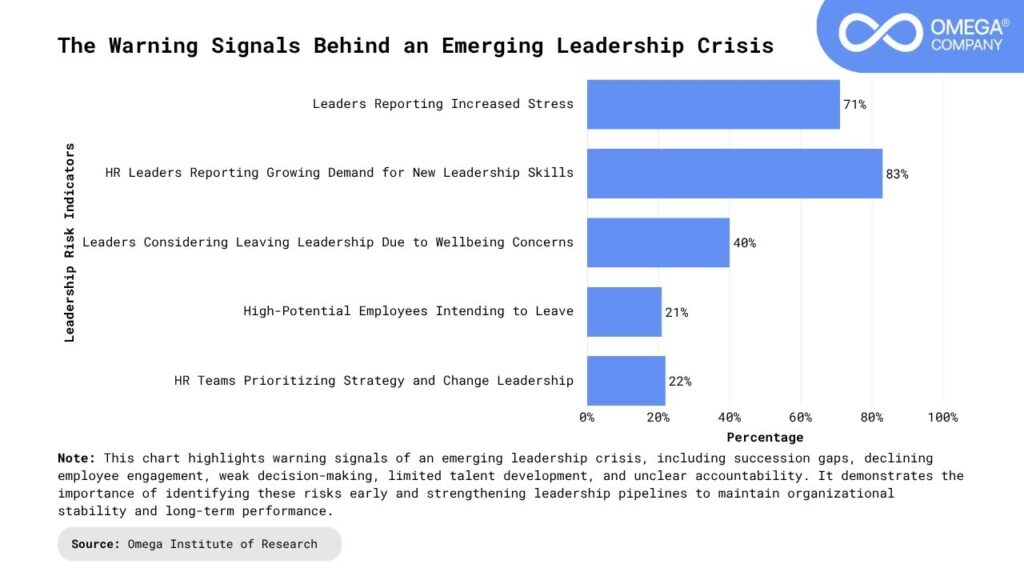
Why Traditional Leadership Development Is No Longer Enough
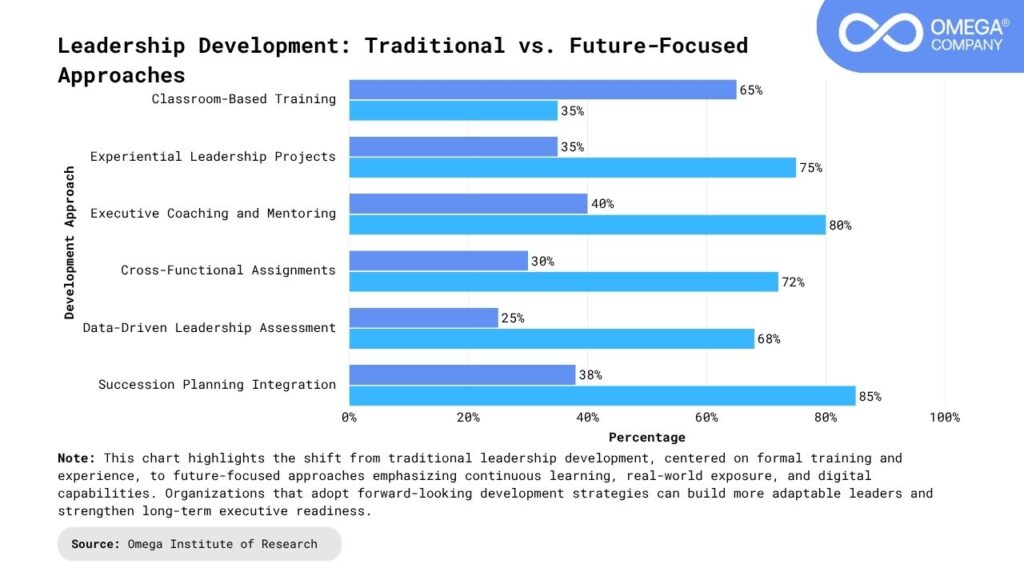
Many organizations continue to rely on conventional leadership development methods, including occasional training sessions, mentoring conversations, and promotions based on tenure or individual achievement. Although these approaches support professional growth, they rarely provide a complete pathway to executive leadership. Future leaders need continuous, practical, and measurable development aligned with business priorities. Leadership workshops must be reinforced through strategic projects, team management, budgeting decisions, and cross-functional initiatives. Similarly, individual performance alone cannot determine executive readiness; organizations must evaluate candidates’ ability to develop others, influence decisions, manage uncertainty, and deliver results through teams. Structured mentorship can strengthen these capabilities through regular feedback and guidance from experienced decision-makers. Leadership development must also reflect business strategy, future market conditions, technology investments, and succession requirements. Finally, continuous assessments of strategic thinking, decision quality, adaptability, people leadership, and execution help organizations measure readiness and prepare emerging leaders for greater responsibility.
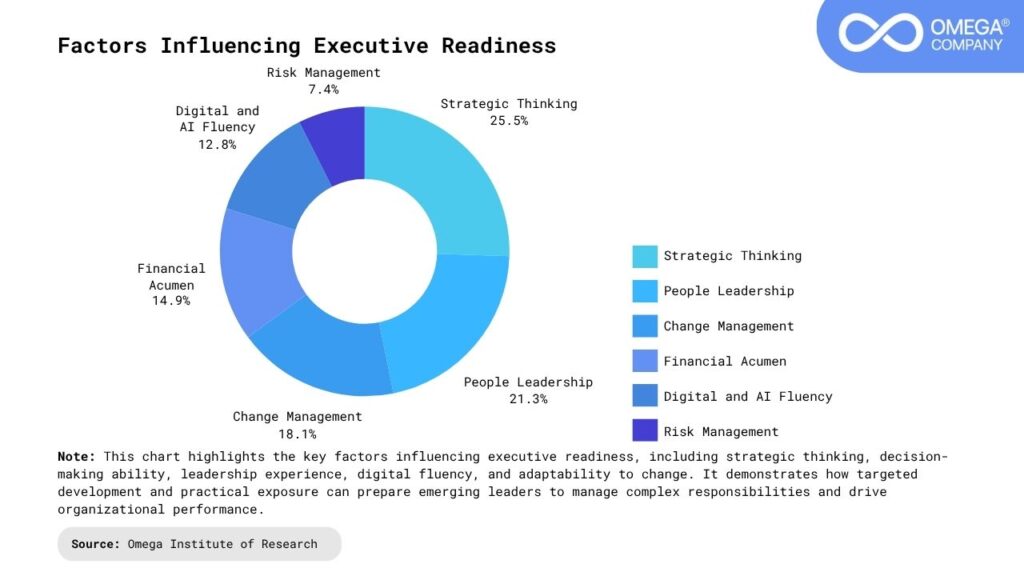
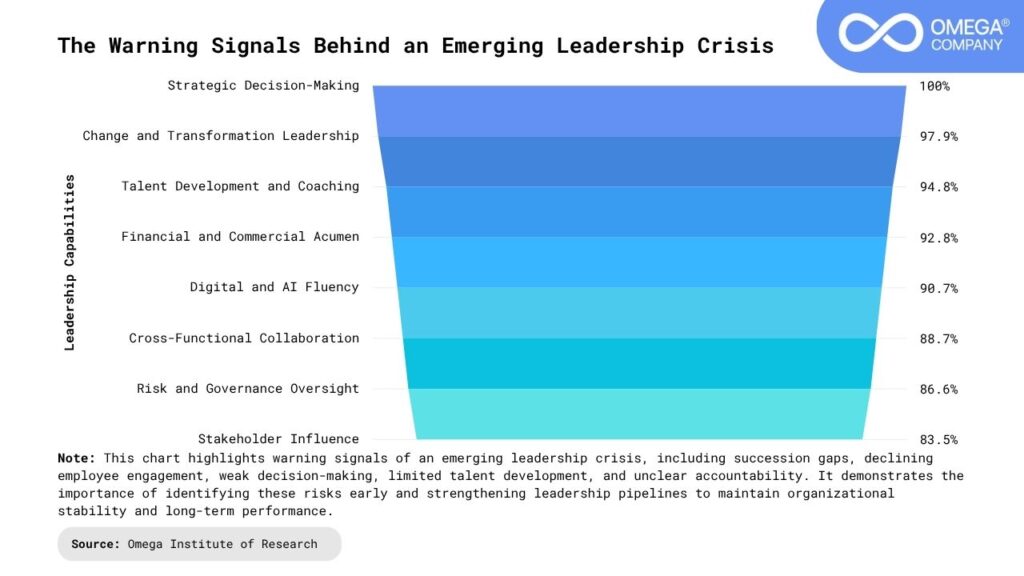
The Capabilities the Next Generation of Executives Must Develop
Strategic Thinking and Business Judgement: Future executives must understand how market dynamics, customer needs, competitive pressures, and financial performance influence organizational priorities. They need to distinguish immediate operational concerns from decisions that determine long-term value creation. Developing this judgement requires exposure to strategic planning, scenario analysis, investment decisions, and business-level trade-offs.
Financial and Commercial Acumen: Executive leaders must understand revenue drivers, cost structures, margins, capital allocation, and return on investment. Their decisions should connect operational activities with measurable financial outcomes. Providing emerging leaders with budgeting responsibilities and exposure to business performance reviews helps them develop the commercial discipline required for senior roles.
AI and Digital Fluency: Leaders do not necessarily need to become technical specialists, but they must understand how AI, automation, data analytics, and digital systems affect productivity risk, customer experience, and competitive advantage. They must also evaluate implementation costs, data quality, governance requirements, and business value. This enables executives to make informed technology decisions rather than delegate strategic judgement entirely to technical teams.
People Leadership and Talent Development: Executive effectiveness depends on building capable teams, developing future leaders, resolving conflict, and creating an environment where accountability and collaboration can coexist. Emerging leaders must learn how to delegate effectively, provide constructive feedback, and align individual performance with organizational objectives. Their success should be measured partly by the strength of the teams and successors they develop.
Decision-Making Under Uncertainty: Senior leaders frequently make decisions before complete information is available. They must evaluate competing scenarios, identify material risks, distinguish reversible from irreversible choices, and adjust their approach as new evidence emerges. Scenario planning, simulation exercises, and ownership of complex projects help future executives develop confidence without confusing confidence with certainty.
Building a Leadership Development System That Produces Results
Identify Critical Leadership Roles Early: Organizations should determine which positions are essential to strategy execution, operational continuity, customer relationships, and future growth. Each role should have a clear description of the capabilities, experience, and judgement required for success. This allows leadership development to focus on the positions where readiness gaps would create the greatest organizational risk.
Create Individualized Development Pathways: Emerging leaders have different strengths, limitations, and career trajectories. Some may need greater financial exposure, while others require experience in people management, strategic planning, or cross-functional execution. Personalized development plans translate these gaps into specific assignments, learning objectives, mentorship opportunities, and measurable milestones.
Use Stretch Assignments to Build Executive Experience: Future leaders need opportunities to operate beyond their current responsibilities while receiving appropriate support. Leading a cross-functional project, presenting recommendations to senior management, managing a budget, or overseeing an operational improvement initiative can build practical executive capability. These assignments reveal how individuals respond to complexity while helping them develop the judgement required for larger roles.
Establish Executive Mentorship and Sponsorship: Mentors provide guidance, feedback, and perspective, while sponsors actively advocate for qualified emerging leaders and help them access meaningful opportunities. Both relationships can expand exposure to senior-level decision-making and organizational priorities. Clear expectations and periodic progress reviews help ensure these relationships contribute to development rather than becoming informal networking exercises.
Connect Development to Succession Planning: Leadership development should prepare individuals for defined future responsibilities without assuming that every participant will automatically receive a promotion. Succession plans should identify potential successors, evaluate their readiness, and specify the experiences required before they can assume critical roles. This creates a more transparent pipeline and reduces dependence on emergency hiring or last-minute internal appointments.
The Role of Senior Executives in Developing Future Leaders
Model the Behaviors Future Leaders Must Learn: Emerging executives observe how senior leaders respond to pressure, communicate difficult decisions, resolve disagreements, and balance short-term demands with long-term objectives. Consistent role modelling makes organizational values visible through actual decisions rather than written statements. Senior leaders should demonstrate the judgement, integrity, accountability, and adaptability they expect future executives to exhibit.
Delegate Decisions, Not Just Tasks: Assigning additional work does not necessarily develop leadership capability if every meaningful decision remains with the manager. Emerging leaders need clearly defined authority to make decisions, allocate resources, solve problems, and take responsibility for outcomes. Appropriate boundaries and escalation procedures provide room for independent judgement while protecting business continuity.
Make Feedback Continuous and Actionable: Annual reviews are insufficient for developing the judgement required at the executive level. Timely feedback should explain what worked, where reasoning fell short, and how decisions could be improved. Regular coaching conversations help emerging leaders recognize behavioral patterns, correct weaknesses, and build confidence through evidence rather than assumptions.
Reward Leaders Who Develop Other Leaders: Executives are often evaluated primarily on revenue, delivery, productivity, or departmental performance. Organizations should also consider how effectively they develop talent, improve team capability, and prepare successors for critical responsibilities. Recognizing these contributions makes leadership development an operational expectation instead of an optional activity.
Build a Culture of Accountability and Learning: Future executives must learn to take ownership of outcomes while remaining open to evidence that challenges their assumptions. Organizations should encourage thoughtful experimentation, transparent discussion of setbacks, and systematic learning from decisions. This balance helps leaders become more resilient without weakening performance standards or accountability.
Measuring Leadership Readiness and Development Impact
Successor Readiness: Measure the proportion of critical leadership roles with identified successors who have demonstrated the required capabilities. Distinguish between individuals who are ready now and those who need additional development. This gives executives a clearer view of succession risk and highlights where development resources should be concentrated.
Internal Leadership Placement: Track the proportion of leadership positions filled by qualified internal candidates. A healthy internal pipeline can preserve institutional knowledge, reduce transition disruption, and demonstrate that development opportunities are translating into career progression. However, internal promotion should remain dependent on capability and role requirements rather than becoming a target that overrides external talent needs.
Time to Leadership Readiness: Assess how long emerging leaders take to demonstrate the capabilities required for their next roles. This helps organizations identify which development experiences accelerate readiness and where bottlenecks exist. The objective is not simply to promote people faster but to build capability efficiently without compromising leadership quality.
Leadership Effectiveness and Team Performance: Evaluate whether newly appointed leaders improve execution, employee engagement, retention, collaboration, and delivery against business objectives. These measures provide evidence of whether leadership capability is translating into organizational outcomes. Results should be interpreted in context because market conditions, team composition, and role complexity can influence performance.
Return on Leadership Development: Compare development investments with relevant outcomes, including reduced vacancy disruption, stronger internal succession, improved retention, and better execution of strategic initiatives. Not every benefit can be attributed to a single programmer, so organizations should establish baselines and assess results over time. A balanced measurement approach makes leadership development more accountable to business priorities.
The Risks of Waiting Until a Leadership Vacancy Emerges
Loss of Institutional Knowledge: Experienced executives often hold critical knowledge about customers, operating processes, organizational history, and strategic relationships. When they leave without prepared successors or structured knowledge transfer; this expertise can disappear faster than documentation can replace it. Developing future leaders early helps preserve organizational understanding and continuity.
Increased External Hiring Pressure: Organizations without internal successors may become dependent on external recruitment for critical positions. External appointments can bring valuable experience, but they may also require significant onboarding and adjustment to the company’s operating model. A strong internal pipeline gives organizations more flexibility to choose between developing existing talent and recruiting outside expertise.
Delayed Strategic Execution: Leadership transitions can slow decisions, create uncertainty about priorities, and disrupt coordination across teams. These delays are especially costly when organizations are implementing major technology programmed, entering new markets, or redesigning business processes. Prepared successors can maintain momentum because they already understand the organization’s objectives, relationships, and decision-making environment.
Reduced Employee Confidence and Engagement: Employees pay attention to whether advancement opportunities are credible and whether leadership appointments appear fair and capability-based. A lack of visible development pathways can weaken motivation and encourage high-potential employees to seek opportunities elsewhere. Transparent succession practices help strengthen trust by demonstrating that leadership growth is supported by deliberate preparation.
Concentration of Leadership Risk: When only a few executives possess the authority, knowledge, or relationships needed to make critical decisions, the organization becomes vulnerable to their absence. Developing a broader group of capable leaders distributes expertise and strengthens decision-making capacity. This creates a more resilient organization that can adapt without depending excessively on individual personalities.
The Future of Leadership: From Individual Excellence to Organizational Capability
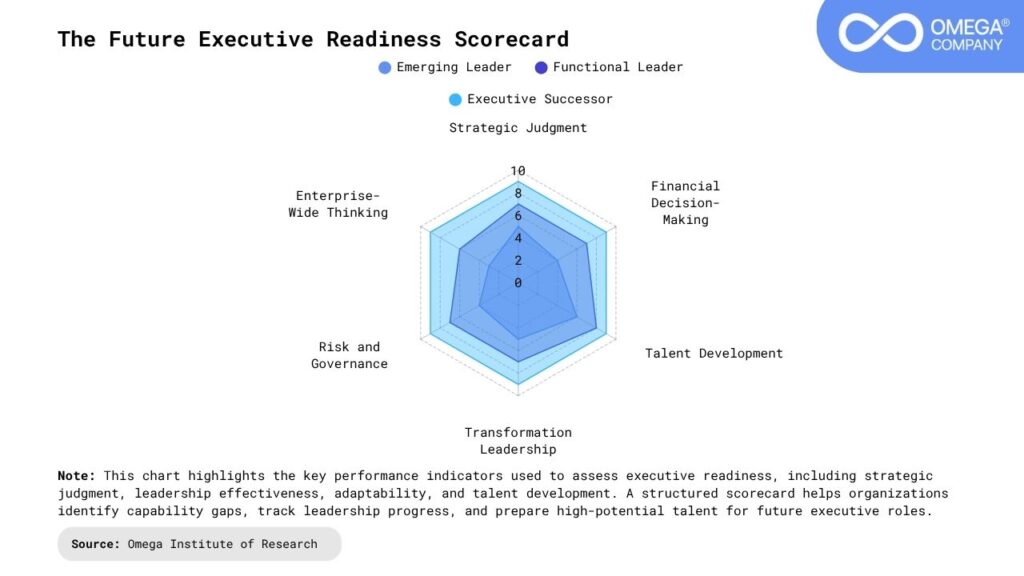
The next generation of executive leadership will be defined not only by what individual leaders can accomplish, but also by the organizational capabilities they create. As AI and automation expand analytical and operational capacity, executive success will increasingly depend on sound judgement, strategic alignment, responsible decision-making, and the ability to mobilize people toward shared outcomes. Future executives will use analytics, AI-assisted insights, and scenario modelling to evaluate alternatives, identify emerging risks, and connect evidence to strategic priorities while balancing data-driven analysis with human judgement. Cross-functional leadership will also become essential as AI transformation, customer experience, cost optimization, and workforce redesign require coordination across technology, finance, operations, and human resources. As business models and competitive conditions evolve, leaders must continuously reassess assumptions, adapt strategies, and maintain organizational direction. Leadership pipelines will therefore need to move beyond static succession plans toward continuous capability assessments and targeted development opportunities. Ultimately, executive success will be measured not only by individual achievements but also by the quality of future leaders they develop, creating sustainable leadership capacity and a lasting organizational advantage.
Conclusion
Building the next generation of executive leaders requires organizations to move beyond traditional talent management toward a more deliberate and forward-looking approach. As artificial intelligence, evolving market demands, and organizational complexity reshape business leadership, companies must ensure that emerging leaders develop the strategic judgement, technological understanding, financial discipline, and people-management capabilities required to navigate change. This preparation cannot depend solely on promotions, occasional training, or years of experience. It must be supported by practical leadership assignments, structured mentorship, continuous capability assessments, and clear accountability for developing future executives. Organizations that embed these practices into their business strategy can strengthen succession planning, improve decision-making, maintain leadership continuity, and build long-term resilience. Ultimately, sustainable leadership is not simply about finding the right person for the next executive position; it is about creating an organizational culture in which capable leaders are consistently identified, developed, and prepared to take on greater responsibility before critical leadership gaps emerge.
- https://knowledge.insead.edu/leadership-organisations/leadership-aspiration-gap
- https://hbr.org/2019/03/the-future-of-leadership-development
- https://talentmagnet.com/blog/leadership-development-competitive-advantage-for-next-decade/
- https://www.insight-experience.com/blog/the-leadership-readiness-gap-why-change-is-outpacing-your-leaders
- https://www.london.edu/think/why-leadership-is-more-important-now-than-ever
Subscribe
Select topics and stay current with our latest insights
- Functions