

- Industries
Industries
- Functions
Functions
- Insights
Insights
- Careers
Careers
- About Us

The Personalization–Privacy Tradeoff: A Leadership Imperative







Hyper-personalization has emerged as one of the most powerful tools for businesses seeking deeper customer engagement, higher conversion rates, and long-term loyalty. Powered by artificial intelligence (AI), machine learning, and advanced data analytics, it enables organizations to tailor experiences, content, products, and services to individual users in real time. However, this unprecedented level of personalization comes with growing privacy concerns, as consumers become more aware of how their data is collected, stored, and used. High-profile data breaches, evolving regulations, and rising mistrust toward digital platforms have intensified scrutiny around data practices. In response, organizations must balance innovation with responsibility by adopting transparent data policies, ethical AI practices, and privacy-by-design frameworks, ensuring personalization enhances value while preserving trust and regulatory compliance.
Understanding Hyper-Personalization
What Is Hyper-Personalization?
Hyper-personalization goes beyond traditional personalization, such as simply using a customer’s name in an email or recommending products based on past purchases. It leverages real-time data, behavioral insights, contextual signals, and predictive analytics to deliver highly relevant, individualized experiences across digital touchpoints. By continuously analyzing user interactions, preferences, location, device usage, and intent, organizations can adapt content and offers dynamically as customer needs evolve. This approach enables brands to anticipate customer expectations rather than merely react to them, creating more meaningful engagement, stronger emotional connections, and higher lifetime value.
Key Technologies Driving Hyper-Personalization
Artificial Intelligence & Machine Learning: Identify complex patterns and predict user behavior with high accuracy by learning from historical and real-time data. These technologies enable automated decision-making, recommendation engines, and adaptive experiences that improve continuously with user interactions.
Big Data Analytics: Process massive volumes of structured and unstructured data from diverse sources such as web activity, social media, and transaction records. This allows organizations to extract actionable insights, uncover hidden trends, and support real-time personalization at scale.
Customer Data Platforms (CDPs): Unify customer data from multiple touchpoints into a single, persistent customer profile. This consolidated view helps ensure consistent, personalized messaging across channels while improving data accuracy and governance.
Internet of Things (IoT): Capture contextual and real-time environmental data from connected devices, such as location, usage patterns, and sensor inputs. This enables hyper-personalized experiences based on real-world behavior and situational context, especially in industries like retail, healthcare, and smart cities.
The Business Value of Hyper-Personalization
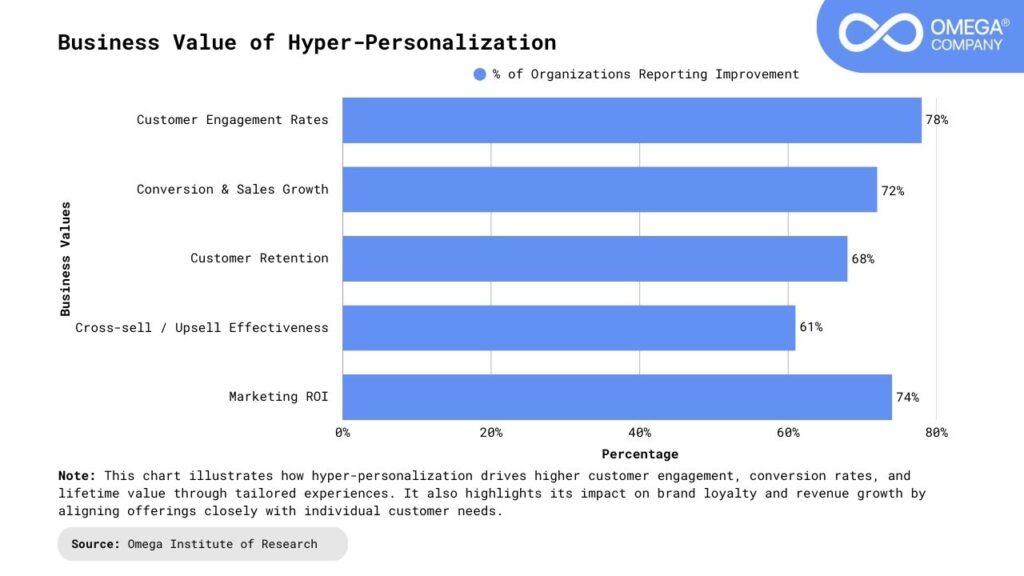
Enhanced Customer Experience: Customers receive highly relevant content, recommendations, and offers tailored to their preferences, context, and timing. This reduces friction across the customer journey, making interactions more intuitive and seamless. As experiences feel more personalized and valuable, customer satisfaction and trust increase. Over time, this leads to stronger emotional connections between customers and brands.
Higher Conversion and Retention Rates: Personalized interactions significantly boost engagement by presenting the right message at the right moment. Customers are more likely to convert when offers align with their immediate needs and intent. Consistent personalization also encourages repeat purchases by reinforcing relevance and convenience. As a result, brands experience improved customer lifetime value and long-term loyalty.
Improved Marketing Efficiency: Targeted messaging ensures marketing resources are focused on high-impact audiences rather than broad, generic campaigns. This reduces wasted spend and improves return on investment (ROI) across channels. Data-driven insights help marketers optimize campaigns in real time, adjusting strategies based on performance and behavior. Overall, personalization enables smarter budget allocation and faster decision-making.
Competitive Differentiation: Organizations that personalize effectively stand out in crowded digital markets where customer attention is limited. Unique, tailored experiences make brands more memorable and harder to replace. Personalization also creates higher switching costs, as customers become accustomed to relevant and seamless interactions. This strategic advantage helps organizations maintain relevance and outperform competitors.
Rising Privacy Concerns in the Digital Economy
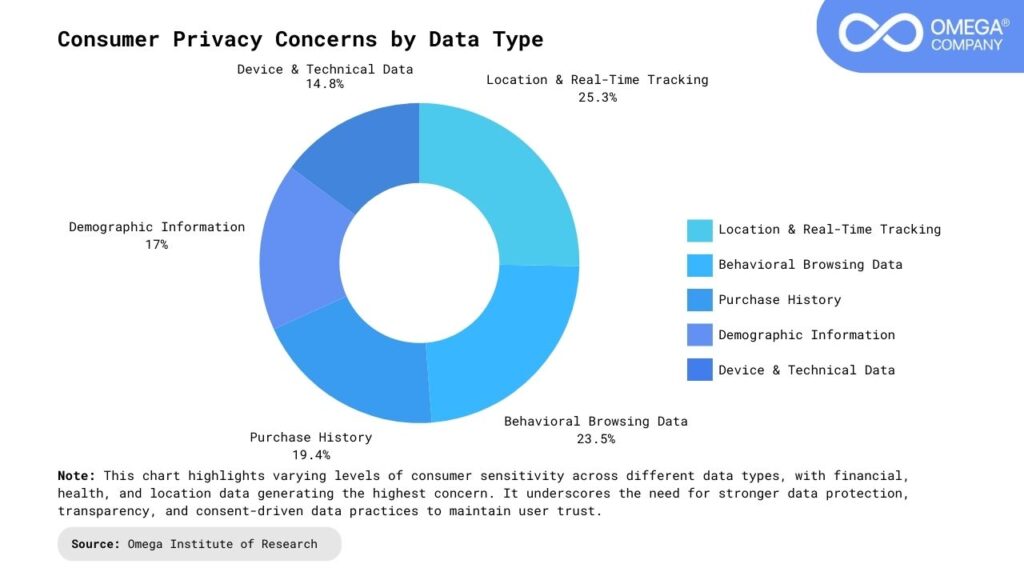
Rising privacy concerns in the digital economy are driven by growing consumer awareness about how personal data is collected, shared, and monetized. Today’s users are far more cautious about their digital footprint, increasingly questioning why platforms know so much about them and who else has access to their information. This heightened sensitivity is fueled by frequent data breaches and cyberattacks, the misuse of personal data for surveillance or behavioral manipulation, limited transparency in data collection practices, and over-targeting that often feels intrusive or unsettling. In response to these risks and rising public concern, governments around the world have introduced stricter regulatory frameworks to protect consumer privacy, including the General Data Protection Regulation (GDPR) in Europe, the California Consumer Privacy Act and Privacy Rights Act (CCPA/CPRA) in the United States, and India’s Digital Personal Data Protection (DPDP) Act, collectively reshaping how organizations manage data and design personalization strategies.
Where Hyper-Personalization and Privacy Collide
Data Collection vs. Data Minimization: Hyper-personalization thrives on collecting extensive volumes of user data to refine accuracy and relevance, while modern privacy frameworks emphasize collecting only what is strictly necessary. This creates a fundamental tension between achieving deeper personalization and maintaining regulatory compliance. Organizations must carefully assess which data truly adds value and which introduces unnecessary risk. Striking this balance is essential to avoid both legal exposure and customer backlash.
Consent Fatigue: Repeated consent requests, cookie banners, and lengthy privacy notices overwhelm users and reduce meaningful engagement with privacy choices. As a result, many users consent out of convenience rather than understanding, weakening the purpose of informed consent. This behavior undermines trust instead of reinforcing it. Over time, excessive consent mechanisms can damage brand perception and user confidence.
Perceived Surveillance: When personalization becomes too precise or frequent, users may feel watched rather than supported. This perceived surveillance creates discomfort and raises concerns about how deeply brands are monitoring behavior. The resulting “creepiness factor” can quickly erode credibility and emotional trust. In extreme cases, it may even prompt users to disengage or abandon platforms altogether.
Algorithmic Transparency: AI-driven personalization systems often function as black boxes, making it difficult to explain how decisions or recommendations are generated. This lack of clarity raises ethical concerns around fairness, bias, and accountability. It also creates legal challenges when organizations are required to justify automated decisions under data protection laws. Without greater transparency, trust in AI-powered personalization remains fragile.
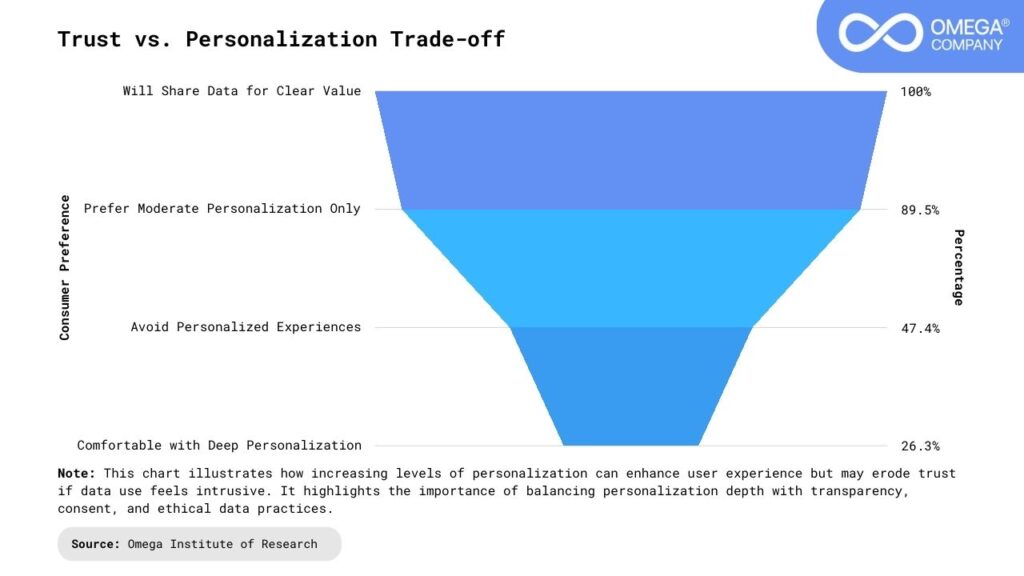
The Future Outlook: Responsible Hyper-Personalization
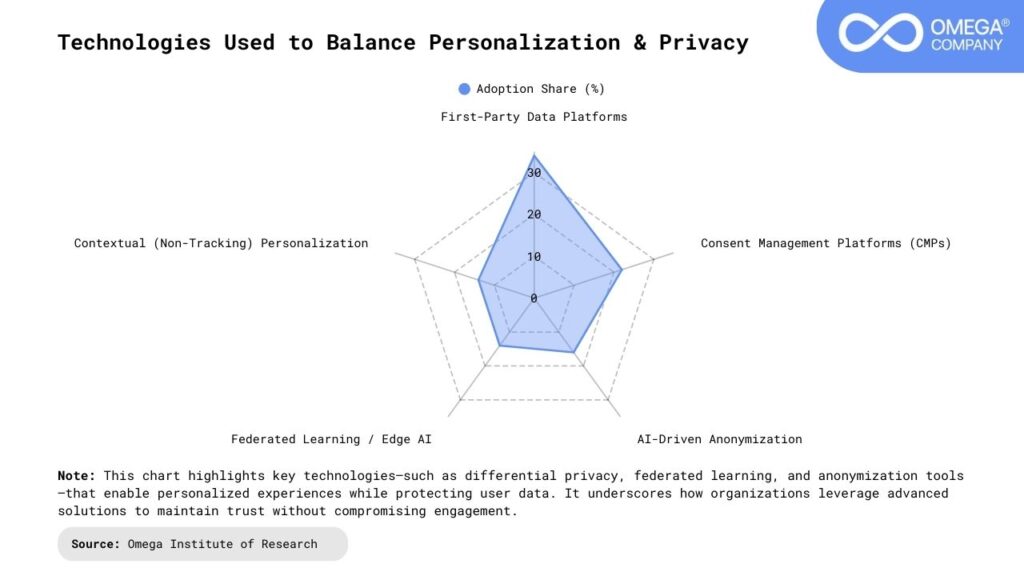
The future of hyper-personalization will increasingly focus on responsibility, transparency, and long-term trust as central pillars of digital strategy. As technology evolves, contextual personalization that leverages situational and real-time signals without relying on deep personal profiling is likely to become a preferred approach. Advances in privacy-enhancing technologies (PETs), such as differential privacy and federated learning, will further enable organizations to innovate while safeguarding sensitive data and reducing compliance risks. These approaches allow insights to be generated without exposing individual identities, strengthening user confidence. Ultimately, trust will become the true differentiator, with brands that respect user privacy and deliver meaningful, value-driven personalization consistently outperforming those that prioritize short-term gains over ethical and responsible data practices.
Conclusion
Hyper-personalization represents the pinnacle of customer-centric digital experiences, but it cannot exist in isolation from privacy considerations. In an environment marked by heightened consumer awareness, stricter regulations, and increased ethical scrutiny, organizations must fundamentally rethink how they collect, govern, and apply customer data. The path forward lies in responsible, transparent, and privacy-first personalization strategies that respect user autonomy while leveraging advanced technologies intelligently. This requires embedding privacy-by-design principles, ensuring clear communication around data usage, and adopting ethical AI practices across personalization initiatives. Organizations that successfully strike this balance will not only achieve regulatory compliance but also build long-term, trust-based relationships with their customers, ultimately transforming privacy from a perceived limitation into a sustainable competitive advantage.
- https://journal.iistr.org/index.php/APSA/article/view/1373
- https://www.warc.com/newsandopinion/opinion/personalisation-vs-privacy-cracking-the-customer-experience-dilemma-in-the-ai-era/en-gb/6913
- https://www.forbes.com/councils/forbestechcouncil/2024/09/12/personalization-vs-privacy-balancing-consumer-interests/
- https://www.cloud-awards.com/hyper-personalization-v
- https://papers.ssrn.com/sol3/papers.cfm?abstract_id=4072059
Subscribe
Select topics and stay current with our latest insights
- Functions