

- Industries
Industries
- Functions
Functions
- Insights
Insights
- Careers
Careers
- About Us

The Rise of Agentic AI: When Artificial Intelligence Starts Doing the Work







Artificial intelligence is entering a new phase. For years, businesses have used AI to analyse information, generate content, answer questions, and support decision-making. Now, a more advanced form of AI is gaining attention: agentic AI, which can plan tasks, make decisions within defined boundaries, use digital tools, and take action toward specific goals. This shift represents more than another technological upgrade; it signals a fundamental change in how work gets done. Instead of simply responding to instructions, AI systems can increasingly manage multi-step workflows, coordinate activities, and adapt their approach as circumstances change. For business leaders, the opportunity is significant, but so are the challenges surrounding accountability, security, and human oversight. As organisations explore the next generation of intelligent automation, understanding agentic AI is becoming essential to building a competitive, productive, and resilient business.
What is Agentic AI?
Agentic AI refers to AI systems designed to pursue objectives by planning and executing a sequence of actions rather than producing a single response. Depending on their design, these systems can interact with software, retrieve information, analyse results, use digital tools, and adjust their next steps based on what they learn. While traditional AI typically responds to a specific prompt, agentic AI can work toward a broader objective by breaking it into smaller tasks and progressing through them with varying degrees of autonomy. For example, a traditional AI assistant might draft an email summarising a customer complaint, whereas an agentic AI system could potentially review the complaint, check the relevant order information, identify an appropriate response, prepare a reply, update an internal record, and route the case for approval. The key distinction is that traditional AI primarily helps generate answers, while agentic AI can help complete workflows, with its actual level of autonomy depending on the tools available, the permissions granted, and the safeguards established by the organisation.
Why Agentic AI is Gaining Momentum
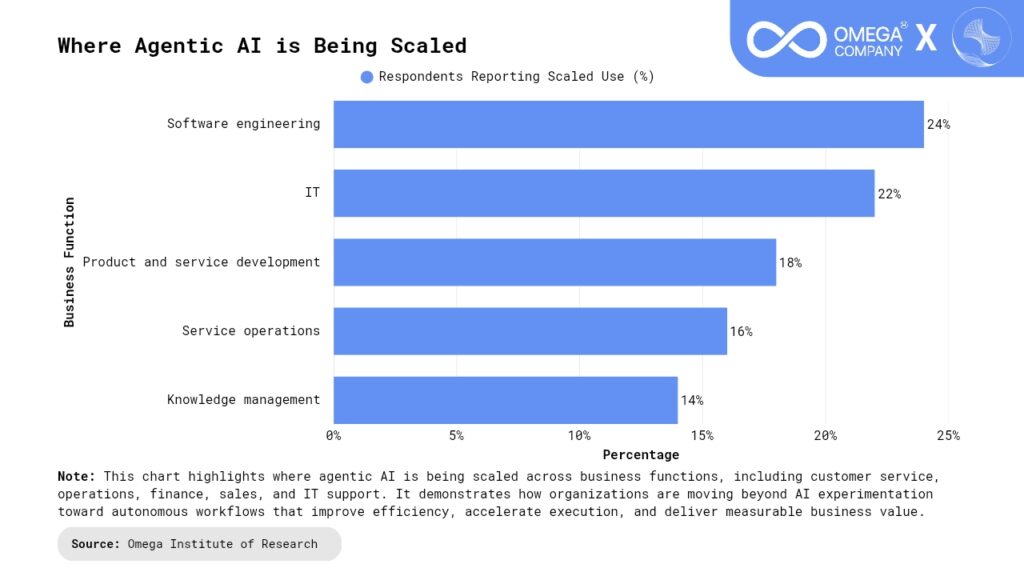
Several developments are bringing agentic AI into the business mainstream, including more capable AI models that can interpret complex instructions, software integrations that enable interaction with business applications, and improvements in reasoning, tool use, and workflow orchestration. As companies move beyond experimentation, they are increasingly focused on achieving measurable business value through AI adoption. Agentic AI offers a potential solution by addressing repetitive, multi-step activities that consume employee time and coordinating entire processes, from gathering information and preparing reports to managing service requests and supporting operational decisions. However, greater capability does not automatically guarantee greater reliability, as real-world performance still depends on data quality, workflow complexity, model accuracy, and effective human supervision.
How Agentic AI is Transforming Business Operations
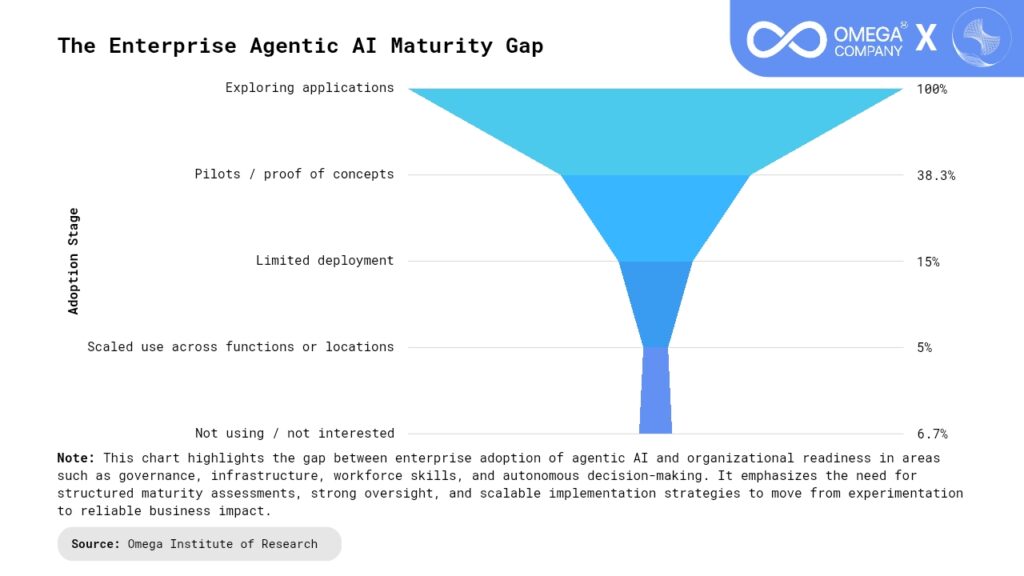
Customer Service and Experience: AI agents can help manage routine customer interactions, retrieve relevant account information, classify requests, and recommend or execute approved next steps. Advanced implementations can coordinate actions across customer relationship management (CRM), billing, and support platforms, reducing repetitive work and allowing employees to focus on complex issues that require empathy, negotiation, or judgement. Businesses must ensure that sensitive cases are escalated appropriately and that customers can reach a human representative when necessary.
Finance and Administration: Finance teams can use agentic AI to support invoice processing, expense reviews, transaction reconciliation, and financial reporting. AI agents can identify missing information, compare records, flag inconsistencies, and prepare exception reports for review, improving process efficiency and reducing manual workloads. However, high-impact actions, particularly payments, financial adjustments, and approvals, require strict permissions, reliable audit trails, and appropriate human authorisation.
Marketing and Sales: In marketing, AI agents can support market research, competitor monitoring, campaign analysis, content planning, and performance reporting, while sales teams can use them to research prospective accounts, organise customer information, prepare meeting briefs, and recommend follow-up activities. The greatest value comes from connecting these capabilities to measurable business objectives, as faster content production and increased outreach alone do not guarantee higher revenue. Organisations should also track lead quality, conversion rates, customer retention, and campaign profitability.
Human Resources and Talent Management: Agentic AI can help coordinate recruitment administration, organise candidate information, schedule interviews, and prepare onboarding materials, reducing administrative workloads and supporting a more consistent hiring process. However, employment decisions directly affect people’s livelihoods, making human oversight essential. AI systems should not independently determine hiring, promotion, or rejection outcomes without appropriate supervision, validation, and safeguards against unfair or discriminatory decisions.
Research, Analytics, and Decision Support: Research-orientated AI agents can gather information from approved sources, compare findings, identify emerging patterns, and prepare structured reports, while multiple agents can collaborate to examine different aspects of a business problem. For consulting and strategy teams, these capabilities can accelerate preliminary research, data analysis, and scenario planning. Human professionals remain essential for validating sources, interpreting context, challenging assumptions, and translating findings into reliable, actionable business recommendations.
The Business Benefits of Agentic AI
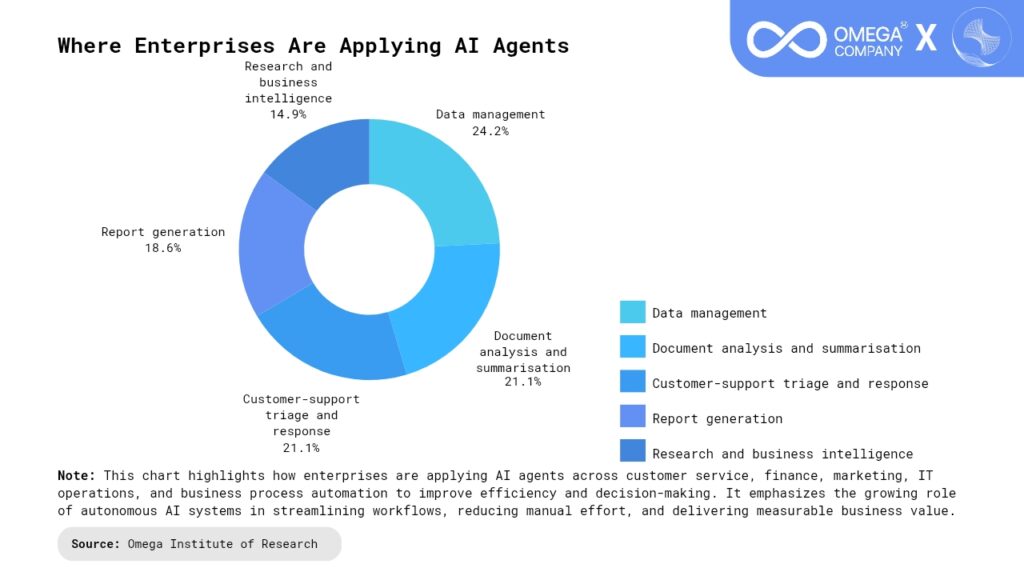
Higher productivity: Automating repetitive, multi-step activities can free employees to focus on strategic work, customer relationships, and complex problem-solving. By reducing manual effort and switching between applications, AI agents can help teams complete routine processes more efficiently. This allows employees to devote more time to innovation, collaboration, and activities that create greater business value.
Faster execution: AI agents can potentially reduce delays between collecting information, analysing it, and initiating the next approved action. By coordinating tasks across connected systems, they can help streamline workflows that would otherwise require multiple manual handoffs. Faster execution can improve responsiveness, shorten turnaround times, and support more timely business decisions.
Operational scalability: Organisations may be able to handle increasing workloads without expanding every administrative function at the same rate, provided that capacity, quality, and oversight remain adequate. AI agents can support higher volumes of routine transactions, customer requests, and internal processes as business demands grow. This flexibility helps organisations manage changing workloads while making more effective use of existing resources.
Improved consistency: Clearly defined workflows can help standardise routine processes and reduce variation in how work is completed. AI agents can follow established procedures, apply predefined rules, and maintain consistent documentation across recurring activities. Regular monitoring and quality checks remain important to identify errors, prevent repeated mistakes, and ensure that processes meet organisational standards.
Better decision support: Agents can consolidate information from multiple approved sources and surface relevant findings for human review. They can help identify patterns, compare alternatives, and prepare concise summaries that support evidence-based decision-making. When combined with reliable data and expert judgement, these capabilities can improve visibility into business performance and help leaders evaluate opportunities and risks more effectively.
Greater organisational agility: Businesses may respond more quickly to changing customer needs, operational disruptions, and emerging market opportunities. AI agents can continuously support information gathering, monitor defined indicators, and help initiate approved responses when conditions change. With appropriate safeguards and human oversight, this adaptability can help organisations improve responsiveness, adjust workflows, and maintain competitiveness in evolving markets.
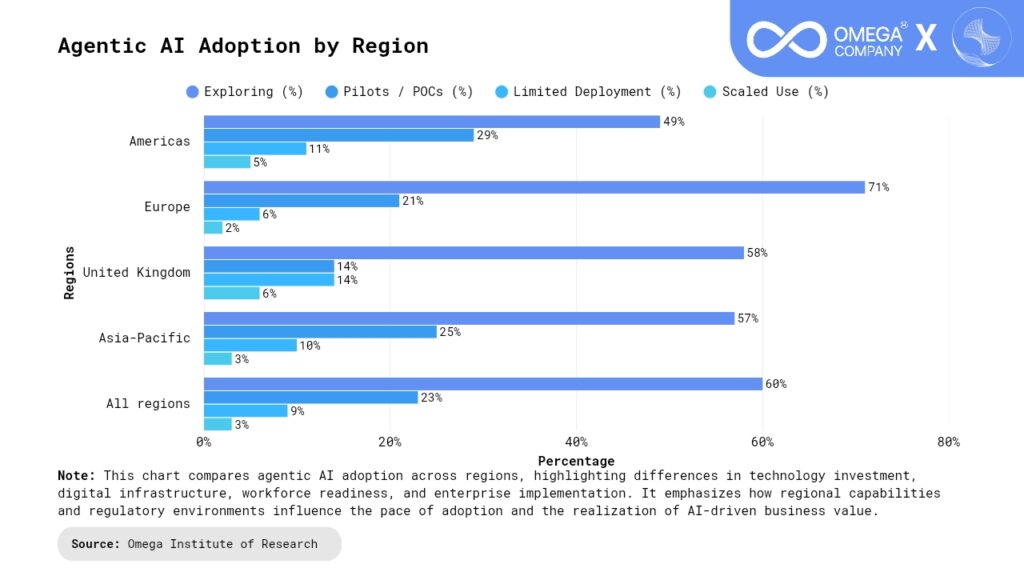
The Risks and Challenges Businesses Cannot Ignore
Accuracy and Reliability: AI agents may misunderstand instructions, rely on incorrect information, or continue down an unsuitable path. Organisations need testing, validation, clear stopping conditions, and mechanisms to detect and correct errors. Because agents can execute multiple actions in sequence, an early mistake may affect subsequent steps and produce increasingly unreliable outcomes. Continuous monitoring, performance evaluations, and human review of high-impact tasks are essential to maintaining accuracy and preventing errors from spreading across business workflows.
Data Privacy and Cybersecurity: Agents may access sensitive information or interact with connected systems. Excessive permissions, prompt injection, compromised tools, and insecure integrations can expose businesses to serious risks. Access should be restricted to what each agent genuinely needs. Organisations should also implement strong authentication, data encryption, secure integration practices, and regular security assessments to protect confidential information. Clear data-handling policies and real-time monitoring can further help detect suspicious activities and reduce the potential impact of security incidents.
Accountability and Governance: When an AI agent makes a mistake, responsibility must remain clear. Businesses need defined ownership, documented permissions, audit logs, escalation procedures, and policies specifying which decisions require human approval. Governance frameworks should establish who can deploy agents, modify their capabilities, and review their actions. Regular audits and documented decision trails can help organisations investigate incidents, demonstrate compliance, and ensure that AI-driven activities remain aligned with business policies and regulatory requirements.
Integration With Existing Systems: Many organisations operate with fragmented applications, inconsistent data, and legacy infrastructure. Connecting an AI agent to these systems without first addressing underlying process problems can automate inefficiency rather than eliminate it. Successful integration requires reliable data flows, compatible software interfaces, standardised workflows, and clearly defined system permissions. Businesses should begin with controlled pilot projects, assess interoperability, and resolve technical limitations before expanding agentic AI across critical operations.
Employee Trust and Adoption: Employees may worry about job displacement, monitoring, or the reliability of AI-generated decisions. Leaders should communicate how AI will be used, involve employees in redesigning workflows, and invest in training that helps teams work effectively with intelligent systems. Transparent communication about responsibilities, expected benefits, and potential limitations can reduce uncertainty and encourage participation. Organisations should also create opportunities for employees to provide feedback, develop new skills, and understand how human judgement will remain central to important decisions.
The Changing Role of Human Employees
As agentic AI becomes more capable, the nature of work may shift from performing every step manually to defining objectives, supervising execution, reviewing exceptions, and making higher-level decisions. Employees will increasingly need skills that complement AI capabilities, including critical thinking, communication, process design, domain expertise, risk assessment, and data literacy. Managers may also need to learn how to delegate tasks to AI systems, evaluate their output, and establish appropriate performance standards. This transition may create opportunities for employees to take on more analytical, creative, and strategic responsibilities while reducing time spent on repetitive administrative activities. Organisations will need to invest in continuous learning and practical AI training to help their workforce adapt to changing responsibilities. However, this does not mean every employee will become an AI supervisor or that all roles will change at the same pace, as the impact will vary by industry, job function, and implementation quality. For business leaders, the priority is to redesign work thoughtfully by combining machine speed and consistency with human judgement, creativity, empathy, and accountability to achieve sustainable business outcomes.
The Future of Agentic AI: From Assistance to Execution
Agentic AI is moving the conversation beyond what artificial intelligence can generate toward what it can reliably accomplish. As systems become better at using tools, coordinating tasks, and operating across connected applications, organisations may increasingly delegate complete, well-defined workflows rather than isolated activities. However, this transition will not happen uniformly, as some applications will mature quickly while others remain constrained by reliability, regulatory requirements, data quality, and the consequences of errors. In many organisations, the near-term future will involve human-supervised AI agents working alongside employees rather than fully autonomous digital operations. The competitive advantage will not belong simply to businesses that deploy the largest number of AI agents, but to those that select the right use cases, establish effective governance, integrate AI into existing workflows, and consistently measure business outcomes.
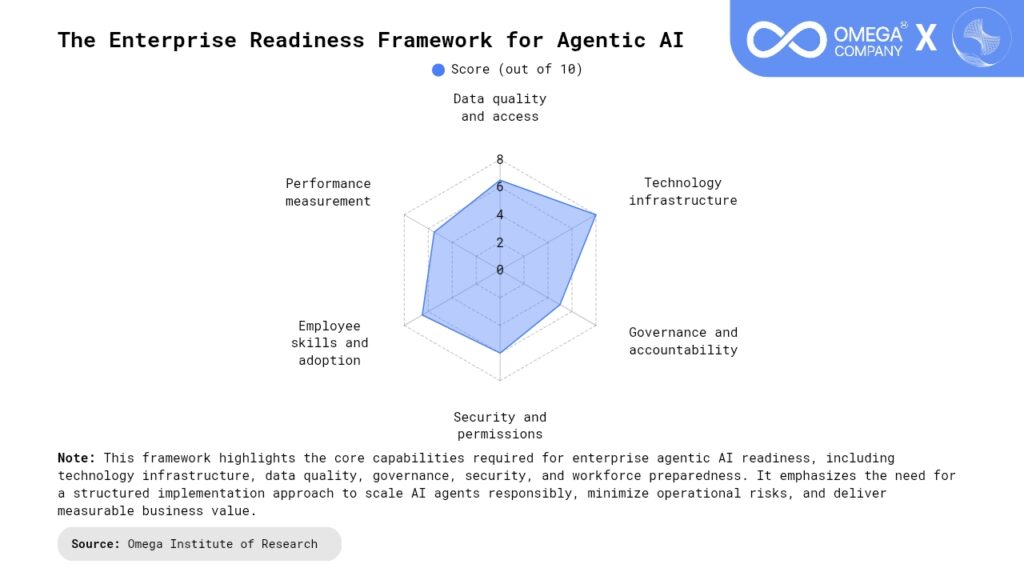
Conclusion
The rise of agentic AI marks an important evolution in enterprise technology, moving artificial intelligence beyond answering questions toward planning activities, using tools, and executing defined tasks. This creates opportunities to improve productivity, streamline operations, strengthen decision-making, and enable employees to focus on higher-value work. However, greater autonomy also brings increased responsibility, requiring businesses to address security, reliability, accountability, and human oversight before allowing AI systems to take consequential actions. For senior leaders, agentic AI should be treated as a business transformation initiative rather than simply a technology experiment. By prioritising measurable use cases, establishing clear operating boundaries, and combining automation with human judgement, organisations can unlock the potential of AI while maintaining control over business decisions and outcomes.
- https://www.mdpi.com/1999-5903/17/9/404
- https://www.capgemini.com/insights/research-library/ai-agents/
- https://www.bcg.com/capabilities/artificial-intelligence/ai-agents
- https://www.cdw.com/content/cdw/en/articles/ai/how-agentic-ai-changing-future-work-ai-use-cases.html
- https://www.imd.org/news/artificial-intelligence/the-rise-of-agentic-ai-a-new-era-in-workplace-productivity/
Subscribe
Select topics and stay current with our latest insights
- Functions