

- Industries
Industries
- Functions
Functions
- Insights
Insights
- Careers
Careers
- About Us

Unlocking Value in Returns: AI’s Growing Role in Reverse Logistics







Reverse logistics has evolved from a back-office function into a strategic pillar of modern supply chains. As businesses and consumers become more environmentally conscious, the ability to efficiently handle returns, recycling, repairs, and refurbishments has gained unprecedented importance. Traditional linear supply chains where products flow from manufacturer to consumer and end as waste are no longer sustainable. Rising regulatory pressure, resource scarcity, and consumer expectations for sustainable practices expose the shortcomings of this take-make-dispose model. Companies that neglect reverse logistics often face higher costs, wasted resources, and reputational risks. Addressing these challenges demands a shift toward circular thinking, where materials and products are kept in use for as long as possible. Reverse logistics is the backbone of this circular economy, enabling businesses to recover value, minimize waste, and reduce environmental impact. By embracing reverse logistics strategically, companies can turn a compliance-driven cost center into a competitive advantage unlocking efficiencies, boosting sustainability, and meeting the demands of today’s eco-conscious marketplace. The future belongs to those who close the loop.
AI’s Impact on Reverse Logistics
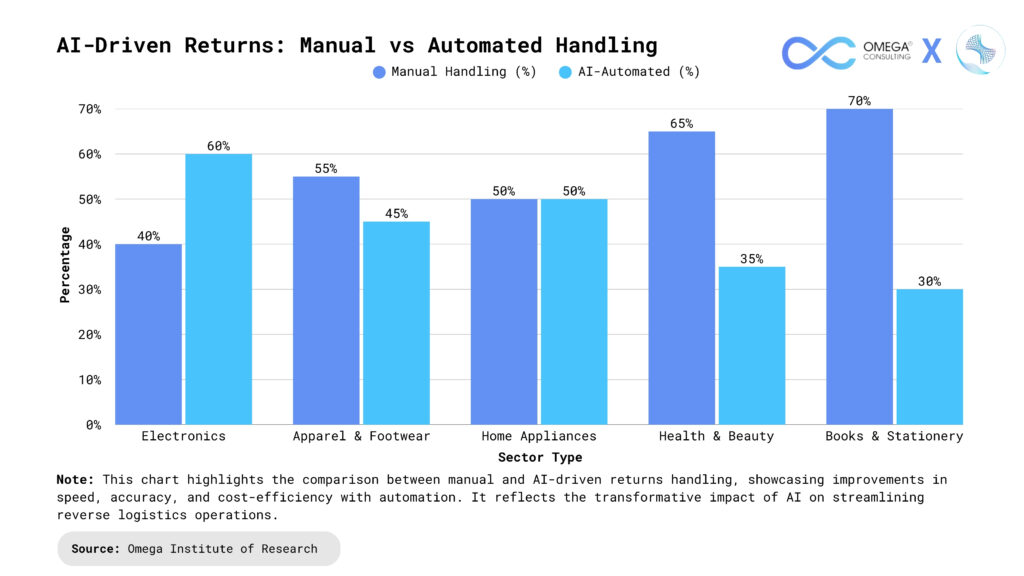
Manual Processes and Their Limitations: Traditionally, reverse logistics relied on manual processes and static rules to handle returns, repairs, and recycling. Decisions about routing, refurbishing, or discarding products were often based on broad assumptions rather than precise data. While this approach provided a basic structure for managing returned goods, it lacked the agility and intelligence to optimize outcomes at scale. Such methods often resulted in inconsistent outcomes and higher operational costs.
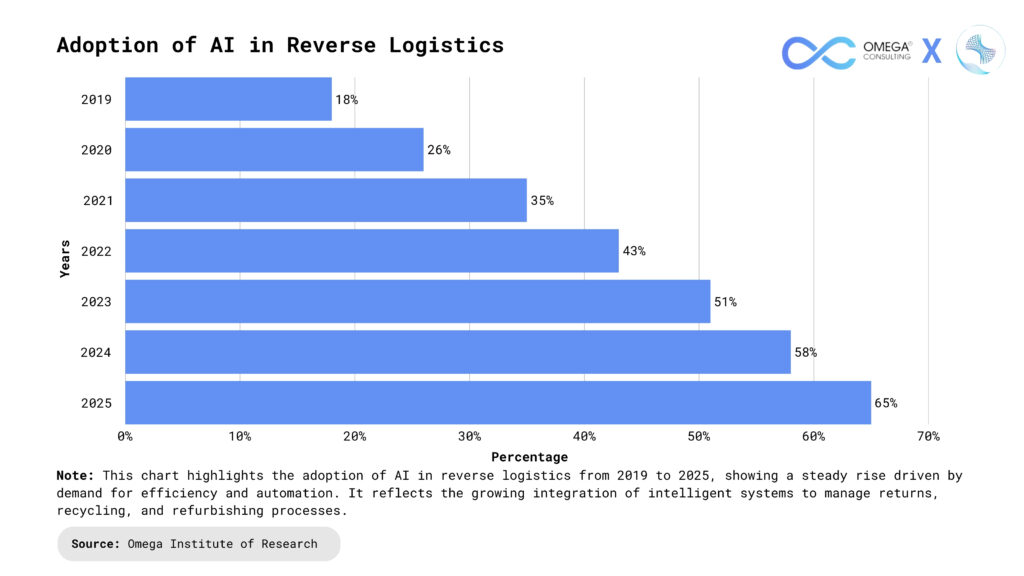
The Rising Challenges of Modern Reverse Logistics: As product volumes and customer expectations have grown, this manual, rule-based model has shown its limitations. Businesses face mounting challenges unpredictable return flows, high processing costs, and difficulty identifying the most valuable recovery options in real-time. The result has been fragmented operations, inefficiencies, and missed opportunities to recapture value or enhance customer experience. These pressures have made reverse logistics a critical area for innovation and improvement. Companies now recognize that optimizing reverse logistics can directly impact profitability and customer loyalty. Those that fail to adapt risk falling behind in both operational efficiency and sustainability goals.
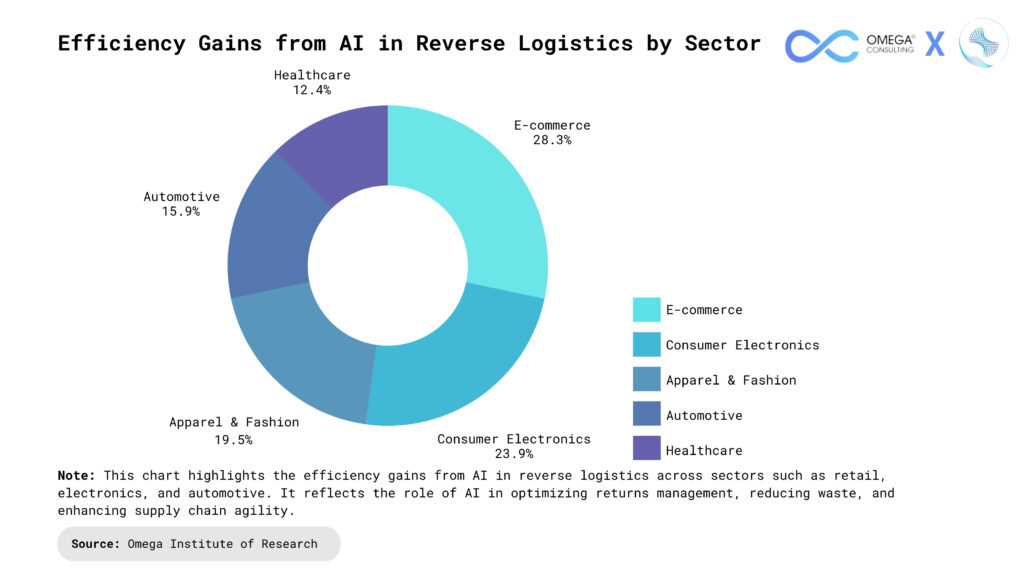
AI-Driven Transformation for Smarter Operations: AI is reshaping this landscape by enabling smarter, data-driven decisions throughout the reverse logistics chain. From predicting return rates to dynamically optimizing routing and processing, AI infuses intelligence into every step. This shift promises not just efficiency gains but also a more sustainable, customer-centric, and profitable reverse logistics operation aligning business goals with environmental responsibility and competitive advantage. three sub headings. With AI, companies can transform reverse logistics from a cost center into a strategic differentiator.
AI in Returns: Enhancing Customer Experience
Personalized Return Journeys: AI analyzes customer profiles, purchase history, and product data to create tailored return workflows. Customers receive step-by-step guidance that feels intuitive and relevant to their situation. This personalization reduces confusion, speeds up resolutions, and leaves customers feeling valued.
Intelligent Decision-Making: Machine learning models evaluate each return request to determine the most cost-effective and customer-friendly outcome. AI decides whether to repair, replace, refund, or restock based on real-time insights. This minimizes losses while ensuring customer satisfaction with the resolution.
Real-Time Tracking and Communication: AI-driven systems keep customers informed with proactive updates throughout the return process. Automated notifications and chatbots handle inquiries instantly, reducing support burden. Transparency builds trust and reassures customers their concerns are being addressed promptly. This consistent communication also enhances overall customer loyalty and satisfaction.
Streamlined Operations Behind the Scenes: AI optimizes internal workflows by forecasting return volumes and allocating resources efficiently. It identifies bottlenecks and recommends process improvements continuously. These efficiencies enable faster turnaround times and reduce operational costs without sacrificing service quality. Over time, this creates a more resilient and scalable reverse logistics operation.
Predicting Returns with AI
Understanding Return Patterns: AI analyzes historical sales, returns data, and customer behavior to identify trends over time. It uncovers which products, categories, or customer segments are most likely to trigger returns. Seasonal spikes, product defects, or mismatched expectations become visible through these insights. Businesses can then proactively address underlying causes before they escalate.
Leveraging Customer Insights: Machine learning models factor in customer demographics, preferences, and sentiment to predict individual return likelihood. For example, customers who frequently purchase certain sizes or styles may exhibit higher return rates. AI flags these patterns early, enabling targeted interventions like better recommendations or clearer product details. This helps reduce unnecessary returns while improving customer satisfaction.
Product-Level Risk Assessment: Not all products carry the same risk of return — AI evaluates attributes like size, material, or complexity to assess risk. It highlights which SKUs tend to have higher return rates due to quality or fit issues. Companies can adjust inventory strategies, improve descriptions, or even redesign problematic products. This ensures better resource allocation and minimizes waste.
Real-Time Demand and Return Forecasting: AI integrates live sales and returns data to create dynamic, real-time forecasts. It predicts not just how many units will sell, but also how many are likely to come back. This enables businesses to optimize warehouse space, staffing, and logistics ahead of time. The result is a more agile and prepared reverse logistics operation.
Reducing Costs Through Predictive Insights: Accurately forecasting returns helps businesses lower operational costs significantly. By knowing where and when returns will peak, they can allocate resources more efficiently. Carriers, warehouses, and repair teams can all be better prepared to handle the load. This reduces rush charges, prevents bottlenecks, and improves profitability.
Enhancing Customer Experience: When companies anticipate returns, they can offer faster resolutions and more convenient options. For instance, suggesting a nearby drop-off point or pre-authorizing exchanges before the item arrives. Customers appreciate the proactive support, which strengthens brand loyalty. Predictive AI thus aligns operational efficiency with a superior customer experience.
AI-Optimized Repair & Resale
Identifying Repairable Products: AI assesses returned items to determine which can be repaired instead of discarded. It analyzes damage reports, images, and sensor data to evaluate feasibility quickly. This reduces unnecessary waste and maximizes product recovery. Businesses can prioritize high-value items for repair, improving profitability.
Streamlining Repair Workflows: Machine learning optimizes repair processes by predicting required parts, tools, and technician skills. It allocates resources efficiently, minimizing downtime and avoiding bottlenecks. AI-driven scheduling ensures that repairs are completed faster and at lower cost. This leads to quicker turnaround and higher throughput.
Predicting Refurbishment Demand: AI forecasts market demand for refurbished products based on trends and customer preferences. It helps companies decide which products to refurbish and in what quantity to avoid overstocking. Accurate demand prediction improves inventory planning and sales outcomes. This ensures refurbished goods meet real customer needs.
Enhancing Quality Assurance: AI-powered inspection tools detect defects more accurately during and after repair or refurbishment. Automated visual checks and anomaly detection guarantee consistent quality standards. This reduces returns of repaired items and boosts buyer confidence. Customers receive reliable, like-new products that meet expectations.
Optimizing Pricing Strategies: AI analyzes market data, competitor pricing, and product condition to recommend optimal resale prices. It balances speed of sale with maximum profit margin intelligently. Dynamic pricing ensures products sell quickly while retaining value. This makes the resale of repaired and refurbished items more viable.
Improving Sustainability Outcomes: AI enables businesses to divert more products from landfills by extending their lifecycle. By optimizing repair and resale processes, companies lower their environmental footprint significantly. Sustainable practices resonate with customers and strengthen brand reputation. Repair and resale become both profitable and responsible business strategies.
Sustainable Reverse Logistics with AI
Minimizing Waste through Smarter Decisions: AI identifies which returned products can be repaired, reused, or recycled rather than discarded. It helps companies prioritize recovery over disposal, reducing landfill contributions. Smarter sorting ensures materials are put to their best use. This supports both environmental goals and cost efficiency.
Optimizing Transportation Routes: AI-powered route planning minimizes fuel use and emissions by finding the most efficient paths. It consolidates return shipments and reduces empty miles in reverse logistics networks. Lower transportation impact means fewer carbon emissions overall. This makes reverse logistics greener without compromising speed.
Enhancing Recycling Processes: AI classifies materials more accurately to ensure proper recycling of components and packaging. Advanced sorting systems use AI vision and sensors to improve recycling efficiency. Companies recover more valuable materials while reducing contamination rates. Recycling becomes more effective and scalable with AI support.
Reducing Overproduction: By predicting returns and understanding product lifecycles, AI helps businesses produce only what’s necessary. Lower overproduction means fewer resources wasted and fewer unsold items discarded. This aligns supply with true demand, conserving raw materials. Over time, companies achieve leaner and more sustainable operations.
Promoting Circular Economy Practices: AI facilitates closed-loop systems where products and materials circulate instead of being thrown away. It enables better tracking, refurbishing, and reintegration of goods into the supply chain. Businesses can design products for reuse, repair, and recycling from the start. This strengthens their role in a circular economy.
Improving Reporting and Compliance: AI simplifies tracking and reporting of sustainability metrics across reverse logistics operations. It ensures companies meet environmental regulations and demonstrate progress transparently. Better compliance builds trust with customers and regulators alike. Sustainability becomes measurable, actionable, and an integral part of strategy
Future of AI in Reverse Logistics
Hyper-Personalized Return Experiences: AI will enable even more tailored return processes based on individual customer behaviors and preferences. It will dynamically adjust options like pickup, credit, or exchange to suit each user. This enhances satisfaction while reducing unnecessary steps. Customers will feel more valued and engaged, strengthening loyalty. Companies can differentiate themselves by offering seamless, personalized post-purchase experiences.
Predictive and Autonomous Networks: Future AI systems will predict not only returns but also orchestrate autonomous reverse logistics networks. Drones, robots, and smart vehicles will work seamlessly under AI control, improving response times. Operations will become faster, safer, and more cost-effective as human intervention declines. AI will proactively balance demand and capacity across the network. Businesses will achieve higher scalability with lower environmental and labor costs.
Integration with IoT and Blockchain: AI will leverage IoT sensors and blockchain for real-time visibility and secure tracking of returns. Data from connected devices will feed AI insights instantly for better decisions at every stage. Blockchain will ensure transparency, authenticity, and trust in every reverse logistics transaction. This integration creates a highly reliable and tamper-proof supply chain. Companies will gain competitive advantage through better accountability and smarter insights.
Advanced Circular Economy Models: AI will drive deeper integration of reverse logistics into circular economy initiatives. Products will be designed with AI-informed insights for easier repair, reuse, and recycling, extending their life. Companies will close loops faster, extracting maximum value from materials while cutting waste. Sustainability and profitability will go hand in hand as processes become more efficient. Organizations can position themselves as leaders in environmental responsibility and innovation.
Strategic Decision-Making with Big Data: AI will move beyond operational tasks to inform high-level strategic decisions in reverse logistics. It will analyze vast datasets to uncover hidden opportunities, risks, and market trends. Executives can make smarter, forward-looking investments and policies that align with customer and environmental goals. AI insights will guide strategic partnerships, product design, and resource allocation. Reverse logistics will evolve into a core driver of competitive advantage and resilience.
Conclusion
The integration of AI into reverse logistics represents more than just an operational enhancement—it is a fundamental shift in how businesses recover value, serve customers, and protect the environment. Effective transformation in AI-enabled reverse logistics must go beyond adopting new technologies; it demands a thoughtful, transparent, and stakeholder-centric approach. By focusing on data-driven decision-making, ethical AI practices, and building organizational trust, companies can overcome challenges, minimize resistance, and unlock new opportunities. Embracing AI as a strategic ally—rather than just a cost-cutting tool—will help organizations create sustainable, customer-focused, and competitive reverse logistics systems. As industries evolve rapidly, those that design agile operations, personalize customer experiences, and embed sustainability into every decision will lead the way in shaping the future of supply chains.
- https://www.mckinsey.com/capabilities/operations/our-insights
- https://www.gartner.com/en/insights/artificial-intelligence
- https://www.dhl.com/in-en/home/innovation-in-logistics.html?locale=true
- https://www.weforum.org/stories/education-and-skills/
Subscribe
Select topics and stay current with our latest insights
- Functions