

- Industries
Industries
- Functions
Functions
- Insights
Insights
- Careers
Careers
- About Us

Workforce Productivity with AI







Artificial Intelligence (AI) has moved from being a futuristic buzzword to a daily reality in modern workplaces. Today, AI is seamlessly integrated into business processes, powering automation, decision-making, customer interactions, and even employee training. For organizations, the promise of AI lies in its ability to not just improve operations, but to dramatically enhance workforce productivity. This is more than just “getting more done” it’s about enabling employees to work smarter, innovate faster, and focus on high-value activities. In a world where speed, adaptability, and efficiency define success, AI is becoming a game-changer in shaping how work gets done.
Understanding Workforce Productivity in the AI Era
Workforce productivity measures how efficiently employees complete tasks that contribute to an organization’s goals. In the pre-AI era, gains in productivity often came from process optimizations, better tools, or employee training. However, with the introduction of AI, these improvements have accelerated significantly. AI systems can handle vast amounts of data, automate tedious processes, and even anticipate problems before they arise. This means employees can focus on strategic and creative aspects of their roles rather than repetitive, manual tasks. The integration of AI into daily workflows also creates a more agile working environment, where teams can adapt to changes faster and make better-informed decisions. Moreover, AI-powered systems can work continuously without fatigue, ensuring consistent productivity levels even outside traditional working hours. This shift allows organizations to meet higher demands, improve output quality, and foster innovation across departments.
Key Ways AI Boosts Workforce Productivity
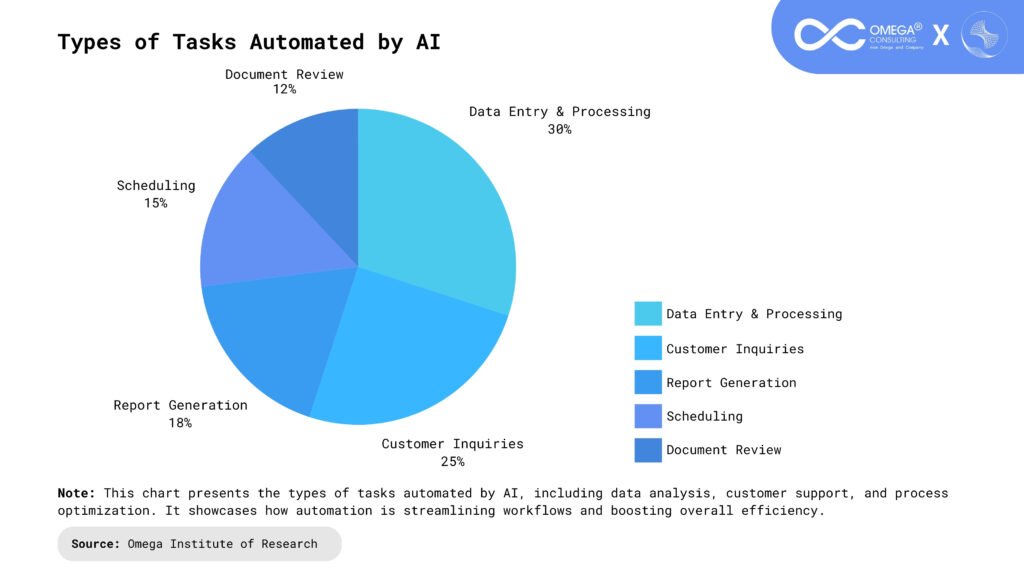
Automating Repetitive and Time-Consuming Tasks: One of AI’s most immediate productivity benefits comes from automation. Repetitive tasks like data entry, appointment scheduling, email categorization, and report generation can consume hours of an employee’s time each week. AI-driven automation tools can perform these functions in seconds and with higher accuracy, reducing human error and freeing employees for higher-value work. Additionally, automation reduces burnout by eliminating tedious, mentally draining tasks, allowing employees to focus on more fulfilling activities. This shift not only boosts productivity but also improves job satisfaction and employee retention.
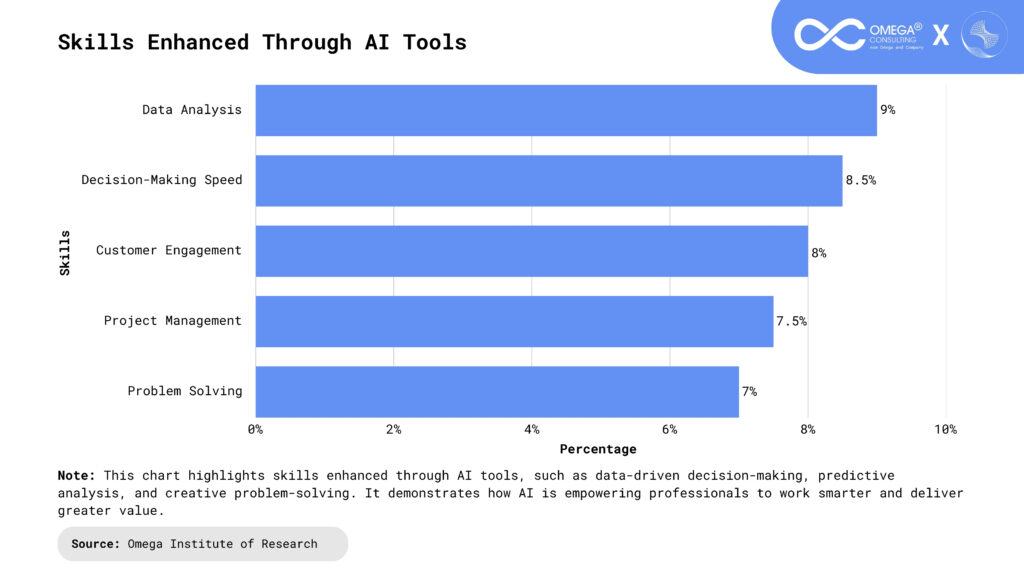
Enhancing Decision-Making with Data Insights: AI is a powerhouse when it comes to data processing. Where a human might spend days combing through datasets, AI can analyze millions of data points in seconds, uncovering trends, correlations, and anomalies. This empowers leaders to make quicker, more informed decisions based on evidence rather than guesswork. With predictive analytics, AI can even forecast potential outcomes and risks, helping businesses take proactive measures instead of reacting to problems. This kind of data-driven agility can give companies a significant competitive advantage in fast-changing markets.
Personalizing Employee Workflows: AI doesn’t just make tasks faster it can make them smarter by personalizing workflows for each employee. Intelligent assistants like Microsoft Copilot or ChatGPT can adapt to an individual’s work habits, suggest relevant resources, draft documents, or summarize lengthy reports. This tailored approach means employees can complete tasks faster without sacrificing quality. Personalized workflows also minimize wasted effort by aligning task priorities with organizational goals, ensuring that every action contributes meaningfully to business outcomes. Over time, AI learns and refines its recommendations, creating an ever-improving work experience.
Improving Collaboration and Communication: Effective collaboration can make or break productivity, especially in hybrid or remote work environments. AI tools enhance teamwork by transcribing meetings, summarizing discussions, identifying action points, and ensuring all members are updated in real time. This eliminates the problem of missed details or forgotten follow-ups. By integrating AI into project management platforms, teams can automatically track deadlines, assign tasks, and flag potential delays. This proactive approach keeps projects moving smoothly and reduces costly miscommunications.
Upskilling and Employee Development: Continuous learning is critical for maintaining workforce productivity, and AI is transforming how training is delivered. AI-powered learning management systems assess employee performance, identify skill gaps, and create personalized training plans. This ensures employees are learning the right skills at the right time without wasting resources on irrelevant courses. Moreover, AI-driven training adapts in real time, adjusting course difficulty and content based on employee progress. This targeted, adaptive learning helps staff acquire skills faster and apply them more effectively in their roles.
AI Across Different Industries: Productivity in Action
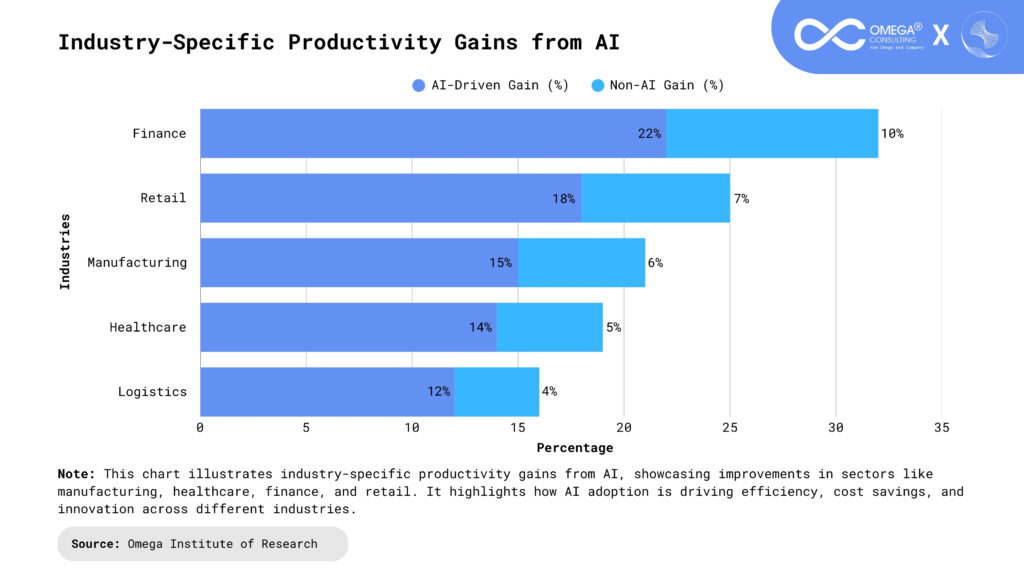
Healthcare: AI is transforming how medical professionals work by analyzing scans, predicting patient risks, and managing administrative tasks. This allows doctors to spend less time on paperwork and more time on direct patient care, ultimately improving both efficiency and patient outcomes. AI also streamlines hospital workflows by prioritizing critical cases and automating patient monitoring, which leads to faster diagnoses, reduced wait times, and more effective operations particularly in high-pressure environments like emergency care.
Manufacturing: AI-powered predictive maintenance detects potential machine issues before they cause costly downtime, ensuring production schedules remain uninterrupted and repair costs are minimized. Beyond maintenance, AI optimizes supply chain management by forecasting material shortages and automatically adjusting procurement schedules. This enables manufacturers to operate more efficiently, reduce waste, and better allocate resources to meet fluctuating market demands.
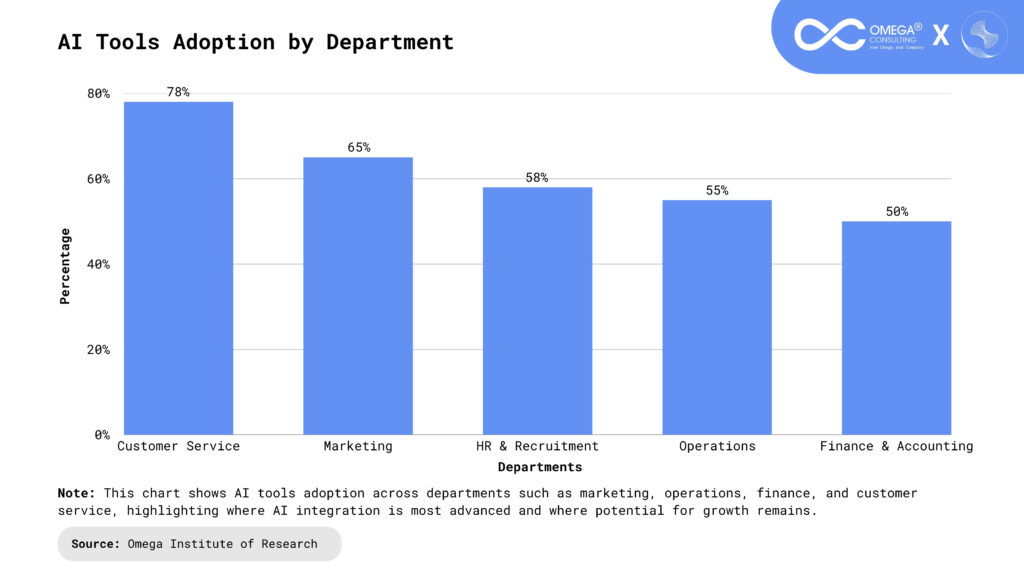
Marketing: AI tools such as HubSpot and Jasper automate repetitive tasks like content creation, messaging personalization, and ad spend optimization, all of which lead to higher engagement rates and improved conversions. These tools also provide real-time analytics on customer behavior, allowing marketing teams to adjust strategies on the fly for maximum impact. The result is highly targeted campaigns that are more cost-efficient and capable of delivering stronger returns on investment.
Finance: AI is revolutionizing operations through advanced fraud detection systems that monitor transactions in real time, significantly reducing losses while ensuring compliance with regulatory standards. Additionally, AI automates financial forecasting and risk assessments, enabling institutions to make faster, data-driven investment and lending decisions. This combination of speed, accuracy, and insight not only enhances profitability but also strengthens long-term financial stability.
Balancing AI and Human Capabilities
While AI excels at speed, accuracy, and pattern recognition, human employees bring qualities that machines cannot replicate such as creativity, emotional intelligence, and ethical reasoning. The future of productivity lies not in replacing people with machines, but in fostering true collaboration between AI and humans. In this partnership, AI takes on the heavy lifting of repetitive, data-driven, and analytical work, while humans focus on innovation, empathy, and strategic thinking. For instance, a marketing campaign might rely on AI to analyze audience data, identify trends, and predict engagement patterns, but the core creative concept and emotional appeal would come from human insight. This balance allows organizations to harness the efficiency and precision of AI without losing the originality, adaptability, and human touch that drive meaningful connections and long-term success.
Challenges to Address Before Scaling AI for Productivity
Data Privacy & Security: AI relies heavily on vast amounts of data, making strict compliance with regulations such as GDPR or CCPA essential. Mishandling sensitive information can lead to severe legal consequences, financial penalties, and loss of customer trust. Organizations must also invest in robust cybersecurity measures to protect data from breaches and unauthorized access. As AI systems grow more complex, regular audits and security updates become critical to maintaining data integrity and ensuring ethical use.
Employee Resistance: Introducing AI into the workplace can sometimes spark fear among employees, particularly concerns about job displacement. To counter this, businesses must communicate transparently about AI’s role, emphasizing how it enhances rather than replaces human work. Providing hands-on training and involving employees in AI adoption decisions can foster a sense of ownership and reduce resistance. When staff understand that AI can eliminate mundane tasks and create opportunities for skill growth, they are more likely to embrace it.
Bias & Fairness: If not carefully monitored, AI models can reflect and even amplify human biases present in the data they are trained on. This can result in unfair outcomes, from biased hiring decisions to discriminatory lending practices. Organizations must ensure that algorithms are transparent, regularly tested, and adjusted to eliminate bias. Implementing diverse data sets, independent audits, and clear accountability structures helps maintain fairness and build trust among both employees and customers.
Integration Costs: Deploying AI tools requires significant financial investment as well as time for proper implementation. This includes expenses for software, infrastructure upgrades, staff training, and system integration. Without careful planning, businesses risk overinvesting in tools that don’t deliver expected returns. A phased implementation strategy, combined with ongoing ROI tracking, ensures that AI adoption remains cost-effective and minimizes operational disruption during the transition.
The Future of Workforce Productivity with AI
AI will continue evolving, offering even more advanced capabilities such as predictive workforce planning, real-time performance tracking, and intelligent task delegation. Organizations that embrace AI now will gain a competitive edge by being more adaptable, efficient, and innovative. In the long term, AI will not just support the workforce, it will shape entirely new ways of working, making productivity gains that were once unimaginable a daily reality. As AI systems integrate more seamlessly with human workflows, they will enable hyper-personalized work environments tailored to each employee’s strengths. Businesses will also see a shift toward proactive problem-solving, where AI identifies challenges before they even arise. Ultimately, the fusion of human creativity and AI precision will set the foundation for a smarter, faster, and more resilient workforce of the future.
Conclusion
Artificial Intelligence is not here to replace people, it’s here to empower them. By taking over routine tasks, providing real-time data insights, personalizing workflows, enhancing collaboration, and enabling targeted skill development, AI is unlocking unprecedented levels of workforce productivity. Businesses that adopt AI strategically will not only achieve higher efficiency but also create a workplace where employees are more engaged, creative, and ready for the future. In the long run, organizations that embrace AI will gain a decisive competitive advantage, attracting top talent and fostering a culture of innovation. By blending human ingenuity with machine intelligence, companies can turn today’s technological disruption into tomorrow’s growth opportunity. Ultimately, AI will not just reshape how we work, it will redefine what’s possible in the modern workplace.
- https://mitsloan.mit.edu/ideas-made-to-matter/how-generative-ai-can-boost-highly-skilled-workers-productivity
- https://www.sciencedirect.com/science/article/pii/S0166497223000585
- https://www.mckinsey.com/capabilities/mckinsey-digital/our-insights/the-economic-potential-of-generative-ai-the-next-productivity-frontier
- https://biztechmagazine.com/article/2024/09/productivity-tech-revolutionizing-work-help-generative-ai
Subscribe
Select topics and stay current with our latest insights
- Functions